 King County
 Why Siding Fails Faster in Kent Than People Expect
Kent sits low in the Green River Valley, in South King County, and that geography matters more than most homeowners realize. Cool, damp air settles into the valley and stays there. Rain doesn't just fall here — it drives sideways during winter storms, gets pushed under laps and around trim by wind, and then sits against exterior walls for days before anything dries out. Add in a long moss season that can run from fall through spring, plus the general marine humidity that reaches inland across King County from the Sound, and you have a climate that is genuinely tough on exterior materials.
None of this means Kent is unusually harsh compared to the rest of the Puget Sound region. It means the margin for error in how siding is installed, sealed, and repaired is smaller here than it is in a drier climate. A gap that would be a cosmetic non-issue in Arizona is a moisture entry point in Kent. That's the lens we use on every repair call.
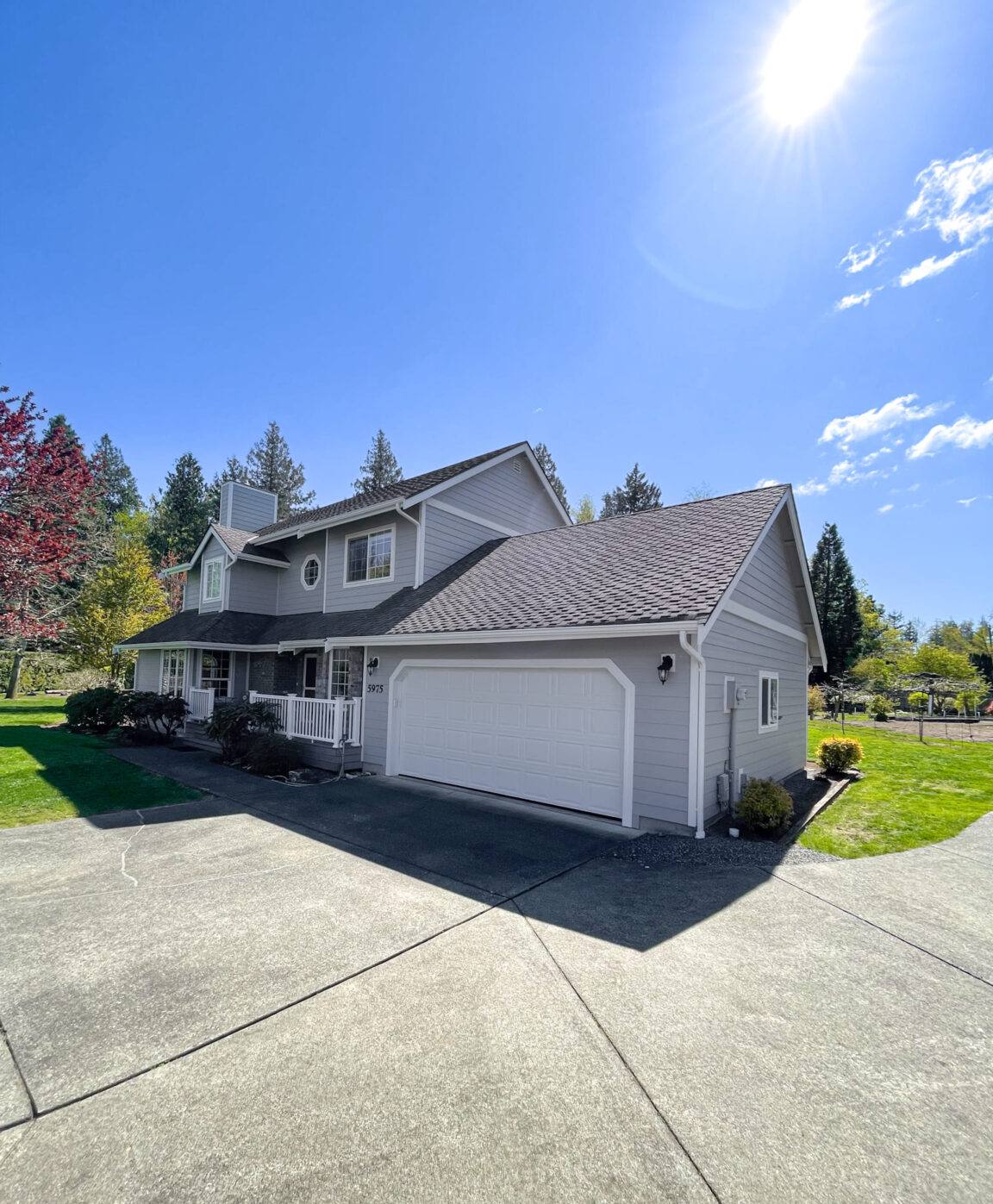
The Damage Patterns We See Most Often on Kent Homes
Moisture-driven failures
Most of the repair calls we run in this area trace back to water getting behind the siding rather than the siding surface itself failing. Warped or buckled boards, soft spots you can push a thumb into, and peeling paint near seams are almost always signs that moisture has been trapped against the wall — not just landing on it.
Moss and organic growth
Green or black staining, especially on north-facing walls and anywhere shaded by trees or overhangs, is common across King County and especially persistent in low-lying areas like Kent's valley floor. Moss itself doesn't destroy siding overnight, but it holds moisture against the surface far longer than bare siding would, which accelerates whatever underlying problem already exists.
Product-specific breakdown
Homes with older wood composite or engineered wood siding often show swelling at the bottom edge of boards and at butt joints — the classic entry points for water in that material. Vinyl siding tends to show a different failure mode: warping or buckling from heat and cold cycling, and cracking that lets water track behind the panel with no way to escape.
Signs It's Time to Call Someone (Before It Gets Worse)
- Soft, spongy, or crumbling siding when pressed by hand
- Visible gaps, cracks, or separation at seams, corners, or trim
- Persistent moss or dark staining that returns shortly after cleaning
- Paint that's peeling, bubbling, or failing in patches rather than evenly with age
- Interior signs — musty smell, discoloration on interior walls, or drafts near exterior walls
- Siding that flexes or feels loose when you press on it
- Visible warping, buckling, or waviness across a section of wall
Any one of these on its own might be minor. Two or three together, especially on the same section of wall, usually means water has already gotten past the surface.
What an Actual Repair Involves — Not Just a Patch
A siding repair that only replaces the visible bad board is a repair that's likely to fail again. Correct repair work starts with figuring out how water got in, not just where it shows up.
Diagnosis first
Before we touch a single board, we look at the flashing above windows and doors, the condition of the house wrap or weather barrier underneath, the caulking at trim and penetrations, and the grading and drainage around that section of the house. Siding damage is frequently a symptom of a flashing or drainage problem, not the root cause.
Removing damaged material properly
We pull back enough surrounding siding to see the full extent of the damage, not just the section that looks bad from the outside. Water tends to travel further under the surface than it shows on the face of the board.
Fixing what let the water in
This is the step that gets skipped by anyone doing a rushed patch. Re-flashing, re-sealing, or correcting a house wrap gap has to happen before new siding goes back on, or the repair is cosmetic.
Matching material and finish correctly
Replacement boards need to match the existing reveal, profile, and color as closely as possible. On factory-finished products this is straightforward when the material is still available; on discontinued or heavily faded siding, we'll tell you honestly if a perfect match isn't realistic before you commit to a repair instead of a fuller replacement.
Repair vs. Replacement: How We Actually Make That Call
| Factor | Leans toward repair | Leans toward full replacement |
|---|---|---|
| Extent of damage | Isolated to one wall or a few sections | Recurring damage across multiple walls |
| Underlying moisture barrier | Still intact and sound | Failing, missing, or original to a much older install |
| Material age and availability | Recent enough to match closely | Discontinued profile or badly faded finish |
| Root cause | Single fixable source (flashing, caulk, grading) | Systemic issue like poor original installation |
| Homeowner's timeline | Wants a targeted fix now | Planning a broader exterior update anyway |
We'll always tell you the honest answer, even when repair is the cheaper and correct call. A full replacement sale isn't worth recommending on a home that only needs targeted work.
Why Our Repair and Replacement Work Is James Hardie Only
When a repair calls for new material, or when the damage points to a full section needing replacement, we install James Hardie fiber cement — and nothing else. That's a standard we hold across every job in King County, not just a preference for Kent.
In a climate defined by driving rain and a long wet season, fiber cement's dimensional stability matters. It doesn't absorb and swell the way wood-based composite products can at cut edges and butt joints, which is where we see the most moisture failures on older homes. Hardie's ColorPlus factory finish is baked on and warrantied against peeling and cracking, which matters in an area where paint failure from moisture cycling is one of the most common complaints we hear about older siding.
We're not going to tell you every other siding product is worthless — plenty of homes around King County have vinyl or engineered wood siding that's performed fine for years. What we will tell you is that after years of repair calls in this climate, the failure patterns we see over and over point back to moisture-sensitive materials and installation shortcuts. We stopped installing anything but Hardie because we didn't want to keep being the crew called back out to fix the same kind of problem five years later.
Our Process on a Kent Repair Call
- Free on-site inspection — we look at the damaged area and the surrounding wall, not just the spot you called about
- Honest diagnosis of the cause, explained in plain terms, including whether repair or replacement makes more sense
- A written scope and estimate before any work starts — no surprise add-ons mid-job
- Removal of damaged siding and inspection of the weather barrier and flashing underneath
- Correction of the underlying moisture issue, then installation of matched or new Hardie material
- Final walkthrough so you can see exactly what was fixed and why
Why a Crew That Already Works Kent Makes a Difference
A repair crew that works this specific part of King County regularly has already seen how the valley's moisture patterns play out on different orientations, roof lines, and older housing stock in the area. That's not a marketing point — it changes how quickly we can diagnose a problem correctly instead of guessing. We're also familiar with local permitting requirements for exterior work in Kent and the surrounding jurisdictions, which keeps a repair project from stalling on paperwork.
Just as important: we're not driving in from out of the area for a one-time job and disappearing. If a repair doesn't hold up the way it should, we're still local and still reachable.
Keeping Moss and Moisture From Coming Back
A correct repair should last, but King County's climate doesn't take a break, and a little upkeep goes a long way toward protecting the work.
- Rinse siding annually to remove pollen, dirt, and early moss growth before it takes hold
- Trim back tree branches and shrubs to improve airflow and sun exposure on shaded walls
- Check and re-caulk trim and penetration points every couple of years, especially south and west-facing walls that see the most weather
- Keep gutters clear so overflow doesn't run down the face of the siding
- Watch grading and downspout discharge near the foundation so water drains away from the house rather than pooling against it
- Address any new soft spots, cracking, or staining early rather than waiting for it to spread
If you're seeing any of the warning signs above on a Kent home, or you just want a second opinion on whether a repair is enough or a section needs full replacement, we're happy to take a look. The estimate is free, there's no pressure, and you'll get a straight answer either way — just fill out the form below to get started.