 King County
 Why West Seattle Windows Take More Abuse Than You'd Think
West Seattle sits right on the water — Puget Sound on one side, Elliott Bay on the other — and that position shapes everything about how windows age here. Homes on the bluffs and anywhere with an open sightline to the water take wind-driven rain straight into the wall assembly, not just rain falling straight down. Add the salt content in that marine air and you get a slow, steady corrosion process on anything metal: window hardware, fasteners, aluminum cladding, even the springs inside older sash windows. It's not dramatic, it's cumulative. A window that would last three decades in a drier inland King County neighborhood can show hardware failure, seal breakdown, or frame corrosion years earlier here.
Then there's the shade. Big evergreens, narrow lots, and homes packed close together mean plenty of West Seattle houses have north- or west-facing walls that rarely get direct sun. That's exactly where moss and algae take hold on sills, trim, and cladding — and where trapped moisture around a window opening has the least chance to dry out between storms. Combine long wet seasons with limited drying time and you get a climate that's genuinely harder on window installations than most parts of the country. The install itself has to account for that, not just the window unit.
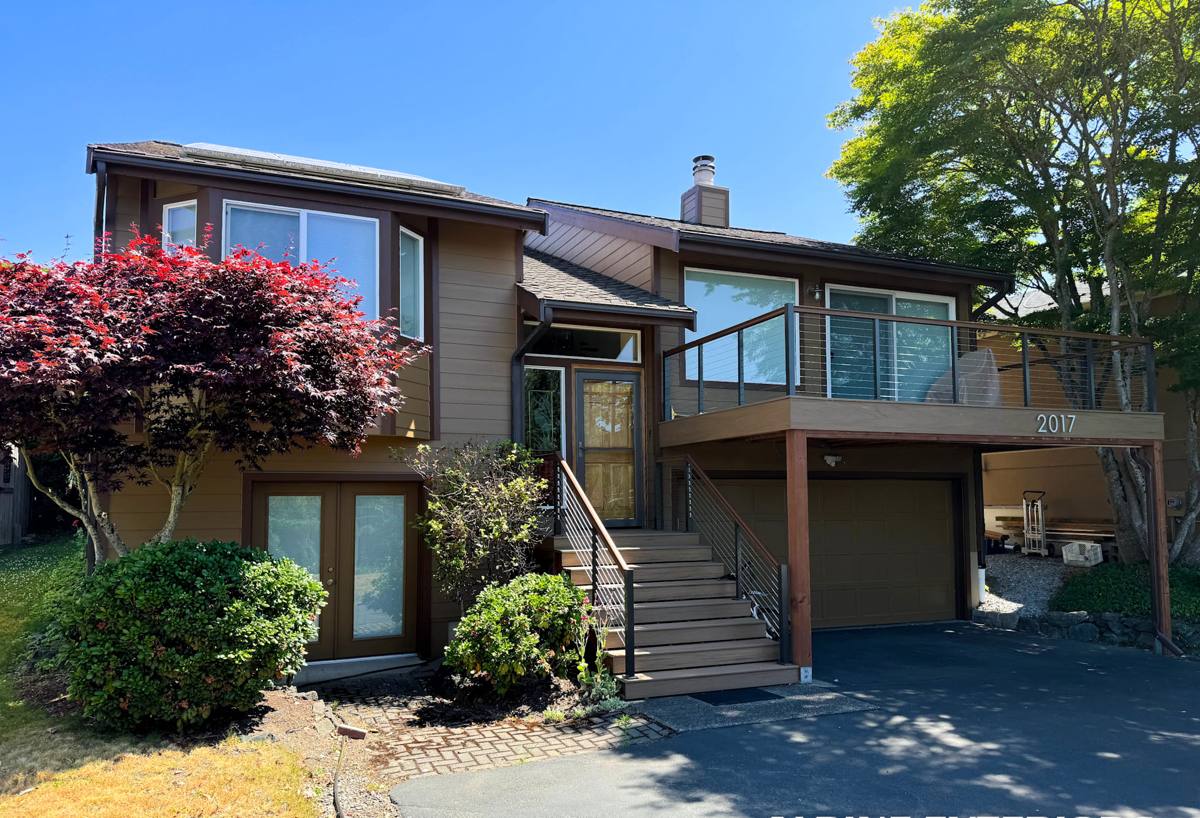
Signs a West Seattle Home Needs New Windows
Most window failure here doesn't look dramatic until it's expensive. Watch for these signs, especially on walls facing the water or shaded from the sun:
- Fogging or a visible haze between panes of double-pane glass — the seal has failed and the gas fill is gone
- Soft, dark, or spongy wood at the sill or bottom corners of the frame
- Paint that bubbles or peels repeatedly at the same spot no matter how often it's redone
- Drafts you can feel with a hand near the frame on a windy day
- Windows that stick, won't stay open, or need a shove to latch — hardware corrosion or frame swelling
- Moss or black streaking building up on the sill or trim faster than you can clean it off
- Noticeably higher heating bills in a home that hasn't changed insulation elsewhere
Any one of these on its own might just need a repair. Several together, especially on the same wall, usually means the window and the flashing behind it are both past their useful life.
What a Correct Installation Actually Involves
It's Not Just Swapping the Glass
The window unit itself gets most of the attention, but in a climate like this the flashing and water management around the opening matter just as much — arguably more. A premium window installed with poor flashing will leak. A mid-range window installed correctly, with proper flashing, sealant, and drainage, will outperform it every time. Our standard for every install includes:
- Removing the old window and inspecting the rough opening for rot, soft framing, or existing water damage before anything new goes in
- Installing a sloped sill pan so any water that gets past the window drains back outside instead of pooling in the frame
- Proper flashing tape sequencing — sill first, then jambs, then head — so each layer overlaps the one below it, shingle-style, the way water actually runs
- Sealing the interior air barrier separately from the exterior water barrier, so the assembly can manage moisture instead of trapping it
- Backer rod and quality exterior sealant at the trim line, sized correctly rather than just caulked over gaps
- Shimming and squaring the unit so it operates properly and the seals aren't stressed unevenly
Why This Matters More Here
In a drier climate, a mediocre flashing job might not show a problem for years. In West Seattle, with wind-driven rain hitting exposed walls regularly and long wet stretches through fall and winter, water finds shortcuts fast. Any gap in the flashing sequence becomes the path water follows into your wall framing — and by the time you see a stain on the interior drywall, the damage has usually been building for a while.
Choosing the Right Window Material for This Climate
There's no single "best" window material — it depends on the wall's sun exposure, your maintenance appetite, and budget. Here's how the common options actually perform in a marine, high-moisture environment like King County's coastal neighborhoods.
| Material | Performance in Salt Air & Rain | Maintenance | Typical Lifespan |
|---|---|---|---|
| Vinyl | Won't corrode or rot; handles moisture well | Low — occasional cleaning | 20–30 years |
| Fiberglass | Excellent — dimensionally stable, resists moisture and salt | Low | 30+ years |
| Aluminum | Prone to corrosion near salt air over time; conducts cold | Moderate — hardware needs attention | 15–25 years, shorter near water |
| Wood (unclad) | Handsome but vulnerable to moisture; needs consistent upkeep | High — repainting, sealing | Varies widely with maintenance |
| Wood-clad (vinyl or fiberglass exterior) | Good — exterior shell protects the wood core | Low to moderate | 25–35 years |
For homes with direct water exposure or shaded, slow-drying walls, we generally steer clients away from bare aluminum and unclad wood on the exterior face — not because they're bad products, but because they demand more upkeep than most homeowners want to keep up with in this climate. Vinyl, fiberglass, or clad-wood units give you the look you want with far less long-term maintenance burden.
Our Installation Process
- On-site assessment — we look at every window opening being replaced, check for rot or existing moisture damage, and measure precisely rather than estimating
- Honest product recommendation — based on that wall's sun and rain exposure, not a one-size-fits-all pitch
- Written estimate — clear pricing, materials, and timeline before any work is scheduled
- Removal and opening inspection — old units come out carefully, and we address any rot or framing issues we find before installing anything new
- Installation — sill pan, flashing sequence, air sealing, and precise leveling as described above
- Exterior trim and sealant finish — weathertight detailing so the finished look matches the rest of the home
- Final walkthrough — we test operation on every window and walk you through anything you need to know before we leave
Most single-day West Seattle jobs cover several windows at once, since it's more efficient to protect the same section of the home's exterior for one continuous work session rather than multiple visits.
What Affects the Cost
| Factor | Why It Matters |
|---|---|
| Window count and size | More openings and larger units mean more material and labor time |
| Material choice | Fiberglass and premium vinyl cost more upfront than basic vinyl or aluminum |
| Existing rot or damage | Framing repair adds time and material before the new window can go in |
| Window style | Casement, awning, and larger picture windows generally cost more than standard double-hung |
| Wall exposure | Water-facing or hard-to-access walls can require more careful, slower flashing work |
| Trim and finish work | Matching existing exterior trim or repainting adds to the scope |
We won't quote a number without seeing the openings — anyone who does is guessing. What we can tell you honestly is that fixing hidden rot found mid-project is far cheaper than the wall damage that comes from ignoring it, so we flag it early rather than after the window is already in.
Why a Crew That Already Works West Seattle Matters
Window installation isn't the same job in every part of King County. A crew used to drier, more sheltered inland lots can do fine work there and still get caught off guard by a West Seattle wall that takes direct wind-driven rain off the Sound, or by how fast moss reclaims a shaded north face. Working this neighborhood regularly means we already know which walls need extra attention to flashing and drainage, which older housing stock tends to have hidden sill rot, and how to sequence a job around King County's wet-season weather windows instead of getting caught mid-install by a storm rolling in off the water. That familiarity shows up in fewer surprises and a tighter, longer-lasting install.
Keeping New Windows Performing Long-Term
A correctly installed window still needs a little upkeep, especially in this climate. A short seasonal routine goes a long way:
- Rinse sills and tracks periodically to keep moss and algae from building up, especially on shaded walls
- Check exterior caulking once a year and touch up any spots that have cracked or pulled away
- Keep gutters and downspouts clear so water isn't sheeting down past window heads
- Trim back vegetation that keeps a wall shaded and slow to dry
- Operate each window a few times through the year so hardware doesn't seize up from disuse and moisture
None of this is a huge time commitment, but skipping it in a wet, salt-air environment is how small maintenance items turn into bigger repairs.
If your West Seattle home has drafty, foggy, or hard-to-operate windows — or you're just planning ahead before the next wet season sets in — we're happy to take a look and give you a straightforward, no-pressure estimate. Fill out the form below and we'll get in touch.