 King County
 West Seattle's Exposure Is Tougher on Siding Than Most Homeowners Realize
West Seattle sits closer to open water than most King County neighborhoods, and that changes what a home's exterior has to survive year after year. Homes here deal with a combination most siding products were never designed for: salt-laden air moving off Puget Sound, wind-driven rain that hits walls sideways instead of just falling from above, and a moss season that can stretch from early fall through late spring. Any one of those on its own is manageable. Together, they're the reason so many West Seattle homes show premature paint failure, soft trim, staining, and moss buildup at the lower courses of siding well before the rest of the exterior looks its age.
Salt air is corrosive to fasteners and finishes, not just metal. It accelerates the breakdown of paint film on wood and engineered wood products, which is part of why homes closer to the water need repainting more often than homes just a few miles inland. Driving rain finds every gap in a siding system — every under-caulked seam, every panel installed too tight to the ground, every missed flashing detail — and pushes water behind the cladding instead of letting it run off the surface. And moss doesn't just grow on roofs; in the damp, shaded microclimates common in West Seattle's tree-lined lots, it colonizes horizontal siding laps and trim ledges, holding moisture against the material long after a storm has passed.
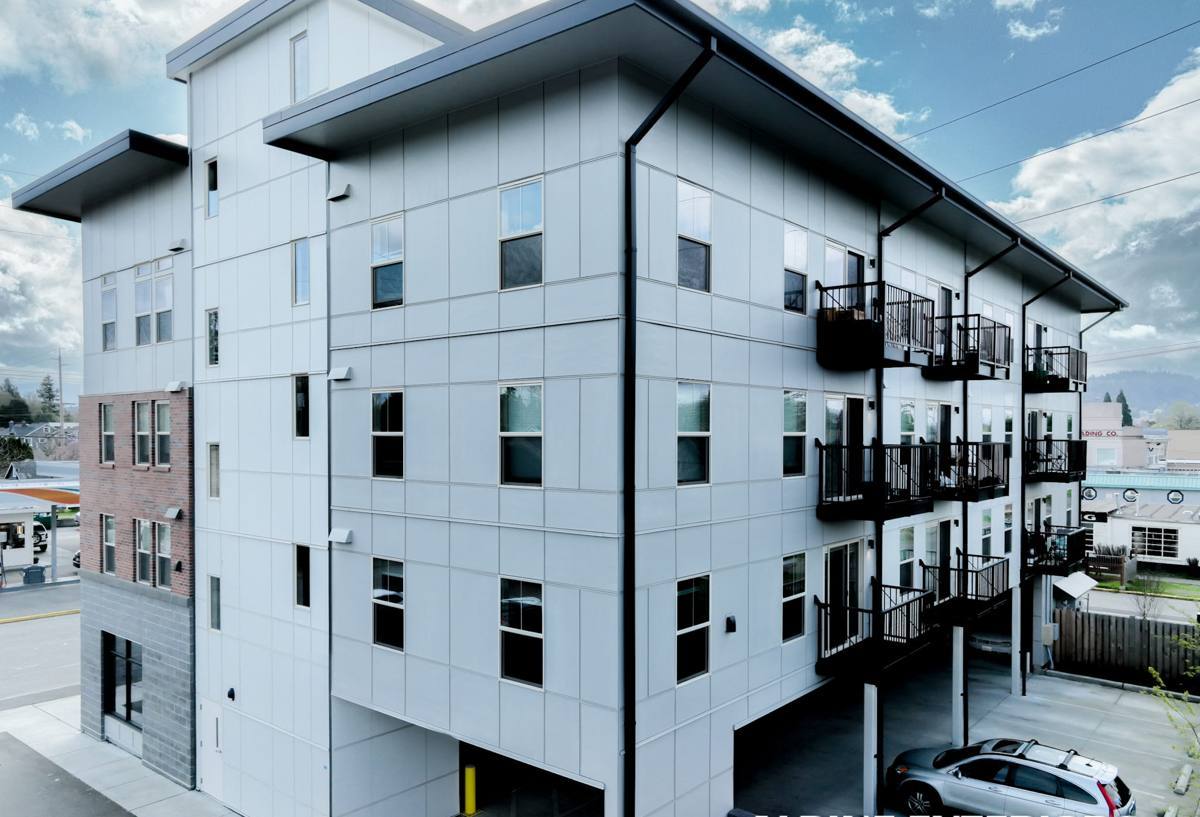
Why James Hardie Fiber Cement Fits This Climate
James Hardie siding is fiber cement — a mix of cement, sand, and cellulose fibers, factory-cured under pressure. That composition matters directly here: it doesn't absorb and swell with moisture the way wood-based products can, and it isn't vulnerable to rot in the way that primed wood trim or engineered wood siding can be once water gets past a seam. It's also non-combustible, which matters everywhere but is a genuine, practical benefit for homes near dry brush, sheds, or tight lot lines.
Hardie's ColorPlus finish is baked on at the factory under controlled conditions, rather than field-applied with a brush and roller on a jobsite where weather and timing are never perfect. That factory finish resists fading and chipping far better than a typical field paint job, and it's backed by its own finish warranty separate from the product warranty. For a house exposed to salt air and constant damp, a finish that was cured properly indoors — instead of painted on a wall in variable Pacific Northwest weather — is a real, measurable advantage.
James Hardie also engineers its products by climate zone. The HZ5 formulation used in the Pacific Northwest is specifically formulated for regions with damp, temperate conditions and freeze-thaw cycles, as opposed to the HZ10 formulation sold in hot, humid southern climates. That's not a marketing distinction — it changes how the product handles moisture cycling over decades, which is exactly the stress West Seattle's climate applies.
Why We Don't Install Alternatives
We get asked why we don't offer vinyl, LP SmartSide, or other fiber cement brands as lower-cost options. The honest answer is that we've standardized on one product because we don't want to sell a homeowner something we know will need more maintenance, fail sooner, or leave them with a weaker warranty in this specific climate. Vinyl can warp and fade, and its seams and J-channels give wind-driven rain more places to work its way behind the cladding. Engineered wood products carry OSB-based cores that depend entirely on an intact factory coating to keep water out — any breach, and the core is vulnerable to swelling. We'd rather install one product correctly, on every job, than offer a menu of options with very different long-term outcomes on a coastal-influenced climate like this one.
What a Correct James Hardie Installation Actually Involves
The single biggest factor in how long Hardie siding performs isn't the product — it's the installation. Fiber cement is unforgiving of shortcuts in a way that shows up years later as water damage hidden behind the wall, not immediately. A correct install includes:
- A minimum ground clearance and proper starter strip so the bottom course never sits in standing water or splash-back
- Weather-resistive barrier and flashing installed and lapped correctly at every window, door, and penetration before a single piece of siding goes up
- Correct fastener type, spacing, and placement — Hardie specifies this precisely, and it's frequently where corner-cutting happens
- Properly sized gaps at butt joints and trim, caulked with a high-quality, paintable sealant rated for exterior use
- Field-cut edges sealed or primed per Hardie's specifications, since factory-cut edges are pre-sealed but job-site cuts are not
- Kick-out flashing at roof-to-wall intersections, which is one of the most commonly missed details on Pacific Northwest homes and a leading cause of hidden rot at those junctions
Skip any one of these and the siding can still look fine from the curb for a few years. The failures show up later, as soft sheathing, stained interior walls, or paint blistering from moisture trapped behind the panel — problems that are far more expensive to fix than they would have been to prevent.
Our Process on a West Seattle Job
1. Inspection and Moisture Check
Before we talk about siding color or product line, we look at what's underneath. On homes with existing wood or engineered siding, we check for soft spots, staining, and moisture intrusion, especially around windows, at the base of walls, and near roof lines — areas that take the worst of King County's driving rain.
2. Tear-Off and Sheathing Repair
Old siding comes off, and any damaged sheathing or framing found underneath gets addressed before anything new goes up. Installing new siding over a compromised wall just hides the problem for another few years.
3. Weather Barrier and Flashing
A new weather-resistive barrier goes on, with flashing detailed at every opening and transition. This step is invisible once the job is done, but it's the layer doing most of the work keeping water out over the life of the house.
4. Hardie Installation to Spec
Panels, planks, or shingles go up following Hardie's fastening, clearance, and joint requirements — not shortcuts that speed up the job but compromise performance in a wet climate.
5. Final Detailing and Walkthrough
Caulking, touch-up, and trim details get finished, then we walk the exterior with the homeowner to review the work before calling the job done.
Choosing the Right Hardie Product Line
James Hardie makes several distinct product lines, and the right choice depends on the home's existing architecture and the homeowner's preference — not just price.
| Product Line | Look | Best Fit |
|---|---|---|
| HardiePlank Lap Siding | Traditional horizontal lap, several texture options | Most common choice; fits nearly any home style |
| HardieShingle | Staggered or straight-edge shingle profile | Craftsman and cottage-style homes common in West Seattle |
| HardiePanel | Vertical panel, often paired with battens | Modern builds or accent sections |
| HardieTrim | Trim boards for corners, fascia, window/door surrounds | Paired with any of the above for a finished, consistent look |
What Drives Cost on a West Seattle Siding Job
Every home is different, but the same handful of factors tend to move the price on a Hardie installation in this area:
| Factor | Why It Matters |
|---|---|
| Condition of existing sheathing | Rot or moisture damage found during tear-off adds repair scope before new siding can go on |
| Home height and access | Multi-story homes and steep lots require more scaffolding or lift time |
| Product line and texture | Shingle profiles and specialty textures typically cost more than standard lap |
| Trim and detail complexity | Homes with lots of corners, dormers, or architectural detail take more labor per square foot |
| Color | Standard ColorPlus color range is priced differently than custom color matching |
Maintaining Hardie Siding in a Salt Air, Moss-Prone Climate
Hardie siding is genuinely low-maintenance compared to wood and engineered alternatives, but "low-maintenance" isn't "no-maintenance," especially this close to the water. A simple annual routine keeps it performing as designed:
- Rinse the exterior once a year to remove salt residue and airborne grime before it builds up in the finish
- Keep gutters clear so overflow doesn't run down the face of the siding and feed moss growth
- Trim back vegetation and tree cover that keeps siding shaded and damp longer than the rest of the house
- Inspect caulking at trim joints and penetrations every year or two, and re-caulk as needed — this is the one maintenance item that actually protects the structure behind the siding
- Address moss on siding promptly with a gentle wash rather than pressure washing, which can force water behind laps and panels
Why Hiring a Crew That Already Works in West Seattle Matters
Installing James Hardie correctly isn't complicated in theory, but it's a system, and systems fail at their weakest detail. A crew that regularly works in King County's coastal-influenced neighborhoods already knows where wind-driven rain tends to find gaps, how much clearance to leave given local rainfall patterns, and which roof-to-wall details need extra attention in a climate where moss and moisture are constant rather than occasional. That familiarity shows up in fewer callbacks and a siding job that still looks and performs well a decade or two later — which is the entire point of paying for a premium product in the first place.
If you're weighing a siding replacement or new siding for a West Seattle home, we're happy to walk the exterior with you, point out what we see, and put together a straightforward, no-pressure estimate using the form below.