 King County
 Why West Seattle Siding Wears Differently
West Seattle sits close enough to Puget Sound that salt-laden air is a real factor in how exterior materials age, not just a talking point. Combine that with the long, wet stretch of fall through spring common across King County, and you get a specific pattern of siding wear: caulk joints that give out early, paint that chalks and fades faster on west- and south-facing walls, and moss or algae creeping in on shaded north sides where things stay damp longer between dry spells. None of this means siding is doomed here — it means repairs need to account for what's actually causing the damage, not just cover it up.
A lot of siding repair calls we get in this neighborhood aren't about one dramatic failure. They're about small, unaddressed problems — a cracked board, a gap where two pieces meet, a section that's stayed damp too long — that have had months or years to get worse. Catching those early is cheaper and less disruptive than waiting for them to turn into rot or interior damage.
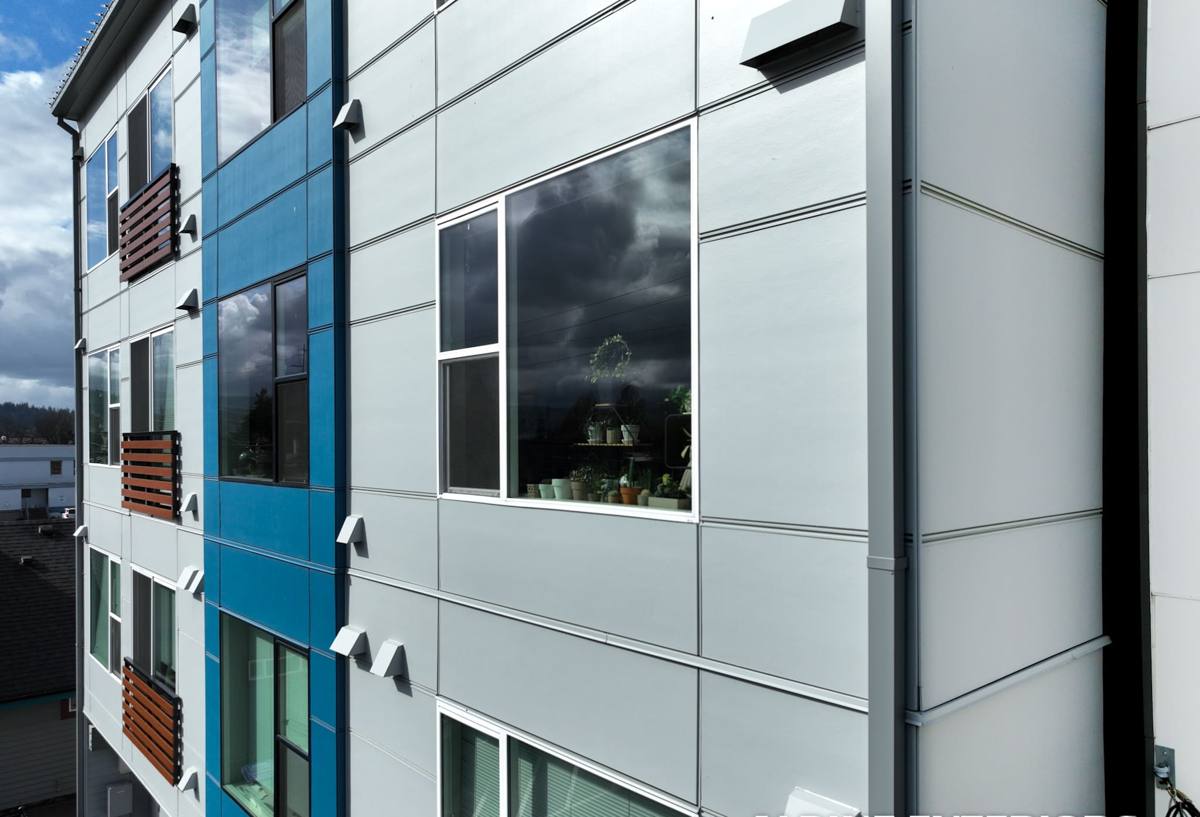
Signs Your Siding Needs Repair, Not Just a Wash
Homeowners often assume dark streaking or a dull, weathered look just needs a pressure wash. Sometimes that's true. Other times it's a sign the siding's protective finish has already broken down and water is getting in behind it. Here's how to tell the difference:
- Soft or spongy spots when you press on the siding, especially near the bottom courses or around windows
- Visible cracking, splitting, or delamination (layers separating) on individual boards or panels
- Persistent moss or algae growth that comes back quickly after cleaning
- Paint that's peeling or bubbling rather than just fading — a sign moisture is trapped underneath
- Gaps at seams, corners, or trim where caulking has shrunk, cracked, or pulled away
- Staining or discoloration on interior walls near exterior corners, which often traces back to a siding or flashing failure outside
If you're seeing any of the first two items on that list, that's not a cosmetic issue — it's moisture intrusion, and it needs attention before the next rainy stretch makes it worse.
Why Moss and Algae Matter More Than They Look
A little green tint on north-facing siding is common in this climate and not automatically a crisis. But moss holds moisture against the siding surface far longer than bare material would, and over a full wet season that constant dampness accelerates whatever weaknesses already exist — degraded caulk, hairline cracks, exposed edges. Left alone long enough, what started as a surface growth problem becomes a substrate problem underneath it.
What a Correct Siding Repair Actually Involves
A repair done right isn't just cutting out a damaged board and nailing in a new one. It starts with figuring out why that section failed in the first place — because if the underlying cause (a flashing gap, a missing weep path, an caulking joint that was never sealed correctly) isn't fixed, the replacement piece will fail the same way on the same timeline.
Our repair process generally includes:
- Diagnosis first. We check whether the damage is isolated or a symptom of a broader moisture or installation issue nearby.
- Checking what's behind the siding. Where there's evidence of water intrusion, we look at the water-resistive barrier and flashing details, not just the visible board.
- Matching materials properly. Mismatched siding profiles, textures, or finishes stand out immediately and can also behave differently in weather, which creates uneven wear down the road.
- Correcting the root cause — resealing, re-flashing, or adjusting clearances — so the new section isn't set up to fail the same way.
- Finishing to blend, so the repair reads as part of the wall rather than an obvious patch.
Repair or Replace? How We Help You Decide
Not every damaged section means a full re-side, and not every "repair" job should actually be a repair. The right call depends on how widespread the damage is and what's driving it.
| Factor | Leans toward repair | Leans toward replacement |
|---|---|---|
| Extent of damage | Isolated to a few boards or one wall section | Recurring across multiple walls or elevations |
| Age of existing siding | Relatively recent, otherwise sound | Nearing or past its expected service life |
| Cause of damage | A one-time event or a fixable detail (caulk, flashing) | Systemic moisture intrusion or original installation errors |
| Material match | Matching product/color still available | Discontinued product, no close match possible |
| What's underneath | Sheathing and barrier intact | Rot, mold, or structural damage found during inspection |
We'll tell you honestly which category your situation falls into. If a repair will genuinely hold up, that's what we recommend — there's no reason to sell a full replacement when a targeted fix solves the problem.
Why We Repair With James Hardie Products
When a repair calls for new material — whether it's a few boards or a larger section — we use James Hardie fiber cement. There are a few practical reasons that matters specifically for repair work in this climate:
- It doesn't absorb water the way wood-based products can, which matters directly in a region with a long wet season and persistent moss pressure.
- ColorPlus factory finish means a repaired section, once properly matched, keeps its color consistently rather than weathering unevenly against older painted siding.
- It's non-combustible, which isn't specific to repair work but is part of why we standardized on it across everything we install.
- Hardie's HZ5 product line is engineered for wetter, harsher climate zones, which fits the Pacific Northwest better than a general-purpose product would.
We don't install LP SmartSide, vinyl, Cemplank, Allura, or unfinished wood siding — not because those products are without merit, but because we've made a professional decision to stand behind one system we know performs consistently in this climate, with a warranty structure we trust. That's the product we use for repairs as well as full installs, so a patched section performs the same way the rest of the wall does.
Our Process for a West Seattle Repair Call
- Assessment. We walk the exterior, note every problem area, and check for signs of moisture behind the siding, not just what's visible on the surface.
- Honest recommendation. You get a clear explanation of what's causing the damage and whether repair or replacement is the right fit — with reasoning, not a sales pitch.
- Material matching. If Hardie's ColorPlus finish is involved, we work to match color and profile as closely as current product lines allow.
- The repair itself. Damaged material comes out, underlying issues get corrected, and new material goes in to spec — proper fastening, clearances, and sealing.
- Final check. We confirm the repair is weathertight before we consider the job done, not just visually complete.
Why a Locally Experienced Crew Matters
Siding repair sounds simple from the outside, but doing it correctly requires understanding how a specific climate stresses specific materials over time. A crew that already works in West Seattle and across King County has seen the patterns — where moss tends to build up, which elevations take the worst of the driving rain, how older installation methods in this area tend to fail. That experience shows up in faster, more accurate diagnosis and repairs that are built to hold up through the next several wet seasons, not just look fine on the day we finish.
It also matters for something less obvious: knowing when a "repair" request is actually pointing to a bigger issue. A crew unfamiliar with regional moisture patterns might patch the visible symptom and miss the cause. We'd rather tell you the honest scope up front.
A Quick Checklist Before You Call Anyone
- Note which walls or sections show damage, and whether it's one spot or spread across the house
- Check for soft spots by gently pressing on suspicious areas (don't force it)
- Look inside near exterior walls for staining, especially near corners and window headers
- Take note of how long moss or algae has been building back after cleaning
- If you know what siding product is currently installed, have that information ready — it speeds up matching
Get an Honest Look at Your Siding
If you're seeing damage, persistent moss, or just want a second opinion on whether a section needs repair, we're happy to take a look. The estimate is free, there's no pressure to sign anything on the spot, and you'll get a straight answer about what's actually going on with your siding and what it'll take to fix it right. Fill out the form below to get started.