 King County
 West Seattle's Exposure Is Different From the Rest of King County
West Seattle sits up on a bluff facing Puget Sound, and that position is a mixed blessing for the houses up here. The views are real, but so is the weather that comes with them. Homes facing the water take wind-driven rain straight on, carry a faint but constant load of salt spray off the Sound, and sit in shade pockets long enough each winter to grow a steady crop of moss on north- and west-facing walls. None of that is unique to West Seattle in isolation — plenty of King County homes deal with rain and moss — but the combination of salt exposure and open water wind is sharper here than it is a few miles inland in places like White Center or South Park.
Siding on a West Seattle home is doing more work than siding on a sheltered lot in the valley. It's the first line of defense against wind-driven moisture trying to find a way behind the cladding, and it's fighting a slower, quieter battle against the corrosive effect of salt air on fasteners, trim, and paint film. When siding fails here, it's rarely from one dramatic event — it's from years of small compromises adding up: a housewrap seam that was never sealed right, caulk that gave out at year eight instead of year fifteen, or a paint finish that couldn't hold up to the UV and salt combination.
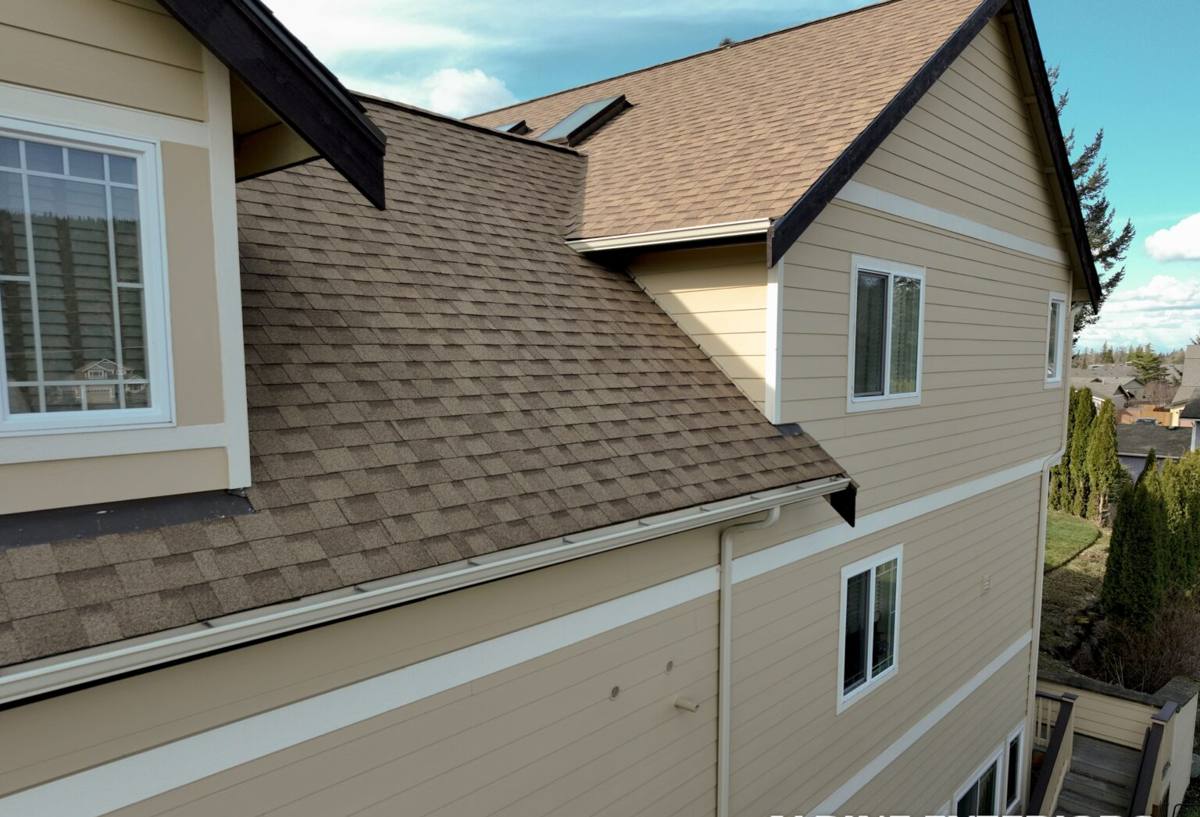
What "Siding Replacement" Actually Means When It's Done Right
A lot of homeowners think of siding replacement as swapping old panels for new ones. That's the visible part, but it's maybe a third of the job. The other two-thirds happen underneath, and it's the part that determines whether your new siding lasts 10 years or 40.
The Water Management System Behind the Cladding
Every wall assembly is built to manage the water that inevitably gets past the outer layer — because on a home exposed to Sound-driven storms, some always will. That means a continuous water-resistive barrier (WRB), properly lapped and taped seams, correctly integrated window and door flashing, and a drainage plane that lets any moisture that does get in run back out instead of sitting against the sheathing. If a crew skips or shortcuts this layer to save time, the new siding on top can look perfect for years while rot builds behind it unseen.
Fasteners, Trim, and Details That Match the Environment
Given the salt exposure closer to the water, fastener choice and trim detailing matter more here than in a sheltered inland yard. Corrosion-resistant fasteners, correctly detailed butt joints, and trim that's flashed rather than just caulked are the difference between a job that ages gracefully and one that starts showing rust streaks and gaps within a few years.
Why We Install Only James Hardie Fiber Cement
We made a decision as a company to install James Hardie fiber cement siding exclusively, and West Seattle's climate is exactly the kind of environment that decision was made for. Fiber cement is non-combustible, dimensionally stable in wet-dry cycling, and doesn't feed the moss and mildew growth that thrives in shaded, damp conditions the way some wood-based and wood-adjacent products can. Hardie's ColorPlus factory finish is baked on under controlled conditions and backed by its own finish warranty, which matters on a home taking direct salt spray and UV — field-applied paint has to work harder to hold up in that combination, and it shows sooner.
We don't install vinyl, LP SmartSide, Cemplank, Allura, primed spruce, or cedar, and we're upfront about why. Vinyl can warp and fade under sustained sun and temperature swings, and it doesn't offer the fire resistance fiber cement does. Wood-based products like LP SmartSide and untreated cedar or spruce need consistent maintenance to keep moisture out of their engineered or natural wood core, which is a harder standard to hold to on a home that's wet more months than not. Other fiber cement brands like Cemplank and Allura are reasonable products in their own right, but we've standardized on Hardie because of its engineered climate-specific HZ product lines, the depth of its installer network and technical support, and the strength of its transferable warranty — and we'd rather be excellent at installing one system correctly than average at installing several.
HZ5 vs. HZ10: Which Hardie Line Fits This Climate
| Product Line | Engineered For | Fit for West Seattle |
|---|---|---|
| HardieZone HZ5 | Moderate freeze-thaw, high-moisture climates | Standard match for most King County installs, including West Seattle |
| HardieZone HZ10 | Hot, humid, high-UV climates | Not the right fit for the Pacific Northwest |
James Hardie engineers its siding by climate zone rather than selling one universal product nationwide. King County, including West Seattle, falls in the HZ5 zone, and that's the formulation we install here — it's built around the wet, moderate-temperature conditions this area actually sees rather than the dry-heat conditions HZ10 is optimized for.
Signs a West Seattle Home Needs Siding Replacement Soon
Some warning signs are easy to spot from the ground; others take a closer look. Homeowners on or near the bluff should watch for:
- Soft spots or visible warping when you press on the siding, especially near the bottom courses and around window trim
- Persistent moss or algae staining that comes back within weeks of cleaning, particularly on north- and west-facing walls
- Paint that's chalking, peeling, or bubbling faster than it should for its age
- Visible gaps or separation at butt joints, corners, and trim where caulk has failed
- Rust streaking from fasteners or trim, which shows up sooner in homes with more direct exposure to the Sound
- A musty smell or discoloration on interior walls that back up to exterior siding
- Siding that's original to a home built more than 25-30 years ago, especially if it's never been fully replaced
Any one of these on its own might just need a repair. Several at once, or any sign of soft sheathing underneath, usually means it's time to talk about full replacement rather than patching.
Our Siding Replacement Process
- On-site assessment. We walk the exterior, check for soft spots and moisture damage, and look at how the home is oriented relative to wind and water exposure.
- Tear-off and sheathing inspection. Old siding comes off and we inspect the sheathing underneath for rot or damage before anything new goes up — this is where hidden problems get caught and fixed, not covered over.
- Water-resistive barrier and flashing. A new WRB goes on with properly lapped seams, and all window, door, and penetration flashing is integrated correctly into the drainage plane.
- James Hardie installation. Panels, lap siding, or trim go up to manufacturer spec — correct fastener spacing, clearances at grade and roofline, and properly detailed joints.
- Trim, caulking, and touch-up. Finish details are sealed and any factory-finish touch-up is done with Hardie-matched product.
- Final walkthrough. We go over the finished job with the homeowner before calling it done.
Cost Factors for West Seattle Siding Replacement
Every home is different, and we'll give you real numbers after seeing your house — but these are the main variables that move the price up or down:
| Factor | Why It Matters |
|---|---|
| Home size and wall complexity | More square footage, corners, and dormers mean more material and labor time |
| Condition of existing sheathing | Rot repair found during tear-off adds cost but is essential to a lasting job |
| Siding profile chosen | Lap siding, shingle-style panels, and vertical panel systems have different material and install costs |
| Trim and detail work | Homes with more window trim, fascia, and architectural detail take more labor to finish correctly |
| Site access | Steep lots and limited staging space, common on the bluff, can affect labor time |
Why Hiring a Crew That Already Works West Seattle Matters
A crew that's spent time on West Seattle roofs and walls already knows which walls take the worst of the wind off the Sound, where moss builds up fastest, and how to detail flashing and fasteners for a home that's going to see more salt air than one a few miles inland. That's not something you can fully substitute with a generic install checklist. It also means we're not guessing at permitting and inspection expectations for King County jobs, and we're not learning the neighborhood's quirks on your home for the first time.
Correct installation matters more than brand choice in the end — even the best siding product fails early if it's installed wrong. But starting with James Hardie's climate-engineered HZ5 fiber cement and pairing it with a crew that installs it to spec, on homes that face exactly the conditions yours does, is how you get a siding job that's still doing its job two and three decades from now.
If your West Seattle home's siding is showing its age, or you just want an honest read on where it stands, we're happy to take a look. Reach out for a free, no-pressure estimate using the form below.