 King County
 Custom Decks Built for Shoreline's Climate, Not a Catalog
Shoreline sits close enough to Puget Sound that salt-laden air is part of daily life for a lot of properties here, and it sits squarely in the Pacific Northwest's long wet season, which means any deck built in this part of King County has to handle a combination most catalog deck plans never account for: months of steady rain, extended shade and dampness that feed moss and algae, and airborne salt that speeds up corrosion on fasteners and hardware. A deck that looks great on day one but wasn't built with those three things in mind will show problems within a couple of seasons — soft spots, rust streaks, slick green boards, or a substructure that's rotting quietly underneath a deck surface that still looks fine from above.
This page is about one thing: building a custom deck in Shoreline that's designed and constructed to actually hold up here. Not a generic "deck installation" overview, but the specific material choices, structural details, and maintenance realities that matter for this climate.
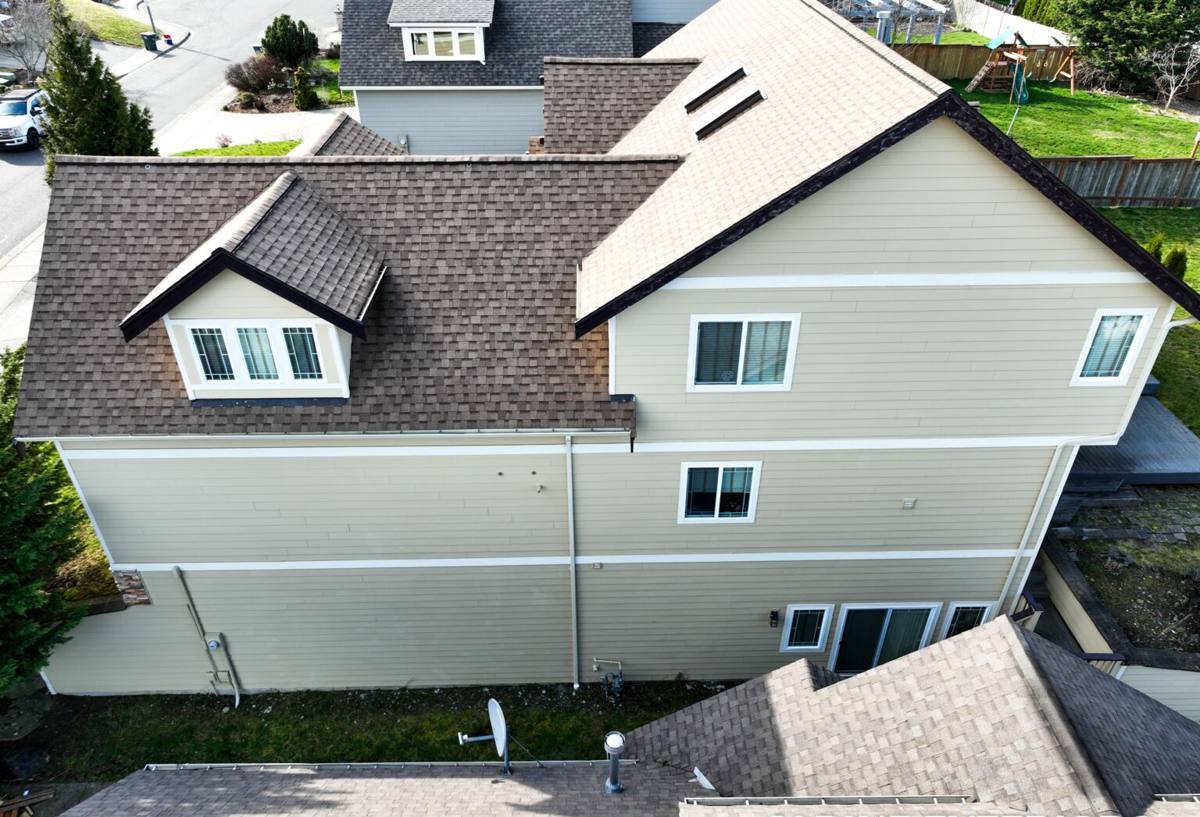
What Shoreline's Weather Actually Does to a Deck
Three climate factors drive almost every deck problem we see in this area, and a correctly built deck addresses all three from the start rather than trying to fix them later.
Salt Air and Corrosion
Properties nearer to Puget Sound deal with airborne salt that accelerates corrosion on anything metal — fasteners, joist hangers, railing hardware, and structural connectors. Standard interior-grade screws or under-spec'd hardware will rust, stain the decking, and lose holding strength years before the wood or composite around them fails. This isn't unique to waterfront lots either; salt air travels, and homes several blocks inland still see accelerated corrosion compared to drier inland climates.
Driving Rain and Moisture Intrusion
Rain here isn't just frequent, it often comes with wind, which drives water sideways into spots a deck in a calmer climate would never have to shed water from — ledger connections, stair stringers, the underside of rim joists, and any point where the deck meets the house. Moisture that gets trapped instead of shed is the single biggest cause of hidden rot in Pacific Northwest decks.
Moss, Algae, and Shade
Long wet seasons combined with tree cover and shaded north or east-facing exposures create ideal conditions for moss and algae growth on deck surfaces. Beyond being unattractive, moss holds moisture against the decking material and turns walking surfaces genuinely slippery, which is a real safety issue on stairs and ramps.
Choosing a Decking Material That Fits This Climate
There's no single "best" decking material — the right choice depends on how much maintenance you want to do, your budget, and how much shade and moisture exposure the deck's location gets. Here's how the common options actually compare for a Shoreline property:
| Material | How It Handles Rain & Moisture | Moss/Algae Resistance | Maintenance |
|---|---|---|---|
| Pressure-treated wood | Good if properly sealed and gapped for drainage; can cup or check if finish is neglected | Moderate — needs periodic cleaning/treatment | Annual cleaning and re-sealing recommended |
| Cedar | Naturally moisture- and rot-resistant, but still needs finish maintenance | Moderate | Periodic cleaning and refinishing |
| Capped composite | Excellent — the cap layer sheds water and won't absorb moisture like wood | Good, though surface film can still support algae in constant shade | Occasional washing; no staining or sealing |
| PVC/cellular decking | Best moisture performance of common options; doesn't absorb water at all | Good | Lowest — occasional washing |
For heavily shaded lots with a lot of tree cover, we lean toward capped composite or PVC precisely because they don't give moss and algae the organic material to root into the way untreated or lightly finished wood surfaces can. For sunnier, more open decks, a well-finished wood deck is still a perfectly good choice, and it's often the right call when matching an existing home's look matters.
What a Properly Built Deck Frame Looks Like Here
The decking surface is what people notice, but the structure underneath is what determines whether the deck is still solid in ten or twenty years. In this climate, a few details matter more than they would somewhere drier:
Ledger Board Flashing
Where the deck attaches to the house is the single most common point of hidden rot in Pacific Northwest decks. Correct flashing — metal flashing integrated with the house's water-resistive barrier, not just caulk — is what keeps water from working its way behind the ledger board and into the rim joist and wall framing over time.
Joist Protection
Covering the tops of joists and beams with a self-adhering flashing tape before decking goes down keeps water from soaking into the exposed end grain and top faces of the framing lumber, which is where rot typically starts even when the visible decking above looks fine.
Fasteners and Hardware
Given the salt-air exposure common across Shoreline, we use stainless steel or heavy-duty coated fasteners and connectors rated for exterior and coastal-adjacent use, not standard galvanized hardware that corrodes faster in this environment. It costs more upfront and it's the difference between hardware that lasts the life of the deck and hardware that's staining and weakening within a handful of years.
Footings Below Frost Depth
Footings need to be set below the local frost line and sized correctly for the soil conditions on the lot — King County soils vary from lot to lot, and a footing that's undersized or too shallow is a foundation problem waiting to surface as deck movement or settling.
Drainage and Moss Prevention Built Into the Design
A deck that's designed to shed water and resist moss buildup needs less maintenance and lasts longer, and most of that comes down to decisions made before construction even starts:
- Proper board spacing so water drains through rather than pooling on the surface
- Grading and any under-deck drainage systems angled to carry water away from the house foundation, not toward it
- Airflow underneath the deck (adequate clearance and skirting with ventilation) so the substructure can dry out between rain events
- Avoiding decking layouts that trap standing water against the house or against railing posts
- Choosing decking and railing materials matched to how much shade the specific deck location gets
- Locating stairs and high-traffic paths with drainage and non-slip surface treatments in mind, since those areas see the most moss-related slip risk
None of this is exotic — it's just applying Pacific Northwest deck-building fundamentals consistently, instead of using a generic build method regardless of site conditions.
Permits and Code Requirements for Custom Decks in King County
Most custom deck projects in Shoreline require a building permit, particularly decks attached to the house, decks above a certain height off grade, or any deck involving structural changes to the home. Guardrail height, stair rise and run, footing depth, and ledger attachment methods are all governed by adopted building code, and inspectors will check these details specifically because they're the ones most linked to safety failures and structural problems down the road. We handle the permitting and inspection process as part of the build rather than treating it as an extra step, since a deck that skips permitting can create real problems at resale or with insurance later.
Our Custom Deck Process
1. On-Site Assessment
We look at sun exposure, shade patterns, drainage on the lot, proximity to Puget Sound and salt exposure, and how the deck will tie into the existing house structure. This is what actually drives material and structural recommendations, not a one-size-fits-all default.
2. Design and Material Selection
We walk through decking material, railing style, and layout options with the trade-offs specific to the site — for example, a heavily shaded north-facing deck gets a different material conversation than an open, sun-exposed one.
3. Permitting
We prepare and submit what's needed for the local permit process and coordinate required inspections so the project stays compliant from footings through final approval.
4. Construction
Footings, framing, ledger flashing, joist protection, decking, and railing installation, built to the standards described above rather than the minimum code will technically allow.
5. Final Walkthrough
We go over the finished deck together, including basic maintenance guidance specific to the material installed, so you know what upkeep (if any) it actually needs going forward.
Cost Factors for a Custom Deck in Shoreline
Every deck is different, but the main variables that move the price are consistent. This isn't a quote — it's a guide to what actually drives cost so you can plan realistically.
| Factor | Why It Affects Cost |
|---|---|
| Decking material | Pressure-treated wood is the lowest upfront cost; composite and PVC cost more upfront but reduce long-term maintenance costs |
| Size and shape | Larger decks and complex, multi-level layouts require more framing, footings, and labor |
| Height off grade | Taller decks need more substantial framing, additional footings, and code-required guardrails and stairs |
| Railing style | Basic wood or metal railings cost less than glass panel or high-end composite railing systems |
| Site access and grading | Sloped, wooded, or hard-to-access lots increase excavation and material handling costs |
| Structural tie-in | Attached decks requiring ledger work and flashing integration with the house add labor compared to freestanding decks |
Broadly, a straightforward pressure-treated deck sits at the lower end of the range, while a larger composite or PVC deck with upgraded railing and multiple levels sits at the higher end. We'll walk through specifics for your property during the estimate rather than quoting a number that doesn't reflect your actual site.
Why Hire a Crew That Already Works in Shoreline
A deck builder who works across a lot of different climates will build you a deck. A crew that already works Shoreline and the surrounding King County area regularly knows which lots run damp and shaded most of the year, which properties deal with more direct salt exposure, and which framing and hardware choices actually hold up here versus which ones cause callbacks in three or four years. That local pattern recognition is the difference between a deck built to a generic spec sheet and one built for the conditions it's actually going to sit in for the next few decades.
If you're planning a custom deck in Shoreline, we're happy to walk your property, talk through material and layout options suited to your site, and put together a free, no-pressure estimate. Fill out the form below to get started.