 King County
 Why Decks in Shoreline Take More Abuse Than Decks Inland
Shoreline sits right along Puget Sound, and that proximity to salt water changes what a deck goes through year after year compared to a deck fifteen or twenty miles inland. Salt-laden air corrodes metal fasteners and hardware faster than plain rain does. Add King County's driving rain, which comes in sideways during winter storms and gets up under railings and ledger boards, and you have a climate that attacks wood decks from multiple directions at once. Then there's the shade and moisture combination that so many Shoreline lots have, thanks to mature trees and the marine layer that keeps humidity up even on days it isn't actively raining. That combination is exactly what moss and algae need to take hold, and once they do, a deck surface goes from mildly slick to genuinely dangerous within a season or two if it isn't addressed.
None of this means a deck in Shoreline is doomed to fail early. It means the repair and maintenance approach has to account for the local conditions instead of treating every deck the same way a contractor might treat one in a dry inland climate. That's the difference between a repair that holds up and one you're paying for again in three years.
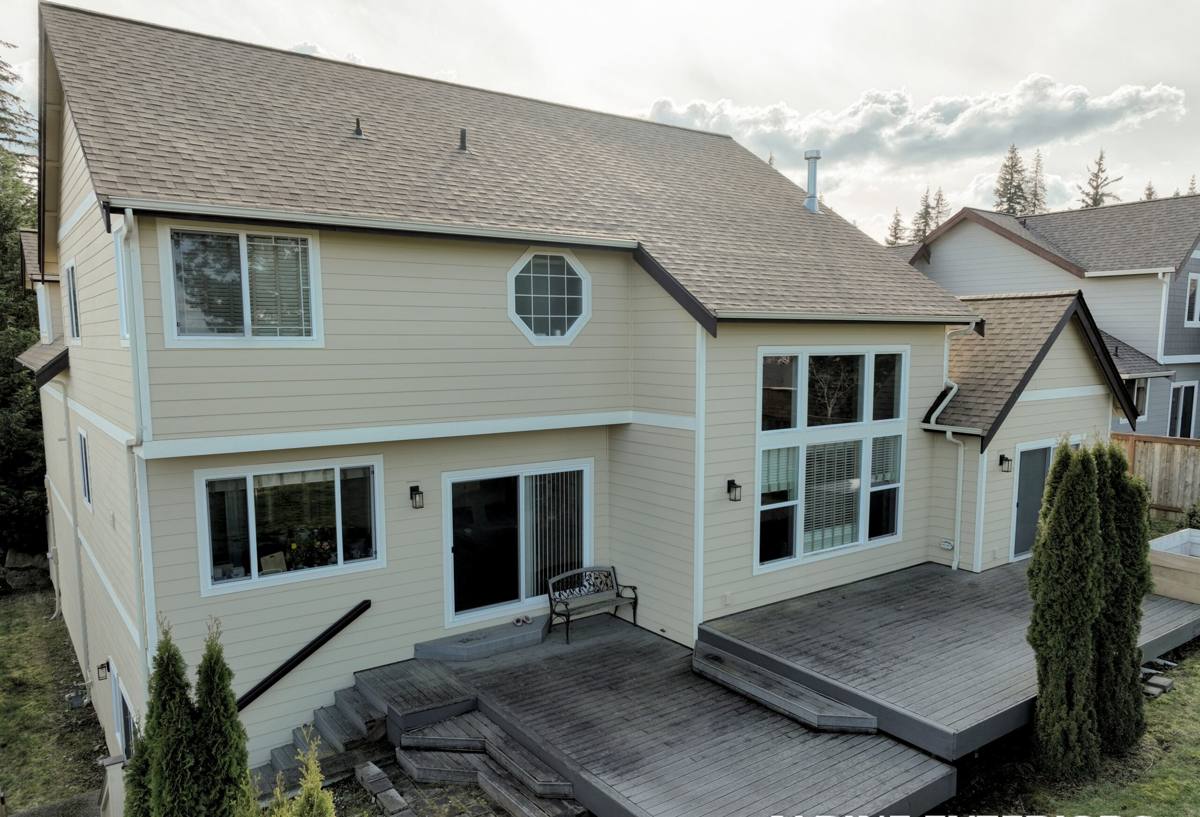
Signs Your Deck Needs Repair, Not Just a Cleaning
A lot of homeowners wait too long to call because the deck "still looks fine" from a few feet away. Damage in this climate tends to start underneath, at connection points, and in places you don't walk on directly. Here's what actually warrants a closer look:
- Soft or spongy spots when you press on decking boards, especially near the house or around post bases
- Rust streaks bleeding out from screws, nails, or joist hangers
- Green or black film that comes back within weeks of cleaning it off
- Gaps opening up where the deck ledger meets the house siding or trim
- Railings or stair rails that wiggle more than they used to
- Standing water that takes more than a day to dry after a normal rain
- Visible daylight or gaps between deck boards and the framing below
- A musty smell coming from underneath the deck
Any one of these on its own might be minor. Two or three together usually means the moisture has been working on the structure for a while, not just the surface.
What a Correct Deck Repair Actually Involves
Surface repairs — swapping a warped board or two — are sometimes all a deck needs. But a repair that only addresses what's visible on top, while ignoring the framing, fasteners, and water management underneath, is the kind of repair that fails again within a couple of wet seasons. A proper job in this climate looks at the whole system.
Fasteners and Hardware Rated for Coastal Exposure
Standard zinc-coated screws and nails are not built for the level of salt exposure a Shoreline deck sees, particularly on lots with a Puget Sound view or a breeze off the water. When we replace fasteners or hardware, we use stainless steel or hot-dip galvanized products rated for coastal and treated-lumber contact, not the coated fasteners sold for general-purpose use. It costs a little more up front and saves you from rust streaks and failed connections a few years down the road.
Flashing and Waterproofing at the Ledger Board
The ledger board — where the deck attaches to the house — is the single most common source of hidden rot we find. If it was never properly flashed, or the flashing has failed, water tracks behind it and into the rim joist and wall framing without any visible sign from the deck surface. Correct flashing means a proper metal or membrane barrier that sheds water away from the house, not caulk alone, which degrades and cracks over time.
Framing, Posts, and Footings
Joists, beams, and posts get inspected for soft wood, checking (cracking), and any point where two pieces of lumber trap moisture between them. Post bases sitting directly in soil or in standing water are a common weak point on older Shoreline decks; correcting that usually means resetting the post on a proper base that keeps wood off wet ground.
Decking Material Choices
When boards need full replacement, we'll talk through the honest trade-offs between wood and composite decking for your situation — composite costs more upfront but doesn't need refinishing and resists moss better on shaded sections, while quality wood decking is less expensive initially but needs more regular maintenance to perform well in a wet, shaded climate. Neither is universally "better" — it depends on your budget, how much upkeep you want to do, and how much sun the deck actually gets.
Moss, Algae, and Shoreline's Long Wet Season
Between fall and spring, a shaded Shoreline deck can stay damp for days at a stretch. That's ideal growing conditions for moss and algae, and it's not just cosmetic — a mossy deck surface gets slippery fast and holds moisture against the wood longer than a clean, dry surface would. Part of a proper repair addresses this rather than just cleaning it once and moving on:
- Removing built-up moss and debris from between boards, where it holds moisture against the wood longest
- Checking gaps between boards are adequate for drainage and airflow, and correcting spacing where boards have swollen tight
- Clearing debris and vegetation from underneath the deck where airflow is often blocked
- Recommending a maintenance-friendly finish or treatment appropriate to the decking material
A one-time power wash treats the symptom. Addressing drainage, airflow, and board spacing treats the cause.
Repair or Replace: How to Tell the Difference
Homeowners often assume any significant damage means a full teardown, when in many cases targeted repair is the more sensible option. The right call depends on a few factors:
| Factor | Leans Toward Repair | Leans Toward Replacement |
|---|---|---|
| Framing condition | Joists and beams are solid; damage is isolated | Widespread soft or rotted framing members |
| Age of the deck | Under 15 years, built to a reasonable standard | Original construction is decades old or undersized by current standards |
| Ledger and flashing | Flashing is intact or easily corrected | Long-term hidden rot from a failed or missing ledger flashing |
| Scope of damage | A few boards, rails, or fasteners affected | Damage recurring across most of the surface and substructure |
| Code compliance | Railings, stairs, and spacing already meet current code | Guardrails, stair geometry, or attachment don't meet current requirements |
In broad terms, isolated board and railing repairs are typically a modest, contained expense, while a structural rebuild involving new framing, footings, and full decking is a considerably larger investment. We'll walk you through exactly where your deck falls on that spectrum before any work starts, with a written scope so there are no surprises.
Permits and Code in Shoreline and King County
Deck work in Shoreline generally falls under the City of Shoreline's building permit process, and whether a permit is required depends on the scope of work — replacing a handful of boards is treated differently than rebuilding framing or altering the deck's footprint or height. Guardrail height, baluster spacing, and stair rise-and-run all have specific code requirements, and older decks built before current codes took effect are sometimes out of compliance without anyone realizing it. Part of our process is flagging that during the inspection and handling the permit conversation so you're not left figuring out city requirements on your own.
Our Deck Repair Process
- On-site inspection. We check the decking surface, framing, ledger connection, posts, footings, and railings — not just what's visible from the top.
- Written scope and options. You get a clear explanation of what's actually wrong, what needs to happen, and a repair-versus-replace recommendation with reasoning, not just a number.
- Permit handling, if needed. If the scope requires a City of Shoreline permit, we manage that process.
- The repair itself. Framing and structural issues get corrected first, then flashing and waterproofing, then decking, railings, and hardware.
- Final walkthrough. We go over the work with you and flag any maintenance items worth watching going forward.
Keeping Your Deck in Good Shape After the Repair
A correct repair buys you years of solid use, but a Puget Sound climate keeps working on a deck year-round, so a bit of regular attention goes a long way:
- Sweep leaves and debris off the surface and out from between boards through fall, when they accumulate fastest
- Rinse off moss and algae before it gets a foothold rather than after it's established
- Check railings and stair connections for looseness once or twice a year
- Keep gutters and downspouts near the deck clear so runoff isn't draining directly onto or under it
- Trim back vegetation that's shading the deck and keeping it damp longer than necessary
- Reseal or refinish wood decking on the schedule appropriate for the product, before the finish fully breaks down
Why It Matters That We Already Work in Shoreline
A crew that mostly works drier, inland jobs can still do competent carpentry, but they may not automatically reach for coastal-rated fasteners, or think to double-check ledger flashing on a shaded, moisture-heavy lot, because it's not what they see every day. Working regularly in Shoreline and along this stretch of King County means we're used to the specific failure patterns this climate produces — where moisture tends to hide, which hardware actually holds up near the Sound, and what the City of Shoreline's permit process expects. That local familiarity shows up in the details: the flashing detail that gets checked instead of assumed, the fastener grade that gets specified instead of whatever's cheapest, and a repair that's built for the weather your deck actually experiences rather than a generic set of assumptions.
If your deck is showing any of the signs above, or it's just been a while since anyone looked at it closely, we're happy to come out for a free, no-pressure estimate and give you a straight answer on what it needs — use the form below to get started.