 King County
 Building a Deck That Holds Up in Shoreline
Shoreline sits right along Puget Sound, and that location shapes everything about how a deck should be built here. Homes get a steady mix of salt-tinged marine air, driving rain that comes in sideways off the water, and long stretches of gray, damp weather where surfaces rarely get a chance to fully dry out. A deck built with generic, one-size-fits-all methods will show it within a few years — soft spots in the decking, rusted fasteners, slick moss on the walking surface, and railings that loosen faster than they should. A deck built with this climate in mind, using the right materials and the right details at every connection point, will still be solid and safe well past the point where a poorly built one needs to be torn out.
This page focuses specifically on deck building for Shoreline homes — what the climate demands, what a correctly built deck actually involves, and how we approach the work when we're on site.
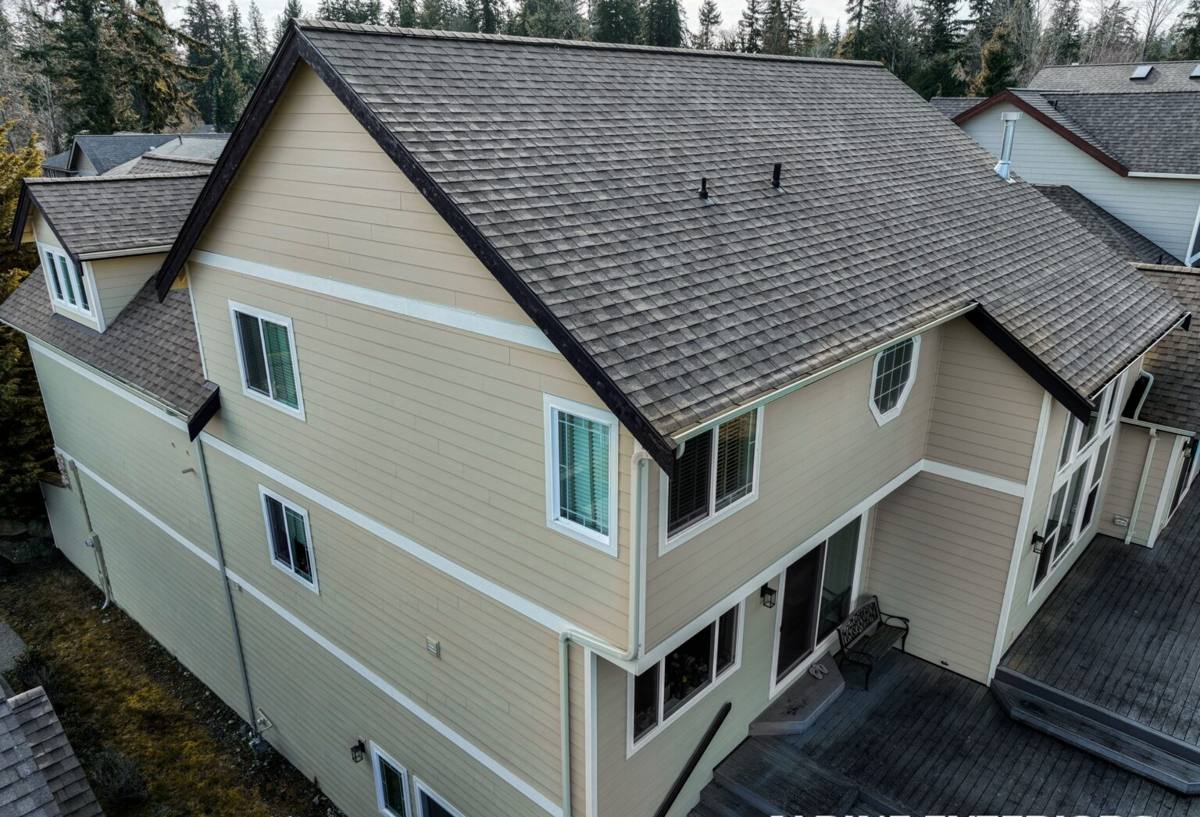
What Shoreline's Climate Does to an Outdoor Structure
King County's marine climate means Shoreline decks deal with more than just "rain." A few specific conditions matter more here than in drier parts of the state:
- Salt-influenced air: Proximity to Puget Sound means airborne moisture carries trace salt, which accelerates corrosion on unprotected metal fasteners, brackets, and hardware.
- Driving, wind-blown rain: Rain here often doesn't fall straight down — it's pushed at an angle by wind coming off the water, which drives moisture into joints, ledger connections, and end grain that a calmer climate wouldn't stress as hard.
- Long, low-light winters: Extended overcast periods mean deck surfaces, especially shaded or north-facing ones, stay damp for days at a time instead of drying out between rain events.
- Moss and algae growth: The combination of moisture and shade turns any deck surface that isn't ventilated or properly finished into a moss farm, which is both a maintenance headache and a slip hazard.
None of this means a deck can't be built well in Shoreline — it just means the material choices and construction details need to account for these conditions from the start, not get patched in later.
Decking Material: Matching the Product to the Climate
There isn't one "correct" decking material for every project — budget, style, and how the deck will be used all factor in. But some materials handle this specific climate more predictably than others. Here's how the common options compare for a Puget Sound-area deck:
| Material | Moisture Behavior | Moss/Algae Resistance | Maintenance | Typical Lifespan Here |
|---|---|---|---|---|
| Pressure-treated wood | Absorbs and releases moisture; prone to cupping/checking if not sealed regularly | Low — needs regular cleaning | Annual cleaning and re-sealing recommended | 15-20 years with upkeep |
| Cedar | Naturally moisture-tolerant but still needs finish maintenance | Moderate | Periodic cleaning and finishing | 15-20 years with upkeep |
| Capped composite | Doesn't absorb moisture into the core; won't rot | Higher, but surface can still grow moss/mildew film without cleaning | Occasional washing, no sealing/staining | 25-30 years |
| PVC decking | Fully moisture-resistant, won't swell or rot | Highest of common options | Occasional washing | 25+ years |
We install both wood and composite/PVC systems depending on what a homeowner wants and what fits the budget. Our role is to walk through the honest trade-offs — wood costs less up front but demands ongoing maintenance in this climate to avoid moisture damage; composite and PVC cost more initially but hold up with far less intervention. Neither choice is wrong; it depends on how much upkeep you want to sign up for.
A Note on Ground-Level and Shaded Decks
Decks built close to grade or under heavy tree cover hold moisture longer no matter what decking material is used. In these spots, airflow underneath the deck and gap spacing between boards matter as much as the material choice — a composite deck with poor ventilation underneath can still develop mildew and slip risk on the surface.
Framing and Structure: Where the Real Damage Happens
Homeowners often focus on the decking boards, but the framing underneath is what actually determines how long a deck lasts — and it's also what you can't see once the deck is finished. In a climate like Shoreline's, a few structural details matter more than they would in a drier region:
Ledger Board Attachment
The ledger board — where the deck attaches to the house — is the single most common failure point on older decks in the Pacific Northwest. If it's not properly flashed to shed water away from the house sheathing, water gets trapped behind it and rots both the ledger and the wall framing behind it, often silently for years. Correct flashing detail here isn't optional in this climate; it's the difference between a deck that's structurally sound in twenty years and one that's hiding rot in five.
Joist Protection
Joist tops and cut ends are where treated lumber loses its factory protection fastest. Capping joists with a protective tape barrier before decking goes down keeps water from wicking into the wood through screw penetrations and cut edges — a detail that's easy to skip and expensive to regret.
Footings and Post Bases
Posts that sit directly on or in contact with concrete or soil hold moisture against the wood constantly. Elevated post bases that keep wood off the concrete, combined with footings set to the correct depth for King County's frost and drainage conditions, keep the structural posts drier and more stable over time.
Hardware and Fasteners: Why Corrosion Resistance Isn't Optional Here
This is one of the most overlooked details in deck building, and it's exactly where the salt-influenced marine air in Shoreline causes the most trouble. Standard galvanized fasteners can corrode faster near Puget Sound than they would further inland, leading to rust streaking on decking, weakened connections, and — in structural hardware like joist hangers and ledger bolts — a genuine safety issue over time.
We build with stainless steel or high-grade corrosion-resistant coated fasteners and hardware rated for the chemicals in modern treated lumber, matched appropriately for a marine-influenced environment. It costs more than using whatever fastener is cheapest at the box store, but it's the difference between hardware that's still tight in fifteen years and hardware that's rusted and loosening in five.
Railings and Guards
Railings take direct weather exposure and also get the most hand contact, so material choice and connection quality both matter. Wood railings need the same maintenance commitment as wood decking. Metal railing components need to be corrosion-resistant for the same reason as structural fasteners. Composite or vinyl railing systems reduce maintenance but still need to be attached with hardware rated for outdoor, moisture-heavy use — a railing is a life-safety component, not just a design element, so we don't cut corners on how it's fastened to the structure.
Drainage, Moss, and Long-Term Maintenance
Even a well-built deck needs help managing moss and moisture over its life in this climate. A few things make a real difference:
- Consistent board spacing that lets water drain through rather than pool on the surface
- Adequate slope away from the house on the decking surface itself
- Clear airflow underneath the deck rather than fully enclosed skirting that traps moisture
- Keeping gutters and downspouts near the deck functioning, so roof runoff isn't dumping extra water onto or near the structure
- Periodic cleaning to remove organic debris (leaves, needles, moss spores) before it establishes and holds moisture against the surface
Moss doesn't mean a deck was built wrong — it's a near-universal reality of King County's climate. But a deck built with drainage and airflow in mind needs far less scrubbing to stay safe and presentable than one that traps water against every surface.
Our Deck Building Process
When we build a deck in Shoreline, the process generally follows the same sequence:
- On-site assessment: We look at the house's ledger wall, grade, drainage patterns, sun/shade exposure, and existing structure (if replacing a deck) before recommending anything.
- Design and material selection: We talk through wood versus composite/PVC honestly, based on your budget and how much maintenance you want to take on, and size the structure to the load and use you actually need.
- Permitting: We handle the permit application and inspection scheduling required for the project — see below for specifics.
- Demolition (if applicable): Careful removal of an existing deck, checking the ledger wall and framing behind it for hidden moisture damage before rebuilding.
- Framing: Footings, posts, ledger flashing, joists, and joist protection installed to code and to the corrosion-resistant hardware standard described above.
- Decking and railings: Installed with correct spacing, fastening pattern, and drainage in mind.
- Final walkthrough and inspection: We review the finished deck with you and make sure it passes final inspection.
Permits and Code in Shoreline and King County
Most new decks and many significant deck rebuilds in Shoreline require a building permit, and the requirement generally depends on the deck's height above grade and its size. Structural elements — footings, framing, ledger attachment, guardrail height and spacing — all need to meet current building code, which exists specifically because improperly built decks are a real safety risk, not a bureaucratic formality. We manage the permit process as part of the project rather than leaving it for the homeowner to sort out, and we build to pass inspection the first time.
What to Check Before You Hire a Deck Contractor
Deck building looks simple from the outside, but the parts that determine whether it lasts are mostly invisible once it's finished. Before hiring anyone to build a deck in this area, it's worth asking:
- Are they pulling the required permit, or suggesting you skip it?
- What fastener and hardware grade are they using — standard galvanized or corrosion-resistant rated for marine-influenced air?
- How is the ledger board being flashed against the house?
- Are they insured and licensed to work in Washington?
- Do they have experience specifically in this climate, or mostly in drier regions?
A contractor who's worked Shoreline and the surrounding King County waterfront communities regularly will already have answers to these questions built into how they work — not because it's a sales pitch, but because they've seen what happens to decks that were built without them.
Why Local Experience Matters for This Job
Deck building isn't identical from region to region. A crew used to building in a dry, inland climate can do competent work that still underperforms once it's exposed to Shoreline's combination of salt air, driving rain, and shade-driven moss growth. Knowing which fastener grade holds up near Puget Sound, how to detail a ledger for this rainfall pattern, and which decking materials actually justify their added cost in this specific climate isn't guesswork — it's the result of building here repeatedly and seeing which details matter over time and which don't.
If you're planning a new deck or need to replace one that's showing its age, we're happy to take a look and talk through what makes sense for your home, your budget, and Shoreline's weather. Reach out for a free, no-pressure estimate using the form below.