 King County
 Why Shoreline Roofs Wear Differently Than Roofs Inland
Shoreline sits close enough to Puget Sound that homes here deal with a different set of stresses than roofs twenty miles inland. Salt-laden air moves through on marine winds and settles on metal flashing, fasteners, and vents. Driving rain off the Sound doesn't just fall straight down — wind pushes it sideways, up under shingle tabs and into any gap in the flashing that a calmer climate would never test. On top of that, King County's long, wet moss season means organic growth has months at a time to take hold on north-facing slopes and shaded valleys before a dry stretch ever shows up to slow it down.
None of this means Shoreline roofs fail faster across the board. It means the details that get overlooked in a generic install — fastener choice, underlayment quality, ventilation balance, flashing sequencing — show up as problems here years before they would somewhere drier and calmer. A roof replacement done right for this area is built with those specifics in mind from the start, not patched around later.
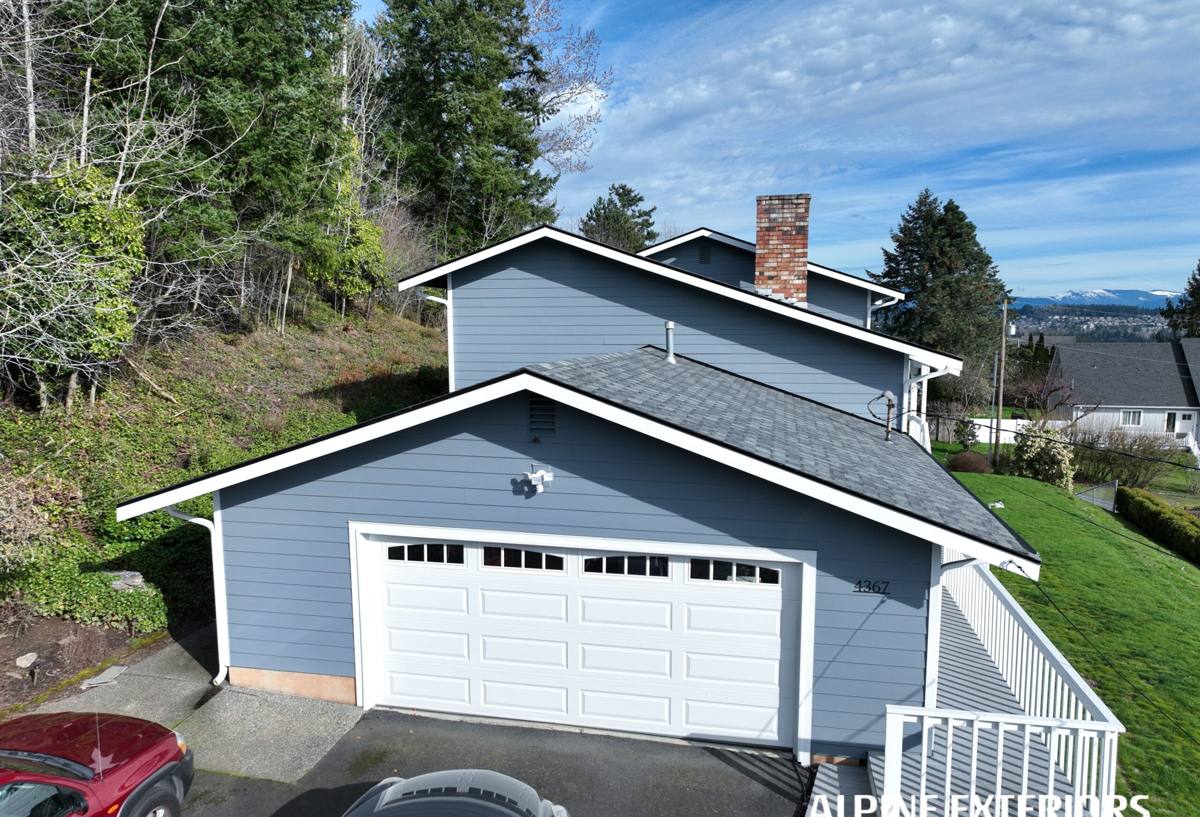
Signs a Shoreline Roof Needs Replacement, Not Another Repair
Every roof reaches a point where repair stops being the honest recommendation. In this climate, that point often arrives through a combination of small issues rather than one dramatic failure.
What we look for during an inspection
- Granule loss heavy enough to expose the shingle mat, especially on south and west slopes that take the most weather
- Moss or algae mats thick enough to hold moisture against the roof surface rather than shed it
- Soft or spongy decking felt underfoot during a walk-on inspection, a sign water has already gotten past the surface layer
- Flashing around chimneys, skylights, and wall intersections that's rusted, lifted, or was never properly step-flashed
- Daylight or water staining in the attic along the roof deck, particularly near valleys and penetrations
- A roof approaching or past the manufacturer's expected service life for its material and exposure
One or two of these on their own might still be repairable. Several at once, especially combined with a roof's age, usually means the cost of chasing repairs will outrun the cost of doing the job properly once.
What a Correct Roof Replacement Involves in This Climate
A roof replacement is more than swapping old shingles for new ones. In a coastal-influenced, high-rainfall area like Shoreline, several steps matter more than they would in a milder climate, and skipping them is where premature failures come from.
Full tear-off and deck inspection
We remove the existing roofing down to the deck rather than layering over it. That's the only way to actually see the plywood or plank sheathing underneath and confirm it hasn't been softened by long-term moisture — a real risk on older Shoreline homes that have gone through decades of wet winters.
Underlayment built for driving rain
Because wind-driven rain here can push water sideways under standard felt, we use synthetic or self-adhered underlayment products at eaves, valleys, and other vulnerable transitions, not just a single layer across the whole deck.
Ventilation that balances intake and exhaust
Trapped attic moisture is a major driver of premature deck rot and interior mold in wet climates. A correct replacement checks that intake vents at the eaves and exhaust vents at the ridge are sized and balanced together, not installed as an afterthought.
Flashing detail work
Chimneys, skylights, dormers, and sidewall intersections are where most leaks actually originate, not the open field of shingles. Proper step flashing, counter-flashing, and sealed penetrations matter more than the shingle brand on the rest of the roof.
Material Options and How They Hold Up Locally
There's no single "best" roofing material for every Shoreline home — the right choice depends on your roof's slope, sun exposure, budget, and how much long-term maintenance you want to take on. Here's how the common options compare for this specific climate.
| Material | Moss & Algae Resistance | Salt-Air Durability | Typical Lifespan |
|---|---|---|---|
| Asphalt composition shingle (standard) | Moderate — benefits from algae-resistant granules | Good with corrosion-resistant fasteners | 20–30 years |
| Asphalt composition shingle (impact/algae-resistant line) | Better — granules formulated to resist growth longer | Good with corrosion-resistant fasteners | 25–30 years |
| Standing seam metal | Very good — smooth surface sheds moss more easily | Requires marine-grade or coated fasteners and panels near the Sound | 40–60 years |
| Cedar shake | Poor without diligent upkeep — organic material feeds growth | Sensitive to sustained moisture; needs regular treatment | 20–30 years with maintenance |
We're generally cautious about recommending untreated cedar shake for exposed or shaded Shoreline roofs. It's not that the material is bad — it's that in a climate with this much sustained moisture and moss pressure, it demands a maintenance schedule most homeowners don't want to keep up with, and the warranty terms on cedar tend to be less forgiving of that reality than composition shingle or metal warranties are.
Our Process, Start to Finish
- Free on-site inspection — we walk the roof and attic, not just look from the ground, and photograph problem areas so you can see what we see.
- Written estimate with material options — a clear breakdown of scope, materials, and price, with alternatives explained rather than a single take-it-or-leave-it number.
- Permitting — we handle the permit process with the local jurisdiction so you don't have to track it down yourself.
- Tear-off and deck repair — old roofing removed, deck inspected, and any soft or damaged sheathing replaced before anything new goes down.
- Underlayment, flashing, and roofing installation — installed in the sequence that actually sheds water, not just the fastest sequence.
- Site cleanup and magnetic nail sweep — debris and stray fasteners cleared from the yard and driveway before we consider the job done.
- Final walkthrough — we go over the finished roof with you and answer any questions before closing out the job.
Moss Season and Long-Term Roof Care
King County's moss season isn't a one-time event — it's a stretch of months where damp, shaded conditions give moss and algae time to establish before a dry season ever interrupts them. Once moss takes hold, it doesn't just sit on the surface; its root structure lifts shingle edges and holds water against the roof deck, which is how a cosmetic issue turns into a leak.
A correct roof replacement reduces how fast moss comes back — good ventilation, algae-resistant materials, and proper slope drainage all help — but no roof in this climate is entirely moss-proof. Periodic gentle cleaning (never pressure washing, which strips granules and shortens shingle life) and keeping overhanging branches trimmed back to let sun and air reach the roof are the most effective low-cost ways to slow regrowth between major service.
What Affects the Cost of a Shoreline Roof Replacement
Every roof and every home is different, so we don't quote a number without seeing the job. But the same handful of factors drive most of the variation we see.
- Roof size and the number of facets, valleys, and penetrations to flash
- Roof pitch and accessibility — steeper or harder-to-reach roofs take more time and safety setup
- Condition of the existing deck and how much sheathing needs replacing
- Material choice, from standard composition shingle up through standing seam metal
- Ventilation upgrades needed to bring an older attic system up to a proper balance
- Layers of existing roofing to remove during tear-off
We break all of this out in the written estimate so you can see exactly what you're paying for, and where the real cost drivers are if you're weighing material options against budget.
Why a Crew That Already Works Shoreline Matters
Roofing crews that work across a wide, varied region tend to install the same way everywhere. A crew that regularly works Shoreline and the surrounding King County shoreline communities has already seen how local wind patterns drive rain under poorly flashed valleys, which fastener types hold up against sustained salt air, and which shaded lots need extra ventilation attention to keep moss from coming back within a couple of years. That familiarity shows up in fewer callbacks and a roof that's actually built for the conditions it has to survive, not just the conditions on a spec sheet.
It also means straightforward permitting — knowing the local jurisdiction's process and inspection expectations avoids delays that catch out-of-area crews off guard.
Get a Free, No-Pressure Estimate
If your roof is showing its age, dealing with persistent moss, or you just want an honest read on how many years it has left, we're glad to take a look. Use the form below to request a free estimate — no pressure, no obligation, just a straight assessment from a crew that knows what Shoreline roofs are up against.