 King County
 Roofing in Shoreline Isn't the Same as Roofing Inland
Shoreline sits right along Puget Sound, and that location shapes almost everything about how a roof ages here. Homes just a few miles inland deal with rain and moss too, but they don't get the steady drift of salt-laden air coming off the water, and they don't take on wind-driven rain from the same angles year after year. An asphalt shingle roof in Shoreline has to handle all three at once: moisture that wants to sit and soak, salt air that speeds up corrosion on anything metal, and long stretches of shade and dampness that let moss and algae take hold long before a roof's rated lifespan is up.
None of that means asphalt shingles are a poor choice here — they're still the most practical, cost-effective roofing material for the vast majority of King County homes. It means the installation details matter more in Shoreline than they do in a drier climate, and cutting corners on underlayment, flashing, or ventilation shows up faster here than almost anywhere else in the state.
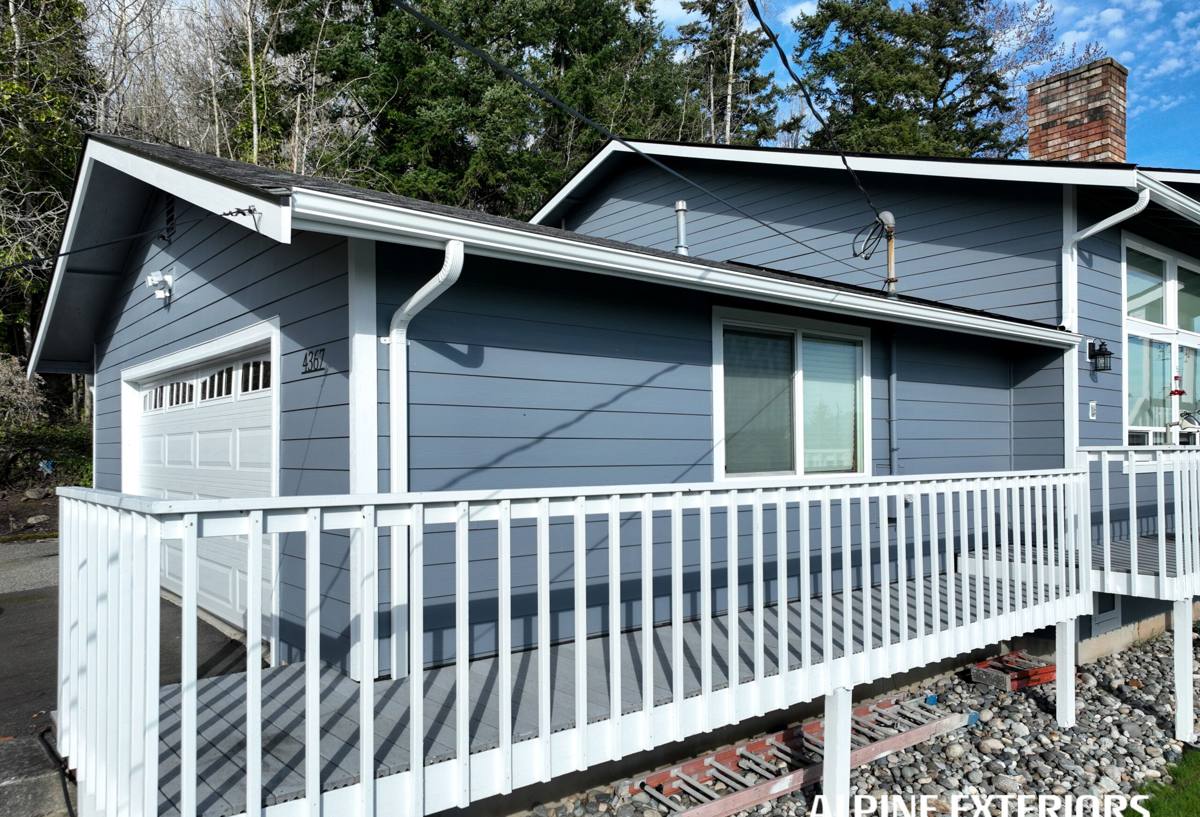
What Shoreline's Climate Actually Does to a Roof
Salt Air and Corrosion
Homes closer to the Sound see accelerated corrosion on exposed metal — nails, flashing, vent stacks, and gutter hardware all take a hit faster than they would twenty or thirty miles inland. A roof built with standard-grade fasteners and thin flashing will show rust streaks and weak points years before a roof built with corrosion-resistant materials in the same spot.
Driving Rain
Winter storms off the Sound don't just fall straight down — they come in sideways. That matters at every seam, valley, and penetration on the roof. A shingle roof that would perform fine under vertical rainfall can leak under driving rain if the underlayment, valley flashing, and shingle overlap weren't installed with wind-driven moisture specifically in mind.
Moss and Algae Season
King County's long, wet, mild winters are close to ideal growing conditions for moss and algae. Shoreline's tree cover and shaded rooflines make it worse — north-facing slopes and areas under overhanging branches can stay damp for days after a storm passes. Moss doesn't just look bad; its root structure works underneath shingle edges and lifts them, opening the door to water intrusion that wouldn't happen on a clean roof.
What a Correctly Installed Shingle Roof Needs Here
A roof built for this climate isn't dramatically different from a roof built anywhere else — it's the same fundamentals, done without shortcuts, with material choices that match local conditions.
- Ice-and-water shield at eaves and valleys — the areas most exposed to standing water and wind-driven rain get a self-adhering waterproof membrane underneath the shingles, not just felt paper.
- Synthetic underlayment across the full deck — more tear-resistant and more water-resistant than old-style felt, and it holds up better during the install itself if weather rolls in mid-project.
- Corrosion-resistant flashing and fasteners — especially important this close to the Sound, where standard galvanized hardware corrodes faster than it should.
- Balanced attic ventilation — intake at the eaves, exhaust at the ridge, sized to the attic volume. Without it, trapped moisture condenses on the underside of the deck and rots it from the inside, regardless of how good the shingles are.
- Proper valley and penetration detailing — valleys, pipe boots, and chimney flashing are where the vast majority of shingle roof leaks actually start, not in the open field of the roof.
Choosing the Right Shingle for a Shoreline Home
Not every asphalt shingle product is built the same, and the differences matter more in a wet, moss-prone climate than they do somewhere dry. The table below is a general guide to the tiers of shingle typically used on residential roofs in this area.
| Shingle Type | Typical Lifespan | Best Suited For |
|---|---|---|
| 3-tab | Shorter end of the range | Budget-driven projects, secondary structures, flatter architectural styles |
| Architectural (laminated) | Mid to long range | Most Shoreline homes — better wind resistance and a dimensional look |
| Algae-resistant architectural | Mid to long range, with better appearance retention | Shaded lots, north-facing roof planes, homes with heavy tree cover |
| Premium/designer | Longer end of the range | Homeowners prioritizing curb appeal and maximum wind/impact rating |
For most homes in Shoreline, we lean toward algae-resistant architectural shingles as the practical default. The copper-infused granules used in algae-resistant products don't make a roof immune to moss, but they measurably slow algae growth on the parts of the roof that stay shaded and damp the longest — which, on a lot with mature trees, can be most of it.
Moss Isn't Just Cosmetic — Here's Why It Matters
A light dusting of algae staining is mostly an appearance issue. Established moss is a different problem. As moss colonies grow, their root structures spread under the shingle tabs, physically lifting the edges and breaking the seal between shingles. Once that seal is broken, wind-driven rain — the kind Shoreline gets regularly off the Sound — has a direct path underneath the shingle surface.
Moss also holds moisture against the shingle surface far longer than open air would, which accelerates granule loss. Granules are what protect the asphalt layer underneath from UV and weather; once they're gone in a given spot, that section of the roof ages faster than the rest of it. This is why a roof with heavy moss buildup often needs full replacement years before its rated lifespan, even though the shingles themselves haven't reached the end of their material life — the damage is concentrated wherever the moss took hold.
Reasonable Moss Prevention
Zinc or copper strips installed near the ridge are a legitimate, low-maintenance way to slow regrowth on a roof that's already clean — rain washing over the strips carries trace metal ions down the roof surface, which moss and algae don't tolerate well. They're not a substitute for periodic gentle cleaning on heavily shaded roofs, but they meaningfully extend the time between cleanings.
Our Installation Process
The steps themselves aren't unusual, but the order and attention to detail are what separate a roof that performs well in this climate from one that doesn't.
- Tear-off and deck inspection. Old roofing comes off down to the deck, and we check the sheathing for soft spots, rot, or delamination — common in older Shoreline homes where past ventilation was inadequate. Any compromised decking gets replaced before anything else happens.
- Drip edge and ice-and-water shield. Metal drip edge goes in at eaves and rakes, followed by self-adhering membrane at the eaves, valleys, and any other vulnerable transition.
- Underlayment. Synthetic underlayment covers the remaining field of the roof, providing a second line of defense under the shingles themselves.
- Flashing. New flashing goes in at chimneys, walls, skylights, and any roof penetration — reusing old flashing is a common shortcut we avoid, since it's often the first thing to fail in a salt-air environment.
- Shingle installation. Shingles are laid to the manufacturer's nailing pattern and exposure specs, which matters directly for wind rating and warranty validity.
- Ventilation check and correction. Intake and exhaust ventilation are verified against the attic's actual square footage, not assumed from the old setup.
- Cleanup and final walkthrough. Magnetic sweep for stray fasteners, debris removal, and a walkthrough covering what was done and what maintenance to expect going forward.
Repair or Replace? What Actually Drives That Decision
Not every roof problem in Shoreline means a full replacement. The right call depends on a handful of factors that we walk through with every homeowner before recommending either path.
| Factor | Leans Toward Repair | Leans Toward Replacement |
|---|---|---|
| Age of roof | Under roughly two-thirds of its rated lifespan | Near or past its rated lifespan |
| Extent of damage | Isolated — one valley, one penetration, storm damage in a limited area | Widespread granule loss, multiple leak points, or moss damage across large sections |
| Decking condition | Sound decking with no rot found during inspection | Soft or delaminated sheathing found under the shingles |
| Ventilation | Adequate and functioning | Inadequate — often paired with visible attic moisture or mold |
| History of repairs | First significant issue on the roof | Repeated patch jobs in different areas over recent years |
Actual project cost depends on square footage, roof pitch and complexity, the number of layers being removed, and how much decking replacement is needed — we won't quote a number without seeing the roof, but we'll always explain what's driving the estimate.
A Practical Maintenance Checklist for Shoreline Homeowners
Between professional inspections, there's a lot a homeowner can watch for that helps a roof reach its full lifespan in this climate.
- Check for moss or dark streaking on shaded, north-facing sections at least twice a year
- Keep gutters clear — clogged gutters back up water under the shingle edge, especially during heavy fall rain
- Trim back tree limbs that shade the roof or drop debris, since both extend how long the surface stays wet
- After a windstorm, look for shingles that appear lifted, curled, or missing granules in patches
- Watch for water stains on interior ceilings, which often show up before a leak is visible from outside
- Avoid pressure washing shingles directly — it strips protective granules and can force water under the shingle layer
Why Local Experience Matters for This Job
Asphalt shingle installation isn't exotic work, but doing it well in Shoreline means understanding conditions that don't show up the same way in drier parts of King County or east of the mountains. A crew that regularly works this area already knows which roof orientations tend to hold moss the longest, which older neighborhoods commonly have ventilation that was undersized when the home was built, and how King County's permitting and inspection process runs for reroofing projects. That familiarity shows up in fewer surprises mid-project and a roof that's built with this specific climate in mind rather than a generic specification sheet.
It also means being available when Shoreline actually needs a roofer — during and right after the wet-season storms that cause most of the damage we get called out for, not just during the handful of dry weeks in summer when scheduling is easy for everyone.
Ready to Talk About Your Roof?
Whether you're dealing with a known leak, visible moss buildup, or you're just trying to plan ahead before your current roof reaches the end of its life, we're happy to take a look and give you an honest read on where things stand. Use the form below to request a free, no-pressure estimate — we'll walk the roof, explain what we find, and lay out your options in plain terms.