 King County
 What Bellevue Homes Need From Their Siding
Bellevue sits close enough to the Sound and Lake Washington that homes here deal with a steady dose of moisture-laden air, and the surrounding tree cover means long stretches of shade that never fully dry out after a storm. Add in the region's driving rain — wind-blown, hitting walls at an angle instead of falling straight down — and siding in this area is asked to do more than look good. It has to shed water sideways, resist the salt and moisture in the air, and survive months of moss and algae pressure every year without breaking down.
That combination is why siding choice and installation quality matter more here than in drier parts of the country. A product or installation method that works fine in Arizona can fail quietly in King County, usually starting at the seams, the fastener lines, or the bottom edge near grade — the places water finds first.
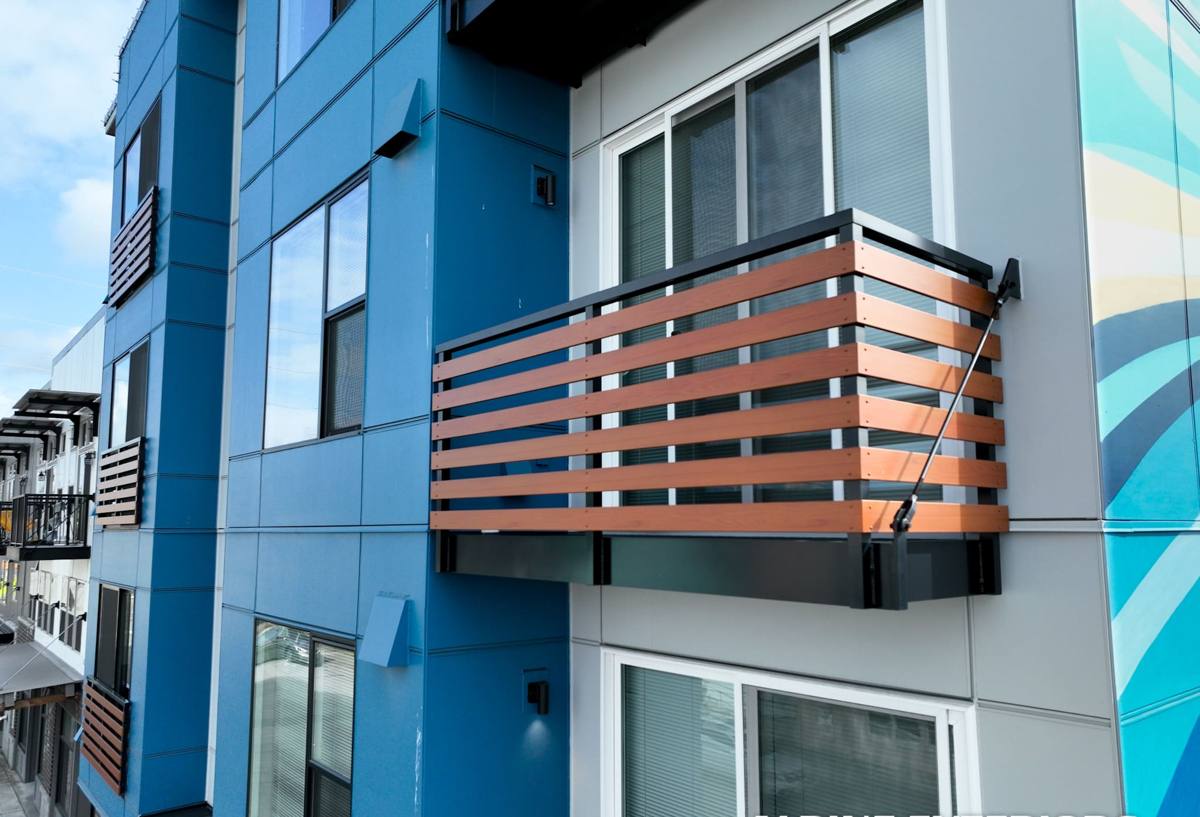
How Bellevue's Climate Actually Attacks Siding
Salt Air and Moisture
Bellevue isn't oceanfront, but its proximity to Puget Sound and Lake Washington still puts a measurable amount of salt and moisture into the air, especially on days with onshore wind. Over years, that moisture cycle contributes to swelling, delamination, and coating breakdown on siding materials that aren't built to handle repeated wet-dry cycling.
Driving Rain
Wind-driven rain doesn't just wash down a wall — it gets pushed up and under laps, into gaps around trim, and behind poorly sealed penetrations. Siding systems that rely on caulk alone to keep water out, rather than proper flashing and drainage detailing, tend to show problems first in exactly these spots.
Moss and Algae Season
King County's mild, wet fall-through-spring stretch is close to ideal growing conditions for moss and algae. Any siding with texture that traps moisture, or any installation with poor air circulation behind the cladding, gives these organisms a foothold. Once established, they hold moisture against the surface and accelerate whatever decay process the material is already prone to.
What Correct Siding Installation Actually Involves
A lot of what determines whether siding lasts 10 years or 40 years happens before a single board goes up, and again at every seam and penetration after that. Here's what we consider non-negotiable on every Bellevue installation:
Water Management Behind the Cladding
- A continuous, correctly lapped weather-resistive barrier under the siding, not just around it
- Proper flashing at every window, door, and roof-to-wall intersection — the siding is the second line of defense, not the first
- Rainscreen gap or drainage plane where wall assembly and product allow, so any moisture that does get behind the cladding can drain and dry
- Correct clearance from grade, decks, and roof lines so splash-back and standing water don't sit against the bottom course
Fastening and Fit to Manufacturer Spec
Fiber cement siding has specific fastener type, spacing, and placement requirements set by the manufacturer, and those specs exist because they've been tested against real wind and moisture loads — not because they're arbitrary. Over-driven or under-driven nails, wrong fastener material, or fastening too close to a panel edge are common shortcuts that don't show up as a problem on installation day but show up five or ten years later as cracking, popped fasteners, or water intrusion.
Joints, Caulking, and Expansion
Every butt joint and trim intersection needs the right gap, backer, and sealant — sized to allow for the material's normal expansion and contraction without opening up a water path. Caulk is a detail, not a strategy; it should reinforce good flashing and lap work, not substitute for it.
Why We Only Install James Hardie Fiber Cement
We made a deliberate decision to install one siding system — James Hardie fiber cement — rather than offer a menu of products at different price points. Fiber cement is non-combustible, dimensionally stable, and holds paint and factory finish far better over time than wood-based or engineered-wood alternatives, which matters given how much wet weather this area sees.
Hardie's HZ product lines are engineered for specific climate zones, and the HZ5 formulation used in the Pacific Northwest is built around freeze-thaw resistance and moisture performance rather than the higher-heat concerns that matter more in the South or Southwest. The ColorPlus factory finish is baked on under controlled conditions, which gives it more consistent coverage and better long-term color retention than field-applied paint, and it's backed by a substantial transferable warranty when the installation itself is done to spec — which is the other half of the equation manufacturers can't control once a board leaves the plant.
We don't install vinyl, LP SmartSide, Cemplank, Allura, or primed wood siding. Each of those products has legitimate uses in the market; we simply chose to specialize in one system we can install correctly, warranty confidently, and stand behind on every Bellevue job rather than stock multiple product lines and installation methods.
Signs Your Current Siding Needs Replacing
Not every issue means full replacement, but these are the signals worth taking seriously before they become structural:
- Soft or spongy spots when you press on the siding, especially near the bottom courses or below windows
- Persistent moss or algae growth that returns within weeks of cleaning
- Visible cracking, buckling, or separation at seams and corners
- Paint that's peeling or bubbling rather than just fading
- Interior signs — musty smell, staining, or bubbling drywall — near exterior walls
- Siding that's original to a home built before modern water-resistive barrier and flashing standards were common
If you're only seeing one or two of these on a limited area, a repair or partial re-side may be enough. Widespread moisture damage, especially anything affecting sheathing underneath, usually means the whole wall assembly needs to come off and be redone correctly rather than patched over.
Our Installation Process
- Assessment and measurement — we inspect the existing wall assembly, note any sheathing or framing damage, and measure for material takeoff
- Tear-off and sheathing check — old siding comes off and we evaluate what's underneath before covering anything back up
- Weather-resistive barrier and flashing — a new, continuous barrier goes on with proper flashing at every penetration
- Furring or rainscreen setup where applicable — to promote drainage and airflow behind the cladding
- Hardie panel or plank installation — installed to manufacturer fastening spec, with correct clearances at grade, decks, and trim
- Trim, caulking, and touch-up — joints sealed correctly, ColorPlus touch-up applied where needed
- Final walkthrough — we go over the finished job with you before calling it done
Cost Factors for Bellevue Siding Installation
| Factor | Why It Affects Cost |
|---|---|
| Existing wall condition | Rotted sheathing or framing found during tear-off adds repair scope before new siding can go on |
| Home size and wall complexity | More corners, dormers, and roof intersections mean more flashing and cutting labor |
| Product line and profile | Lap, panel, and shingle-style Hardie products differ in material and labor cost |
| Access and site conditions | Steep lots, tight setbacks, or limited equipment access common in established Bellevue neighborhoods can add labor time |
| Trim and detail work | Custom trim, corner treatments, and color-matched accessories add to both material and labor |
We won't quote a number without seeing the home, but these are the variables that move the estimate up or down, and we walk through them with you before any work starts.
Why It Matters That We Already Work in Bellevue
King County's permitting requirements, typical wall assemblies, and the local building department's expectations around water management aren't identical from city to city. A crew that regularly works Bellevue and the surrounding King County area already knows what inspectors here look for, what wall assemblies are common in the neighborhoods we work in, and how to sequence a job around the area's wet-season weather windows rather than fighting them. That familiarity shows up in fewer surprises mid-project and a tighter, more predictable timeline.
Caring for Your Siding After Installation
James Hardie fiber cement is low-maintenance compared to wood, but "low-maintenance" doesn't mean "no maintenance," especially in a climate that grows moss on almost anything left untouched.
- Rinse siding annually with a garden hose to knock off pollen, dust, and early moss growth
- Keep gutters clean and downspouts directed away from the wall so runoff doesn't concentrate against one section
- Trim back vegetation and tree branches that keep siding shaded and damp
- Watch caulked joints and trim intersections for cracking over time and have them resealed before they open up
- Address any impact damage or cracking promptly rather than waiting for it to spread
A few minutes of attention a couple times a year is usually all it takes to keep a correctly installed Hardie system performing the way it's designed to.
If you're planning a siding project in Bellevue and want a straight answer about what your home actually needs, we're happy to take a look. Reach out for a free, no-pressure estimate using the form below.