 King County
 Why Bellevue Homes Wear Out Their Siding Differently
Bellevue sits in a stretch of King County where the weather rarely does anything dramatic, but it never really lets up either. Long stretches of drizzle, wind-driven rain off the Sound and Lake Washington, and a marine air layer that carries a faint salt tinge all work on a home's exterior day after day, month after month. None of it is severe on its own. Together, over years, it's exactly the kind of slow, cumulative exposure that finds every weak point in a siding system — a gap in caulking, a nail popped from expansion and contraction, a corner where water was never supposed to sit but does.
Add in tree cover, which much of Bellevue has in abundance, and you get shade, slower drying times, and a long moss season that stretches well past what homeowners in drier climates ever deal with. Moss and algae don't just look bad on a wall — they hold moisture against the surface longer than open air would, and that matters enormously depending on what the siding underneath is actually made of.
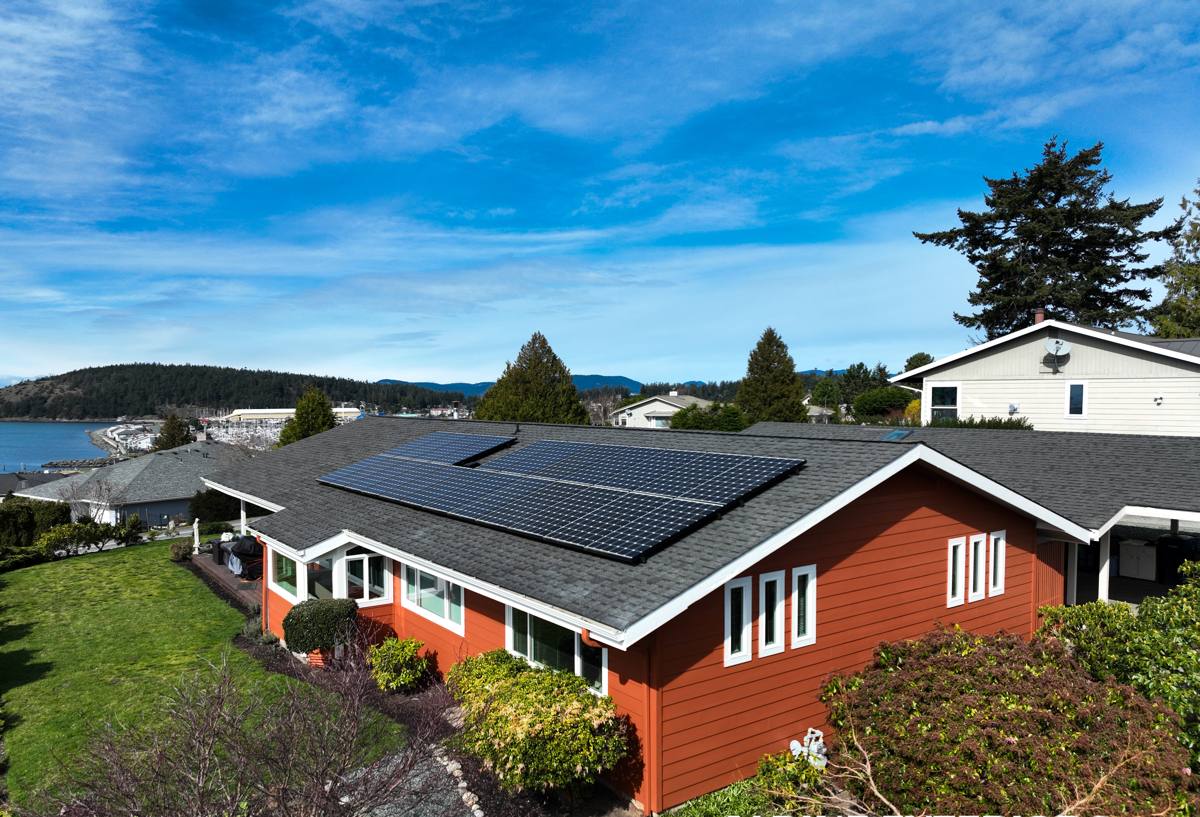
What "Driving Rain" Actually Does to a Wall Assembly
Driving rain isn't just rain that falls harder. It's rain pushed sideways by wind, which means it doesn't just land on a wall — it gets forced into every horizontal seam, every unsealed joint, every spot where flashing is missing or was installed as an afterthought. A siding system that looks fine from the curb can still be letting water behind it in small amounts every time a storm rolls through off the Sound.
Over time, that moisture finds wood sheathing, framing, and insulation — none of which dry out quickly in a climate where the air itself stays damp for weeks at a stretch. This is the core reason siding replacement in this region isn't just a cosmetic project. Done right, it's a chance to correct water management problems that have been quietly building for years, not just swap out old panels for new ones.
Where Water Actually Gets In
- Butt joints and seams where old caulking has shrunk, cracked, or failed
- Window and door trim where flashing was skipped or improperly lapped
- Bottom edges near grade, decks, and porches where splash-back keeps material wet
- Inside and outside corners, especially on older installations without proper corner flashing
- Areas under heavy tree cover where moss and organic debris trap moisture against the surface
Signs a Bellevue Home Needs Siding Replacement, Not Just Repair
Not every siding problem calls for a full replacement, and we'll tell you honestly when a repair or a maintenance fix is the right call instead. But there's a point where patching stops making sense — where the material itself, not just a section of it, has reached the end of what it can handle in this climate.
- Soft or spongy spots when you press on the siding, especially near the bottom courses
- Paint that won't hold no matter how often it's redone, or finish that's chalking and fading quickly
- Persistent moss or algae growth that returns within a season of cleaning
- Visible warping, buckling, or panels separating from the wall
- Cracking or splitting, particularly around nail heads or seams
- A musty smell near exterior walls, or interior signs of moisture like peeling paint or stains near windows
- Siding that's original to a home built more than 20-25 years ago with a wood-based or vinyl product
What a Correct Siding Replacement Involves
A siding replacement done right in King County isn't just about the visible panels. The parts nobody sees are what determine whether the job holds up through the next twenty Bellevue winters.
1. Tear-Off and Substrate Inspection
Old siding comes off, and the sheathing underneath gets inspected for rot, soft spots, or water damage that's been hiding for years. This is often the first time a homeowner learns whether past leaks caused real structural damage — and it needs to be addressed before anything new goes up, not covered over.
2. Weather-Resistive Barrier
A properly lapped, correctly installed weather barrier is the layer that actually keeps bulk water out of the wall assembly. In a climate with this much sustained rain, shortcuts here are the single biggest cause of hidden damage down the road.
3. Flashing at Every Penetration
Windows, doors, hose bibs, light fixtures, vents — anywhere something breaks the plane of the wall needs proper flashing, integrated with the weather barrier so water sheds outward and down, never inward.
4. Correct Fastening and Clearances
Fastener spacing, siding-to-grade clearance, and gaps at trim all matter more here than in drier climates, because the margin for error shrinks when the wall assembly stays damp longer between dry spells.
5. Factory-Finished Material
We install James Hardie fiber cement siding with the factory ColorPlus finish baked on before it ever reaches the jobsite — not field-primed and field-painted, which is where a lot of long-term finish failures start.
Why We Standardized on James Hardie
We install James Hardie fiber cement exclusively. We don't install vinyl, LP SmartSide, primed wood, cedar, or other fiber cement brands, and we're upfront about why: in a climate defined by sustained moisture and a long moss season, the material choice matters as much as the installation.
Fiber cement is non-combustible and dimensionally stable — it doesn't expand and contract with moisture the way wood-based products do, which means fewer failed seams and less paint cracking over time. James Hardie's HZ5 product line is specifically engineered for climates like ours, with moisture and freeze-thaw performance built into the formulation rather than added on. The factory ColorPlus finish is baked on under controlled conditions, which holds up better against UV and moisture than most field-applied paint systems, and it comes with a real transferable warranty backing it.
That doesn't mean other products are without merit — vinyl is inexpensive and low-maintenance in the right setting, and engineered wood has genuine appeal for certain budgets and looks. But we've made a professional call: in King County's specific mix of sustained rain, shade, and moss pressure, fiber cement is what we're willing to put our name on.
Cost Factors for Bellevue Siding Replacement
| Factor | Why It Matters Locally |
|---|---|
| Home size and wall complexity | More corners, dormers, and trim details mean more flashing and cut work, which affects both material and labor |
| Substrate condition | Hidden rot from years of moisture exposure adds repair scope that isn't visible until tear-off |
| Siding profile and accessories | Lap width, trim style, and corner treatment affect both material cost and the look of the finished home |
| Tree cover and access | Heavy shade and tight lot lines common in Bellevue neighborhoods can affect crew access and staging |
| Existing paint or coating removal | Older siding with lead-era paint or heavy moss buildup may need extra prep and disposal steps |
How Our Process Works
We start with an on-site inspection, not a phone estimate — you can't accurately judge substrate condition, water damage, or wall complexity without walking the property. From there we walk you through what we're seeing, what it means, and what a correct fix looks like, in plain terms.
Once a project is scoped, we handle tear-off, substrate repair where needed, weather barrier and flashing installation, and the Hardie installation itself to manufacturer specification — because a warranty is only as good as the installation behind it. We keep you informed of what we find once the old siding comes off, especially if it changes the scope of the job.
Why It Matters That We Already Work in Bellevue
A crew that works regularly in Bellevue and the surrounding King County area has already seen how this specific climate behaves against a wall — which sides of a home take the worst of the wind-driven rain, where moss tends to establish first, how tree cover on a given lot affects drying time. That's not something you get from general contracting experience alone; it comes from doing this work, in this weather, on homes like yours, repeatedly.
It also means straightforward logistics — permitting familiarity with local jurisdictions, realistic scheduling around the region's wetter months, and a crew that isn't guessing at how King County's building requirements apply to your project.
Caring for New Siding in a Wet, Shaded Climate
Fiber cement siding installed correctly needs very little upkeep, but a little seasonal attention goes a long way here. Rinse off moss and organic buildup before it establishes, especially in shaded areas. Keep gutters clear so water isn't sheeting down the wall face. Trim back vegetation that keeps siding damp or blocks airflow. None of this is heavy maintenance — it's the difference between a wall that dries out between storms and one that never gets the chance.
If your Bellevue home's siding is showing its age or you're just not sure whether it's a repair or a replacement situation, we're happy to come take a look. The estimate is free, there's no pressure, and you'll get a straight answer about what your home actually needs.