 King County
 Why Bellevue Roofs Wear Differently Than You'd Expect
Bellevue sits in a part of King County where a roof rarely fails from one dramatic event. It fails slowly, from months of driving rain soaking into worn flashing, from moss holding moisture against shingles long after a storm has passed, and from damp marine air keeping everything just wet enough, just long enough, to accelerate decay that a drier climate would never produce. A roof that would coast for decades in the Southwest can be structurally compromised here well before it looks obviously bad from the ground.
That's the core difference in how we approach a new roof installation in Bellevue: we're not just installing a product, we're building an assembly that has to shed water for months at a time without a real break, resist moss colonization on shaded and north-facing slopes, and keep attic moisture from condensing under a deck that's cold and wet more often than it's warm and dry.
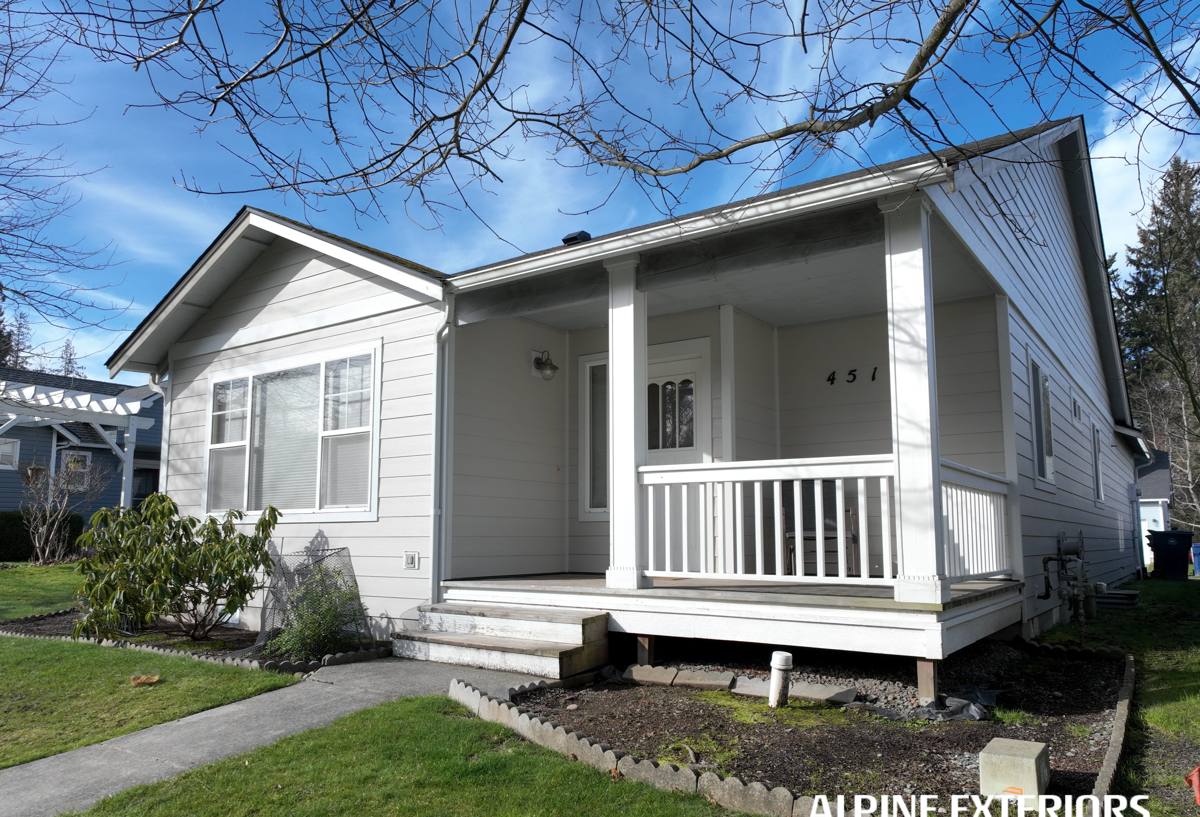
Signs a Bellevue Home Actually Needs a New Roof
Homeowners often wait for a leak, but by the time water is visibly coming through a ceiling, the roof has usually been failing for a while. Worth watching for:
- Granule loss showing up as dark grit in gutters or downspout runoff
- Shingles that look "wavy," cupped, or lifted at the edges, especially on south and west slopes
- Moss or dark streaking that keeps coming back within a season or two of cleaning
- Soft or spongy spots when walked on, which usually means the decking underneath is compromised
- Daylight visible through the attic roof deck, or damp insulation near the eaves
- Flashing around chimneys, skylights, or roof-to-wall junctions that's rusted, lifted, or caulk-patched
Any one of these on its own might just mean a repair. Several together, or a roof past 20-25 years for asphalt shingle, usually means it's time to talk replacement instead of continuing to chase leaks.
What a Correct New Roof Installation Actually Involves
Full Tear-Off, Not Layering
We don't install a new layer over old shingles. A second layer traps moisture between the two, hides deck damage, and voids most manufacturer warranties outright. A full tear-off is the only way to actually see and fix what's underneath.
Deck Inspection and Repair
Once the old roofing is off, the plywood or plank decking gets inspected board by board. In a climate that stays damp this long, it's common to find soft or delaminated sections around old flashing points, valleys, and eaves. Any compromised decking gets replaced before anything new goes down — installing new shingles over bad decking just guarantees a shorter lifespan.
Underlayment and Ice/Water Barrier
Synthetic underlayment across the full deck, with self-adhering ice-and-water membrane at eaves, valleys, and around every penetration. This is the layer that actually protects the home if wind-driven rain gets under the shingles, which happens more here than in drier regions.
Flashing Done Right
Step flashing at walls, new flashing at chimneys and skylights, and properly lapped valley metal. Flashing failure — not shingle failure — is the single most common cause of roof leaks we see on tear-offs, and it's almost always from flashing that was reused or corner-cut on a previous job.
Ventilation
Balanced intake at the soffits and exhaust at the ridge, sized to the attic's actual square footage. Without it, moisture from daily living gets trapped in the attic, condenses on the underside of the deck, and rots it from the inside — a slower version of the same water problem the roof surface is trying to keep out.
Roofing Materials That Hold Up in King County
There's no single "best" roofing material — the right choice depends on the home's roof pitch, budget, and how much moss-prone shade the roof sits under. Here's how the common options actually perform in this climate:
| Material | Typical Lifespan Here | Moisture/Moss Behavior | Trade-Offs |
|---|---|---|---|
| Architectural asphalt shingle | 25-30 years | Good with proper ventilation; algae-resistant granules help on shaded slopes | Best value; most common choice for Bellevue homes |
| 3-tab asphalt shingle | 15-20 years | Sheds water fine but less wind and impact resistance | Lower upfront cost, shorter service life |
| Standing seam metal | 40-50+ years | Excellent — sheds moss and moisture better than any shingle | Higher upfront cost; installation sensitivity requires an experienced crew |
| Cedar shake | 20-30 years with upkeep | Attractive but needs regular treatment to resist moss and rot in this climate | Highest maintenance burden; we're honest with clients about this before they commit |
| Synthetic/composite shake | 30-40 years | Mimics cedar's look without the moisture absorption | Mid-to-upper cost; a common alternative for clients who want the look, not the upkeep |
We install what fits the home and the budget, but we won't tell a client cedar shake is low-maintenance in this climate just to close a sale — it isn't, and that's a maintenance conversation worth having before, not after, installation.
Ventilation and Moisture Control Deserve Their Own Conversation
Because Bellevue's roofs stay wet or damp for so much of the year, ventilation isn't a nice-to-have — it's what keeps the deck dry from underneath while the shingles fight moisture from above. Under-ventilated attics in this region commonly show sheathing rot, mold on rafters, and premature shingle failure from trapped heat and moisture cycling. Part of every new roof installation includes checking baffle placement so insulation isn't blocking soffit intake, since that's the single most common ventilation defect we find on older Bellevue homes.
Our Installation Process, Step by Step
- On-site inspection and honest assessment — repair vs. replace, with photos of anything we find
- Written estimate covering material, labor, disposal, and any deck repair allowance
- Permit pulled and scheduling confirmed around a realistic weather window
- Property protection — landscaping, siding, and gutters covered before tear-off begins
- Full tear-off and deck inspection, with any soft or damaged decking replaced
- Underlayment, ice-and-water membrane, and new flashing installed
- New roofing material installed to manufacturer spec, including proper nailing pattern and exposure
- Ventilation checked and corrected as needed
- Full site cleanup, including a magnetic nail sweep
- Final walk-through with the homeowner before we consider the job done
What Actually Drives Cost on a Bellevue Roof Replacement
Every estimate is specific to the home, but these are the factors that move the number most:
| Cost Factor | Why It Matters |
|---|---|
| Roof size and pitch | Steeper roofs take longer, need more safety setup, and use more material per square foot of coverage |
| Number of existing layers | Tear-off and disposal cost scale with how much has to come off |
| Decking condition | Hidden rot found after tear-off is the most common source of a revised estimate |
| Material choice | Asphalt, metal, and shake carry very different material and labor costs |
| Roof complexity | Valleys, dormers, skylights, and chimneys each add flashing labor |
| Ventilation upgrades | Adding intake/exhaust where none existed is a worthwhile add, not a padded line item |
We'd rather flag a likely deck repair cost upfront as a contingency allowance than surprise a homeowner mid-project — it's a more honest way to estimate, even if the number looks slightly higher on paper.
Permits, Terrain, and Working Within Bellevue's Neighborhoods
A full roof replacement in Bellevue typically requires a building permit, and we handle that process as part of the job rather than leaving it to the homeowner. Many Bellevue neighborhoods also carry HOA guidelines on roofing color or material, particularly in planned communities, so it's worth checking those covenants before finalizing a material choice. Bellevue's mature tree canopy and sloped, wooded lots are part of what make it a great place to live — they're also exactly what accelerates moss growth and keeps north-facing roof slopes shaded and damp longer than open, sun-exposed roofs elsewhere in King County.
Why a Crew That Already Works Bellevue Matters
Roofing crews unfamiliar with King County's rain patterns sometimes schedule tear-offs without a real weather buffer, leaving a deck exposed overnight to a system that wasn't in the forecast when they started. A crew that works this area regularly plans around that risk as a matter of course, not as an afterthought. Local experience also means knowing which older Bellevue subdivisions tend to have specific ventilation quirks, which HOA offices to check with, and how to sequence a tear-off so exposed decking is never left uncovered longer than it has to be.
Before hiring anyone for a roof replacement, it's worth confirming a few basics:
- Current WA state contractor license and liability insurance, verifiable independently
- A written estimate that itemizes material, labor, disposal, and permit costs separately
- A clear tear-off-to-dry-in timeline, especially during the wetter months
- Manufacturer certification if the warranty depends on it
- A real physical address and local references, not just a phone number and a truck wrap
If you're weighing a new roof in Bellevue, we're happy to take a look and give you a straight assessment — no pressure, no inflated urgency, just what we'd actually recommend for your home and budget. Use the form below to request a free estimate.