 King County
 Why Bellevue Windows Take More Punishment Than People Expect
Bellevue sits in a marine climate zone shaped by Puget Sound and the lakes on either side of it. That means damp air for most of the year, driving rain that comes in sideways during winter storms, and a moss season that can stretch from fall through spring on anything shaded or north-facing. Windows are one of the few parts of a home that combine wood, metal, glass, sealant, and weatherstripping in one assembly — which also means they're one of the few parts of a home where four different materials can fail at four different rates if the unit wasn't built or installed correctly in the first place.
In King County, the failure pattern is predictable. Wood sashes and sills soak up moisture where caulking has cracked or shrunk. Aluminum frames without a thermal break sweat condensation on cold mornings, and that condensation runs down into the sill and framing below. Vinyl frames that were never fully square in the rough opening let wind-driven rain track past the flashing during a real winter storm, not just a light drizzle. None of these are dramatic failures — they're slow ones, which is exactly why they go unnoticed until there's soft wood, a stuck sash, or a stain creeping up the interior wall.
What "Custom" Actually Means on a Window Job
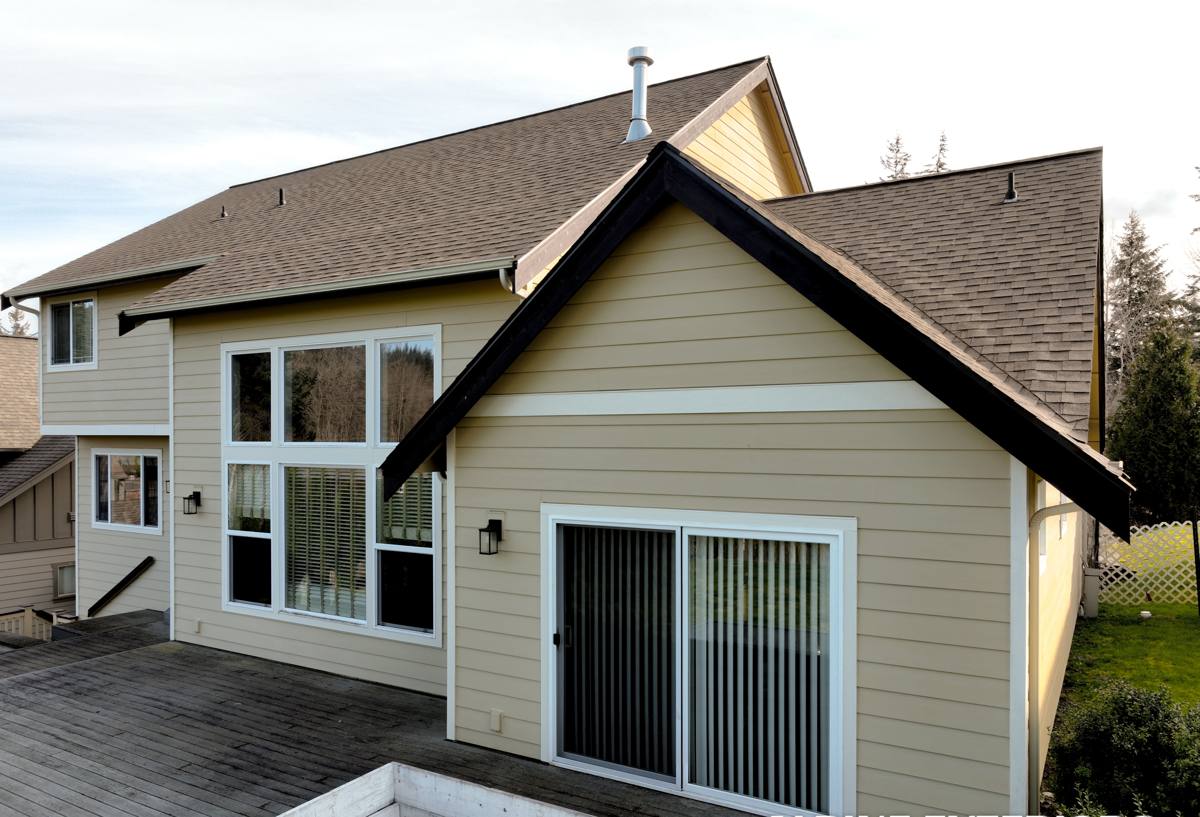
Custom doesn't mean expensive or unusual — it means the window is built and installed to match the actual opening and the actual house, instead of forcing a stock size to fit. Most homes in the Bellevue area, whether they're older construction near the lake or newer builds further from it, have at least a few openings that aren't perfectly standard: settled framing, an odd bay configuration, a taller-than-usual living room window, or trim details worth preserving.
A correct custom window job accounts for:
- Exact opening measurements, taken after removing the old unit — not estimated from the outside
- Frame material and finish that match the home's exposure (sun side vs. shaded, north wall vs. south wall)
- Glass package suited to the room — solar gain control on south and west exposures, sound dampening on busy streets
- Flashing and sill pan detailing appropriate for our rain volume, not a fair-weather climate
- Trim and interior finish work that matches the rest of the room, inside and out
Signs a Bellevue Home Needs Window Work
Most homeowners call us for one of two reasons: comfort or damage. Comfort issues show up as drafts, cold spots near the glass, or windows that are noticeably harder to open and close than they used to be. Damage issues take longer to notice and cost more to fix once they're found. Here's what we look for during an inspection:
- Soft or discolored wood at the sill, especially on the bottom corners
- Visible moss or algae growth on the frame or in the weep holes
- Condensation between the panes of a double-pane unit — a sign the seal has failed
- Paint that's bubbling or peeling only around the window, not the surrounding siding
- Difficulty locking the window fully, which usually means the frame has racked slightly
- A noticeable draft you can feel with a hand near the frame on a windy day
Any one of these is worth a look. More than one usually means the window has been letting water in for a while, and the fix is bigger than the window itself.
Frame Material Options for Puget Sound Weather
There's no single "best" window material — the right choice depends on the exposure, the home's style, and how much upkeep you want to take on. Here's how the common options actually perform in our climate:
| Material | Moisture Performance | Maintenance | Best Use |
|---|---|---|---|
| Vinyl | Good — won't rot, minimal sealant upkeep | Low | Most Bellevue homes, budget-conscious replacements |
| Fiberglass | Excellent — very stable, resists warping in wet-dry cycles | Low | High-exposure walls, larger openings |
| Wood (clad exterior) | Good if maintained — clad exterior protects the wood, interior stays traditional | Moderate | Historic or higher-end homes wanting a wood interior look |
| Wood (unclad) | Requires diligent upkeep — exposed wood is the most vulnerable to our rain and moss season | High | Restoration projects, strict historic requirements |
| Aluminum | Poor without thermal break — prone to condensation and sweating | Low-moderate | Rarely our first recommendation for residential use here |
We'll talk through these trade-offs honestly during your estimate. A wood-interior clad window can be the right call for a home where the look matters, as long as you understand the maintenance commitment. A budget vinyl unit that isn't installed with proper flashing will fail faster than a mid-range unit installed correctly — the installation matters as much as the material.
How We Handle a Bellevue Window Job, Start to Finish
- On-site assessment — We check each opening individually, not just the glass. Sill condition, framing moisture, and exterior siding tie-in all factor into the plan.
- Measuring and ordering — Exact measurements are taken after old units are pulled where possible, or verified carefully beforehand, so the replacement fits the actual opening rather than a rounded-off estimate.
- Removal — Old sashes and frames come out carefully to protect surrounding siding and interior trim, and we check the framing underneath before anything new goes in.
- Sill pan and flashing — This is the step that determines whether the window survives its first real winter storm. A proper sill pan and correctly lapped flashing directs water out and away from the framing, not into it.
- Setting and shimming — The unit is set level, plumb, and square, then shimmed and fastened per the manufacturer's installation instructions — the details that actually keep a warranty valid.
- Insulating and sealing — Low-expansion foam or backer rod and sealant around the frame, not packed solid, which can bow the frame and cause operation problems.
- Interior and exterior finish — Trim, caulking, and paint or stain matched to the home, inside and out.
- Final walkthrough — Every window is opened, closed, and locked in front of you before we consider the job done.
Where Installations Go Wrong
We get called out to fix more failed installations than failed windows. A quality window unit installed without a proper sill pan, with sealant used as the only water barrier, or shimmed unevenly, will leak or bind within a few seasons regardless of what brand is on the label. Our standard is to treat flashing and drainage as non-negotiable on every job — it's the part that's invisible once the trim goes back on, which is exactly why it's the part that gets rushed on lower-quality installs. We'd rather take the extra time on this step than come back to fix rot in three years.
We also don't recommend unclad, all-exposed-wood windows for most homes in this climate unless there's a specific historic or design reason for it. It's not that wood windows are a bad product — it's that our rain volume and moss season demand a maintenance schedule most homeowners don't want to keep up with. When wood is the right call, we say so and explain what upkeep it needs. When it isn't, we'll tell you that too.
Energy Performance and Moisture Control
Beyond keeping water out, a correctly specified window improves comfort and lowers heating costs through our long, wet, moderately cold winters. Look for:
| Feature | Why It Matters Here |
|---|---|
| Low-E glass coating | Reduces heat loss in winter and solar heat gain in summer without darkening the glass |
| Argon or krypton gas fill | Improves insulation between panes, especially valuable on larger windows |
| Warm-edge spacer bars | Reduces condensation risk at the edge of the glass, where our humidity causes the most fogging |
| Weatherstripping quality | Directly affects draft resistance during King County's windiest storm months |
Condensation on the inside of a window during winter isn't always a window defect — it's often a sign of high indoor humidity meeting a cold surface, which is common in tightly sealed homes with poor ventilation. We'll help you figure out which one you're dealing with rather than assuming new glass is the automatic fix.
Permits and Working Within King County Requirements
Window replacement in Bellevue and elsewhere in King County can require a permit depending on the scope — particularly if openings are being resized, load-bearing headers are affected, or the home is in a designated historic area. Egress requirements for bedroom windows are also worth checking if you're changing size or style. We handle this conversation upfront during the estimate so there are no surprises mid-project, and we won't cut corners on code compliance to save a step.
Why It Matters to Hire a Crew That Already Works in This Area
A contractor who works Bellevue and the surrounding King County area regularly knows what a given neighborhood's housing stock tends to need — older homes with settled framing versus newer construction with different sealant and flashing details, homes shaded most of the day versus ones that bake on the west side in summer. That familiarity shows up in faster, more accurate assessments and fewer surprises once the old window comes out.
Before hiring anyone for window work, it's worth asking a few direct questions:
- Are you licensed and insured to do this work in Washington State?
- Will you pull permits when the job requires it, or is that left to me?
- What does your flashing and sill pan detail actually look like — can you explain it, not just name-drop a brand?
- What's the manufacturer's warranty, and what's your own labor warranty on top of it?
- Can I see examples of similar homes you've worked on in this area?
A contractor who answers these plainly, without dodging the installation-detail questions, is one worth trusting with an opening in your exterior wall.
Get an Honest Look at Your Windows
Whether you're dealing with a single failing window or planning a full replacement across the home, we're happy to take a look and give you a straightforward assessment — what's actually wrong, what your options are, and what it'll cost. Request a free, no-pressure estimate using the form below and we'll get back to you.