 King County
 Asphalt Shingles Built for Bellevue's Weather, Not Just the Catalog Photo
Bellevue sits in a strange middle ground climate-wise. It's far enough inland to avoid the worst of the coastal storms, but close enough to Lake Washington and the greater Puget Sound air mass to pick up the same moisture-laden, salt-tinged air that ages roofing across King County. Add in the region's long, low-intensity rainy season and the shade cover from mature Douglas fir and cedar that so many Bellevue neighborhoods are built around, and you get a set of conditions that's genuinely tougher on a roof than most manufacturers' warranty language assumes. An asphalt shingle roof that would last decades in a dry, sunny climate can show granule loss, moss colonization, and edge deterioration years early here if it wasn't installed with this specific weather in mind.
This page is about doing asphalt shingle roofing correctly for a Bellevue home — not a generic overview of shingles in general. We'll cover what the climate actually does to a roof over time, what a properly built shingle roof looks like in this area, how we approach the work, and what ongoing care actually matters once the roof is on.
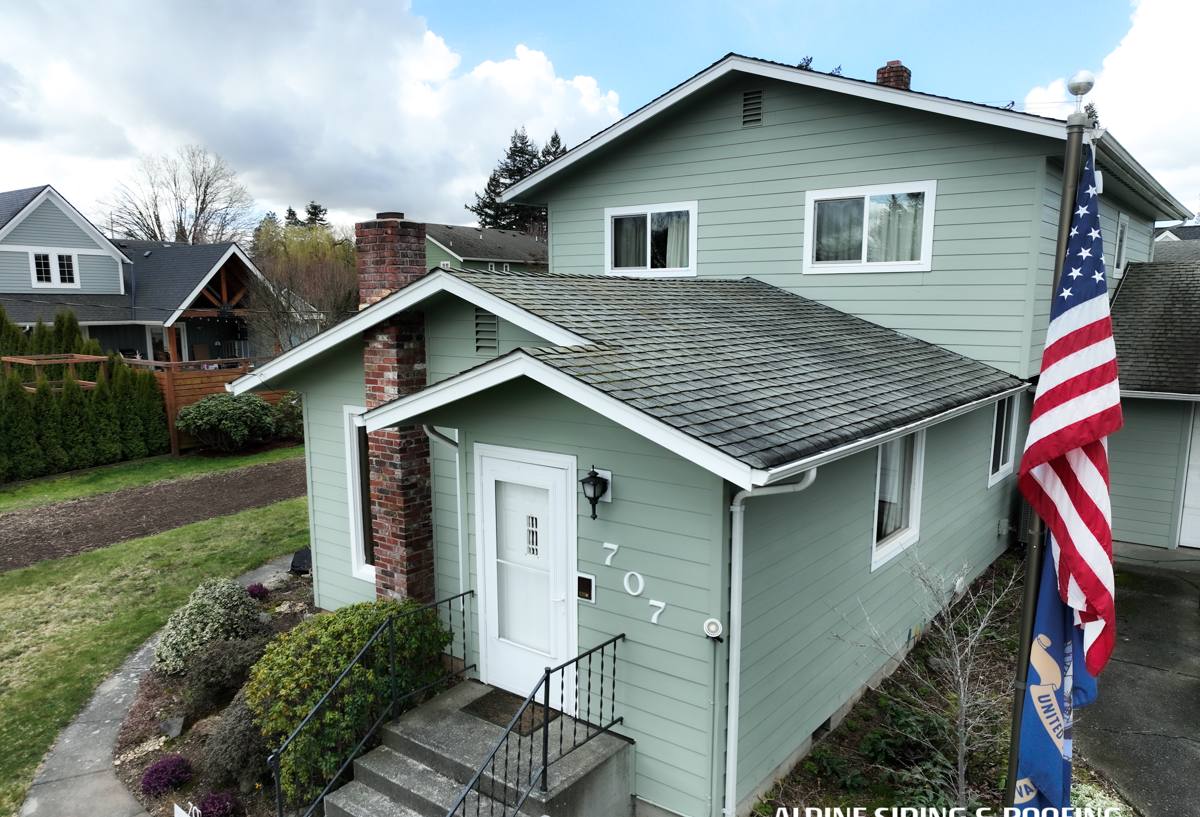
What Salt Air, Driving Rain, and Moss Actually Do to a Roof
Salt-Influenced Marine Air
Homes closer to Lake Washington and anywhere with open exposure to Puget Sound weather patterns deal with airborne moisture that carries trace salts and minerals. Over years, this accelerates the breakdown of metal components on a roof — flashing, nail heads, vent stacks, and gutter hardware — well before the shingles themselves show their age. A roof system that relies on lower-grade or under-protected metal in these areas will show rust streaks and premature flashing failure long before the shingles are due for replacement.
Driving Rain
Storms that come through King County are rarely just vertical rainfall — wind-driven rain pushes water sideways and upward under laps, eaves, and around penetrations in a way that straight-down rain never tests. A shingle roof that's only built to shed water moving one direction will eventually leak at valleys, chimney flashing, and low-slope transitions. This is one of the most common causes of "mystery leaks" we get called out for on roofs that otherwise look fine from the ground.
Moss and Algae Season
Because Bellevue's wet season stretches across most of the fall, winter, and spring, roofs here spend far more of the year damp than roofs in drier climates. That extended dampness, combined with shade from tree canopy that's common throughout King County residential neighborhoods, creates ideal conditions for moss and algae growth. Moss doesn't just look bad — its root structure works into the shingle mat, lifts tabs, and holds standing moisture against the roof deck long after a storm has passed.
What a Correctly Installed Shingle Roof Includes
A shingle roof is a system, not just a layer of shingles nailed to plywood. For a King County climate specifically, we consider a job correctly done when it includes all of the following — not as upsells, but as baseline requirements for the conditions here.
- A synthetic underlayment rated for extended wet exposure, not just standard felt, since the roof deck may stay damp under the shingles for long stretches during the rainy season
- Ice-and-water shield membrane at eaves, valleys, and around every roof penetration — the areas most exposed to wind-driven rain and ice dams during cold snaps
- Corrosion-resistant flashing and fasteners suited to marine-influenced air, not bare or minimally coated metal
- Balanced intake and exhaust ventilation so moisture-laden attic air actually escapes instead of condensing against the underside of the deck
- Proper nailing pattern and shingle exposure per manufacturer specification — under-nailing is one of the most common causes of early wind and rain damage we find on older roofs
- Starter strip and drip edge detailing at eaves and rakes to control the very edges where driving rain does the most damage
Skipping any one of these doesn't necessarily cause an immediate problem — it causes a five- or ten-year problem, which is exactly the kind of shortcut that's hard for a homeowner to spot until the damage is already done.
Choosing a Shingle for This Climate
Not every asphalt shingle product is built the same way, and for a roof that will spend a large share of the year wet and shaded, the differences matter more than they would in a drier region.
| Shingle Type | Typical Lifespan Here | Moss/Algae Resistance | Wind Rating Fit for Region |
|---|---|---|---|
| Standard 3-tab | 15–20 years | Low unless treated | Adequate for most areas, lower margin |
| Architectural / dimensional | 25–30 years | Moderate, better with algae-resistant granules | Good, higher wind rating standard |
| Algae-resistant (copper/zinc granule) architectural | 25–30 years | High — actively resists moss and algae growth | Good |
| Impact-resistant / premium architectural | 30+ years | High | Best available in shingle class |
For most Bellevue homes, especially those with tree cover or north-facing roof planes that stay shaded and damp longer, we steer homeowners toward an algae-resistant architectural shingle as the practical baseline. The upgrade cost over standard shingles is modest, and the payoff is fewer moss treatments and a roof that holds its appearance and performance longer under exactly the conditions King County throws at it.
How We Approach an Asphalt Shingle Roofing Project
Inspection and Assessment
Before we talk about shingles at all, we look at the roof deck, the existing ventilation setup, flashing condition, and any signs of past moisture intrusion. A roof over a compromised deck or dead ventilation system won't perform to spec no matter how good the shingles are.
Tear-Off and Deck Evaluation
We remove the old roofing down to the deck rather than layering over it. This lets us actually inspect the sheathing for soft spots, rot, or prior water damage — issues that are common on older King County homes where a roof may have been re-covered once already without addressing an underlying leak.
Underlayment and Flashing
This is where the climate-specific work happens: full underlayment coverage, ice-and-water membrane at vulnerable areas, and new flashing at every valley, wall intersection, chimney, and penetration. We don't reuse old flashing on a new roof — it's a small cost relative to the job and it's the piece most likely to fail first in this air.
Shingle Installation
Shingles go down to manufacturer nailing and exposure specifications, with attention to starter courses and edge detail since that's where driving rain first tests the roof. We also confirm ventilation balance is correct for the finished system before calling the job complete.
Final Walkthrough
We walk the finished roof and the site with the homeowner, confirm cleanup, and go over what routine maintenance looks like going forward for the specific tree cover and exposure of that property.
Moss, Ventilation, and the Maintenance Picture Nobody Talks About
A new shingle roof in Bellevue isn't a "set it and forget it" investment the way it might be in a drier climate. Given the length of the wet season here, a bit of routine attention makes a real difference in how long the roof actually lasts versus its rated lifespan on paper.
- Keep gutters and valleys clear of needles and debris — clogged water has nowhere to go but under the shingles
- Have moss growth removed gently (never pressure-washed directly against shingles) before it establishes root structure into the mat
- Trim back overhanging branches where practical to reduce shade and debris load on north-facing slopes
- Check attic ventilation periodically — a blocked soffit vent or failed exhaust vent undoes the moisture control the whole system depends on
- Have flashing and penetrations checked every few years, since these fail well before the shingle field does in this climate
None of this is expensive or complicated, but it's the difference between a shingle roof that hits the top of its expected lifespan and one that needs early repairs because moss and trapped moisture were left unaddressed for years.
Signs Your Bellevue Roof Needs Attention
Because leaks in this climate often start small and hidden — under a lifted shingle tab, behind aging flashing, or inside a valley — it's worth knowing the early warning signs rather than waiting for a visible drip inside the house.
- Moss visible on the roof surface, especially in valleys or on shaded slopes
- Granules collecting in gutters or at downspout outlets
- Shingle tabs that look curled, cupped, or lifted at the edges
- Dark streaking that doesn't wash off with rain (algae staining rather than dirt)
- Soft or spongy spots noticeable when walking the attic near the deck
- Daylight visible through the roof deck from inside the attic
- Rusted or visibly deteriorating flashing around chimneys and vents
Any one of these on its own isn't necessarily an emergency, but they're worth a professional look before the next wet season adds to the problem.
What Affects the Cost of an Asphalt Shingle Roof in This Area
Every roof is different, so we won't quote a number without seeing the property, but the factors below are what actually move the price on a Bellevue asphalt shingle project, more than the base cost of the shingles themselves.
| Factor | Why It Matters Here |
|---|---|
| Roof pitch and complexity | Steeper, multi-plane roofs take longer and require more flashing detail at valleys and intersections |
| Deck condition | Rot or soft sheathing found during tear-off adds repair scope before shingles can go down |
| Existing layers | Removing multiple old roofing layers adds labor and disposal cost |
| Ventilation upgrades | Older Bellevue homes often need intake or exhaust vents added to meet current moisture-control standards |
| Shingle class chosen | Algae-resistant and premium architectural shingles cost more upfront but reduce moss-related maintenance |
| Access and site conditions | Mature landscaping, tight lot lines, or steep driveways common in King County neighborhoods can affect staging and disposal |
Why Hiring a Crew That Already Works Bellevue Roofs Matters
A shingle roof installed to generic national standards will still function, but it won't necessarily hold up the way a roof built specifically for this climate will. Crews that work across King County regularly see how moss establishes on north-facing slopes here, how flashing ages under marine-influenced air, and how ventilation needs to be balanced for a wet season that lasts most of the year. That's knowledge that comes from doing the work locally and repeatedly, not from a spec sheet.
It also matters for the practical side of a roofing project — permitting familiarity, disposal logistics for tear-off debris, and knowing which details tend to get overlooked on the kind of tree-covered, sloped lots common around Bellevue. A contractor who already knows the terrain doesn't need to relearn it on your roof.
Get a Straightforward Look at Your Roof
If your shingle roof is showing moss, granule loss, or you're simply due for a replacement, we're happy to take a look and give you an honest assessment — no pressure, no inflated scare tactics. Use the form below to request a free estimate, and we'll walk the roof, explain what we find, and lay out your options in plain terms.