 King County
 A deck in Redmond takes a different kind of beating than one on the dry side of the state. Between the region's driving rain, the mature tree canopy shading so many King County yards, and a moss season that can stretch from fall through spring, the boards, framing, and hardware under your feet are working hard year-round. When a deck starts to fail here, it's usually not one dramatic event — it's years of moisture doing quiet damage in places you can't see until a board gives way underfoot.
Why Redmond Decks Wear Out Faster Than the Sticker Warranty Says
Most decking materials are rated and warrantied under fairly generic conditions. Redmond's climate isn't generic. Shade from Douglas firs, maples, and other mature trees common on King County lots keeps decks damp long after a storm has passed, since sunlight and wind never fully dry the surface. That prolonged dampness is exactly what moss, algae, and wood-rot fungi need to take hold.
Add in the region's pattern of driving rain — wind-blown moisture that gets pushed sideways into ledger boards, railings, and the gaps between deck boards — and you get water intrusion in spots that a drier climate would never test. Over a decade or more, that moisture cycle works its way into fasteners, ledger connections, and framing lumber, even on decks that look fine from a few feet away.
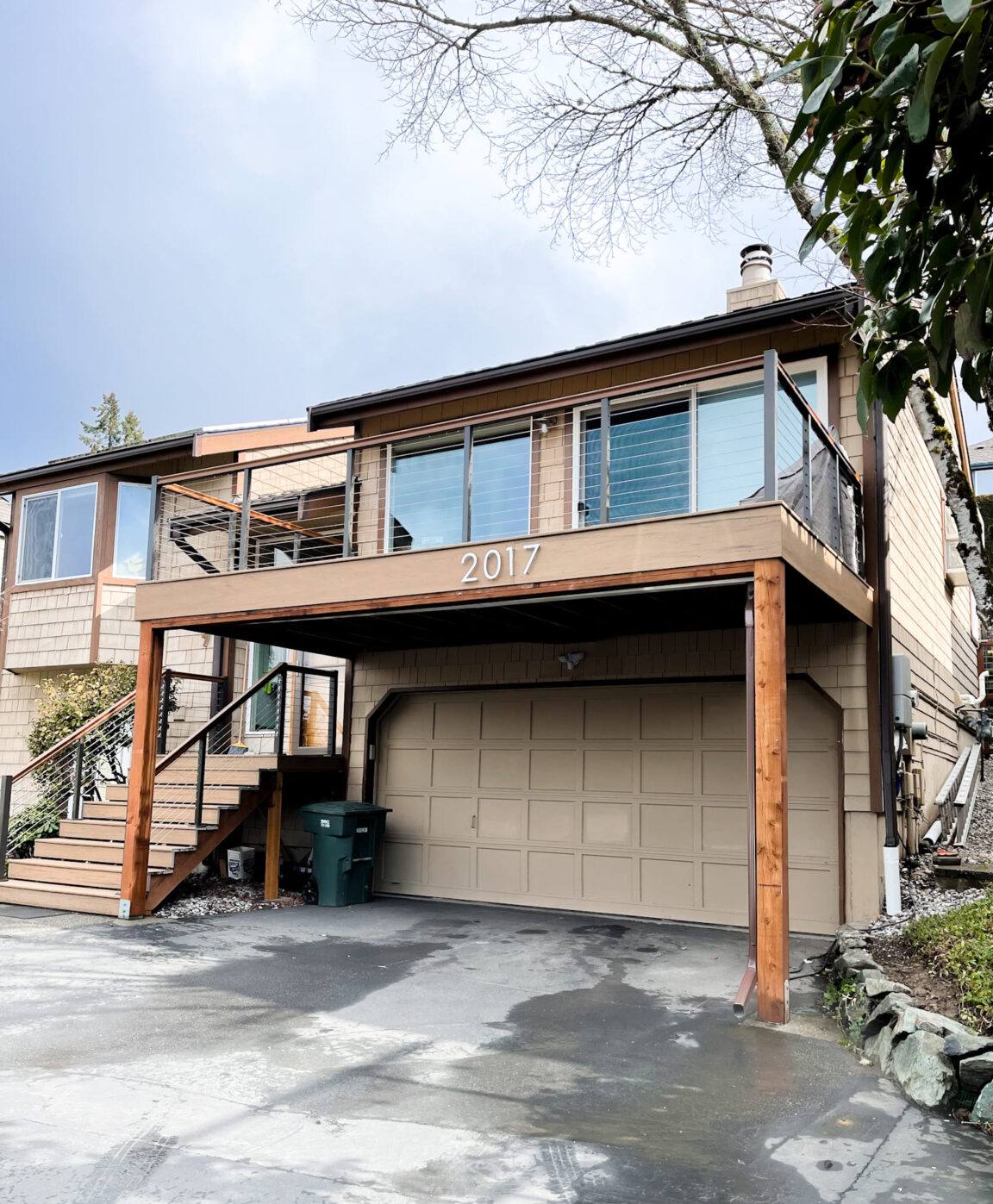
Signs Your Deck Has Crossed From Repairable to Replace
Not every deck problem means a full teardown. Loose railings, a handful of cupped boards, or surface staining can often be fixed. But certain signs point to structural or systemic issues that a patch job won't solve:
- Boards that feel spongy or soft underfoot, especially near the house or stair landing
- Rust streaking around fasteners, which usually means the hardware is corroding faster than the wood around it
- A ledger board that's separating from the house, or visible gaps where it meets the siding or trim
- Persistent moss or dark fungal staining that keeps returning within weeks of cleaning
- Railings or stair stringers that flex or wobble when you lean on them
- Widening gaps, cupping, or splitting across multiple boards rather than just one or two
- A deck that was never permitted or built to current guardrail and attachment standards
If more than one of these applies, it's worth having someone look at the framing underneath, not just the visible decking. A lot of the real damage on King County decks happens below the surface.
What a Correct Deck Replacement Actually Involves
Framing, Ledger Attachment, and Flashing
The ledger board — where the deck attaches to your house — is the single most important connection on the whole structure, and it's also the spot most exposed to water running off the house wall. A correct replacement includes proper flashing behind the ledger so rain is directed away from your siding and wall framing, not trapped against it. This matters as much for the health of your home's exterior as it does for the deck itself.
Joists get protected with joist tape along the top edge to keep standing water out of the wood, and all structural hardware — joist hangers, ledger bolts, post bases — should be corrosion-resistant and rated for the type of lumber and treatment being used. Footings need to be sized correctly for the load and set below the frost line, which matters more on some King County lots than homeowners expect given our slope-heavy terrain.
Decking Surface and Fastening
How the boards are fastened affects both appearance and how well water sheds off the surface. Hidden fastener systems leave a cleaner look and reduce the face-screw holes where water likes to sit. Board spacing matters too — gaps that are too tight trap moisture and debris; gaps that are too wide feel uneven and collect grime faster.
Guardrails and Stairs
Elevated decks are common on Redmond's sloped lots, which makes guardrail height, baluster spacing, and stair rise-and-run more than a cosmetic detail — these are code items with real safety consequences. A replacement is the right time to bring an older deck up to current standards, not just match what was there before.
Choosing a Decking Material for King County's Wet Climate
There's no single "best" decking material — it depends on how much upkeep you want to do and how much shade and moss exposure your specific yard gets. Here's how the common options compare under our conditions:
| Material | Moisture & Moss Resistance | Maintenance | Typical Lifespan |
|---|---|---|---|
| Pressure-treated wood | Moderate — needs sealing to perform well in shade | Annual cleaning and periodic re-sealing/staining | 10–15 years |
| Cedar | Naturally decay-resistant but softer surface | Regular sealing; shows weathering faster in shaded spots | 15–20 years with upkeep |
| Composite (standard) | Good — won't rot, but surface can hold moss without cleaning | Periodic washing; no sealing or staining required | 20–25 years |
| Capped composite / PVC | Best — solid outer shell resists moisture and staining | Occasional rinsing; lowest maintenance overall | 25+ years |
Wood costs less upfront but asks more of you over time — in a climate with our moss season, that upkeep isn't optional if you want it to last. Composite and capped composite cost more initially but handle shade and driving rain with far less ongoing effort, which is why we see more homeowners moving that direction on heavily treed King County lots.
Our Deck Replacement Process
Every deck is a little different, but the sequence stays consistent:
- On-site assessment of the existing deck, ledger connection, framing, and any moisture damage that isn't visible from the surface
- Material and design discussion based on your budget, sun exposure, and how much maintenance you're willing to do
- Permit filing where required, based on the scope of the replacement
- Removal and disposal of the old deck
- Rebuild of framing, ledger flashing, and footings to current standards
- Installation of decking, railings, and stairs
- Final walkthrough to check fastening, drainage, and railing security before we call it done
Permits and Code Considerations in Redmond
Deck work in Redmond, like most of King County, generally requires a permit once you're dealing with structural framing, footings, or a deck elevated above a certain height — a straightforward like-for-like board swap on an existing, sound structure sometimes doesn't trigger the same review. Codes here cover guardrail height, baluster spacing, stair dimensions, and how the ledger attaches to the house, all aimed at preventing the kind of structural failures that make the news elsewhere.
Because permit requirements depend on the specifics of your project and lot, it's worth confirming with the local building department before work starts rather than assuming. We handle the permit paperwork for replacements that require it, so you're not left tracking down inspection scheduling on your own.
Why a Crew That Already Works Redmond Matters
A deck built to a generic set of specs can still fail early if it isn't built for the site it's on. Crews who work King County regularly get a feel for how tree cover, slope, and drainage patterns on a given lot affect where moisture collects and how a deck needs to be flashed and vented to handle it. That local pattern recognition is different from what you get with a crew passing through from out of the area.
There's also the practical side: familiarity with Redmond's permitting process, knowing what inspectors are looking for, and understanding how to protect mature landscaping — tree roots, irrigation lines, established plantings — during demolition and rebuild. None of that shows up in a materials list, but it affects how smoothly a project actually goes.
Keeping a New Deck Looking Good Through the Wet Season
Whatever material you choose, a little seasonal attention goes a long way in this climate:
- Sweep leaves and debris off the surface regularly in fall, before they get waterlogged and start staining or feeding moss
- Rinse composite or capped composite decking a few times a year to keep algae from getting a foothold in shaded areas
- Re-seal or re-stain wood decking on the schedule the product calls for — skipping a cycle is when rot gets a head start
- Keep gutters and downspouts clear so roof runoff isn't dumping extra water directly onto the deck
- Avoid leaving planters or mats in one spot for months at a time, since trapped moisture underneath is exactly the problem you're trying to avoid
If you're weighing a deck replacement and want a straight answer about what your current deck actually needs, we're happy to take a look. Reach out for a free, no-pressure estimate using the form below.