 King County
 Roof Repair Built for Redmond's Weather
Redmond sits in the heart of King County's marine climate, and that climate is hard on roofs. Long stretches of driving rain, seasonal wind off the water, and months of shade and dampness that favor moss growth all add up to wear patterns that look different from what you'd see in a drier state. A roof repair here isn't just about patching a leak — it's about understanding why that leak happened in the first place and fixing the underlying cause so it doesn't come back with the next storm.
We work on roofs across King County, and Redmond's mix of mature tree canopy, older established neighborhoods, and newer construction means we see a wide range of roofing ages, materials, and problems. What stays consistent is the climate: moisture that doesn't fully dry out for days at a time, and organic growth that takes hold anywhere sun exposure is limited.
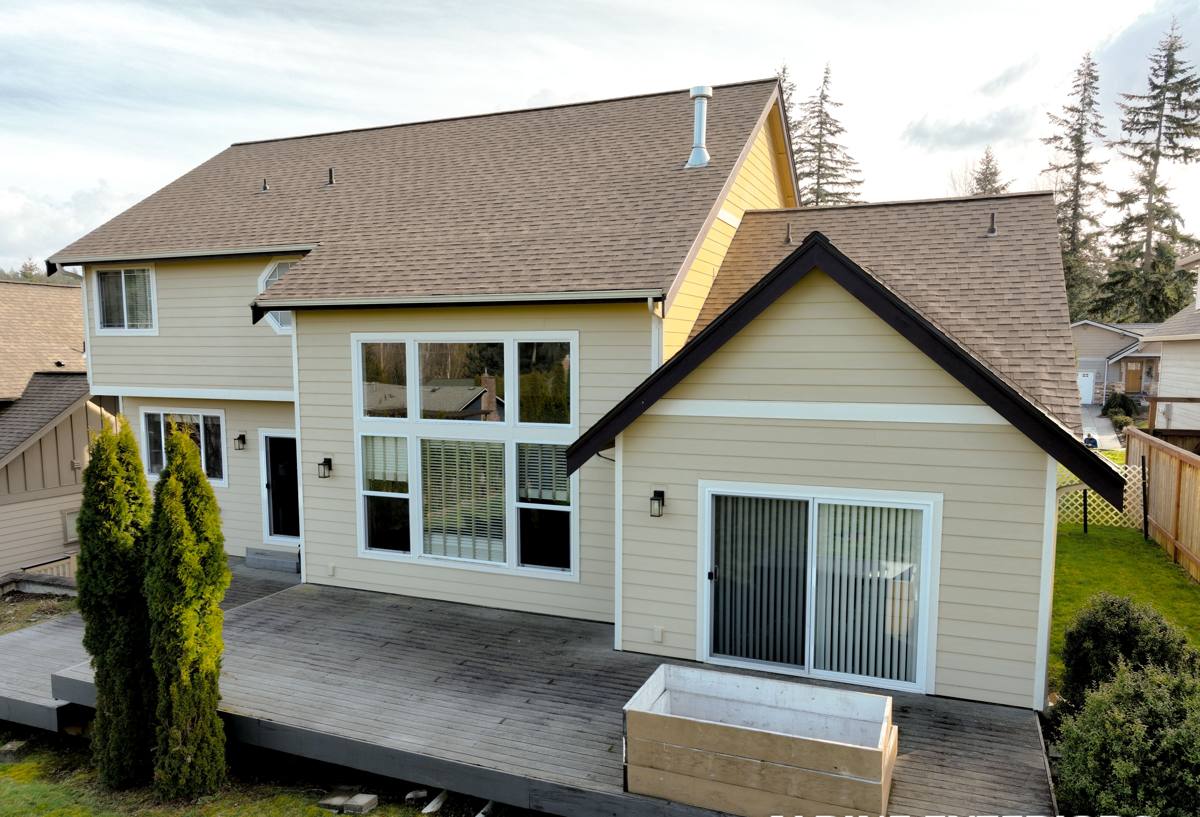
Why Local Roofs Fail Faster Here
Moss and Organic Growth
King County's long wet season gives moss, algae, and lichen a real head start. Once moss establishes on a roof, it holds moisture against the shingle or shake surface far longer than open air would, which accelerates granule loss on composition roofs and speeds up rot on wood. Moss also grows under shingle tabs and around flashing edges, gradually lifting materials that are supposed to lie flat and shed water.
Driving Rain and Wind-Driven Moisture
Storms that come through the region often bring rain at an angle, not straight down. That matters because it pushes water into laps, seams, and flashing details that are designed for vertical runoff, not horizontal pressure. A roof that looks fine in a light rain can still leak in a wind-driven storm if flashing or underlayment details aren't done correctly.
Salt Air and Regional Moisture
Homes throughout the greater Puget Sound region — including inland communities like Redmond — deal with a persistently humid, marine-influenced air mass. That moisture works into fasteners, flashing metal, and exposed wood over time, even at a distance from open water. It's one more reason roofing materials and installation details that work in drier climates don't always hold up the same way here.
Signs Your Redmond Home Needs a Roof Repair
Most roof problems don't announce themselves with a dramatic leak on day one. They show up as smaller signs first. If you notice any of the following, it's worth having a professional take a look before the next heavy rain:
- Dark streaking or visible moss patches on north-facing or shaded slopes
- Granules collecting in gutters or at downspout outlets
- Curling, cracked, or lifted shingle edges
- Soft or spongy spots when walking the roof (professionals only — never test this yourself)
- Water stains on interior ceilings, especially near chimneys, skylights, or roof valleys
- Daylight visible through the attic roof deck
- Rusted, loose, or missing flashing around vents, chimneys, and wall intersections
- Sagging areas along the roofline or in valleys
Common Repair Issues We Find in King County Homes
Some problems come up more often than others in this region, and each one has a different fix. Here's how we typically approach the issues we see most:
| Issue | Common Cause | What the Repair Involves |
|---|---|---|
| Moss buildup on shaded slopes | Limited sun exposure, tree canopy, prolonged dampness | Careful manual removal, treatment to slow regrowth, and inspection underneath for granule loss or rot |
| Leaks around chimneys or skylights | Aged or improperly stepped flashing | Removal and replacement of flashing with correct step-and-counter detailing |
| Valley leaks | Debris buildup, worn valley material, poor original installation | Clearing debris, replacing valley metal or membrane, restoring correct water flow |
| Soft roof decking | Long-term hidden moisture intrusion | Localized decking replacement, not just a surface patch, before new roofing goes back down |
| Lifted or cracked shingles | Wind exposure, age, thermal cycling | Individual shingle or section replacement with matched materials where possible |
What a Correct Repair Actually Involves
A roof repair done right is more than sealing the visible symptom. When we're called out for a leak, we start by tracing the water back to its actual entry point, which is often several feet away from where the stain shows up inside the house — water travels along the roof deck and framing before it drips. Skipping this step is the most common reason a "repaired" roof leaks again in the next big storm.
Once we've found the real source, a proper repair typically includes:
- Removing and inspecting the affected roofing material, not just covering it
- Checking the roof deck underneath for soft spots or rot before anything goes back down
- Replacing flashing and underlayment at the repair area, not just the visible surface layer
- Matching replacement shingles or shakes as closely as possible to existing material
- Confirming proper fastening and lap patterns so the repair sheds water the way the surrounding roof does
We also check nearby areas — vents, valleys, penetrations — while we're already up there, since it's far more efficient to catch a second developing issue during one visit than to schedule a return trip later.
Our Redmond Roof Repair Process
1. Inspection and Diagnosis
We start with a full assessment of the roof, not just the spot where you noticed a problem. That includes checking attic ventilation and insulation where accessible, since poor attic airflow can contribute to both moisture problems and premature moss growth.
2. Honest Explanation of Findings
You'll get a plain-English rundown of what we found, what's causing it, and what the repair will involve — including whether we think a repair is the right call or if the roof is closer to the end of its service life.
3. The Repair Itself
We work efficiently but don't rush flashing and underlayment details, since those are what actually keep water out long-term. Job sites are cleaned of debris and old material before we leave.
4. Follow-Up
If a repair was done to address an active leak, we recommend checking in after the next significant rain event to confirm the fix is holding, especially during the wetter months of the year.
Repair or Replace? How We Help You Decide
Not every roof problem calls for a full replacement, and not every roof is a good candidate for another repair. We look at the whole picture before making a recommendation:
| Factor | Leans Toward Repair | Leans Toward Replacement |
|---|---|---|
| Roof age | Well within expected service life | At or past the typical lifespan for its material |
| Extent of damage | Localized to one section or detail | Widespread across multiple slopes |
| Decking condition | Solid, dry decking found during inspection | Multiple areas of soft or rotted decking |
| Repair history | First or second repair in this area | Recurring repairs in the same spots |
| Material match | Matching material is available | Discontinued material makes seamless matching impossible |
Cost ranges for roof repairs vary widely depending on the size of the affected area, roof pitch, material type, and whether decking replacement is needed — a small flashing repair is a very different job from a valley rebuild. We'll walk you through the actual scope before any work starts.
Materials We Repair
Redmond homes are roofed in a range of materials, and each has its own repair considerations:
- Composition (asphalt) shingle — the most common material locally; repairs focus on matching granule color and maintaining proper shingle overlap
- Cedar shake — requires careful sourcing of compatible shakes and attention to spacing, since cedar needs airflow to dry out between rain events
- Metal roofing — repairs center on seam integrity and fastener condition rather than surface wear
- Flat or low-slope membrane roofing — common on additions and some home styles; repairs require membrane-specific seaming and patching methods rather than shingle techniques
If a product or installation approach isn't something we recommend for this climate, it usually comes down to how it handles sustained moisture and moss exposure over time, not a knock on the product itself. We'll always explain the trade-offs honestly rather than just steering you toward what's easiest for us to install.
Why a Crew That Already Works Redmond Matters
Roofing problems in King County are shaped by local conditions — the amount of shade a lot gets, how close the home is to mature trees, prevailing wind direction during storms, and how a particular neighborhood's housing stock was originally built. A crew that regularly works in and around Redmond has a working sense of these patterns, which means less guesswork during diagnosis and fewer surprises once a repair is underway.
There's also a practical scheduling advantage. When a roof is actively leaking during a King County storm, response time matters. A crew already working the area can typically get to you faster than one dispatching from far outside the county.
Protecting Your Roof Between Repairs
A few habits go a long way toward reducing how often repairs are needed in this climate:
- Keep gutters and downspouts clear so water isn't backing up under roof edges
- Trim back overhanging branches to reduce shade and debris buildup on the roof surface
- Have moss treated before it spreads, rather than after it's established across a slope
- Schedule a roof check after any major windstorm, even if nothing looks obviously wrong from the ground
- Address small leaks promptly — hidden decking damage gets more expensive the longer moisture sits
If you're noticing signs of wear, a leak, or just want an honest read on your roof's condition before the next stretch of King County rain, we're happy to take a look. Reach out for a free, no-pressure estimate using the form below.