 King County
 Redmond's Climate Is Harder on Siding Than It Looks
Redmond doesn't get hurricanes or hailstorms, and that lulls a lot of homeowners into thinking their siding has an easy job. It doesn't. What Redmond gets instead is worse in its own way: months of driving rain pushed sideways by wind off Puget Sound, heavy tree canopy that keeps north- and west-facing walls damp and shaded well into the afternoon, and a moss and algae season that can run from October through April in a wet year. Add the marine air that moves through the whole King County corridor and you have a climate that's constantly testing whatever is on the outside of your house — not with one big event, but with steady, cumulative moisture exposure, year after year.
Siding in this environment doesn't usually fail dramatically. It fails slowly — a soft spot behind a gutter downspout, a seam that's been wicking water for two winters, a north wall gone green because nothing ever fully dries out between storms. By the time it's visible, the damage is often already behind the surface. That's the backdrop for every siding decision a Redmond homeowner makes, and it's why the material and the installation both matter more here than they would in a drier climate.
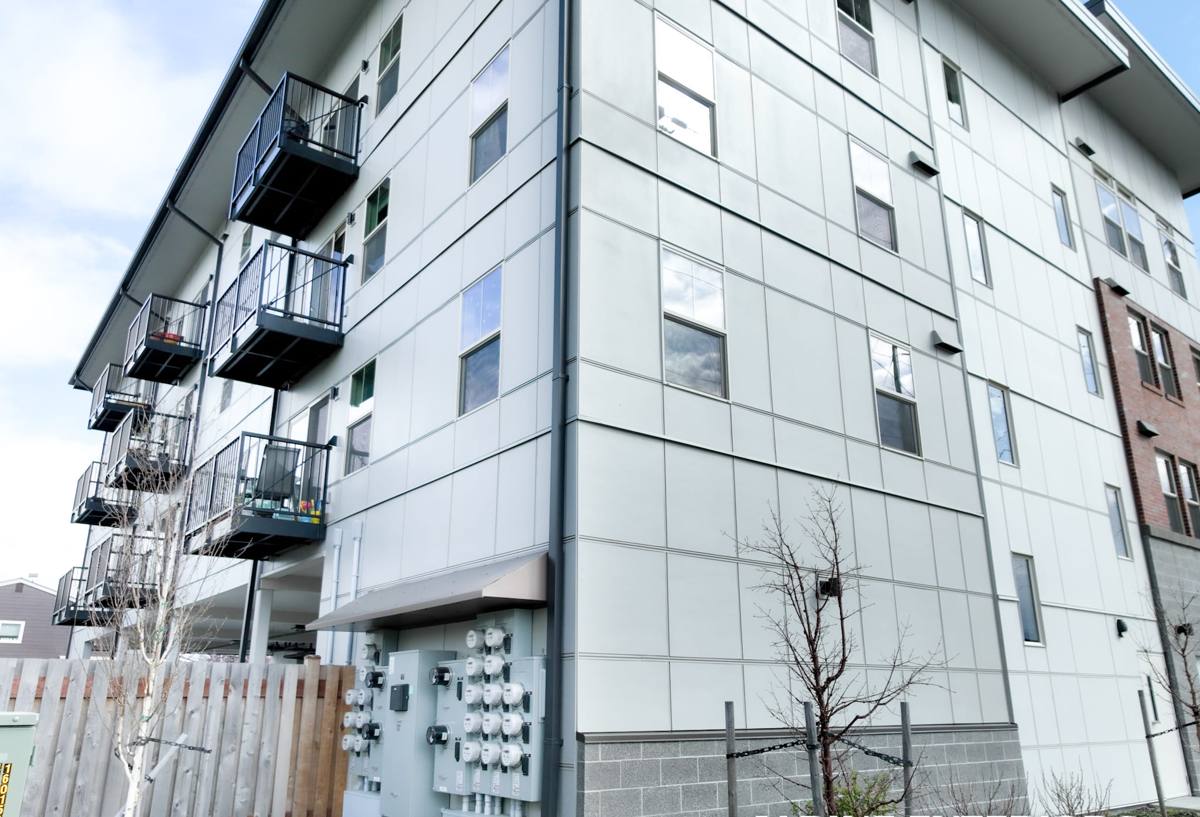
What James Hardie Siding Brings to a Redmond Home
James Hardie fiber cement siding is the only product we install, on every job, in every neighborhood we work. That's not a marketing position — it's a standard we set because of what this climate does to lesser materials over time. Fiber cement is made from cement, sand, and cellulose fibers, which means it doesn't rot, it doesn't feed mold or moss the way wood-based products can, and it holds its shape through the wet-dry, warm-cool cycling that's constant here. It's also non-combustible, which matters more each year as wildfire smoke and dry summer stretches become a bigger part of the Pacific Northwest's annual pattern.
ColorPlus Factory Finish
Most Hardie siding we install uses the ColorPlus finish — a coating baked on at the factory under controlled conditions rather than sprayed or brushed on site after installation. That matters in a place like Redmond, where field-applied paint has to cure through unpredictable weather windows and often doesn't get the full cure time it needs before the next rain rolls in. A factory finish goes on evenly, cures fully, and comes with a longer, more consistent warranty against fading and peeling than a site-painted finish typically offers.
Engineered for Wet Climates
James Hardie makes different formulations for different regions through what they call HardieZone engineering — siding built for hot, humid climates is not the same product as siding built for cold, wet ones. The lines we install for King County homes are matched to a marine climate: freeze-thaw cycling, sustained moisture, and long stretches without direct sun. That's a meaningfully different set of stresses than what a siding product engineered for the Southeast or Southwest has to withstand, and it's part of why we don't treat siding as a one-size-fits-all material.
What a Correct Installation Actually Involves
Hardie siding fails when it's cut and nailed on wrong far more often than it fails on its own. The product is forgiving of weather; it is not forgiving of a rushed installation. On a Redmond job, correct installation means:
- Proper weather-resistive barrier and flashing behind every seam, window, and door opening — not just at the obvious water entry points
- Minimum clearance between the bottom of the siding and the ground, decks, patios, and roof lines, so splash-back and standing water can't wick into the board
- Correct fastener spacing and placement per Hardie's installation instructions, since over-driven or misplaced nails crack the board or void the warranty
- Field-cut edges sealed and primed before installation, since a raw cut edge left exposed is the fastest way for moisture to get into fiber cement
- Proper joint treatment at butt seams and corners, sized to allow for the material's normal expansion and contraction
- Ventilation behind the siding so trapped moisture has somewhere to go instead of sitting against the wall assembly
Every one of those steps is invisible once the job is done. You can't look at a finished wall and tell whether the flashing behind it was done right — you find out five or ten years later, when it either wasn't a problem or it was. That's the uncomfortable truth about siding work: the quality is judged by what doesn't happen, not by what you can see on install day.
Our Process for a Redmond Project
Assessment First
We start by walking the exterior and looking at what's actually happening on your walls — where the moss is heaviest, which elevations stay shaded and damp, whether there's existing water damage behind the current siding, and how the roofline, gutters, and grading are interacting with the walls. This tells us more about what your home needs than a generic estimate ever could.
Tear-Off and Inspection
Once the old siding comes off, we inspect the sheathing and framing underneath before anything new goes up. This is the point where hidden rot or moisture damage — often from years of a failing product or a bad prior installation — actually gets found and fixed, rather than sealed back up behind new siding.
Install to Spec, Not to Shortcut
We install James Hardie siding to the manufacturer's published specifications, not to whatever gets a crew off the job fastest. That includes the flashing, clearances, and fastening details above. It's slower than a shortcut install. It's also the difference between siding that performs for decades and siding that needs attention in five years.
Final Walkthrough
We walk the finished exterior with you, point out what was done and why, and make sure everything — clearances, caulking, trim, paint lines — meets the standard we'd put on our own home.
James Hardie Compared to Other Siding Materials
We get asked regularly why we don't install vinyl, LP SmartSide, or cedar. Here's the honest comparison, without overstating anyone else's shortcomings:
| Material | Behavior in a Wet, Shaded Climate | Long-Term Maintenance |
|---|---|---|
| James Hardie fiber cement | Doesn't rot or feed moss; holds paint/finish well | Occasional wash-down; repaint only if not ColorPlus |
| Vinyl | Can warp or buckle with temperature swings; seams can trap moisture | Low, but limited repair options if damaged |
| LP SmartSide (engineered wood) | Wood-based core is more moisture-sensitive at cut edges and seams | Requires diligent caulking and paint upkeep |
| Cedar / primed spruce | Natural wood; more prone to rot, moss growth, and insect issues in shade | Regular refinishing and moisture monitoring needed |
Every one of those alternatives has legitimate uses and loyal customers elsewhere. In a climate that stays wet and shaded for a large part of the year, though, we've made the call that fiber cement's moisture resistance and non-combustible composition is the better long-term bet for the homes we put our name on.
Cost Factors for a Redmond Hardie Project
There's no single number that applies to every home, but the variables that move the price are consistent. Understanding them helps you evaluate any estimate you get, from us or anyone else.
| Factor | Why It Matters |
|---|---|
| Home size and wall complexity | More corners, dormers, and roof intersections mean more flashing and cut detail work |
| Condition of existing sheathing | Rot or moisture damage found at tear-off adds repair scope before new siding can go on |
| Siding profile and finish | Lap width, shingle-style panels, and ColorPlus vs. field-applied paint all shift cost |
| Trim and accessory work | Fascia, soffits, and trim boards are often replaced alongside siding for a consistent result |
| Access and site conditions | Steep lots, mature landscaping, and tight setbacks — common on wooded Redmond properties — affect labor time |
Signs Your Current Siding Is Already Struggling
Before you get to a full replacement decision, it's worth knowing what to look for. If you're seeing several of these on a Redmond home, it's a good time to have someone take a closer look rather than wait:
- Persistent moss or algae staining on north- or west-facing walls that returns shortly after cleaning
- Soft or spongy spots when you press on the siding, especially near the bottom courses or around window trim
- Visible gaps, warping, or buckling at seams and panel joints
- Peeling or bubbling paint that keeps recurring in the same spots
- Interior signs like musty odors or discoloration on walls that share an exterior with a problem area
Why a Crew That Already Works Redmond Matters
Redmond's building stock spans everything from older single-story homes to newer construction on wooded lots, and the microclimates within the area vary — a shaded, tree-covered lot behaves very differently than an open one a half-mile away. A crew that already works this area knows which elevations tend to hold moisture, how local permitting and inspection processes run, and what the region's rain patterns do to an installation over a full year, not just on a dry install day. That local familiarity shows up in the small decisions — where extra flashing gets added, how clearances get handled on a sloped lot, which details get extra attention on a heavily shaded wall — that a crew unfamiliar with King County's climate might not think to prioritize.
If you're weighing a siding replacement or want a second opinion on an existing installation, we're happy to walk your property, point out what we see, and give you a straightforward, no-pressure estimate — no obligation, just an honest look at what your home needs.