 King County
 Metal Roofing Built for Redmond's Wet, Mossy Climate
Redmond sits in a part of King County where roofs rarely get a break. The rain doesn't just fall straight down here — it comes in sideways during fall and winter storms, finds every gap in flashing and fastener seals, and settles into shaded valleys and north-facing slopes that stay damp for weeks at a time. Add in a moss season that can stretch from late fall through spring, and it's no surprise that roofing material choice matters more here than it does in drier parts of the country. A properly installed metal roof handles that combination better than most alternatives, but "properly installed" is doing a lot of work in that sentence. A lot of the problems we get called out to fix on metal roofs aren't material failures — they're installation shortcuts that only show up a few years in.
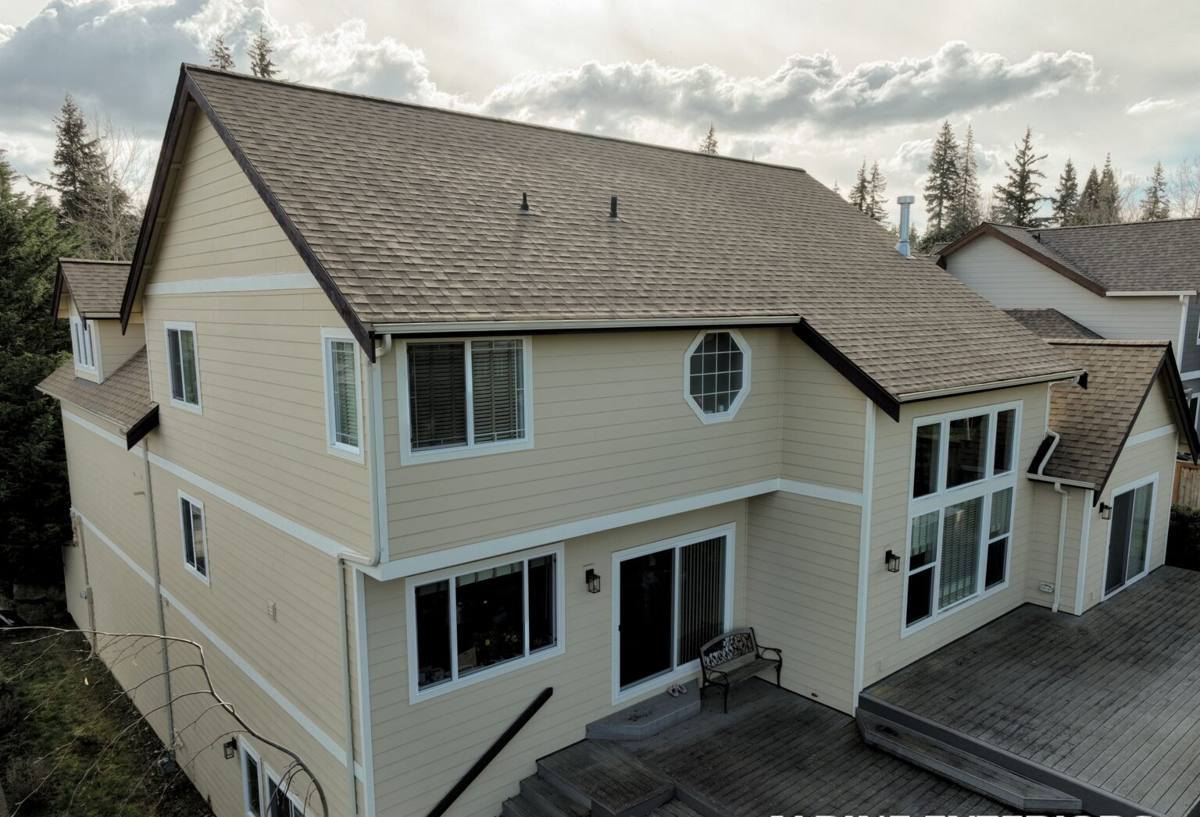
What King County Weather Does to a Roof Over the Years
Driving Rain and Wind-Driven Moisture
Standard vertical rain is easy for almost any roofing material to shed. The problem in this region is horizontal rain during windstorms, which pushes water uphill under laps, around penetrations, and into any flashing detail that was cut corners on. Metal roofing sheds water fast because of its smooth, continuous surface and steep-shed profile, but that only holds true if the seams, laps, and fastener penetrations are sealed and lapped correctly. A metal roof with sloppy flashing work will leak just as readily as any other roof — sometimes worse, because water that gets past a compromised seam can travel a long way under the panel before it finds a place to drip through.
The Long Moss Season
King County's cool, damp stretch from fall through spring is exactly the environment moss and algae need to take hold. On asphalt shingles, moss roots into the granule surface and holds moisture against the material, which speeds up wear. Metal doesn't give moss the same foothold — there's no porous surface for spores to anchor into — but debris still collects in valleys, at panel laps, and around roof penetrations. Left alone, that debris holds moisture against the metal and can lead to localized staining or, over enough years, coating breakdown at the contact point. A metal roof is much lower-maintenance in a mossy climate, not maintenance-free.
Marine Air and Slow Corrosion
Even away from the immediate shoreline, the marine air that moves through the greater Puget Sound region carries moisture inland and keeps humidity levels elevated for much of the year. That steady dampness is part of what feeds the region's long moss season, and it's also why fastener quality and coating integrity matter more here than they would in a dry climate. Bare-metal fasteners, thin coatings, or mismatched metals at flashing transitions will corrode faster in this kind of persistent humidity than they would somewhere arid. It's a slow process, but it's a real one, and it's almost entirely preventable with the right materials and detailing at install time.
Standing Seam vs. Exposed-Fastener Metal Panels
Most metal roofing installed on Redmond homes falls into one of two categories, and the difference matters more than most homeowners are told upfront.
| Factor | Standing Seam | Exposed-Fastener Panel |
|---|---|---|
| How panels attach | Concealed clips under raised seams — no fasteners through the panel face | Screws driven through the panel face into the deck or purlins |
| Long-term weather performance | Very strong; no exposed penetrations for water to work into over time | Good, but exposed fastener gaskets compress and age, and eventually need attention |
| Upfront cost | Higher material and labor cost | More budget-friendly |
| Maintenance over time | Minimal — mainly debris clearing and periodic inspection | Fastener gaskets should be checked periodically and replaced as they age |
| Typical best use | Primary roofs, homes where owners want a 40+ year, low-maintenance system | Outbuildings, budget-conscious projects, shorter planning horizons |
Both systems can perform well in King County's climate. The honest trade-off is that exposed-fastener roofs cost less to install but ask more of the homeowner over the life of the roof, since every one of those screw penetrations is a point that depends on a gasket staying compressed and intact. Standing seam removes that variable entirely, which is why it's what we recommend for most primary residences in this area, especially on roofs with the low-slope or shaded sections common in Redmond's tree-covered lots.
What a Correct Metal Roof Installation Actually Involves
The panels themselves get most of the attention, but the details underneath and around them are what actually determine whether a metal roof performs for decades or starts causing problems within a few years.
- Underlayment: A high-temperature, self-adhered underlayment at eaves, valleys, and around penetrations — not just felt paper — because metal panels can run hotter in direct sun than shingles, and standard felt can degrade faster underneath them.
- Deck condition: Any soft, rotted, or delaminated sheathing gets replaced before a single panel goes down. Installing over a compromised deck just hides the problem until it's worse and more expensive.
- Fastening and clips: Matched to the panel manufacturer's spec, spaced correctly for our wind exposure, and — for standing seam — using clips rated for the expected thermal movement of the panel run.
- Flashing at every transition: Valleys, chimneys, skylights, sidewalls, and roof-to-wall intersections are where most metal roof leaks actually originate, not the open field of the roof. Each needs custom-formed flashing, not a generic trim piece stretched to fit.
- Ventilation: Balanced intake and exhaust airflow keeps the underside of the deck dry and helps prevent condensation from forming under the panels, which is a common source of "mystery leaks" on metal roofs that were installed without ventilation being considered.
- Metal compatibility: Fasteners, flashing, and panels need to be compatible metals. Mixing dissimilar metals in contact with each other sets up galvanic corrosion that can eat through a fastener or panel edge years before it should fail.
Our Process, Start to Finish
- On-site inspection: We walk the roof, check the deck condition from the attic side where possible, and look at existing flashing, ventilation, and any problem areas you've noticed.
- Honest estimate: You get a written scope and price before any work starts — no surprise change orders for things we should have caught during inspection.
- Tear-off or overlay decision: In most cases we recommend a full tear-off so we can inspect and repair the deck, but we'll tell you honestly if your situation allows for an overlay and what the trade-offs are.
- Deck prep and underlayment: Any damaged sheathing is replaced, then high-temp underlayment goes down at eaves, valleys, and penetrations before the field underlayment.
- Panel installation: Panels and clips or fasteners go in to manufacturer spec, with attention to consistent alignment and proper overlap for our wind and rain exposure.
- Flashing, trim, and penetrations: Custom-formed flashing at every valley, wall, and penetration — this is where we spend a disproportionate amount of time, because it's where roofs actually fail.
- Cleanup and magnetic sweep: Full site cleanup, including a magnetic sweep for stray fasteners and metal shavings around the house and landscaping.
- Final walkthrough: We go over the finished roof with you, explain what maintenance (if any) it needs, and make sure you have documentation for any manufacturer warranty.
Metal Roofing Versus Asphalt Composition Shingles for Redmond Homes
Asphalt composition shingles remain a reasonable, lower-cost option, and we install and repair them too. But for homeowners weighing the two in this climate, the honest comparison comes down to a few things: metal sheds our driving rain faster and doesn't give moss the porous surface it needs to take hold the way shingles do; metal typically lasts two to three times longer than a standard asphalt roof, which changes the math on cost-per-year even though the upfront price is higher; and metal handles the freeze-thaw and prolonged dampness of our winters without the granule loss and edge curling that eventually catches up with aging asphalt. Asphalt still wins on upfront cost and is a perfectly sound choice for homeowners on a tighter budget or a shorter ownership horizon — it's not that one is "better" in every case, it's that they answer different priorities.
Keeping a Metal Roof Performing in King County
A well-installed metal roof asks very little of you, but "very little" isn't "nothing." A few habits go a long way in this climate:
- Clear needles, leaves, and debris from valleys and around penetrations once or twice a year, especially after fall leaf-drop.
- Keep overhanging branches trimmed back so less organic debris lands on the roof in the first place — less debris means less trapped moisture.
- Check gutters and downspouts are flowing freely; a roof can shed water perfectly and still cause problems if the gutters backing up against it are clogged.
- After any significant windstorm, a quick visual check (from the ground, or ask us to take a look) for lifted trim or loosened fasteners is worthwhile.
- Have exposed-fastener roofs inspected every few years so aging gaskets can be caught and addressed before they leak.
Why It Matters to Hire a Crew That Already Works in Redmond
Metal roofing installation isn't forgiving of guesswork. A crew that mostly installs asphalt shingles and occasionally takes on a metal roof is more likely to miss the details — underlayment rated for the heat, correct clip spacing for panel expansion, flashing built for our specific rain patterns — that separate a metal roof that lasts 40-plus years from one that starts leaking at year five. Working regularly in Redmond and the surrounding King County communities also means we already understand the roof pitches, tree coverage, and moisture patterns typical of homes in this area, and we're not learning on your roof. That local familiarity, combined with actual metal roofing experience rather than general roofing experience, is what keeps a job like this from becoming a callback.
If you're considering a metal roof for your Redmond home, or want an honest second opinion on a system someone else quoted, we're happy to take a look. Use the form below to request a free, no-pressure estimate — we'll walk the roof, answer your questions straight, and give you a clear picture of what your project actually needs.