 King County
 Redmond Decks Face a Different Set of Problems Than Decks Inland
Redmond sits in one of the wetter corners of King County, and the weather here doesn't just make outdoor living harder to enjoy — it works against a deck year-round. Driving rain angles in sideways during fall and winter storms, moisture-laden marine air pushes in off Puget Sound and settles under tree cover, and a moss season that can run from October through May coats anything that stays damp and shaded. A deck built without that reality in mind will look fine for a season or two and then start showing problems: soft spots, green film on the boards, rust streaks from bad fasteners, and rot working its way into the framing where nobody's looking.
We build decks for homes throughout the Redmond area, and the difference between a deck that lasts fifteen-plus years and one that needs major repair by year five almost always comes down to what's underneath the boards and how the structure sheds water — not the decking material alone.
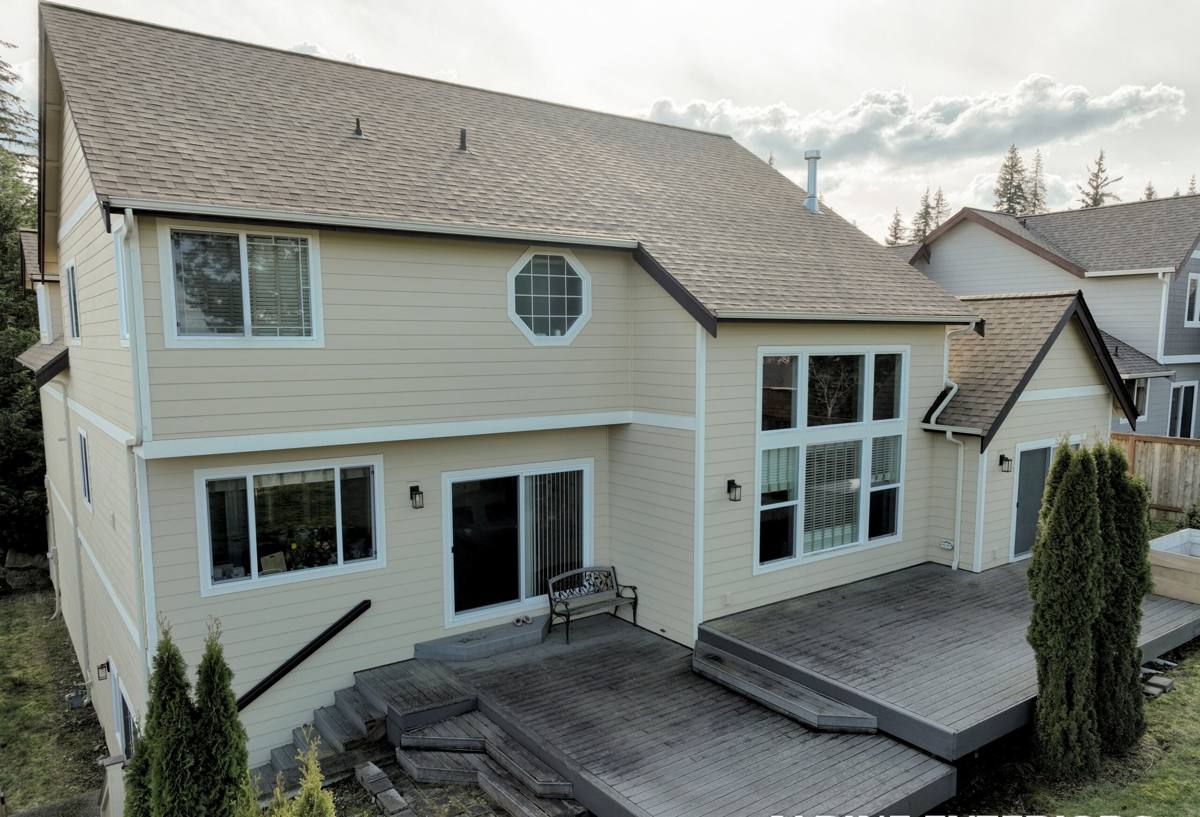
What a Correctly Built Deck Needs in This Climate
A deck is a system, not just a surface to walk on. In a climate that stays wet for most of the year, every part of that system has to manage moisture on purpose.
Footings and Frost Depth
King County's frost depth requirements mean footings need to be set deep enough that seasonal freeze-thaw movement doesn't shift the posts over time. Skipping this, or pouring shallow footings to save time, is one of the most common shortcuts we see on older or DIY decks — and it's also one of the hardest problems to fix after the fact, since it usually means jacking the structure and re-pouring.
Ledger Board Attachment and Flashing
Where a deck attaches to the house is the single most failure-prone point on the entire structure. If the ledger board isn't properly flashed — with metal flashing that directs water out and away from the house sheathing, not just caulk and hope — water gets behind the siding and rots the rim joist and wall framing from the inside. This kind of damage is invisible until it's expensive, and it's directly tied to how much driving rain a home takes over the years, which in Redmond is a real amount.
Joist Spacing, Airflow, and Drainage Underneath
Tight joist spacing gives a deck a solid feel underfoot, but the space below the boards needs to breathe too. Decks built low to the ground, or over poorly graded soil, trap moisture underneath year-round in this climate. That trapped moisture is what accelerates rot in the framing and gives moss and algae exactly the damp, shaded environment they need to take hold on the underside of boards and along the ledger.
Choosing Deck Material for Redmond's Weather
There's no single "best" decking material — there's the right material for how you'll use the deck, your maintenance tolerance, and your budget. Here's how the common options actually perform in a wet, moss-prone climate like Redmond's.
| Material | Moisture & Rot Resistance | Moss/Algae Resistance | Maintenance | Typical Lifespan |
|---|---|---|---|---|
| Pressure-treated pine | Good, if properly sealed and re-sealed | Low — porous surface holds moss spores | Annual cleaning and re-sealing recommended | 15–20 years with upkeep |
| Cedar | Naturally moisture-resistant, but softer | Moderate — still needs cleaning | Periodic staining/sealing to prevent graying and softening | 15–20 years with upkeep |
| Capped composite | Excellent — won't rot or absorb water | Higher, but still needs periodic washing | Occasional washing, no staining or sealing | 25–30+ years |
| Uncapped composite (older generation) | Good, but can absorb moisture at cut edges | Lower than capped — more porous surface | More frequent cleaning than capped composite | 20–25 years |
For homes with a lot of tree cover or a shaded, north-facing deck footprint — common throughout Redmond's residential neighborhoods — we usually steer homeowners toward capped composite or well-maintained cedar over untreated or uncapped materials, simply because the maintenance burden of keeping wood sealed in a climate this wet adds up fast. That said, a properly built and maintained wood deck is a perfectly good choice for homeowners who don't mind the upkeep and prefer the look and feel of real wood.
Moss, Algae, and the Slip Problem
Moss on a deck isn't just a cosmetic issue — it's a safety issue. Wet moss and algae film turn deck boards slick, and stairs are especially dangerous when they're shaded and rarely see direct sun. Redmond's tree canopy and long stretch of overcast, damp months create ideal conditions for growth, particularly on the north side of a house or under overhangs where boards never fully dry out between rain events.
Good deck building reduces this problem before it starts: adequate spacing between boards for drainage and airflow, a decking profile that doesn't trap standing water, and thoughtful placement relative to overhead trees and structures. No deck in this region will be entirely moss-free without some homeowner maintenance, but a well-built one needs far less scrubbing than one that was framed and installed without airflow in mind.
Permits and Code Requirements
Most new decks in Redmond and the surrounding King County jurisdictions require a building permit, particularly when the deck is attached to the house, elevated above a certain height off grade, or includes a roof or cover. Requirements vary depending on the specific structure and its footprint, so we handle the permit process as part of the build rather than leaving it to the homeowner to sort out. Building to code isn't just a formality — it's what ensures the footings, framing, and ledger attachment are actually sized and fastened correctly for the loads and weather this deck will see.
Our Deck Building Process
Every deck we build follows the same core sequence, adjusted for the specific site and design:
- On-site assessment — we look at grade, drainage, sun exposure, tree cover, and how the deck will attach to the house before design work starts.
- Design and material selection — sized to how you'll actually use the space, with material recommendations based on sun/shade exposure and maintenance preference.
- Permitting — we prepare and submit what's required for the jurisdiction the home falls under.
- Footings and framing — set to proper frost depth, with a structure sized for the deck's real load, not just minimum code.
- Ledger flashing and waterproofing — done correctly at the house connection, since this is the point most failures start from.
- Decking installation — with fastener spacing and board gapping set for drainage, not just appearance.
- Final walkthrough — covering how to care for the specific material you chose, given our climate.
Signs an Existing Deck Needs Attention
If you're not building new but wondering whether your current deck needs repair or replacement, a few warning signs are worth checking for before another wet season sets in:
- Soft or spongy spots when you walk across the boards
- Rust streaks or corroded fastener heads
- Persistent green or black film that returns quickly after cleaning
- Gaps or separation where the deck meets the house
- Wobble or movement in the railing posts
- Standing water that doesn't drain within an hour or two after rain
Any one of these on its own might be minor. Several together usually mean the structure underneath needs a real look, not just a surface fix.
Why Hiring a Crew That Already Works in Redmond Matters
A deck built to a generic national spec doesn't automatically hold up here. Local crews who build regularly in King County's climate know which details get skipped by out-of-area contractors — the flashing detail that actually stops water at the ledger, the footing depth that accounts for our frost line, the board spacing that keeps moss from taking hold as fast. We also know how Redmond's permitting process works, which saves time and avoids the delays that come from a plan getting kicked back for missing information.
Just as important, we're around after the job is done. If a warranty question or a maintenance question comes up two years down the road, you're not trying to track down a crew that only worked in the area for one project.
Maintenance That Actually Extends the Life of a Redmond Deck
Whatever material you choose, a little seasonal attention goes a long way in this climate. Clearing debris out of board gaps before it composts into a moss bed, rinsing pollen and organic buildup off the surface a couple times a year, and checking the ledger flashing and fasteners annually will catch small problems while they're still small. Wood decks need periodic sealing to keep moisture out; composite decks need far less, but benefit from an occasional wash to keep algae film from building up on shaded sections.
If you're weighing a new deck, a rebuild, or just want an honest opinion on whether your current deck is structurally sound, we're happy to take a look. Fill out the form below for a free, no-pressure estimate.