 King County
 Why Redmond Homes Are Hard on Windows
Redmond sits in a part of King County where mature tree canopy, close-set neighborhoods, and long stretches of overcast, wet weather all work against older windows. It isn't just about rain falling on glass. It's about how long a window assembly stays wet, how much shade keeps moisture from drying off the frame, and how much wind-driven rain gets pushed sideways into gaps that were never sealed correctly in the first place.
Over a full Puget Sound-area winter, that adds up. Driving rain finds its way past worn weatherstripping and failed caulk lines. Shaded siding and trim stay damp for days at a time, which is exactly the environment moss and algae need to take hold. And even homes that aren't right on the water still see enough marine-influenced humidity moving through the region to accelerate wear on wood sills, aluminum frames, and old sealant.
None of this means every window in Redmond is failing. It means the climate is unforgiving of shortcuts, and a window that was installed correctly ten or twenty years ago is going to be performing very differently today than one that was rushed or under-flashed.
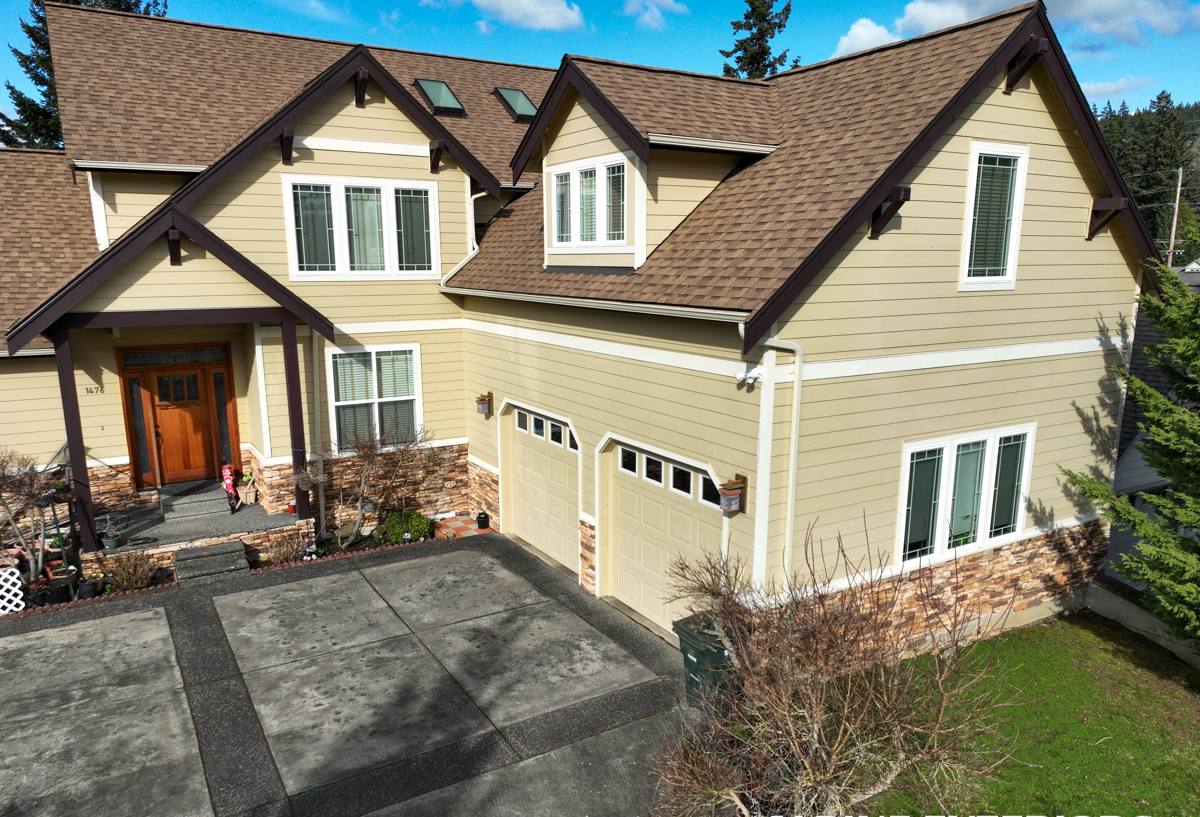
Signs a Redmond Home Actually Needs Replacement (Not Just a Repair)
Not every drafty window needs a full replacement. But there are patterns we see often enough in this area that they're worth watching for:
- Fogging or a permanent haze between panes on double-glazed units — the seal has failed and the gas fill is gone
- Soft or spongy wood at the sill or lower corners, often a sign moisture has been sitting there through multiple wet seasons
- Visible moss, algae, or black staining on the frame or the siding immediately around the window
- Windows that are difficult to open, close, or lock — frames can swell and warp after repeated wet-dry cycles
- Noticeable drafts or cold spots near the window even when it's fully closed and latched
- Condensation forming on the inside of the glass regularly during colder months, which can point to poor insulating performance
If you're only seeing one of these, a repair or targeted resealing might be enough. If you're seeing several on the same window, or the same issues on multiple windows on one exposure of the house, replacement is usually the more honest recommendation.
What a Correct Window Replacement Job Actually Involves
The window itself is only part of the job. In a climate like ours, the installation detailing around the window matters as much as the product. A correct replacement includes:
Removal Without Hidden Damage
Old windows come out carefully so we can actually see the condition of the framing, sheathing, and any existing flashing underneath. This is where problems that caused the original failure — a missed flashing detail, old caulk standing in for real weatherproofing — get found and corrected instead of covered back up.
Proper Flashing and Water Management
Every window opening needs a path for water to drain out, not pool. That means correctly lapped flashing tape, a sloped sill pan where called for, and integration with the house wrap or building paper so water sheds down and out rather than getting trapped behind the new window. This step is invisible once the job is done, which is exactly why it's the step that gets skipped on rushed installs — and the step that causes rot years later.
Air Sealing and Insulation
The gap between the window frame and the rough opening gets sealed with the right materials — not just foam sprayed in without regard for expansion, and not just caulk over a gap that's too wide to caulk properly. Done right, this is what actually stops the drafts homeowners notice.
Exterior Trim and Finish Work
The trim and sealant lines on the outside are the last line of defense against driving rain. They need to be finished cleanly and with materials that hold up to repeated wet weather, not just look good on install day.
Choosing the Right Window for This Climate
Frame material matters more here than in drier parts of the country, because whatever you choose is going to deal with sustained damp weather for months at a stretch, most years.
| Frame Material | How It Handles Our Climate | Maintenance |
|---|---|---|
| Vinyl | Doesn't rot or corrode; performs consistently in wet, mild climates | Low — occasional cleaning |
| Fiberglass | Very stable in temperature and moisture swings; strong long-term option | Low |
| Wood (unclad) | Classic look but needs consistent upkeep to resist rot in a wet climate | High — regular painting/sealing |
| Wood-clad | Wood interior with a weather-resistant exterior shell; good balance if maintained | Moderate |
| Aluminum (older style) | Prone to condensation and heat loss unless thermally broken | Moderate — watch for corrosion |
Glass matters too. A quality double-pane, low-E, argon-filled unit is the practical standard for this region — it manages our mild but persistently damp winters better than single-pane or older double-pane glass, and it cuts down on the interior condensation that's common in older homes here.
Our Process for a Redmond Window Replacement
- Walkthrough and assessment — we look at every window being considered, note frame condition, sill condition, and any moisture or moss issues nearby on the siding or trim
- Honest recommendation — we'll tell you plainly which windows need replacement now, which can wait, and which just need a repair or reseal
- Measurement and product selection — accurate measurements and a frame/glass package chosen for how the home is oriented and shaded
- Removal and inspection — old windows come out, framing is checked for hidden rot or past flashing mistakes before anything new goes in
- Install with proper flashing and air sealing — the part that determines whether the window performs for the next twenty years or the next five
- Exterior finish and cleanup — trim, caulk lines, and site cleanup done to the same standard as the install itself
Energy Efficiency and Comfort
Redmond's winters aren't extreme, but they're long, damp, and gray, and that steady chill finds every weak point in a home's envelope. Old, leaky windows are one of the more noticeable sources of that — cold air settling near the glass, drafts at the sash, and heating systems working harder to compensate. Modern, correctly installed windows with quality low-E glass reduce that draft and heat loss noticeably, and they also cut down on the interior condensation that tends to show up on older glass during our wetter months.
This isn't about chasing a specific efficiency rating for its own sake. It's about a home that feels more even room to room and doesn't lose heat through the windows all winter.
What Affects the Cost of a Window Replacement
| Factor | Why It Matters |
|---|---|
| Frame material | Vinyl and fiberglass generally cost less upfront than wood or wood-clad |
| Number of windows | Doing multiple windows in one project usually lowers the per-window cost |
| Window size and style | Larger openings, custom shapes, or specialty operating styles cost more than standard sizes |
| Condition of the rough opening | Hidden rot or past water damage found during removal adds repair work before the new window goes in |
| Story height and access | Second-story or hard-to-access windows take more time and equipment |
| Trim and finish work | Matching existing trim profiles or upgrading exterior finish adds labor |
We give straightforward, itemized estimates so you can see exactly what's driving the number, not just a lump sum.
Why a Crew That Already Works in Redmond Matters
Window performance in this climate comes down to installation detail, and installation detail comes down to experience with how local homes are actually built and how weather actually behaves against them. A crew that regularly works Redmond and the surrounding King County area already knows the common framing and siding conditions found in homes from different building eras here, what shaded, tree-covered lots do to moisture retention around window openings, and how to detail flashing so it holds up through a full wet season, not just the demo weather on install day.
That local familiarity shows up less in what a homeowner can see on day one and more in how the windows hold up three, five, and ten winters later.
A Simple Checklist Before You Sign a Window Contract
- Does the estimate specify frame material and glass package, not just "vinyl window"?
- Is flashing and water management around the opening explained, or just assumed?
- Does the contractor point out moisture, rot, or moss issues found during inspection, even if it means a bigger scope?
- Is the warranty on both the product and the labor spelled out clearly?
- Does the quote break out cost by factor (material, size, access, trim) rather than one flat number?
- Can they speak specifically to how the install will handle our wet-season conditions, not just general claims about quality?
If you're weighing whether it's time to replace windows on a Redmond home, we're glad to take a look and give you a straightforward assessment. Reach out for a free, no-pressure estimate using the form below.