 King County
 Fiber Cement Siding Built for Redmond's Wet Season
Redmond sits in the part of King County where homes spend a good chunk of the year damp. Long stretches of driving rain, overcast skies that slow down drying time, and a moss season that seems to start earlier every year all put steady pressure on exterior walls. Siding here isn't just a cosmetic choice — it's the first line of defense against moisture finding its way into wall assemblies that may not dry out again until summer.
Fiber cement siding, specifically James Hardie's engineered product line, is built around that reality. It's a cement-based material reinforced with cellulose fibers, formed under pressure and cured to a dense, stable board that doesn't absorb water the way wood-based products do and doesn't warp or soften the way vinyl can under repeated wet-dry cycles. For a Redmond home, that difference shows up over years, not days — in how well seams hold, how paint or factory finish performs, and whether moisture problems announce themselves early with visible rot or quietly build up behind the cladding.
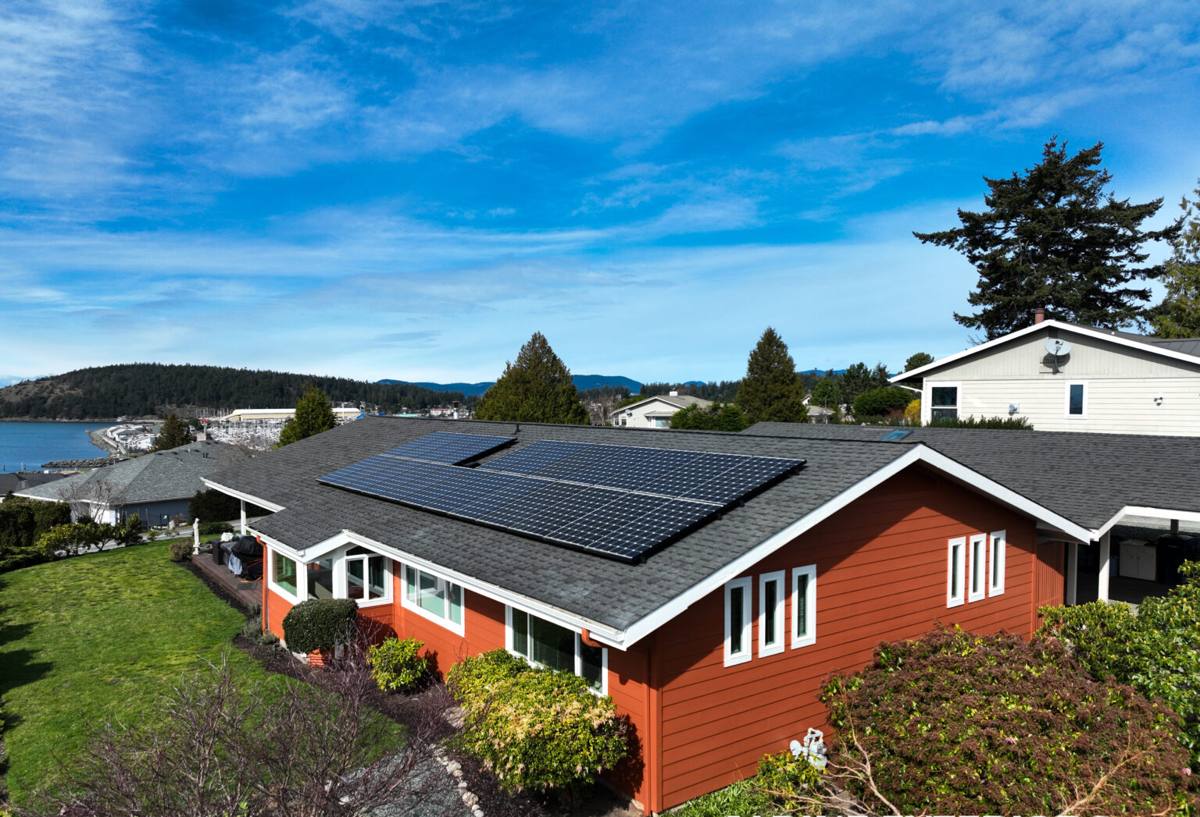
What King County's Climate Actually Does to Siding
It helps to be specific about what "Pacific Northwest weather" means for a wall assembly, rather than treating it as a vague backdrop.
Sustained Moisture Exposure
Redmond doesn't get dramatic storms so much as long, low-intensity rain that keeps exterior surfaces wet for extended periods. Materials that swell when wet and shrink when dry — untreated wood, some engineered wood products — go through that cycle repeatedly every winter. Over time, that movement stresses joints, paint film, and fasteners.
Moss and Organic Growth
Shade from mature trees, north-facing walls, and consistent moisture give moss, algae, and mildew exactly the conditions they need. Porous or textured surfaces give organic growth more to grip onto, and once established, it holds moisture against the siding surface even longer, extending the wet season for that wall long after the rain itself has stopped.
Salt Air Influence
King County homes with any proximity to Puget Sound or the Sound-influenced air mass deal with a mild but real corrosive element in the air. It's not coastal-Florida level salt exposure, but it's enough to matter for fasteners, flashing, and any metal trim over a couple decades of service life.
Limited Drying Windows
Because overcast, humid stretches can run for days or weeks, any water that does get behind siding — through a bad seam, a missed flashing detail, or a failed caulk joint — has less opportunity to dry out before the next rain arrives. This is why installation detailing matters more here than it would in a dry climate: mistakes don't get "forgiven" by a stretch of hot, dry weather the way they might elsewhere.
Why Fiber Cement Fits This Environment
James Hardie's HZ5 product line is engineered specifically for climates like King County's — cold, wet winters with real freeze-thaw cycling at times, and long humid stretches the rest of the year. The material itself doesn't rot, doesn't provide a food source for moss and mildew the way wood fiber can, and holds its factory-applied ColorPlus finish without the repainting cycle that wood and some composite sidings require.
That said, fiber cement is not a "install it and forget it" product. It performs exactly as well as its installation. Correct flush-mount clearances, properly lapped house wrap, sealed butt joints, and correctly fastened trim are what actually keep water out — the material is only half the equation.
What a Correct Fiber Cement Installation Involves
A lot of siding problems we get called out to inspect in King County aren't material failures — they're installation shortcuts. Here's what we consider non-negotiable on every Redmond project:
- Weather-resistive barrier installed and lapped correctly before any siding goes up, with all penetrations properly flashed
- Minimum required clearance between siding and grade, decks, patios, and roof lines — this is where moss and rot most often start
- Butt joints and seams sealed per manufacturer specification, not just caulked as an afterthought
- Correct fastener type, spacing, and depth — over-driven or under-driven nails are one of the most common defects we find on re-inspections
- Proper flashing at windows, doors, and any wall penetrations, integrated with the water-resistive barrier rather than just caulked over it
- Factory-cut and factory-primed edges used wherever possible, with any field cuts sealed per Hardie's installation guidelines
Skipping any one of these doesn't usually cause an immediate problem. It shows up two, five, or ten years later as a moisture issue that's expensive to trace and repair — often after damage has already spread into sheathing or framing.
Our Process for a Redmond Job
1. Assessment
We start by looking at the existing siding and wall assembly, not just measuring for a quote. Age, current moisture readings where accessible, existing flashing conditions, and any trouble spots — north-facing walls, areas under trees, spots with visible moss — all factor into the plan.
2. Tear-Off and Inspection
Once old siding comes off, we inspect the sheathing and house wrap underneath. This is often the first real look anyone's had at that wall assembly in years, and it's the point where hidden moisture damage — if any exists — gets caught before new siding goes over it.
3. Water-Resistive Barrier and Flashing
Any compromised house wrap gets replaced. Flashing at every window, door, and penetration gets installed or corrected to shed water down and out, not into the wall.
4. Installation to Spec
James Hardie panels and trim go up per manufacturer clearance, fastening, and joint requirements — the details covered above, applied consistently across the whole house, not just the visible street-facing walls.
5. Final Walkthrough
We walk the finished job with the homeowner, covering what was done, what to expect from the finish over time, and basic care.
Comparing Siding Options for This Climate
| Factor | James Hardie Fiber Cement | Vinyl Siding | Untreated Wood / Primed Spruce |
|---|---|---|---|
| Moisture resistance | Dense cement composite, does not rot | Doesn't rot, but seams can trap moisture behind panels | Absorbs moisture, prone to rot without diligent upkeep |
| Moss/algae resistance | Factory finish resists organic growth adhesion | Can host mildew in seams and channels | Porous surface, more susceptible to growth |
| Finish longevity | ColorPlus factory finish, long fade resistance | Color molded in, can fade and chalk over time | Requires repainting on a regular cycle |
| Freeze-thaw stability | Dimensionally stable, engineered for cold/wet cycling | Can become brittle in cold, crack on impact | Expands/contracts with moisture, stresses joints |
| Fire resistance | Non-combustible | Combustible, can melt or deform near heat | Combustible |
Why It Matters That We Already Work in Redmond
Installation quality depends heavily on knowing the conditions you're building for. A crew that regularly works King County homes already knows which wall orientations tend to hold moisture longer, where moss establishes fastest, and which flashing details actually matter given the rainfall patterns here versus a drier climate. That's not something a crew unfamiliar with the region picks up on the first job.
It also means faster, more accurate estimates — we're not guessing at local permitting norms, typical wall assemblies for the area's housing stock, or realistic weather windows for scheduling tear-off and installation. And if a question comes up after the job is done, it's a local call, not a search for whoever's available.
Only James Hardie, and Why
We install James Hardie fiber cement siding exclusively. We don't install vinyl, LP SmartSide, or primed wood siding, and that's a deliberate professional standard, not a sales position. Each of those products has legitimate uses and reasonable upfront cost, but each also comes with trade-offs — moisture behavior in seams, repainting cycles, dimensional stability in freeze-thaw conditions — that we're not willing to install and then stand behind for a King County home that has to survive a genuine wet season every single year.
James Hardie's HZ5 line, engineered finish system, and long transferable warranty give us a product we can install to spec and trust to perform over the long haul in this specific climate. That's the whole reason we standardized on it.
Ready to Talk About Your Home
If you're dealing with aging siding, visible moss, or just want an honest read on whether your current siding is holding up the way it should, we're happy to take a look. Reach out for a free, no-pressure estimate — we'll walk your home's exterior with you and tell you plainly what we see.