 King County
 Siding Repair Built for Redmond's Wet Side of the Cascades
Redmond sits in the part of King County where marine air off Puget Sound, months of driving rain, and heavy tree cover combine to put real stress on exterior siding. Homes here don't usually fail all at once — they fail in small, quiet spots first: a cracked panel behind a downspout, a soft patch near a window sill, a streak of moss creeping up a north-facing wall that never quite dries out. Left alone, those small spots turn into rot, trim damage, and eventually a much bigger repair bill.
Siding repair is a different job than new construction siding. It's diagnostic work first, carpentry second, and matching work third. Done right, it stops water intrusion at the source, restores the wall's ability to shed moisture, and blends into the surrounding siding so the repair isn't the first thing you notice. Done wrong — caulk over a crack, a patch that doesn't match, a panel reinstalled without fixing the flashing underneath it — it just buys a year or two before the same spot fails again.
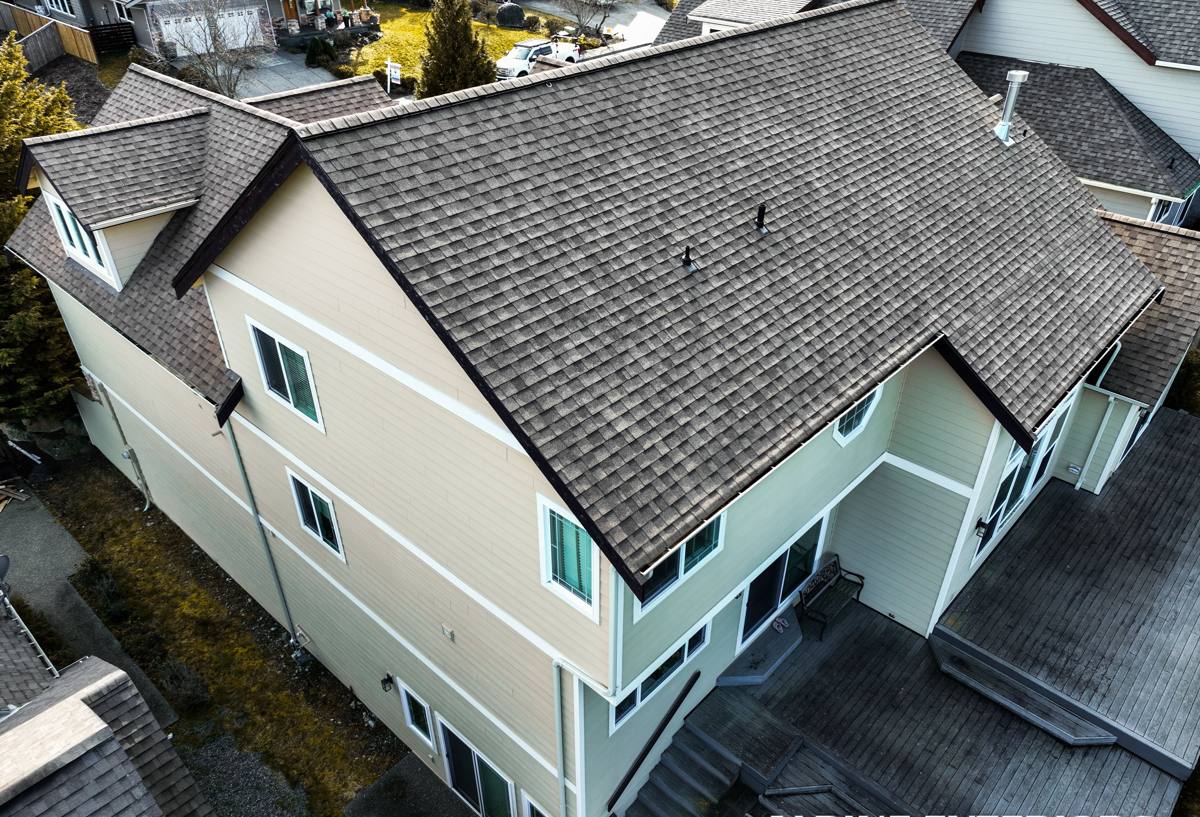
Signs Your Redmond Home's Siding Needs Attention
Most siding repair calls we get start with one of these. None of them require you to be a siding expert to notice — they just require a walk around the house a couple of times a year, especially after a stretch of heavy driving rain.
- Soft, spongy, or crumbling spots when you press on the siding near the bottom edge of the wall or under windows
- Visible cracks or splits, especially at panel seams, corners, or anywhere siding meets trim
- Bubbling, peeling, or discolored paint that keeps coming back in the same spot no matter how many times it's repainted
- Persistent moss or black streaking on shaded or north-facing walls that doesn't wash off and returns quickly
- Gaps or separation where siding meets window and door trim, or where caulking has shrunk and pulled away
- Warped or bowed panels, particularly near downspouts, hose bibs, or areas where sprinklers hit the wall
- Musty smell or visible staining on interior walls that share an exterior wall with damaged siding
What a Correct Siding Repair Job Actually Involves
Diagnosing the Real Problem, Not Just the Symptom
A crack or a soft board is a symptom. The real question is what's letting water behind the siding in the first place — failed caulking, missing or damaged flashing, a nail popped through the face of a panel, or siding that was installed too close to grade or a deck surface. We pull back the damaged section and check the housewrap, flashing, and framing underneath before deciding what actually needs to be replaced. Patching over a moisture source without fixing it just hides the problem for a while.
Matching Materials and Finish
Replacing a section of siding is easy. Making it disappear into the rest of the wall is the part that separates a good repair from an obvious patch job. That means matching board width and profile, matching the reveal, and — where the original siding is factory-finished — matching color as closely as the product line allows rather than repainting a new board a shade that's close but not right.
Flashing and Water Management
Every repair is an opportunity to correct the water management detail that likely caused the failure in the first place: proper flashing above windows and doors, correct overlap at seams, and a gap at the bottom of the wall so water can drain instead of wicking up into the siding. In a climate that sees as much sustained rain as King County, these details matter more than the siding material itself.
Repair or Replace? How We Make the Call
Not every damaged wall needs full replacement, and not every repair is worth doing instead of replacing. We look at the extent of the damage, the age and condition of the surrounding siding, and whether the underlying cause has been addressed. Here's roughly how that decision plays out:
| Situation | Typical Recommendation | Why |
|---|---|---|
| Isolated crack, hole, or one or two damaged boards | Targeted repair | Localized damage with sound siding around it — no reason to touch the rest of the wall |
| Rot concentrated near ground level, decks, or downspouts | Section repair plus water management fix | Common moisture entry points in King County; fixing the cause prevents a repeat |
| Widespread soft spots, warping, or repeated moss across multiple walls | Full re-side evaluation | Suggests systemic moisture exposure or aging material rather than one bad spot |
| Older wood, LP, or vinyl siding failing in several areas at once | Full re-side with James Hardie | Patching aging, discontinued, or mismatched products rarely holds up long-term |
| Existing James Hardie siding with isolated impact damage | Section repair with matched material | Fiber cement holds up well; damage is usually physical, not moisture-driven |
Why We Repair With James Hardie Fiber Cement
We install and repair with James Hardie fiber cement exclusively — we don't install vinyl, LP SmartSide, Cemplank, Allura, primed spruce, or cedar. That's not a marketing position; it's a standard we hold to because of what we've seen happen to other materials in a climate like this one over years of moisture exposure, and it shapes how we handle repair work too.
Built for This Climate
Hardie's HZ5 product line is engineered specifically for climates like King County's — one with sustained rain, humidity, and a long moss season rather than extreme heat or freeze. Fiber cement doesn't absorb water and swell the way wood-based products can, and it won't support rot the way wood or wood-composite siding can when moisture gets trapped behind it.
ColorPlus Factory Finish
Hardie's ColorPlus finish is baked on at the factory under controlled conditions, which gives it more consistent color and better fade resistance than field-applied paint — and it means a repaired section can be matched far more precisely than trying to color-match a hand-painted product years after the original install.
Matching Existing Hardie Siding
If your home already has James Hardie siding, repairs are usually straightforward — we can source matching profile, plank width, and color so the repaired section blends in rather than standing out. If your current siding is a different material entirely, we'll be upfront about the trade-offs of patching it versus starting to plan for a full re-side down the road.
Our Siding Repair Process in Redmond
- Inspection. We look at the damaged area and the wall around it, and check for signs the problem extends further than what's visible from the ground.
- Diagnosis. We identify the actual cause — flashing failure, caulk failure, grade or drainage issue, impact damage, or material fatigue — not just the visible symptom.
- Scope and estimate. We explain what needs to be replaced, what can be repaired, and why, in plain language, with a written estimate before any work starts.
- Repair. We remove only the damaged material, correct the underlying water management issue, and install matched siding with proper fastening and sealant.
- Finish and check. We confirm the repair is weathertight, clean up the site, and walk you through what we found and fixed.
Why Hiring a Crew That Already Works Redmond Matters
Siding repair problems in King County tend to repeat themselves for predictable reasons: heavy tree canopy that keeps walls shaded and damp longer after rain, sprinkler systems that hit siding directly, and decades of driving rain finding the same weak points in flashing and trim. A crew that regularly works in this area has already seen those patterns play out on dozens of homes and knows where to look first instead of guessing. We're also familiar with the permitting expectations and inspection standards that apply to exterior work in King County jurisdictions, which keeps repair projects moving instead of stalling on paperwork.
Just as important is availability after the job is done. A repair crew that's local and established will still be around if a question comes up next season — not a name from an out-of-area ad that's hard to reach once the invoice is paid.
What Siding Repair Costs Depend On
We don't publish flat repair pricing because the range is genuinely wide — a single cracked panel and a wall with hidden rot behind three boards are very different jobs. The factors that move the estimate are consistent, though:
| Factor | Effect on Scope |
|---|---|
| Extent of hidden damage behind the siding | Rot found in sheathing or framing adds repair scope beyond the visible siding |
| Wall height and accessibility | Second-story or hard-to-reach walls take more setup time |
| Availability of matching material | Older or discontinued profiles may need a closer color match rather than an exact one |
| Underlying cause of the damage | Fixing a flashing or grading issue adds work but prevents a repeat failure |
| Number and location of damaged areas | Multiple isolated spots cost more in total than one concentrated area |
We give a firm, written estimate after seeing the damage in person — not a phone quote based on a description, since the visible damage rarely tells the whole story until the siding comes off.
If you're noticing soft spots, cracking, moss, or peeling paint on your Redmond home's siding, we're happy to take a look and give you an honest, no-pressure estimate — including whether a targeted repair is enough or whether it makes more sense to start planning ahead. Use the form below to get started.