 King County
 Why Kirkland Decks Take a Beating
If you've owned a deck in Kirkland for more than a couple of winters, you already know the pattern: the boards look fine in July, and by February they're green, slick, and starting to cup at the edges. That's not bad luck — it's the climate. Kirkland sits low along Lake Washington, which means humid air holds onto the neighborhood longer than it does in drier parts of King County. Add in months of driving rain, low winter sun that never quite dries a north-facing deck, and a moss season that can stretch from October into May, and you've got conditions that are genuinely hard on outdoor wood.
Composite decking was designed for exactly this kind of exposure. It doesn't mean a deck becomes maintenance-free forever, but it does mean the material stops fighting a losing battle against moisture the way untreated or even pressure-treated wood does. The rest of this page is about what that looks like in practice for a home in Kirkland specifically — not a generic decking pitch.
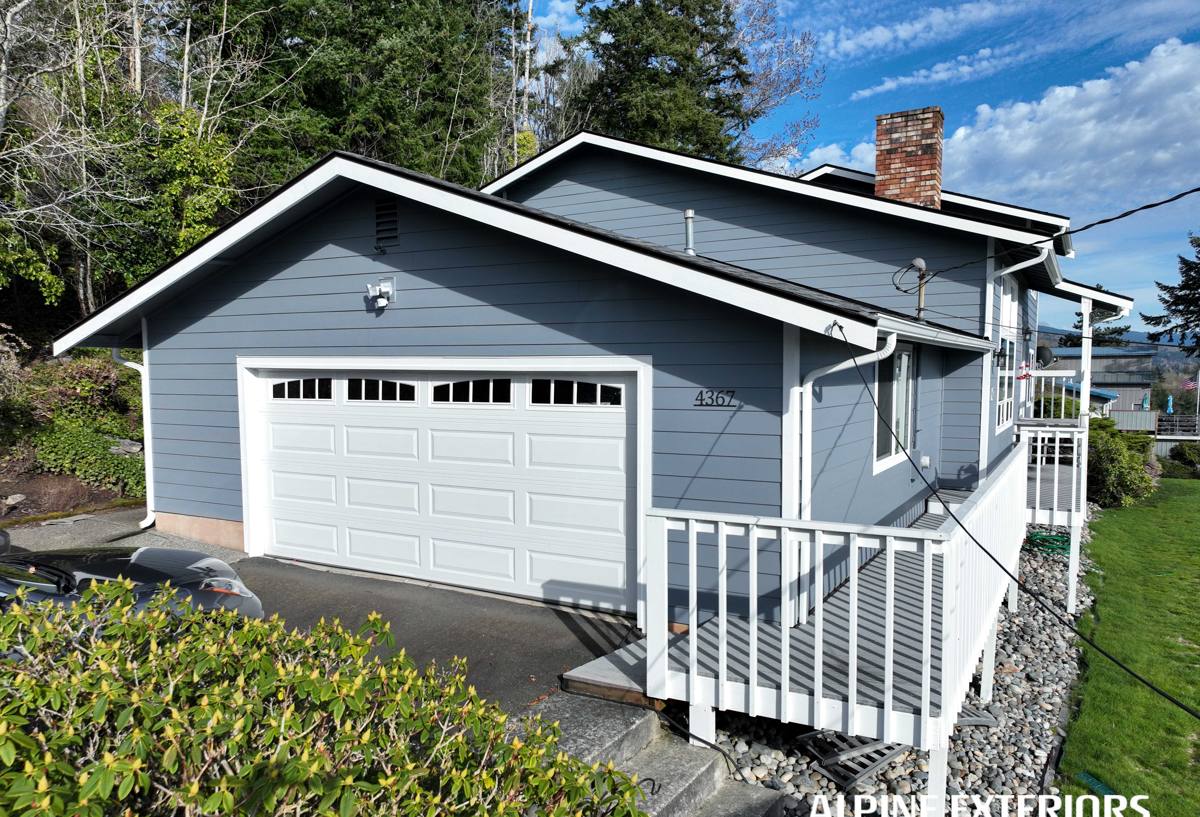
What Local Homes Actually Need From a Deck
Most of the composite decking calls we get in this part of King County fall into a few categories:
- A wood deck that's rotting at the ledger board, stair stringers, or anywhere water tends to pool
- A deck that grows moss and algae faster than it can be cleaned, especially on shaded or north-facing sides
- Boards that have cupped, split, or thrown screws after a few freeze-thaw cycles
- Homeowners who are simply tired of the annual sanding-and-sealing cycle
Composite decking addresses the moisture and moss problems directly — the boards don't absorb water the way wood fibers do, so there's less for algae and mildew to take hold in. It doesn't eliminate the need to clean a deck (moss will still grow on any horizontal surface that stays damp and shaded), but it removes the rot risk and cuts the cleaning and refinishing work down substantially.
Sun, Shade, and Tree Cover Matter More Than People Expect
A deck tucked under mature trees or on the shaded side of a house will always need more attention than one that gets afternoon sun, regardless of material. Part of doing this right in Kirkland is being honest with a homeowner about which of those situations they're in, and adjusting board selection, gap spacing, and drainage details accordingly — not just installing the same deck everywhere and hoping for the best.
Composite vs. Wood vs. PVC: An Honest Comparison
There's no single "best" decking material for every situation, but for a wet, moss-prone climate like ours, the trade-offs are pretty clear:
| Material | Moisture/Rot Resistance | Moss & Algae Resistance | Maintenance | Typical Lifespan |
|---|---|---|---|---|
| Cedar / Pressure-Treated Wood | Moderate — will rot without upkeep | Low — porous surface holds spores | Annual cleaning, sanding, sealing/staining | 10–15 years before major repair |
| Composite (capped) | High — won't rot or absorb water into the core | Moderate to high — surface can still grow moss if never cleaned | Periodic washing, no sealing/staining | 25–30+ years |
| Solid PVC | Very high — fully synthetic | High | Occasional washing | 25–30+ years |
Composite sits in a practical middle ground: it costs less than solid PVC, looks and feels closer to real wood, and eliminates the rot and refinishing burden that makes wood decks a recurring expense in this climate. We install composite for the large majority of Kirkland projects because it matches what the climate actually demands without over-building the budget.
What a Correct Composite Deck Installation Involves
Composite boards are forgiving compared to wood, but a deck is only as good as what's underneath it. A few details matter more here than they would in a drier climate:
The Substructure
Composite decking is heavier than wood and doesn't flex the same way, so joist spacing has to match the manufacturer's specification for the board profile being used — this is often tighter than a standard wood deck frame. Framing lumber still needs to be properly treated and flashed, since the composite boards on top don't protect the structure underneath from moisture.
Ledger Flashing and Drainage
Where a deck attaches to the house, proper ledger flashing is what keeps water from working its way behind siding and into the wall assembly — this is one of the most common failure points we find on older Kirkland decks, and it has nothing to do with the decking material itself. Getting the flashing and any waterproofing membrane right at the ledger is non-negotiable, regardless of what boards go on top.
Fastening and Board Gaps
Hidden fastener systems give a cleaner look and avoid the exposed screw heads that trap moisture and grime. Board gap spacing needs to be set correctly for airflow and drainage — too tight, and water and debris sit on the surface longer than they should, which is exactly what feeds moss growth.
Our Process
1. On-Site Assessment
We look at the existing structure (if there is one), sun and shade exposure, drainage around the foundation, and how the deck ties into the house. This is also where we talk through board style, color, and railing options based on what actually holds up in your specific spot on the property.
2. Permitting
Most new decks and many replacement decks in King County and the city of Kirkland require a building permit, particularly when the deck is attached to the house or elevated above a certain height. We handle the permit application and inspections as part of the job so it isn't left to the homeowner to navigate.
3. Demolition and Framing
If we're replacing an existing deck, we remove the old structure and inspect what's underneath — ledger, posts, footings — before building or reinforcing the frame to current code and to the composite manufacturer's spacing requirements.
4. Installation
Decking, fascia, and railing go in with attention to consistent board gaps, proper flashing at the house, and clean transitions at stairs and edges.
5. Final Walkthrough
We walk the finished deck with you, cover basic care, and make sure everything meets both code and your expectations before calling the job done.
What Affects the Cost of a Composite Deck
Composite decking has a wider price range than most homeowners expect, mostly because the framing and structural work often costs as much as the decking material itself. Rough figures for a fully installed composite deck in this area commonly land somewhere in the $35–$75 per square foot range, but the real number depends on:
| Factor | Why It Moves the Price |
|---|---|
| Existing structure condition | Rotted framing, posts, or footings add rebuild cost before decking even goes on |
| Height and stairs | Elevated decks need more substantial framing, railing, and often permitting review |
| Board tier and brand | Composite lines range from entry-level to premium capped products with different warranties |
| Railing material | Composite or aluminum railing costs more than basic wood but requires far less upkeep |
| Site access | Backyards with tight access or slope can add labor time |
We give a firm, itemized quote after the on-site assessment rather than a phone-estimate range, because the framing condition is usually the biggest variable and can't be judged accurately without seeing the deck in person.
Living With a Composite Deck in a Wet Climate
Composite decking cuts maintenance dramatically, but "low-maintenance" isn't "no-maintenance," especially with a long moss season working against you. A simple seasonal routine keeps a composite deck looking right for decades:
- Sweep off leaves, needles, and debris regularly — trapped organic matter is what feeds moss and mildew
- Wash the deck with a soft-bristle brush, mild soap, and water once or twice a year, more often on shaded sections
- Avoid pressure washers on the highest settings, which can damage the board's capped surface over time
- Keep gutters and downspouts clear so runoff isn't dumping extra water directly onto the deck
- Trim back overhanging branches to let more sun and air reach shaded areas
- Check railing posts and stair connections annually for movement, since hardware is still exposed to the same weather
Why a Local Crew Makes a Difference
A deck built for a dry climate and a deck built for the Puget Sound region aren't the same project, even if the material list looks identical on paper. Crews who work Kirkland regularly already know which yards drain poorly, which sides of a house never see direct sun, and how King County's permitting and inspection process actually runs — which means fewer surprises mid-project. It also means we're not guessing at flashing and drainage details that matter far more here than they would in a drier part of the country.
If your current deck is rotting, mossy, or just past its useful life, or you're planning a new deck from scratch, we're happy to take a look and give you a straightforward assessment — no pressure, no upsell. Use the form below to request a free estimate for your Kirkland property.