 King County
 Kirkland's Climate Is Hard on Siding, Even Good Siding
Kirkland sits close to the water, gets its share of driving rain off the Sound and Cascades weather systems, and spends a good chunk of the year under low, wet, shaded skies. That combination — persistent moisture, wind-driven rain that hits siding at an angle instead of straight down, and long stretches without enough sun to dry things out — is exactly the kind of environment that finds every weak point in a home's exterior. A caulk joint that would last a decade in a drier climate can fail in half that time here. A trim board that isn't properly flashed will hold water long enough to start rotting from the inside before anyone notices a problem from the street.
That's the case for taking siding repair seriously in this area rather than treating it as a cosmetic afterthought. Siding is the building's primary defense against bulk water intrusion. When it's compromised — cracked, gapped, buckled, or just poorly sealed at the seams — water gets behind it, and King County's climate doesn't give that water many chances to dry out before it does damage to sheathing, framing, and insulation.
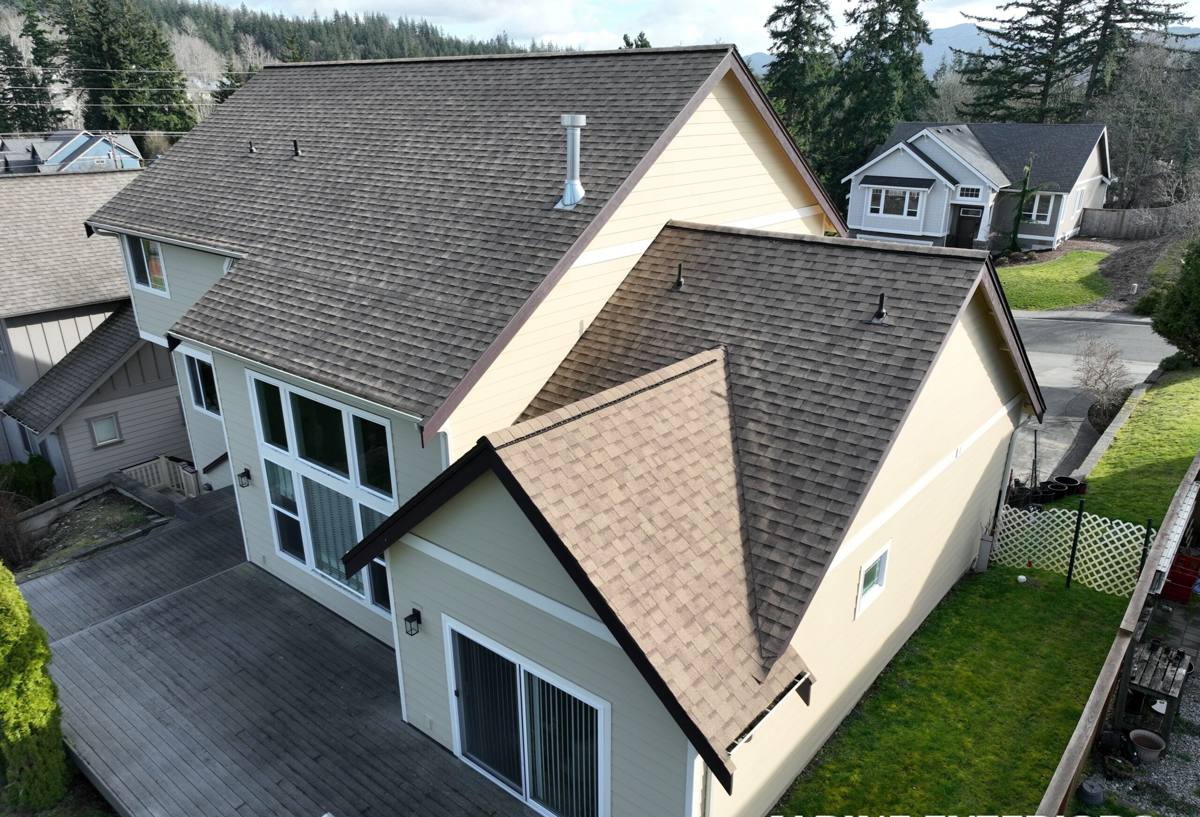
What Kirkland's Moisture and Moss Season Actually Do to a House
Driving Rain and Wind-Driven Moisture
Unlike a straight downpour, wind-driven rain pushes water sideways into laps, seams, and any gap where two pieces of siding or trim meet. Homes on more exposed lots, or with siding that wasn't installed with the right overlaps and clearances, take the brunt of this. Over years, that repeated wetting works caulk loose, swells cut edges that weren't sealed at installation, and pushes moisture behind J-channel and trim.
Moss, Algae, and Shaded North Sides
King County's long moss season isn't just a roof problem. North-facing walls, areas under overhangs, and siding near mature trees stay damp long enough for moss and algae to take hold. Beyond the cosmetic staining, moss holds moisture directly against the siding surface, which is a problem for any substrate but especially for products that aren't dimensionally stable or properly finished. It also traps debris in seams and butt joints, which can hold water against the wall assembly far longer than open air ever would.
Freeze-Thaw and Temperature Swings
Kirkland doesn't get brutal winters, but it does get enough freeze-thaw cycling to stress any siding material that has already absorbed moisture. Water trapped behind or within damaged siding that then freezes can widen cracks and accelerate failure at joints that were already weak.
Common Siding Repair Issues We See on Kirkland Homes
- Failed caulking and sealant joints at trim, window and door surrounds, and butt joints, letting water track behind the siding
- Rot at the bottom courses near grade, decks, and sprinkler overspray zones where siding stays wet longer than the rest of the house
- Buckled or warped panels from moisture absorption, especially on materials not engineered for this climate
- Cracked or chipped panels from impact — ladders, debris, tree limbs, or storm damage
- Missing or damaged flashing above windows, doors, and horizontal trim, a frequent hidden cause of interior water stains
- Moss and algae staining that's more than cosmetic and points to a wall section that isn't drying out between rains
- Nail pops and fastener failure where movement in the wall assembly has worked panels loose over time
What a Correct Siding Repair Actually Involves
A repair that's done right addresses the cause, not just the visible symptom. That means:
- Removing enough surrounding material to see what's actually happening behind the siding — not just patching over a stain
- Checking the water-resistive barrier (house wrap) and flashing details for gaps or damage, and correcting them before anything goes back on the wall
- Replacing any rotted sheathing or framing found underneath, not just the siding itself
- Matching the replacement material and profile so the repair doesn't stand out or create a new weak seam
- Re-caulking and sealing to manufacturer specification, using compatible products rather than whatever tube is on the truck
- Confirming proper clearance from grade, decks, and roof lines so the repaired section doesn't fail again for the same reason
Skipping the investigation step is the most common shortcut in siding repair, and it's why the same spot on a house sometimes gets "fixed" more than once. If the underlying moisture path isn't found and corrected, cosmetic patching just buys a little time.
Repair vs. Replace: How We Make the Call
Not every damaged section needs a full re-side, and not every homeowner needs to hear that a small repair is actually a sign of a bigger problem. Here's generally how the decision breaks down:
| Factor | Favors Repair | Favors Full Replacement |
|---|---|---|
| Extent of damage | Isolated, localized areas | Damage spread across multiple walls or elevations |
| Underlying cause | A single identifiable source (one bad flashing detail, one impact spot) | Systemic issues — original installation defects, widespread moisture intrusion |
| Age and condition of remaining siding | Siding is otherwise sound and has useful life left | Siding is near end of service life or a discontinued product/color |
| Material match | Replacement material and finish can be closely matched | Material is obsolete, faded beyond match, or was never a good fit for this climate |
| Cost over time | Repair cost is proportionate to remaining siding value | Repeated repairs are costing more, cumulatively, than replacement would |
We'll always tell you honestly which side of that table your house falls on. A straightforward repair is a straightforward repair — we don't upsell a full re-side when it isn't warranted.
Why We Repair With James Hardie Fiber Cement
When a repair calls for new material — a full panel, a section of trim, or a full elevation — we use James Hardie fiber cement, and we don't install vinyl, LP SmartSide, or other fiber cement brands as a substitute. That's a standard we hold across every job, not just repairs. Fiber cement doesn't absorb and swell with moisture the way engineered wood products can, it's non-combustible, and Hardie's ColorPlus factory finish holds color and resists the kind of moss-friendly surface degradation that plain paint film is more prone to over time in a wet climate like ours.
Practically, that also means repair sections blend in properly. Hardie's HZ5 product line is engineered for climates with exactly this kind of moisture exposure, and matching new HZ5 material to existing Hardie siding gives a far more consistent, durable result than patching with a different product or brand and hoping the finish ages the same way. When your existing siding isn't Hardie, we'll say so plainly and walk you through what a mixed-material repair versus a full Hardie replacement would each look like — no pressure either way on a repair-only call.
Our Process for a Kirkland Repair Job
- On-site assessment. We look at the damaged area and the surrounding wall assembly, not just the spot you called about, since water problems rarely stay put.
- Honest scope and estimate. You get a clear explanation of what we found, what caused it, and what it will take to fix — repair or replace, whichever actually applies.
- Investigation during the work. Once material is off the wall, we check sheathing, framing, and the water-resistive barrier before closing anything back up.
- Correct repair. Matching material, proper flashing and sealing, and fastening to spec — not a patch that just covers the visible damage.
- Walkthrough. We show you what was done and why, including anything we found that's worth keeping an eye on elsewhere on the house.
Why a Local King County Crew Matters for This Kind of Work
Siding repair in this region is a different job than siding repair in a dry climate, and a crew that works King County homes regularly already knows what to check first. We know what wind-driven rain does to west- and south-facing walls here, which details tend to fail first in a long moss season, and what proper clearances and flashing look like for homes built to handle Pacific Northwest weather. That local, repeat experience means less time spent diagnosing and more time spent fixing the actual cause — and it means we're still around, working in the same area, if a repair ever needs a follow-up look.
Signs Your Kirkland Home May Need Siding Repair Now
- Visible cracking, buckling, or gaps at seams and butt joints
- Soft or spongy areas when you press on siding near the bottom of walls
- Peeling or bubbling paint/finish, especially in one concentrated area
- Interior water stains near exterior walls, windows, or doors
- Heavy moss or algae buildup that keeps a wall section damp
- Missing, cracked, or visibly displaced caulking at trim and joints
- Fastener heads showing through the surface or panels that have worked loose
If you're seeing any of that on your Kirkland home, it's worth getting a straight answer before the next wet season does more damage. We offer a free, no-pressure estimate to look at the specific area of concern and tell you honestly what it needs — fill out the form below to get started.