 King County
 Why Kirkland Roofs Need a Different Kind of Attention
Kirkland sits on the east side of Lake Washington, close enough to Puget Sound's marine air and far enough into the Cascade foothills' rain shadow shift to get a mix of weather patterns most homeowners never think about until their roof starts failing. Damp air moves through this part of King County most of the year, driving rain comes in at an angle during winter storms, and the tree cover that makes Kirkland's neighborhoods attractive also means moss, needles, and organic debris settle onto roofs and stay wet for months at a stretch. A metal roof handles all of that better than most other materials, but only if it's installed with this specific climate in mind, not installed the same way it would be in a dry inland state.
We work on roofs across King County, and Kirkland jobs tend to share a few things in common: mature tree canopy, homes built across several different decades with different original roofing standards, and a lot of moss and lichen staining on north-facing slopes that never get direct sun. None of that is unusual. It just means the installation details matter more here than they would somewhere drier.
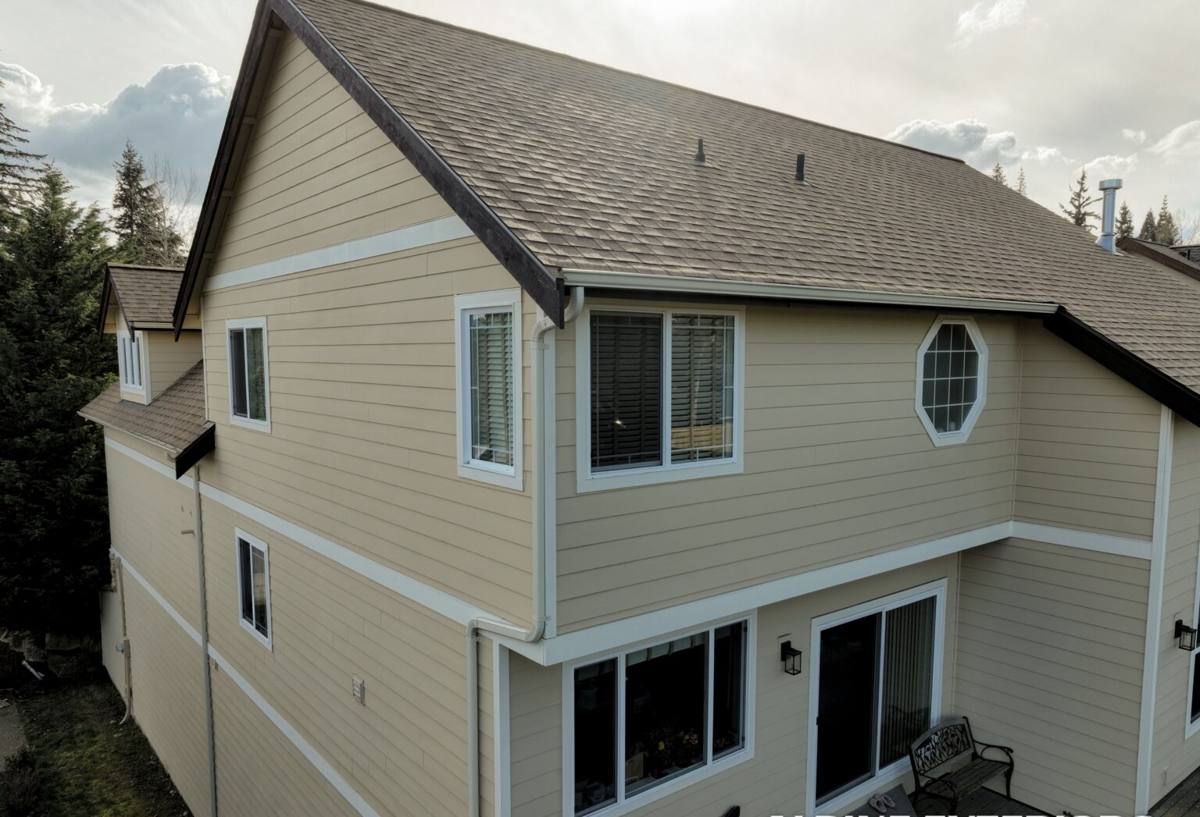
What Driving Rain and a Long Moss Season Actually Do to a Roof
Wind-Driven Rain
Storms coming off the Sound don't always drop rain straight down. When wind pushes rain sideways or upward under roof edges, any roof with weak flashing, under-driven fasteners, or gaps at penetrations (vent stacks, skylights, chimneys) will eventually let water in. Metal roofing resists this well because panels can be run with fewer seams than shingles, but the flashing details at valleys, walls, and penetrations are what actually keep water out — the panel itself is rarely where a leak starts.
Moss and Organic Growth
King County's moss season isn't really a season anymore for shaded roofs — it's closer to year-round, easing off only during the driest weeks of summer. Moss holds moisture against roofing material, and on organic roofing surfaces that moisture accelerates decay. Metal doesn't feed moss growth the way an organic shingle surface can, and it dries faster after rain because water sheds off a smooth, sloped panel instead of soaking into a mat of granules or wood fiber. That said, metal roofs still collect moss and debris in valleys and against rooftop features — the difference is that on metal, that debris sits on top of an inert surface rather than one it can degrade.
Temperature Swings and Condensation
King County doesn't get extreme heat, but daily swings between cool damp mornings and warmer afternoons cause condensation on the underside of roofing when a house isn't ventilated correctly. This matters more with metal than with some other materials, because metal conducts temperature quickly. A metal roof installed without proper attic ventilation and the right underlayment can end up with moisture problems inside the roof assembly even if the top side never leaks.
Metal Roofing Options and How They Perform Here
Not all metal roofing is the same product wearing different colors. The type of panel, the fastening method, and the coating all affect how a roof performs against Kirkland's rain and moss exposure.
| Type | How It's Fastened | Best Fit | Trade-Offs |
|---|---|---|---|
| Standing seam | Concealed clips, no exposed fasteners on the field | Homes wanting the longest service life and cleanest look | Higher material and labor cost; requires an experienced crew to detail correctly |
| Exposed-fastener panel | Screws driven through the panel face into gaskets | Budget-conscious projects, outbuildings, some roof styles | Fasteners and gaskets age and need periodic checking; more maintenance over time |
| Stone-coated steel | Interlocking panels, often screwed at overlaps | Homeowners who want the profile of tile or shake with metal's durability | More installation detail at overlaps; higher material cost than standard panel |
For most Kirkland homes, we lean toward standing seam or a quality stone-coated steel system because concealed or interlocking fastening gives wind-driven rain fewer entry points. Exposed-fastener panel still has a place on simpler roof lines or secondary structures, but it asks for more attention over the life of the roof, since every screw penetration is a place moisture can eventually work its way in if a gasket fails.
What a Correct Metal Roof Installation Actually Involves
The panels are the part homeowners see. The parts that determine whether the roof performs are underneath and around them.
Underlayment
In a climate this wet, we don't treat underlayment as an afterthought. A synthetic, high-temperature underlayment (or self-adhered membrane at eaves, valleys, and other vulnerable spots) gives the roof a second line of defense if wind-driven rain ever gets past the panel seams.
Flashing and Penetrations
Valleys, sidewalls, chimneys, skylights, and vent stacks are where most roof leaks actually originate, on metal roofs and every other roof type. Properly formed and lapped flashing, sealed the right direction with the roof's water flow (not against it), is non-negotiable.
Fastening and Panel Movement
Metal expands and contracts with temperature more than other roofing materials. Fasteners and clips need to allow for that movement, or panels can eventually work loose, buckle, or pull fasteners out of alignment over years of freeze-thaw and heat cycling.
Ventilation
We check attic ventilation on every metal roofing project. Balanced intake and exhaust ventilation keeps warm, moist indoor air from condensing against the underside of the roof deck — a detail that matters more with metal than with some other roofing materials.
Our Process on a Kirkland Metal Roofing Project
We keep the process straightforward and explain what we're doing at each stage, because a roof replacement is disruptive and homeowners deserve to know what's happening on their house.
- On-site assessment — we look at the existing roof, deck condition, ventilation, and any trouble spots (valleys, chimney flashing, areas with heavy moss or past leak staining).
- Tear-off or overlay decision — most metal roofing goes over a full tear-off to the deck so we can inspect and repair any damaged sheathing; in some cases a compatible overlay is appropriate, and we'll say so honestly rather than defaulting to whichever job is bigger.
- Deck repair — any soft, rotted, or water-damaged decking gets replaced before anything else goes down. Installing new roofing over a compromised deck just hides a problem.
- Underlayment and flashing installation — this is where leak resistance actually gets built in, done before a single panel goes up.
- Panel installation — panels run, seamed or fastened per the system's specification, with attention to how water will move across valleys and around penetrations.
- Trim, ventilation components, and final detailing — ridge caps, vent boots, and any ventilation upgrades get installed and checked.
- Walkthrough and cleanup — we walk the finished roof with the homeowner, and the property gets cleared of debris and fasteners.
Maintaining a Metal Roof in a Moss-Heavy, Rainy Climate
Metal roofing is lower-maintenance than most materials, but "low-maintenance" isn't "no-maintenance" in King County. A few habits keep a metal roof performing for its full service life:
- Clear overhanging branches so leaves and needles don't pile up in valleys and against rooftop features.
- Check and clear gutters at least twice a year — clogged gutters back water up under eave flashing.
- Rinse off accumulated moss, algae, or debris rather than letting it sit wet against the roof for months.
- Inspect flashing at chimneys, skylights, and sidewalls annually, especially after a hard winter storm season.
- Avoid pressure washing directly against seams or fasteners — a gentle rinse or soft brushing is safer for the finish and the seals.
- Have any exposed fasteners on screw-down panel systems checked periodically, since gaskets can wear over the years.
Cost Factors on a Kirkland Metal Roofing Project
Every roof is different, and we'll always give a specific number after seeing the actual roof, but the factors that move the price are consistent:
| Factor | Why It Matters |
|---|---|
| Panel type (standing seam vs. exposed-fastener vs. stone-coated) | Material and labor cost vary significantly by system |
| Roof complexity (valleys, dormers, penetrations) | More cuts, flashing, and detail work mean more labor time |
| Deck condition | Rot or damage found at tear-off adds repair scope before roofing can begin |
| Tear-off vs. overlay | Full tear-off costs more upfront but avoids hiding existing problems |
| Ventilation upgrades | Adding or correcting intake/exhaust ventilation is worth doing during a re-roof |
Broadly, metal roofing costs more upfront than composition shingle, and the gap is real. Where it tends to even out is in how much less attention it needs over the following decades in a climate that's hard on roofing — fewer moss-related repairs, less granule loss, and a longer runway before replacement.
Why a Crew That Already Works Kirkland Matters
Roofing crews that work across many different climates sometimes apply the same install standards everywhere. A crew that regularly works King County roofs already knows where moss builds up worst on a Kirkland roof pitch, which flashing details actually hold up against a wind-driven winter storm off the Sound, and how local permitting and inspection processes work for this jurisdiction. That familiarity shows up in fewer callbacks and a roof that's detailed for the weather it's actually going to face, not generic weather.
It also means we're not disappearing after the invoice clears. We're working in this area regularly, which matters if a question comes up a year or two down the line about a flashing detail, a maintenance question, or storm damage.
If you're weighing a metal roof for your Kirkland home, we're glad to take a look and walk you through what your specific roof needs — no pressure, no generic sales pitch. Use the form below to request a free estimate, and we'll go from there.