 King County
 Why Kirkland Windows Wear Out the Way They Do
Kirkland sits close enough to Lake Washington and the broader Puget Sound air mass that homes here deal with a specific combination of conditions: persistent marine humidity, long stretches of driving rain in the fall and winter, and short, low-angle winter sun that lets moss and algae take hold on anything shaded or north-facing. None of that is dramatic on its own. What it does over years is quietly attack window seals, wood sills, and frame corners faster than a drier climate would. A window that would last two decades in Eastern Washington can start failing at the seams here in twelve or fourteen years if it wasn't installed with this climate in mind.
The practical effect on a Kirkland home is condensation between panes, soft or discolored sills, drafts around the frame that show up specifically during wind-driven rain, and single-pane or early dual-pane windows that simply can't keep up with today's energy costs. Window replacement here isn't just a cosmetic upgrade — it's weatherproofing work first and an appearance and efficiency upgrade second.
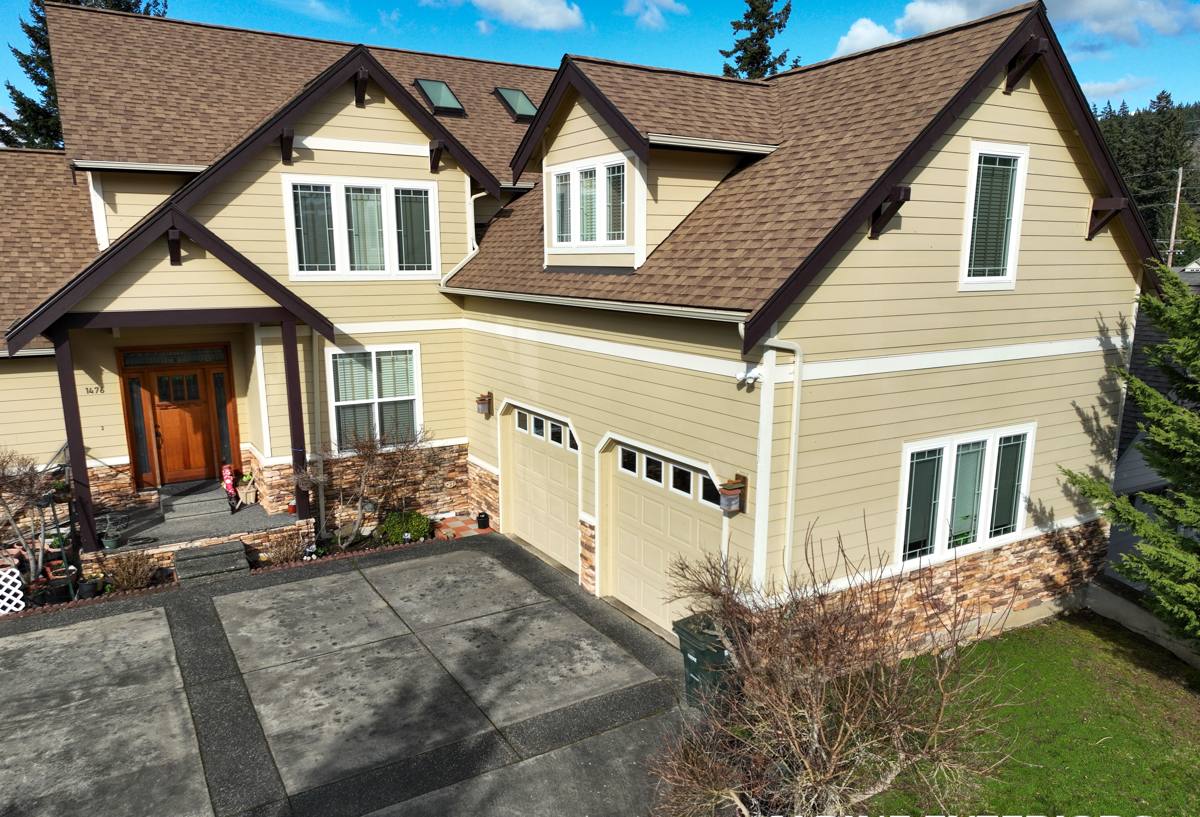
How to Tell a Window Actually Needs Replacing
Not every old window needs to come out. Some just need re-caulking or a new sash balance. Here's how we tell the difference on a King County home:
- Fogging or a cloudy haze between the panes that won't clean off — the seal has failed and the gas fill (or air gap) is compromised
- Visible gaps, soft wood, or paint that's bubbling at the sill, especially on walls that face the prevailing weather
- Windows that are noticeably cold to the touch on the frame itself, not just the glass, during winter
- Difficulty opening, closing, or locking — often a sign the frame has shifted or swollen from moisture intrusion
- A musty smell or soft drywall near the window that suggests water has been getting past the frame for a while
If you're only seeing one or two of these on an otherwise sound frame, repair may be the more honest answer. We'll tell you that directly rather than push a full replacement you don't need yet.
What a Correct Window Replacement Job Actually Involves
A window replacement done right in this climate is as much about what happens around the window as the window itself. The unit is only half the job. The other half is making sure water that hits the wall during a driving rainstorm has nowhere to go but back outside. That means:
Removing the old unit without damaging the rough opening
We pull the existing window carefully so we can actually see the condition of the framing and sheathing underneath — this is often the first real look anyone's had at that wall in years, and it tells us whether there's hidden rot that needs to be addressed before a new window goes in.
Correcting what we find
If the sheathing or framing shows moisture damage, patching it and moving on is how call-backs happen two winters later. We repair what's actually there, not just what's easy to see.
Flashing and sealing to shed water, not trap it
Proper flashing tape and a correctly lapped weather-resistive barrier matter more here than in drier regions, because Kirkland's rain events are frequently wind-driven, meaning water hits the wall sideways, not just straight down. A window that's caulked shut on all four sides with no way for incidental moisture to escape can actually trap water inside the wall — that's a mistake we specifically avoid.
Setting, shimming, and insulating the gap
The window has to be level, plumb, and square before it's fastened, with the gap around the frame properly insulated — not stuffed tight, not left hollow. Both extremes cause problems down the line.
Material and Frame Options for This Climate
There isn't one "best" window material for every home — it depends on your home's age, your budget, and how much upkeep you want to take on. Here's how the common choices actually compare for a Kirkland house dealing with damp, mossy conditions:
| Frame Material | Moisture Behavior Here | Upkeep | Typical Fit |
|---|---|---|---|
| Vinyl | Won't rot or absorb water; performs well in sustained damp conditions | Low — occasional cleaning | Most standard replacements, budget-conscious upgrades |
| Fiberglass | Very stable in wet/dry cycling, minimal expansion or contraction | Low | Homes wanting a stiffer, more durable frame long-term |
| Wood (clad exterior) | Good if the exterior cladding is intact; exposed wood is a liability in this climate | Moderate to high — exterior clad species and finish matter | Homes where interior wood trim appearance is a priority |
| Aluminum | Prone to condensation and thermal transfer unless thermally broken | Low, but performance issues are harder to fix after install | Specific architectural or commercial-style applications |
As a professional standard, we steer most Kirkland homeowners away from exposed painted wood exteriors and non-thermally-broken aluminum for typical residential replacements — not because the materials are bad in general, but because both carry maintenance or moisture trade-offs that show up faster in a marine climate with this much annual rainfall. We'll walk through what fits your specific home rather than pushing one material across the board.
Glass Packages Worth Understanding
The frame gets most of the attention, but the glass package affects comfort and energy performance just as much, especially on windows that face the weather or get afternoon sun.
- Double-pane, standard low-E: A solid baseline for most rooms — good insulation value, reduces UV fading on furniture and flooring
- Double-pane, upgraded low-E with argon fill: Better performance in shoulder seasons, worth it on larger windows or exposed walls
- Triple-pane: Noticeably better sound dampening and thermal performance, but adds weight and cost — makes the most sense on street-facing or particularly exposed windows
We'll help you decide where the upgraded glass actually earns its cost versus where standard low-E does the job just as well.
Our Process, Start to Finish
- Walkthrough and honest assessment — we look at every window you're considering, note which are candidates for repair versus replacement, and explain why
- Measurement and product selection — exact rough opening measurements, material and glass package discussion based on that specific window's exposure
- Written estimate — clear line items, no vague allowances
- Scheduling around the weather — we plan installs to minimize how long any opening sits uncovered, which matters in a climate where rain can show up with little warning
- Removal, inspection, and correction of hidden damage — as described above, this is where a rushed job and a correct one diverge
- Installation with proper flashing and sealing — set level and square, insulated, flashed to shed water outward
- Final walkthrough — operation check on every window, interior and exterior cleanup, and a clear explanation of anything you should watch for in the first few rain events
What Drives the Cost of a Window Replacement
Costs vary widely based on the scope, so we won't quote a number without seeing the home — but these are the factors that actually move the price up or down:
| Factor | Effect on Cost |
|---|---|
| Number of windows replaced at once | Doing several together typically reduces the per-window cost versus one at a time |
| Frame material chosen | Vinyl is generally the most budget-friendly; clad wood and fiberglass run higher |
| Glass package | Upgraded low-E and triple-pane options add cost per unit |
| Condition of the rough opening | Hidden rot or framing repair adds labor and material not visible at estimate time |
| Window size and shape | Oversized, custom, or specialty shapes (arches, bays) cost more than standard rectangular units |
| Access and site conditions | Second-story windows, tight side-yard access, or landscaping obstructions can add labor time |
Maintenance That Actually Extends the Life of New Windows
A correct install buys you years, but a little seasonal attention buys you more. In this climate, the routine that matters most is:
- Clear moss and debris from sills and tracks before it holds moisture against the frame, particularly on shaded or north-facing windows
- Check exterior caulking annually, especially after a hard winter, and re-caulk any hairline gaps before they widen
- Keep gutters and downspouts clear so water isn't sheeting down the wall directly above a window
- Operate every window at least a few times a year, even ones you rarely open, so seals and hardware don't seize up
- Wipe condensation off interior glass promptly during cold snaps rather than letting it sit on the sill
Why a Crew That Already Works in Kirkland Matters
Window replacement isn't a product you drop into any wall the same way everywhere. A crew that works across King County regularly has already seen how Kirkland's older housing stock was originally built, what the common rough-opening quirks are in different eras of local construction, and how the specific rain and wind exposure on a lake-adjacent property behaves compared to a more sheltered inland lot a few miles away. That experience shows up in fewer surprises during the job and a lower chance of a callback down the road.
It also means we're not guessing at permitting requirements or local code expectations — we've been through them before on homes near yours, not just somewhere else in the region.
Ready to Talk Through Your Windows?
If your Kirkland home has windows that fog, draft, stick, or just look tired, we're happy to take a look and give you a straight answer — repair, replace, or leave alone — with no pressure either way. Use the form below to request a free estimate and we'll get back to you to schedule a walkthrough.