 King County
 Why Kirkland's Weather Puts Windows to the Test
Kirkland sits right on Lake Washington, and that lakefront location means homes here deal with a steady mix of marine air, driving rain, and long gray stretches where moisture just sits against the building. It's not the harsh salt spray of an open coastline, but the humid, moisture-laden air coming off the water still finds every gap in a window frame over time. Add in King County's extended rainy season and the moss growth that comes with it on north-facing walls and rooflines, and you've got a climate that's genuinely tough on window seals, sills, and flashing.
Most window failures we see in Kirkland aren't dramatic. They're slow — a sill that stays damp a few extra hours after every storm, a seal that's lost its snap, a frame that's started to swell just slightly at the corners. By the time a homeowner notices fogging between panes or a drafty feeling near the glass, the window has usually been struggling for a year or more. Installation quality is what determines whether a window shrugs off decades of this weather or starts failing within five years.
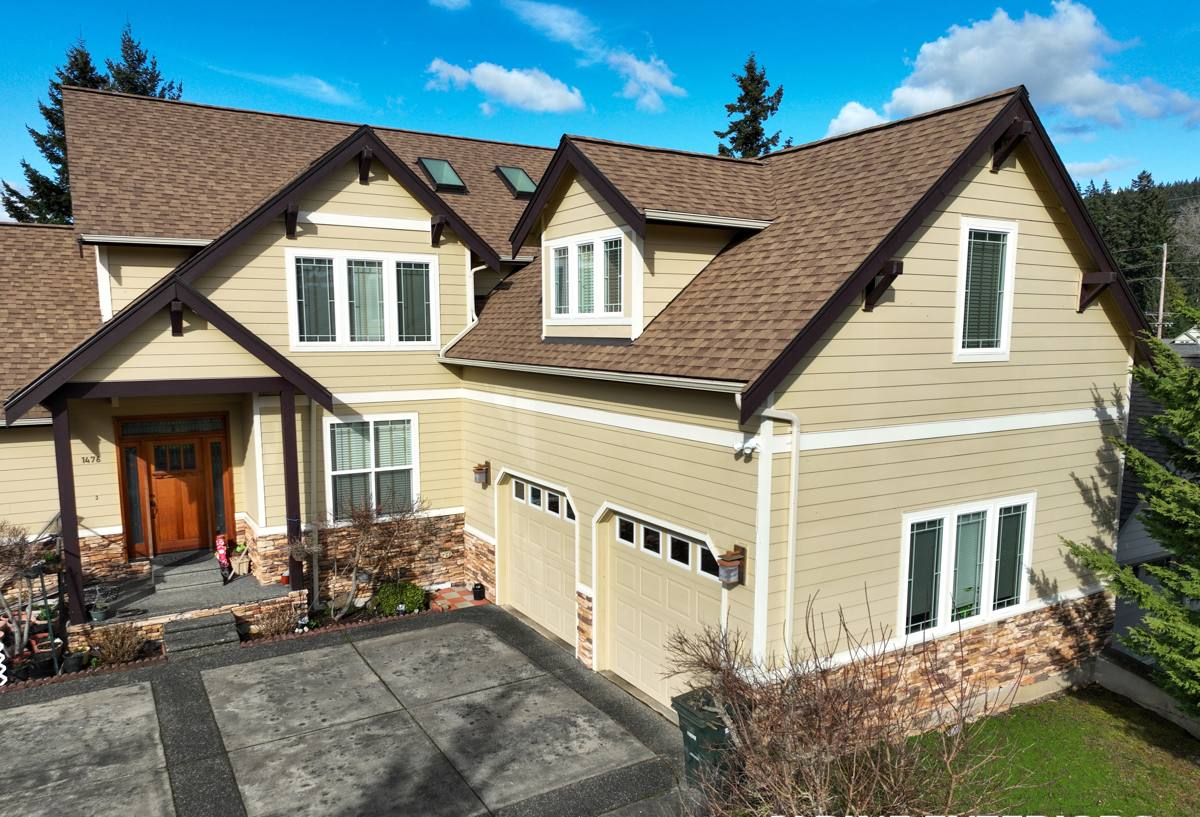
Signs It's Time to Replace Windows in a Kirkland Home
Not every window problem means full replacement, but in a wet climate like ours, a few signs usually mean the window has reached the end of its useful life rather than needing a simple repair.
- Fogging or a milky haze between the panes — the seal has failed and the gas fill is gone
- Visible gaps, soft spots, or discoloration in the wood or composite sill
- Windows that are noticeably harder to open, close, or lock than they used to be
- Persistent drafts you can feel with a hand near the frame on a windy day
- Condensation forming on the inside of the glass regularly, even in mild weather
- Paint or trim around the window failing faster than the rest of the house's exterior
If you're only seeing one of these, it's worth a look before assuming the worst. But when two or three show up together, especially on the same wall, that's usually a sign the window system — not just the glass — has been compromised.
What a Correct Window Installation Involves
Window installation looks straightforward from the outside, but the parts nobody sees are what actually determine whether a window lasts. In a climate like Kirkland's, the details matter more than they would somewhere dry.
Flashing and Water Management
Every window opening needs a layered system that directs water down and out, never inward. That means sill pan flashing at the bottom of the rough opening, properly lapped flashing tape at the sides and top, and integration with the home's existing weather-resistive barrier so water sheds over each layer like shingles. Skip or shortcut this step and the window can look perfect for a year or two before hidden rot sets in behind the trim — which is a far more expensive problem than the window itself.
Insulation and Air Sealing
The gap between the window frame and the rough opening needs to be filled with a material that stays flexible and doesn't force the frame out of square — typically a low-expansion foam or backer rod and sealant, not rigid canned foam packed in tight. Over-filling this gap is a common mistake that bows the frame and causes the sash to bind or the window to leak air along the edges within a couple of years.
Fit, Level, and Plumb
A window that's out of square by even a small margin will bind, leak, or wear its hardware out early. Setting it level, plumb, and square — and shimming it correctly before fastening — is what makes the difference between a window that operates smoothly for twenty years and one that starts sticking within a few winters.
Choosing Windows for a Kirkland Climate
Material and glass package both matter here. The table below covers the trade-offs we walk homeowners through most often.
| Option | Strengths in This Climate | Trade-Offs to Know |
|---|---|---|
| Vinyl frames | Won't rot, low maintenance, good value, handles moisture well | Fewer color options; can expand/contract with temperature swings |
| Fiberglass frames | Very stable dimensionally, holds paint well, long service life | Higher upfront cost than vinyl |
| Wood-clad frames | Classic interior look, good insulating properties | Exterior cladding must be detailed carefully to keep moisture out |
| Double-pane, argon-filled | Solid energy performance, standard choice for most homes | Less sound dampening than triple-pane |
| Triple-pane | Best insulation and noise reduction, ideal for street-facing rooms | Heavier sash, added cost, benefit is marginal on sheltered walls |
For most Kirkland homes, vinyl or fiberglass frames with a double-pane, low-E, argon-filled glass package hit the right balance of cost, energy performance, and durability against our wet weather. Triple-pane makes the most sense on homes near busier roads or with rooms that face prevailing wind and rain directly off the lake.
Our Window Installation Process
We keep the process straightforward and communicate at each stage so there are no surprises.
- On-site assessment — we measure openings, check for existing water damage or rot around the frames, and talk through window styles and glass options for your home.
- Written estimate — a clear breakdown of materials, labor, and timeline before any work begins.
- Removal and inspection — old windows come out carefully, and we inspect the rough opening for hidden moisture damage before anything new goes in.
- Flashing and prep — sill pans, flashing tape, and weather barrier integration are installed to manage water correctly.
- Setting the window — leveled, plumbed, shimmed, and fastened according to the manufacturer's installation instructions, which is also what keeps the warranty valid.
- Insulation, sealing, and trim — gaps are filled properly, interior and exterior trim is finished, and everything is caulked and sealed against the weather.
- Final walkthrough — every window is tested for smooth operation and a tight seal before we call the job done.
What Drives the Cost of Window Installation
Every home is different, so exact numbers depend on the specifics, but a few factors consistently move the price up or down.
| Factor | How It Affects Cost |
|---|---|
| Number of windows | Per-window cost usually drops on larger jobs due to shared labor and setup |
| Frame material | Vinyl is typically the most budget-friendly; fiberglass and wood-clad cost more |
| Glass package | Triple-pane and specialty coatings add cost over standard double-pane low-E |
| Hidden damage | Rot or water damage found behind old frames adds repair work before install |
| Window size and style | Large picture windows or custom shapes cost more than standard operable sizes |
| Access and floor level | Second-story or hard-to-reach windows can add labor time |
We give a firm, itemized estimate up front, so if hidden damage turns up once the old window is out, we stop and talk it through with you before doing any additional work — no surprise charges added to the bill after the fact.
Why Hiring a Crew That Already Works Kirkland Matters
Window installation isn't a one-size-fits-all job. A crew that regularly works homes in Kirkland and around King County has already seen how the local moisture and moss-heavy conditions affect different frame materials, flashing details, and older home construction styles common in this area. That experience shows up in small decisions — how much of a gap to leave for expansion, which sealant holds up in our humidity, how to detail flashing around trim that's already showing early wear — that a crew unfamiliar with the region might get wrong.
It also matters for permitting and code compliance, since requirements can vary by jurisdiction even within King County. A local crew already knows what's expected and handles that process as part of the job rather than treating it as an afterthought.
Keeping New Windows Performing for Years
A correct installation does most of the work, but a little seasonal attention extends the life of any window in our climate.
- Clear debris and moss from sills and nearby gutters before the fall rains start
- Check exterior caulking annually and touch up any cracked or peeling sections
- Operate each window a few times a season so hardware and weatherstripping don't seize up
- Wipe down tracks and hardware periodically to prevent grit buildup that wears seals
- Watch for early signs of trouble — sticking sashes, soft trim, or a musty smell near the frame
- Keep an eye on interior condensation, which can signal a ventilation issue as much as a window issue
If something looks off, catching it early is almost always cheaper and simpler than waiting until it becomes a bigger repair.
If your Kirkland home has windows that are drafty, fogged, hard to operate, or just due for an upgrade, we're happy to take a look and walk you through honest options for your home and budget. Fill out the form below for a free, no-pressure estimate.