 King County
 Why Kirkland Decks Wear Differently
A deck in Kirkland doesn't fail the way a deck fails in a dry climate. It fails from the bottom up and from the inside out. Nine months of the year, this part of King County sees a steady cycle of rain, damp air, and short windows of sun that never quite dry things out before the next system rolls through. Add in moisture-laden marine air pushing in off Puget Sound, and you get wood and hardware that stay wet longer than they were designed to. That's the difference between a deck that looks fine for a season and one that's actually built to last here.
Moss is the most visible symptom, but it's not the real problem — it's a sign that a surface is holding moisture it shouldn't be. Left alone, that moisture works into ledger connections, fastener holes, and end grain, and that's where rot and rust actually start. A deck built for Kirkland has to be designed around shedding and drying water, not just supporting weight.
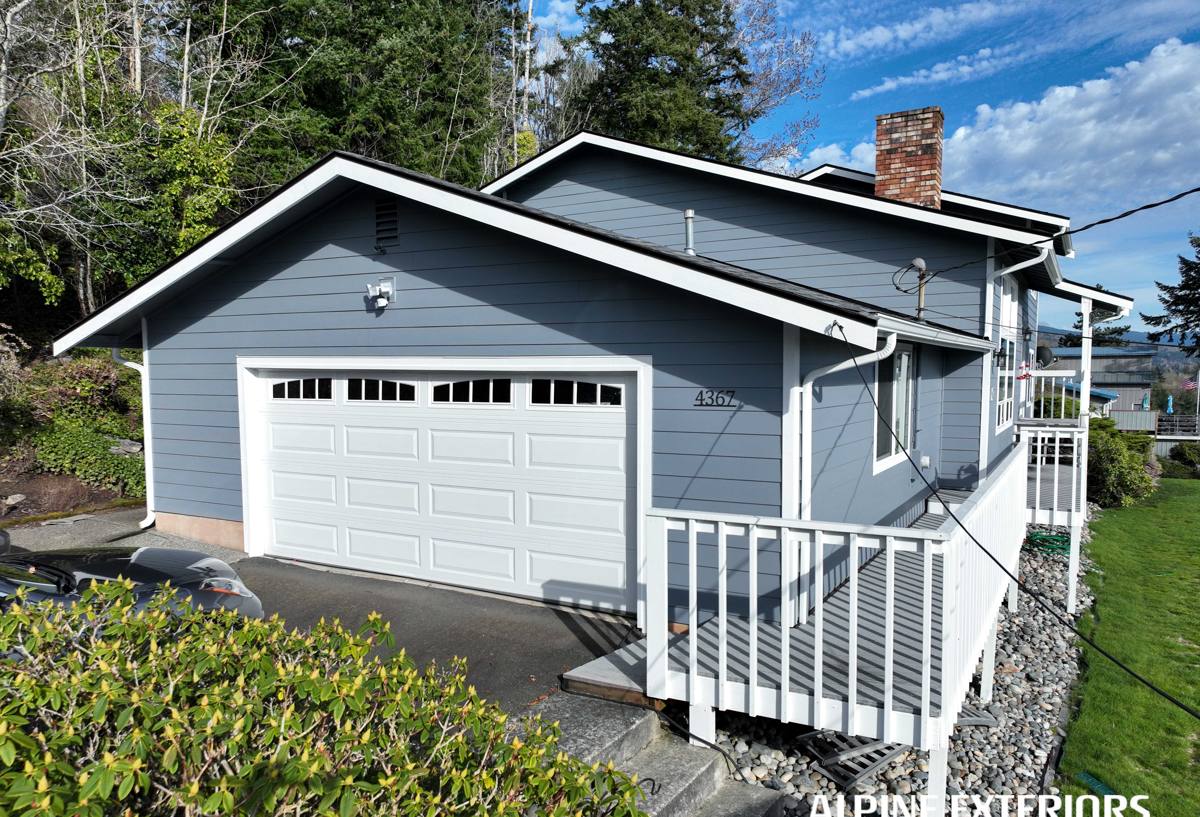
What a Correctly Built Deck Involves
A deck is a structure, not a surface. The decking boards are the part everyone sees, but the framing underneath is what determines whether the deck is safe and how long it lasts. A correct build starts with engineering the load path: footings sized and set below frost depth, posts and beams sized for the actual span and expected loads, and joists spaced to support the decking material chosen — composite and PVC generally want tighter joist spacing than solid wood.
Just as important is how the deck attaches to the house. The ledger board — the piece bolted to the home's framing — carries a huge share of the deck's load, and it's also the single most common point of water intrusion and structural failure when it's flashed poorly. In a climate that stays wet as long as this one does, ledger flashing isn't a detail to rush; it's the difference between a deck that's structurally sound in ten years and one that's quietly rotting behind the siding.
The parts homeowners rarely see, but that matter most
- Footing depth and diameter matched to the deck's actual load, not a generic minimum
- Proper ledger flashing (metal flashing plus a self-adhering membrane, layered to shed water past the house wrap)
- Joist tape or a comparable moisture barrier over the top edge of every joist
- Corrosion-resistant, code-rated fasteners and connectors throughout — not general-purpose hardware
- Adequate gap between the house and any low-clearance skirting to keep air moving underneath
Choosing Decking Material for This Climate
There's no single "best" decking material — there's a best material for a given budget, maintenance appetite, and how much shade and moisture the specific spot on the property gets. In Kirkland, we lean toward materials that resist moisture absorption and don't need frequent refinishing, because a deck that requires yearly maintenance often doesn't get it, and that's when problems start.
| Material | Upfront Cost | Maintenance | Moisture/Moss Resistance | Typical Lifespan |
|---|---|---|---|---|
| Pressure-treated wood | Lowest | Annual cleaning, periodic stain/seal | Fair — needs upkeep to stay ahead of moss and checking | 10-15 years with consistent maintenance |
| Cedar | Moderate | Regular cleaning and refinishing to preserve color and seal | Naturally rot-resistant, but surface still needs care in a wet climate | 15-20 years with maintenance |
| Capped composite | Higher | Occasional washing, no staining or sealing | Strong — capped surface resists moisture and moss buildup | 25+ years, most with 25-50 year warranties |
| PVC decking | Highest | Lowest — wash occasionally | Excellent — fully synthetic, doesn't absorb moisture | 25+ years |
Real wood still has a place, especially where the look and cost matter most and the homeowner is genuinely willing to keep up with cleaning and refinishing. But we're honest with clients about the trade-off: wood in this climate demands ongoing attention, and skipping a season or two of maintenance is exactly how moss gets a foothold and moisture starts working into the grain. Capped composite and PVC cost more upfront but remove most of that maintenance burden, which is why we install a lot of both.
Moisture Management Below the Surface
The decking material gets the attention, but what's underneath does the real work of keeping a deck healthy through a wet King County winter. Every joist top should be protected so water doesn't sit in the wood fibers where the decking boards are fastened down — that's one of the most common places we find hidden rot when we inspect an older deck. Fastener choice matters too: in a damp climate, the wrong screws or hangers corrode from the inside, which weakens connections long before anything looks visibly wrong on the surface.
Airflow underneath the deck is just as important as flashing on top. A deck built low to the ground or boxed in tightly with solid skirting traps moisture against the framing with nowhere to go. We build in enough clearance and ventilation to let the structure actually dry out between rain events, which in this area might only be a day or two at a time.
Railings, Stairs, and Hardware
Guardrails and stair railings are code-required safety features, not just finishing touches, and they take on outsized wear in this climate because they're the most exposed part of the structure. Metal balusters and connectors need to be corrosion-resistant, and any wood rail components need the same moisture protection as the rest of the deck. We size and space railings to current residential building code — height, baluster spacing, and stair rise/run all have code minimums that exist because they prevent real injuries, and we don't cut corners on them to save a little material.
Permits and Code in King County
Most new decks and many deck replacements in King County require a building permit, and the requirements — footing depth, guardrail height, attachment method to the house — are there to make sure the structure is actually safe to stand on, not just to slow the project down. Requirements can vary depending on the deck's height, size, and attachment to the home, so we confirm what applies to your specific project rather than assuming.
Part of hiring a local crew is not having to sort this out yourself. We handle the permit application, make sure the design meets current code before a shovel goes in the ground, and coordinate inspections so the project doesn't stall out waiting on paperwork you didn't know you needed.
Our Process, Start to Finish
- On-site assessment: we look at the ground, existing structure (if replacing a deck), sun and moisture exposure, and how the deck will connect to the house.
- Design and material selection: we walk through material options honestly, including maintenance trade-offs, and size the structure to the actual use — furniture, hot tub, grill, foot traffic.
- Permitting: we prepare and submit what's needed and schedule inspections at the right points in the build.
- Construction: footings, framing, ledger flashing, and moisture protection go in first — the parts you won't see again once decking is installed.
- Decking, railings, and finish work: boards, rails, stairs, and any lighting or fascia details.
- Final walkthrough: we go over the finished deck and what maintenance, if any, it needs going forward.
Keeping a Kirkland Deck Healthy Year-Round
Even a well-built deck needs some seasonal attention in this climate. The goal isn't constant upkeep — it's a short list of things done at the right time of year that prevent moss and moisture from gaining ground.
- Clear leaves and debris from between boards before fall rains set in — trapped debris holds moisture against the deck surface
- Wash off moss and algae in early spring before it spreads, using a deck-safe cleaner rather than a pressure washer on close range
- Check that gaps between boards and any drainage points stay clear so water keeps moving instead of pooling
- Re-stain or reseal wood decking on the manufacturer's recommended schedule — don't wait until it looks like it needs it
- Look underneath the deck once a year for any signs of moisture staining, rust on hardware, or soft wood near the ledger
Why Local Experience Matters Here
Deck building isn't the same job in every climate, and a crew that mostly builds in dry regions will make different assumptions than one that works Kirkland and King County year-round. We know which details actually matter here — ledger flashing, joist protection, material selection, drainage — because we see what happens when those details get skipped: the calls we get are almost always about a deck that looks fine on top and has a moisture problem underneath. Building it right the first time costs less than fixing it after a few wet winters.
If you're planning a new deck or replacing one that's past its prime, we're happy to take a look and talk through what makes sense for your property. There's no cost and no pressure — just a straightforward estimate based on what your home and yard actually need.