 King County
 Windows Are a Weather System, Not Just Glass
In Kirkland, a window isn't just something you look through — it's one of the largest weak points in your home's defense against the outside. King County's climate is defined by long stretches of driving rain, high humidity, and a moss season that can stretch from fall through spring. Add in the salt-tinged air that moves through the broader Puget Sound region, and you've got conditions that are hard on caulk, hard on seals, and hard on wood trim year after year. Custom windows done right account for all of that from day one — not just the glass itself, but how the whole assembly sheds water, breathes, and holds up over the next few decades.
Kirkland's housing stock adds another layer to this. The city has a mix of older lakeside and hillside homes with original single-pane or early dual-pane windows, mid-century ramblers with non-standard openings, and newer construction where builder-grade windows were installed to a price point rather than a performance standard. "Custom" in this context usually means matching an opening that doesn't fit a stock size, matching a shape or grid pattern to an existing home's character, or upgrading performance specs without tearing into the surrounding wall more than necessary.
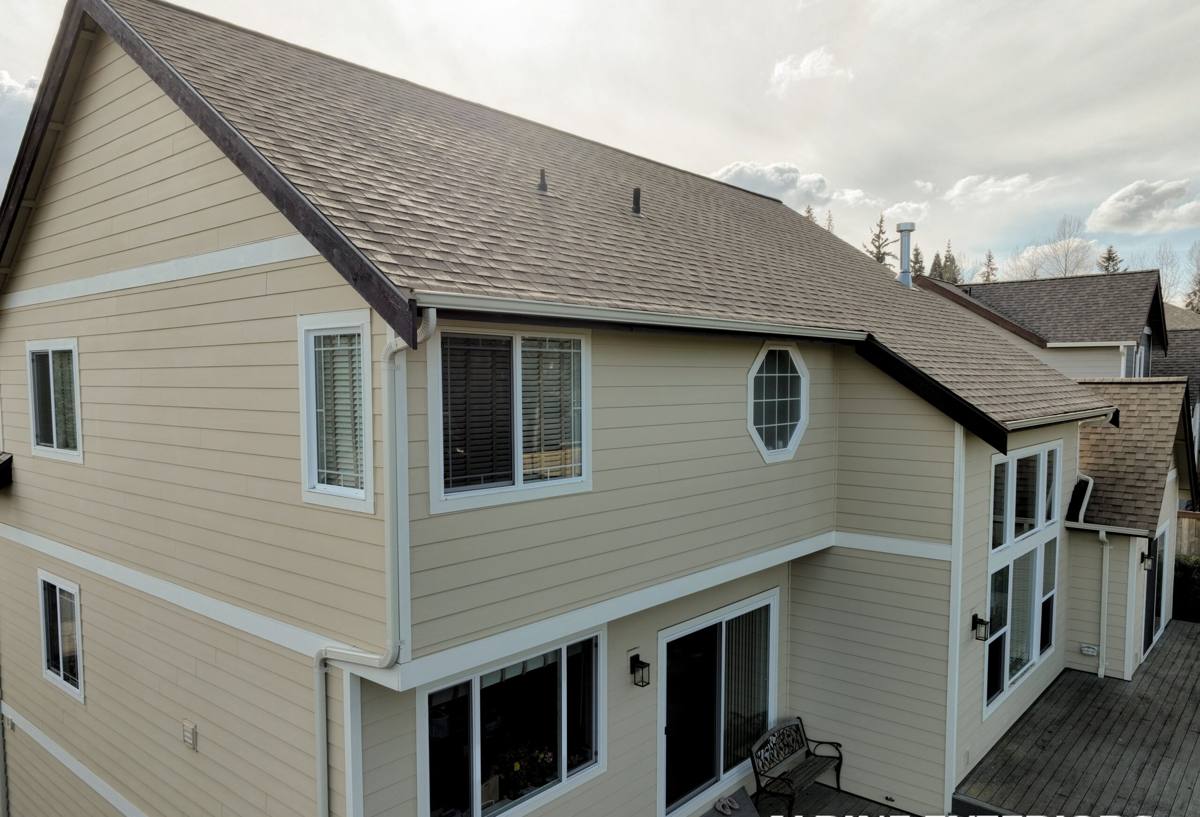
What "Custom" Actually Means for a Kirkland Home
Custom windows fall into a few categories, and most Kirkland projects involve one or more of these:
- Retrofit replacement — new windows built to fit existing rough openings, minimizing disruption to siding and interior trim.
- Full-frame replacement — the old frame comes out entirely, exposing the rough opening so we can inspect and repair any hidden water damage before the new window goes in.
- Non-standard sizes and shapes — arched, oversized, or oddly proportioned openings common in older Eastside homes and custom-built houses.
- Matched sightlines — keeping grid patterns, frame color, and proportions consistent across a home's facade, especially when only some windows are being replaced.
The right approach depends heavily on the condition of what's already there. A home with sound framing and no water intrusion is usually a good candidate for retrofit replacement. A home with soft sills, staining, or a musty smell near the window trim almost always needs a full-frame approach so we can address the cause, not just cover it up.
Retrofit vs. Full-Frame: How We Decide
We don't default to the more expensive option just because it's more thorough. We open up a sample area, check the sheathing and framing for moisture damage, and base the recommendation on what we actually find — not on assumption. If the wall is dry and sound, retrofit saves you money and disruption. If there's rot or a history of leaks, full-frame is the only way to fix the actual problem instead of trapping it behind new glass.
Material Options for a Damp Climate
Every window material performs differently under sustained moisture exposure, temperature swings, and UV. Here's how the common options stack up for a King County home like yours:
| Material | Moisture Resistance | Maintenance | Best Fit |
|---|---|---|---|
| Vinyl | Very good — won't rot, minimal seam risk if welded corners are used | Low — occasional cleaning | Most Kirkland homes, best value-to-performance ratio |
| Fiberglass | Excellent — dimensionally stable in wet and dry cycles | Low | Larger openings, higher-end remodels, long-term durability priority |
| Wood-clad (exterior clad, interior wood) | Good on the exterior face, but interior wood is vulnerable if seals fail | Higher — requires attentive caulking and inspection | Historic character homes where interior wood trim matters |
| Aluminum | Poor thermal performance, prone to condensation in our climate | Low | Rarely our recommendation for residential Kirkland projects |
We steer most clients toward vinyl or fiberglass for standard replacements because both handle King County's moisture cycles without the ongoing maintenance burden that solid wood or wood-clad products carry. That's not a knock on wood-clad windows — they can look excellent — but they demand a level of upkeep that a lot of busy homeowners underestimate until they're dealing with a failed seal ten years in.
Signs Your Current Windows Are Losing the Fight
Window failure in this climate is usually gradual, and homeowners often live with early warning signs for years before addressing them. Watch for:
- Fogging or a permanent haze between panes (a failed seal, not a cleaning issue)
- Windows that stick, won't stay open, or are difficult to lock
- Visible gaps or drafts you can feel near the frame on windy days
- Soft, discolored, or spongy wood at the sill or surrounding trim
- Moss or dark staining creeping onto the frame or nearby siding
- A noticeable jump in heating costs with no other explanation
- Condensation forming on the interior glass regularly through fall and winter
Any one of these on its own isn't necessarily urgent. Several at once, especially combined with soft trim, usually means water has been getting past the seal for a while and it's worth having someone look before it turns into a framing repair.
What a Correct Installation Actually Involves
Most window failures we get called out to fix aren't a bad window — they're a poor installation. The product matters less than the details around it. A correct install includes:
Flashing and Water Management
Proper flashing tape and pan flashing at the sill direct any water that gets past the exterior cladding back outside, rather than into the wall cavity. This is the single most important detail on a wet-climate install and the one most often skipped or rushed.
Sealant Strategy
Sealant is a backup, not the primary defense. We use it correctly — continuous beads at the right locations, compatible with the window and cladding materials — but we don't rely on caulk alone to keep water out over the long run.
Insulation Without Gaps
The gap between the window frame and rough opening needs to be filled evenly, without compressing the frame or leaving voids that become cold spots and condensation points.
Interior and Exterior Finish
Trim, casing, and any paint or caulk finish work should match the surrounding home and be sealed against its own moisture entry points, not just look finished from a distance.
Our Process, Start to Finish
- On-site evaluation — we look at existing windows, framing condition, and what's driving the need for replacement.
- Measurement and product selection — exact openings, material choice, and performance specs suited to the exposure of that specific wall.
- Permit filing — handled on our end when the scope requires it (see below).
- Removal and prep — old windows out, opening inspected and repaired if needed before anything new goes in.
- Installation — flashing, air sealing, and insulation done to a standard built for this climate, not a minimum-code shortcut.
- Finish work — interior and exterior trim completed and sealed.
- Walkthrough — we go over the work with you and confirm everything operates and seals correctly before we consider it done.
Permits and Local Code in Kirkland
Window replacement in Kirkland may or may not require a permit depending on scope — straightforward like-for-like replacement in the same opening is often exempt, while enlarging an opening, changing egress windows in bedrooms, or work tied to a larger remodel typically isn't. Egress requirements matter in particular: bedroom windows have minimum size and opening requirements for emergency escape, and it's easy to accidentally violate them when resizing an opening without checking first. We handle the permit determination and filing as part of the job so you're not left guessing whether your project needs a City of Kirkland sign-off.
Energy Performance in a Mild but Damp Climate
King County doesn't see extreme heat or cold, so window shopping here is a little different than it is in climates with harsh winters. Two numbers matter more than the marketing around them:
- U-factor — measures how well the window resists heat loss. Lower is better, and this is the number that matters most for our mild, heating-dominated climate.
- SHGC (Solar Heat Gain Coefficient) — measures how much solar heat passes through. Less critical here than in sunnier climates, but still worth considering on south- and west-facing walls.
We help you pick glass packages based on the actual orientation and exposure of each wall rather than a single spec applied to the whole house. A north-facing window and a west-facing window in the same home don't always need the same glass.
Why a Local Crew Matters for This Job
Window installation is one of those projects where local knowledge shows up in details you won't notice until years later. A crew that works King County regularly knows how this region's rain behaves against different wall orientations, understands Kirkland's permitting expectations, and has already seen how various window products hold up after a few real Pacific Northwest winters — not just what the manufacturer's brochure claims. That experience shapes decisions on flashing details, material selection, and where to spend versus where it doesn't matter, in ways a crew unfamiliar with this climate simply won't account for.
If you're weighing custom windows for a Kirkland home, we're glad to take a look, walk you through honest options for your specific openings and exposure, and put together a straightforward estimate — no pressure, no pushy upsell. The form below is the easiest way to get that conversation started.