 King County
 Why Kirkland Roofs Wear Out Differently
A roof in Kirkland does not fail the way a roof in a dry climate fails. There is rarely one dramatic storm that takes it out. Instead, it is a slow accumulation of small insults: months of low-intensity rain that never quite lets the roof deck fully dry, humid marine air moving in off the Puget Sound region that keeps moisture sitting in shaded valleys and north-facing slopes, and moss and algae that get a running start every fall and don't really let up until late spring. Add in the tree cover common to Kirkland's older, established neighborhoods, and you have a roof environment that punishes shortcuts far more than a dry climate would.
That matters because a roof replacement done with generic, one-size-fits-all methods will underperform here even if it looks fine on installation day. The materials, the underlayment strategy, the ventilation, and the flashing details all need to account for King County's wet-side conditions, not just the manufacturer's minimum spec sheet.
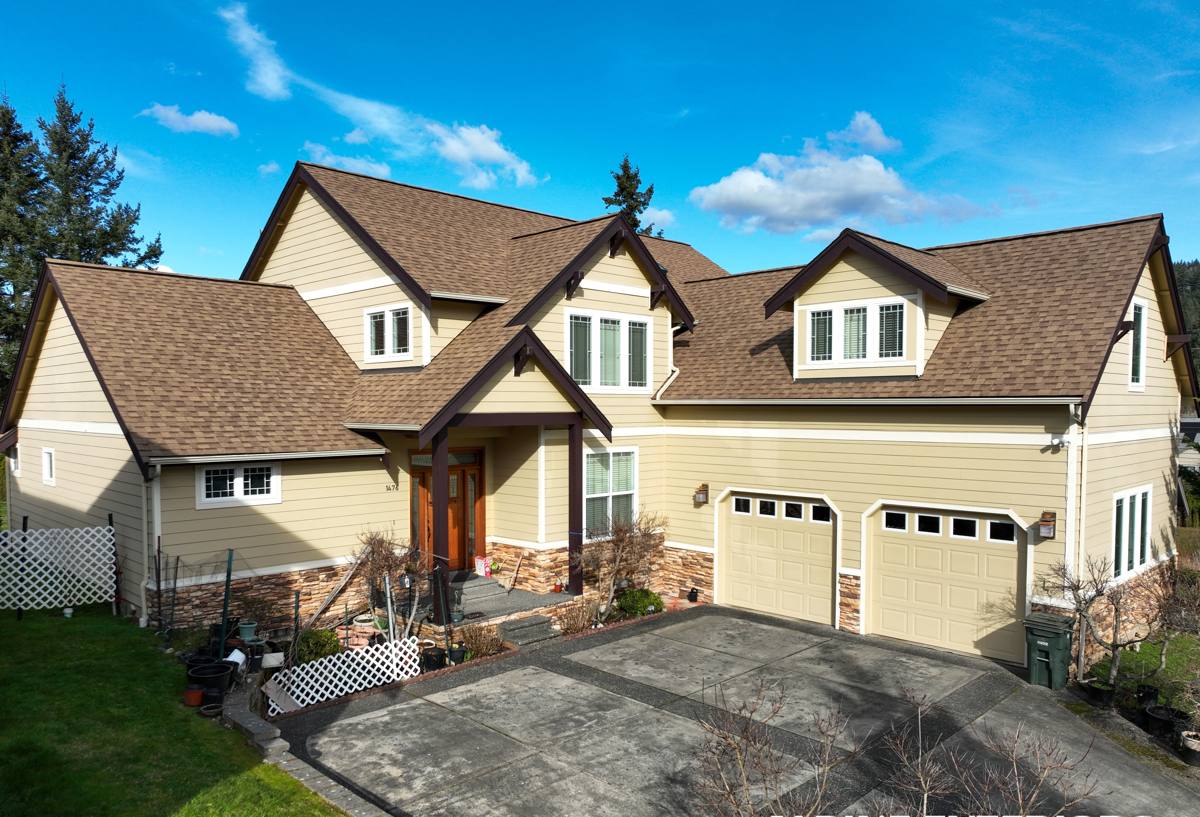
Signs a Kirkland Roof Needs Replacement, Not Another Repair
Homeowners often ask whether a problem area can just be patched. Sometimes it can. But repeated repairs on an aging roof usually mean the underlying materials have reached the end of their useful life, and patching becomes a losing game against the moisture and moss cycle described above. Some signals that point toward full replacement rather than another repair visit:
- Granule loss heavy enough that you're finding shingle grit in gutters and downspouts every season
- Moss that keeps returning within a year of treatment, especially on north-facing or shaded slopes
- Curling, cupping, or cracked shingles spread across multiple roof planes, not just one localized spot
- Soft or spongy decking felt underfoot during inspection, indicating moisture has reached the wood
- Daylight visible through the attic roof deck, or consistent staining on attic sheathing and rafters
- A roof already past, or close to, the manufacturer's expected service life for its material and exposure
- Multiple past repairs on the same roof plane within a few years
If only one or two of these apply and the roof is otherwise young, a targeted repair is the honest recommendation. If several apply, replacement is usually the more cost-effective path over the long run, since repeated repairs on a failing roof rarely add up to less than one correct replacement.
What a Correct Roof Replacement Actually Involves
A roof replacement is more than swapping old shingles for new ones. In a climate that stays wet as long as ours does, the parts you don't see matter as much as the parts you do.
Full Tear-Off and Deck Inspection
We remove the existing roofing down to the deck rather than layering over old material. That is the only way to actually see the condition of the sheathing underneath. Any deck areas that are soft, delaminated, or water-damaged get replaced before anything new goes down — installing new roofing over a compromised deck just guarantees a shorter lifespan for the whole system.
Underlayment and Ice & Water Protection
Given how much of the year Kirkland roofs stay damp, underlayment selection is not a place to cut corners. Self-adhered ice and water shield belongs in the vulnerable spots — valleys, eaves, around chimneys and skylights, and any low-slope transitions — with synthetic underlayment across the field for a consistent secondary water barrier under the shingles.
Ventilation: The Half of the Job Most People Never See
A roof that can't breathe traps moisture in the attic, which speeds up deck rot from underneath and can void material warranties. Balanced intake and exhaust ventilation, sized correctly for the attic space, is part of a correct replacement — not an upsell.
Flashing and Penetrations
Chimneys, vent pipes, skylights, and wall-to-roof transitions are where the vast majority of leaks actually originate, not the open shingle field. New step flashing, counter-flashing, and pipe boots go in as part of the job, not reused from the old roof.
Choosing the Right Roofing Material for This Climate
There is no single "best" roofing material — there's a best fit for your home's exposure, roof pitch, budget, and how much long-term maintenance you're willing to take on. Here's how the common options compare for King County's wet-side conditions.
| Material | Moss & Moisture Behavior | Typical Lifespan Here | Maintenance Burden |
|---|---|---|---|
| Standard asphalt composition shingle | Moderate moss resistance; algae-resistant granule versions perform noticeably better in shade | 20-25 years | Periodic moss treatment recommended |
| Architectural / dimensional shingle | Heavier profile sheds water better than 3-tab; good algae-resistant options available | 25-30 years | Low to moderate |
| Standing seam metal | Sheds moisture fast, minimal surface for moss to establish on | 40-50+ years | Low |
| Wood shake | Absorbs and holds moisture in our climate; requires diligent, ongoing maintenance to resist rot and moss | Highly variable by upkeep | High |
Our professional standard leans toward asphalt composition and metal for most Kirkland homes because their moisture behavior and maintenance demands line up realistically with how much attention most homeowners want to give a roof year after year. Wood shake can look great, but the honest trade-off is that it needs consistent, disciplined maintenance in our rain and moss cycle to avoid the exact problems — trapped moisture, accelerated decay — that a replacement is supposed to solve.
How Our Replacement Process Works
- On-site inspection and estimate — we look at the current roof, attic ventilation, decking condition, and any problem areas before recommending anything
- Material and scope walkthrough — we go over options in plain terms, including the trade-offs above, so the decision is yours to make with full information
- Scheduling around weather windows — tear-off and dry-in are timed to give us the best realistic stretch of dry weather available
- Tear-off and deck repair — full removal, deck inspection, and replacement of any damaged sheathing
- Underlayment, flashing, and ventilation installed — the components that determine how the roof performs over the next 20-plus years, not just how it looks on day one
- New roofing installed to manufacturer specification — correct nailing pattern, exposure, and fastening for wind and moisture performance
- Site cleanup and magnetic sweep — debris, old materials, and stray fasteners cleared from the property
- Final walkthrough — we review the finished roof with you before considering the job done
What Roof Replacement Typically Costs in Kirkland
Every roof is different, but the factors below are what actually move the number. Broad ranges only — your estimate will be specific to your home.
| Cost Factor | Why It Matters |
|---|---|
| Roof size and number of planes | More square footage and more complex geometry mean more material and labor |
| Pitch and access | Steep or hard-to-access roofs take longer and require more safety setup |
| Number of existing layers | Removing multiple old layers adds tear-off time and disposal cost |
| Deck condition | Rotted or soft sheathing found during tear-off requires replacement before roofing can go on |
| Material choice | Standard asphalt, architectural shingle, and metal carry different material and labor costs |
| Ventilation and flashing needs | Older homes often need ventilation upgrades or additional flashing work to meet current standards |
For context, a full tear-off and asphalt shingle replacement on a typical Kirkland home often lands somewhere in the low-to-mid five figures, with metal roofing and larger or more complex roofs running higher. The only way to get a real number is a look at your actual roof, which is what the estimate is for.
Protecting Your Investment After Replacement
A new roof still lives in the same climate the old one did. A little ongoing attention keeps it performing for its full expected lifespan instead of showing premature wear.
- Keep gutters clear so water isn't backing up under the eaves during heavy rain
- Trim back overhanging branches to cut down on shade, debris, and moss establishment
- Schedule periodic moss treatment before it takes hold, rather than after it's visible from the street
- Have the attic checked occasionally for proper airflow and any signs of moisture
- Address minor flashing or sealant issues quickly rather than letting small leaks become deck damage
Why Local Experience in Kirkland Matters
A roofing crew that works Kirkland regularly already knows how the local rain patterns, tree cover, and lake-effect humidity behave against different roof designs and orientations across the city. That familiarity shows up in small decisions — where to add extra ice and water protection, how much ventilation a particular attic actually needs, which valleys tend to hold moisture longest — that a crew unfamiliar with the area might not think to prioritize. It also means we're not disappearing after the invoice is paid; we're a call away if a question comes up next winter.
If your roof is showing its age or you just want an honest read on whether repair or replacement makes sense, we're happy to take a look. The estimate is free, there's no pressure to commit on the spot, and you'll get a straight answer either way — use the form below to get started.