 King County
 Ballard's Marine Climate Is Harder on Siding Than It Looks
Ballard sits close enough to Puget Sound that salt-laden air is just part of daily life, and that changes what a siding material has to survive. Salt air accelerates corrosion on fasteners and metal trim, and it works its way into porous or poorly sealed materials over years, not months. Add in the long, wet stretch of fall through spring that King County is known for, and you have a climate that punishes anything that traps moisture or swells when it gets wet.
Then there's moss. In a neighborhood with mature trees, damp shade, and a roofline or siding surface that stays wet for days at a stretch, moss and algae growth is close to guaranteed on the wrong material. Wood-based products in particular give moss something to grip and feed on. None of this is unique to any one house — it's the baseline condition every exterior on this side of Seattle has to be engineered for.
What We See on Ballard Homes
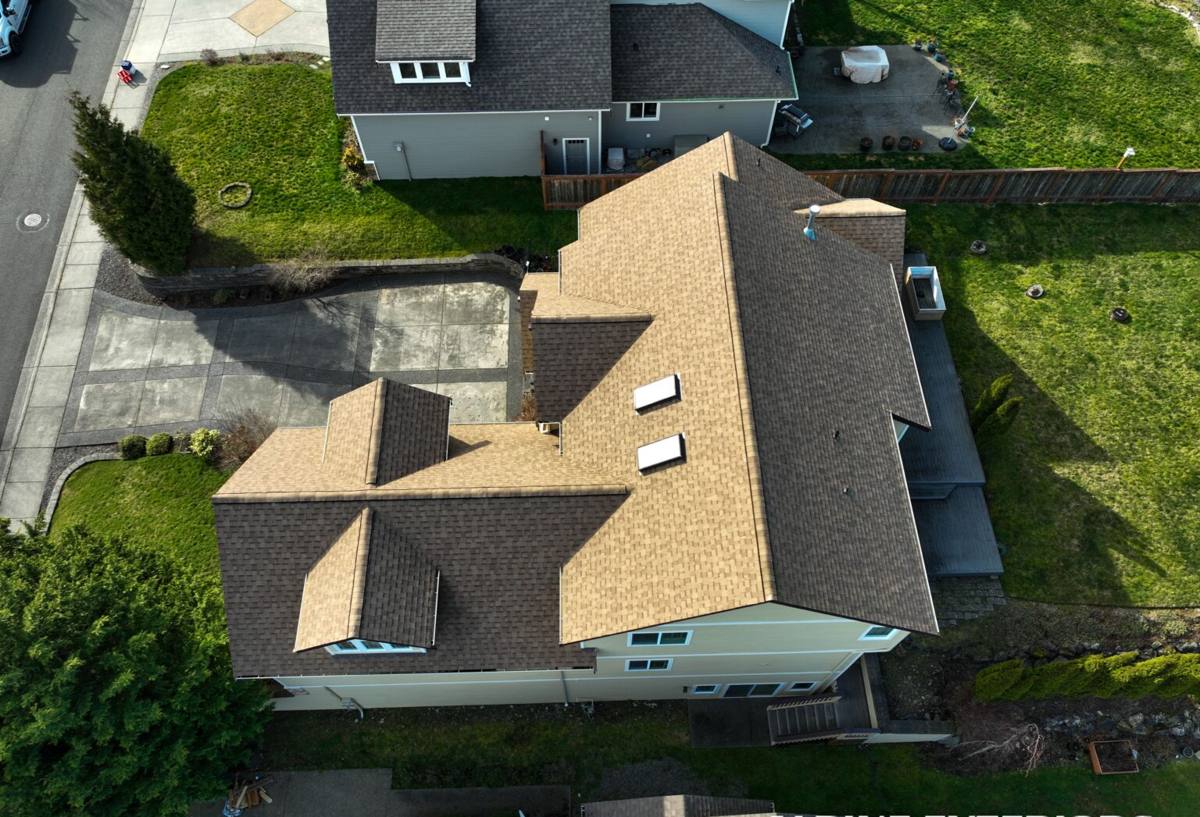
Ballard's housing stock is a mix — a good number of older craftsman-style and early-1900s homes alongside newer infill construction and townhomes built over the last couple of decades. The older homes often still have original wood siding or a past re-side that's showing its age: cupping boards, peeling paint, soft spots near the ground and around window trim. The newer builds are more likely to have vinyl or a fiber cement product installed to a builder-grade spec rather than a climate-specific one.
In both cases, the failure points tend to be the same: the bottom few feet of wall near grade where splashback and standing moisture do the most damage, north- and shade-facing walls where things never fully dry out, and any spot where old caulking has failed and let water behind the cladding. A correct siding job pays close attention to exactly these areas rather than treating the whole wall as one uniform surface.
Why We Only Install James Hardie
We don't install LP SmartSide, vinyl, Cemplank, Allura, primed spruce, or cedar. That's not a marketing line — it's a standard we hold because we've seen how each of those products actually performs over a decade or two in exactly this kind of climate, and we'd rather stand behind fewer products and know them well than offer a menu and hope for the best.
Vinyl is inexpensive and low-maintenance in mild climates, but it expands and contracts with temperature swings, can crack in a hard impact, and its seams and fastening are unforgiving of a sloppy install. Wood species like cedar or primed spruce look great on day one but need ongoing paint and caulk maintenance to keep moisture out, and in a wet, moss-friendly climate that maintenance schedule gets demanding fast. Other fiber cement brands compete reasonably well on paper, but James Hardie is the manufacturer that has invested specifically in engineering products for Pacific Northwest humidity and rain exposure, backs them with a strong factory finish, and has the track record and installer network we trust. Standardizing on one product means our crews install it constantly, know its quirks cold, and can talk you through exactly what it needs — instead of relearning a different material's rules on every job.
Choosing the Right Hardie Line for a Salt-Air, Wet Neighborhood
James Hardie makes climate-engineered product lines, and for a neighborhood like Ballard the HZ5 formulation — engineered for wetter, harsher climates — is generally the right call over a product built for drier regions. The difference matters more than most homeowners realize: it affects how the board handles moisture cycling over the years, which is exactly the stress this climate puts on an exterior.
On top of the base product, ColorPlus factory-applied finish is worth the upgrade for most Ballard projects. A factory finish is baked on under controlled conditions and holds up to UV and moisture far better than a field-applied paint job, and it comes with its own finish warranty. In a neighborhood dealing with salt air and long damp stretches, a finish that doesn't need repainting every several years is a real, practical saving — not just a convenience.
- HZ5 formulation for wetter, higher-humidity regions rather than a standard-climate product
- ColorPlus factory finish over field-applied paint wherever the budget allows
- Lap siding, shingle-style panels, or a mix, chosen to match the home's existing lines rather than a one-size template
- Trim and fascia in a matching Hardie system so expansion, moisture behavior, and finish age consistently across the whole exterior
What a Correct Installation Actually Involves
Clearance and Drainage
Most siding failures we're called out to inspect aren't a failure of the material — they're a failure of clearance and drainage. James Hardie's own installation instructions call for a minimum gap between the bottom of the siding and grade, roofing, decks, and hard surfaces, and for a drainage plane behind the siding so any moisture that does get past the surface has somewhere to go. Skipping this step is invisible on install day and shows up as rot and staining years later.
Fastening and Flashing
Corrosion-resistant fasteners aren't optional this close to salt air — the wrong fastener will rust, streak the finish, and eventually lose its grip. Flashing at every window, door, and roofline intersection has to be installed to shed water outward, not just caulked over and hoped for. This is the least visible part of the job and the part most likely to get rushed by a crew that doesn't specialize in the product.
Caulking and Finish Lines
James Hardie's install specs are explicit about where caulk is required and where it isn't — over-caulking traps moisture just as reliably as under-caulking lets it in. Butt joints, corners, and penetrations need the right sealant applied correctly, and any field-cut edges need to be sealed and, where required, painted to match, or they become the first place moisture gets in.
Our Process, Start to Finish
We start with a walk-around assessment of the existing siding and the specific problem spots on your home — grade clearance, shaded walls, old caulk failures, and any soft or damaged sheathing underneath. That inspection drives the actual scope of work rather than a generic quote.
From there we handle tear-off and a check of the sheathing and weather barrier underneath before anything new goes up — this is the point where hidden moisture damage from the old siding gets caught and dealt with, not covered over. Installation follows Hardie's written specifications for clearance, fastening, and flashing at every transition, and we finish with the trim, caulking, and touch-up that make the whole exterior look and perform as one system rather than a patchwork. We walk the finished job with you before we consider it done.
James Hardie Compared to Other Siding Options in This Climate
| Factor | James Hardie Fiber Cement | Vinyl | Wood (Cedar / Primed Spruce) |
|---|---|---|---|
| Moisture behavior | Doesn't swell, rot, or feed moss when installed to spec | Doesn't absorb water, but seams and gaps can let moisture behind it | Absorbs moisture; needs paint/seal maintenance to keep it out |
| Salt air / corrosion exposure | Cement-based board is not affected; fasteners must be corrosion-resistant | Not affected directly, but can chalk and fade near the water | No corrosion issue, but finish degrades faster in salt air |
| Moss and algae resistance | Factory finish resists growth better than bare or painted wood | Generally resistant, though dirt and mildew can build in seams | Provides an easy surface for moss to establish and hold moisture |
| Maintenance over time | Occasional wash; ColorPlus finish holds color for years | Low, but cracks and fades and can't be easily patched to match | Repaint or reseal on a recurring cycle to stay protected |
| Fire resistance | Non-combustible | Melts/deforms under heat exposure | Combustible |
What Drives the Cost of a Ballard Siding Project
Every home is different, but a few factors consistently move the price of a James Hardie project up or down. Knowing them ahead of time makes it easier to understand your estimate and where the money is actually going.
| Cost Factor | Why It Matters |
|---|---|
| Extent of tear-off and hidden damage | Rotted sheathing or old moisture damage found during tear-off adds repair work before new siding can go on |
| Product line and finish | HZ5 with ColorPlus factory finish costs more upfront than field-painted, standard-climate board, but reduces future maintenance |
| Home size and wall complexity | Dormers, multiple stories, and cut-up wall lines take more labor per square foot than a simple rectangular elevation |
| Trim and accessory work | Matching Hardie trim, fascia, and accessories keeps the whole system consistent but adds to scope |
| Access and site conditions | Tight lots, mature landscaping, and limited staging space common in established neighborhoods can add time |
Keeping Hardie Siding Performing in a Wet, Salty, Mossy Climate
James Hardie siding is genuinely low-maintenance compared to wood, but "low-maintenance" doesn't mean "no maintenance" — especially this close to the water. A short annual routine keeps it performing the way it's designed to.
- Rinse the siding once or twice a year to clear salt residue, pollen, and dirt buildup before it accumulates
- Check and clear moss or debris from any spot where two surfaces meet — behind gutters, at deck ledgers, around foundation planting beds
- Look over caulking at trim, corners, and penetrations annually and have any cracked or missing sections redone promptly
- Keep gutters clear and downspouts directed away from the wall so splashback doesn't concentrate at the base of the siding
- Trim back vegetation and tree limbs that keep a wall section shaded and damp longer than the rest of the house
- Watch grade and mulch levels near the foundation — regrading or landscaping work over time can quietly reduce the clearance your siding needs
Why Hiring a Crew That Already Works in Ballard Matters
Siding installation isn't just about following a manufacturer's manual in the abstract — it's about applying it correctly to the specific conditions of a specific neighborhood. A crew that regularly works in Ballard already understands how the local mix of older and newer homes tends to be built, where the recurring moisture and clearance problems show up, and how a marine climate this close to Puget Sound behaves across the seasons. That experience shows up in faster, more accurate assessments and fewer surprises once tear-off starts.
It also means accountability. A local crew is one you can call back easily, whose past work in the neighborhood you can ask around about, and who has a real reason to get the flashing, clearance, and fastening details right the first time rather than treating your home as a one-off out-of-town job.
If you're weighing a re-side in Ballard, we're glad to walk your home, point out the specific problem areas we see, and put together a straightforward estimate for a James Hardie system built for this climate — no pressure, no generic sales pitch. Reach out using the form below to get a free estimate started.