 King County
 Why Ballard's Marine Climate Is Hard on Windows
Ballard sits close enough to Puget Sound that homes here deal with a different mix of weather stress than houses further inland in King County. Salt-laden air off the water accelerates corrosion on hardware, fasteners, and low-quality metal components. Wind-driven rain off the Sound doesn't just fall straight down — it gets pushed sideways into window frames and trim, which means flashing and sealing details that would be fine in a calmer climate can fail here. And the long, wet moss season that runs from fall through spring keeps wood trim, sills, and cladding damp for months at a stretch, which is exactly the environment moss, algae, and rot need to take hold.
None of this means Ballard is uniquely brutal on windows — it means the margin for error is smaller. A window and installation that would coast along for 20 years in a dry inland neighborhood can start showing seal failure, frame swelling, or hardware corrosion years earlier here if it wasn't specified and installed with this climate in mind.
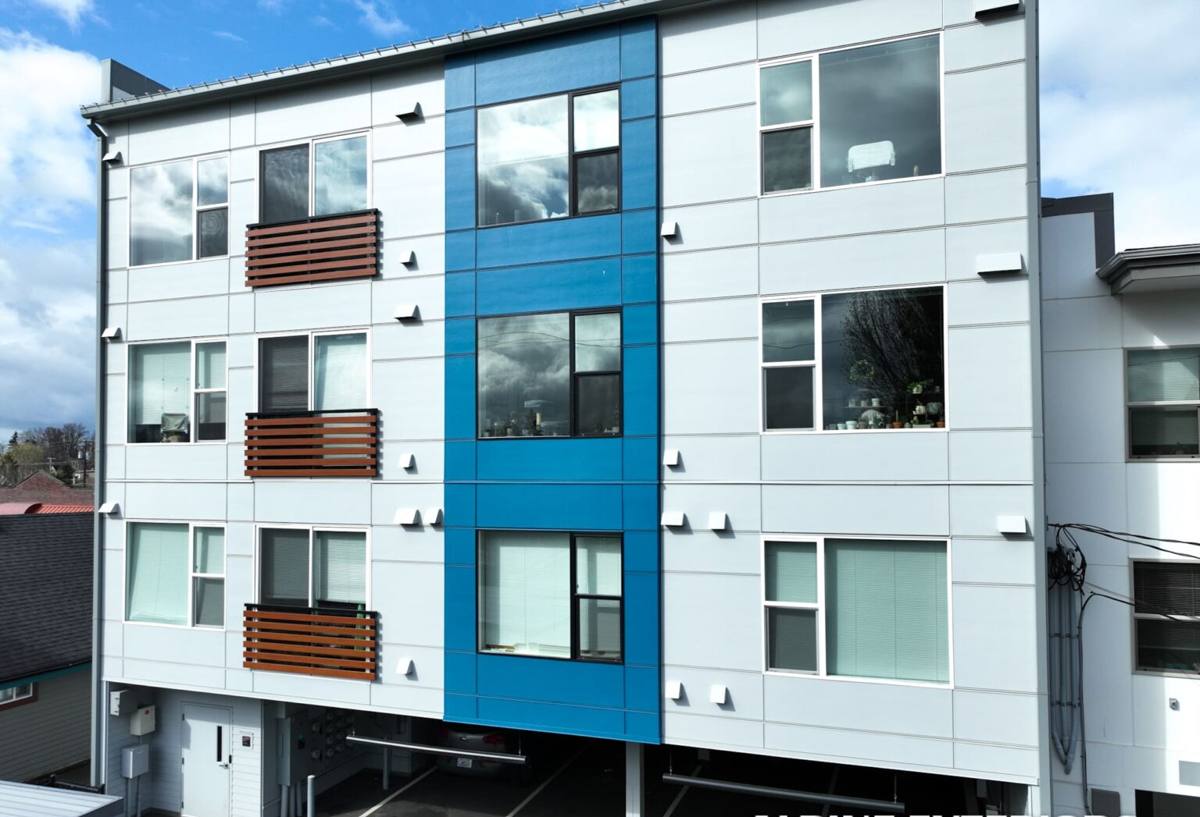
What "Energy-Efficient" Actually Means for a Ballard Home
Energy-efficient windows aren't just about a sticker with a low U-factor. In a marine climate like this one, efficiency and durability are tied together — a window that leaks air or moisture stops being efficient the moment that happens, regardless of its rating on paper. We look at three things together, not separately.
Frame Material
The frame has to resist moisture intrusion and hold its shape through repeated wet-dry cycles without warping, swelling, or letting water track into the wall cavity. This matters more in Ballard than in drier parts of King County, since the frame stays damp longer during moss season.
Glass and Glazing
Double-pane, low-E glass with an argon fill is the baseline for this climate — it cuts heat loss through the glass itself, reduces condensation on the interior pane in winter, and helps keep west- and south-facing rooms from overheating on the rare hot summer stretch. The specific low-E coating and glass spacer type also affect how well the seal holds up over years of temperature swings and coastal humidity.
Installation and Sealing
This is where most efficiency gains are actually won or lost. A well-rated window installed with a weak flashing detail or an incomplete air seal will underperform a mid-grade window that's flashed, sealed, and insulated correctly. Given the sideways-driving rain this neighborhood gets, flashing details around the head and sill are not optional extras — they're the difference between a window that stays dry and one that slowly rots the framing behind it.
Signs Your Ballard Windows Are Costing You Money
Most homeowners don't realize their windows have become a problem until a room feels drafty or a heating bill jumps. Here's what to check for before it gets to that point:
- Visible condensation or fogging between the panes (a sign the seal has failed and the insulating gas is gone)
- Cold air noticeable near the frame edges on a windy day, even with the window fully closed
- Soft, discolored, or spongy wood trim or sill — especially on north- and west-facing windows that catch more driving rain
- Moss or dark green streaking building up on sills, trim, or the wall just below a window
- Windows that are hard to open, close, or latch — frames can swell slightly with moisture and bind the sash
- Corroded or stiff hardware, hinges, or locks (salt air speeds this up on lower-grade metal)
- A noticeable temperature difference standing near the window versus the middle of the room
Any one of these on its own isn't necessarily an emergency, but a window showing two or more of these signs is usually past the point where caulk and weatherstripping will fix it.
Window Types We Recommend for This Neighborhood
There's no single "best" window for every house — it depends on the home's age, exposure, and budget. But some materials handle this climate more predictably than others, and we're upfront about the trade-offs of each.
Vinyl
Good value, low maintenance, and vinyl doesn't rot or corrode the way wood or lower-grade metal can. The trade-off is a slightly less premium look and, on cheaper lines, a frame that can flex more over time. For most Ballard homes looking for a straightforward, efficient replacement, quality vinyl is a solid, honest choice.
Fiberglass
More dimensionally stable than vinyl through temperature and moisture swings, which is a real advantage given how much this neighborhood cycles between wet and dry. It costs more upfront but holds paint and finish well and resists warping over the long haul.
Wood and Wood-Clad
Wood interiors look great and many homeowners want that look for period homes in this area, but exposed wood exteriors need real upkeep in a climate with this much sustained moisture — that's a maintenance commitment, not a flaw in the product. Clad options (vinyl or aluminum exterior over a wood interior) are a common way to get the interior look while keeping the weather-facing side low-maintenance. We're honest with clients that a fully exposed wood exterior in a high-moss, high-rain microclimate is more work to keep looking good than most other options — it's a trade-off worth knowing about upfront, not a knock on wood as a material.
| Material | Moisture Resistance | Maintenance | Typical Fit |
|---|---|---|---|
| Vinyl | Strong | Low | Value-focused replacements, most home styles |
| Fiberglass | Very strong | Low | Homes wanting long-term stability, higher budget |
| Wood-clad | Strong on exterior face | Moderate | Period or craftsman-style homes wanting a wood interior look |
| All-wood | Depends on upkeep | High | Historic restoration where wood is required |
What a Correct Installation Involves
The window itself is maybe half the job. The other half is the installation detail that keeps water out of the wall for the next 20-plus years. Here's the sequence we follow:
- Remove the old window and inspect the rough opening, sill, and surrounding framing for hidden rot or moisture damage before anything new goes in
- Repair or rebuild any compromised framing or sheathing — installing a new window over damaged framing just hides the problem
- Install sill pan flashing so any water that does get past the window drains outward instead of into the wall
- Set the new window level, plumb, and square, with proper shimming so it operates smoothly for years
- Flash the head and sides using a shingle-lap sequence so water sheds down and out, not into the seams
- Air-seal the gap between the window frame and rough opening with appropriate insulation — not just spray foam packed in carelessly, which can bow the frame
- Finish exterior trim and caulking with materials suited to this climate's wet-dry cycling
- Walk through operation, locks, and weatherstripping with the homeowner before calling the job done
Skipping or rushing any one of these steps is how a "good window" ends up with a rot problem behind the trim three years later. It's also the number one reason we tell homeowners to be skeptical of the lowest bid — cutting time on flashing and sealing is one of the easiest ways to shave labor cost, and it's invisible until the damage shows up.
Cost Factors for Ballard Window Projects
Every home is different, so we don't publish a flat price list, but these are the main factors that move the number up or down on a typical project:
| Factor | Why It Matters |
|---|---|
| Number of windows | Per-unit cost usually drops as the total count on a project goes up |
| Frame material | Vinyl, fiberglass, and wood-clad sit at different price points, as shown above |
| Existing frame condition | Rot repair or reframing adds labor beyond the window itself |
| Window size and configuration | Large picture windows, bays, or custom shapes cost more than standard operable sizes |
| Access and floor level | Upper-story or hard-to-reach windows take more time and equipment |
| Glass package | Upgraded low-E coatings or sound-dampening glass add cost but can be worth it near busier streets or flight paths |
As a rough starting point, homeowners in this area typically budget somewhere in the low-to-mid thousands per window installed, with the total depending heavily on the factors above. We'll give you real numbers for your specific house during an estimate rather than a generic quote that doesn't account for your home's condition.
Maintenance in a Salt-Air, Moss-Prone Climate
Even a well-installed, quality window benefits from a bit of seasonal attention here:
- Rinse accumulated salt residue and grime off frames and glass a couple of times a year, especially on windows facing open water or prevailing wind
- Clear moss and debris from sills and tracks before it holds moisture against the frame
- Check weep holes (the small drainage gaps at the bottom of the frame) to make sure they're not clogged with dirt or moss — this is what lets water drain out instead of pooling
- Lubricate hardware annually to fight the corrosion effect of salt air
- Inspect exterior caulking each fall before the wet season sets in, and touch up anywhere it's cracked or pulled away
None of this is heavy work, but skipping it for years is how a house in this climate ends up with problems that a house in a drier part of King County wouldn't develop nearly as fast.
Why Hiring a Crew That Already Works Ballard Matters
A window installer who mostly works drier, inland areas of King County isn't wrong about windows in general — but they may not default to the flashing and sealing details that matter most here, simply because they don't see the failure modes as often. A crew that regularly works Ballard and similar Puget Sound-adjacent neighborhoods has already seen what driving rain does to a poorly flashed sill, what salt air does to cheap hardware over a few winters, and where moss tends to build up and hold moisture against a frame. That local pattern recognition shows up in small decisions during the install — the kind that don't cost more to get right, but only get made correctly by someone who's dealt with the consequences of getting them wrong.
We also know the practical side of working in this part of King County — permitting expectations, typical home ages and construction types in the area, and the kind of access and parking realities that come with a dense, established neighborhood. That's less about any single trick and more about not wasting your time or money on avoidable surprises mid-project.
Ready for an Honest Look at Your Windows?
If your windows are drafty, fogged, hard to operate, or just old enough that you're wondering whether it's time, we're happy to take a look and give you a straight answer — including telling you if repair or targeted weatherstripping makes more sense than full replacement. Use the form below to request a free, no-pressure estimate for your Ballard home.