 King County
 Deck Replacement Built for Ballard's Weather
Ballard sits close enough to the water that homes here take a different kind of beating than decks further inland. Salt-laden air off the Sound works into fasteners and metal connectors, driving rain comes in sideways off the water for months at a stretch, and the shaded, damp stretches of the neighborhood grow moss on almost any horizontal wood surface that isn't getting regular sun and airflow. A deck that was built to a generic spec, or repaired one board at a time over the years, usually can't keep up. Replacement isn't just about looks at that point — it's about getting the structure, drainage, and materials right so the next deck actually lasts through what King County throws at it.
This page is specifically about deck replacement for homes in Ballard. We're not going to talk in generalities about decks everywhere — we're going to talk about what actually fails here, what a correct rebuild looks like, and how our process works when we're on your property.
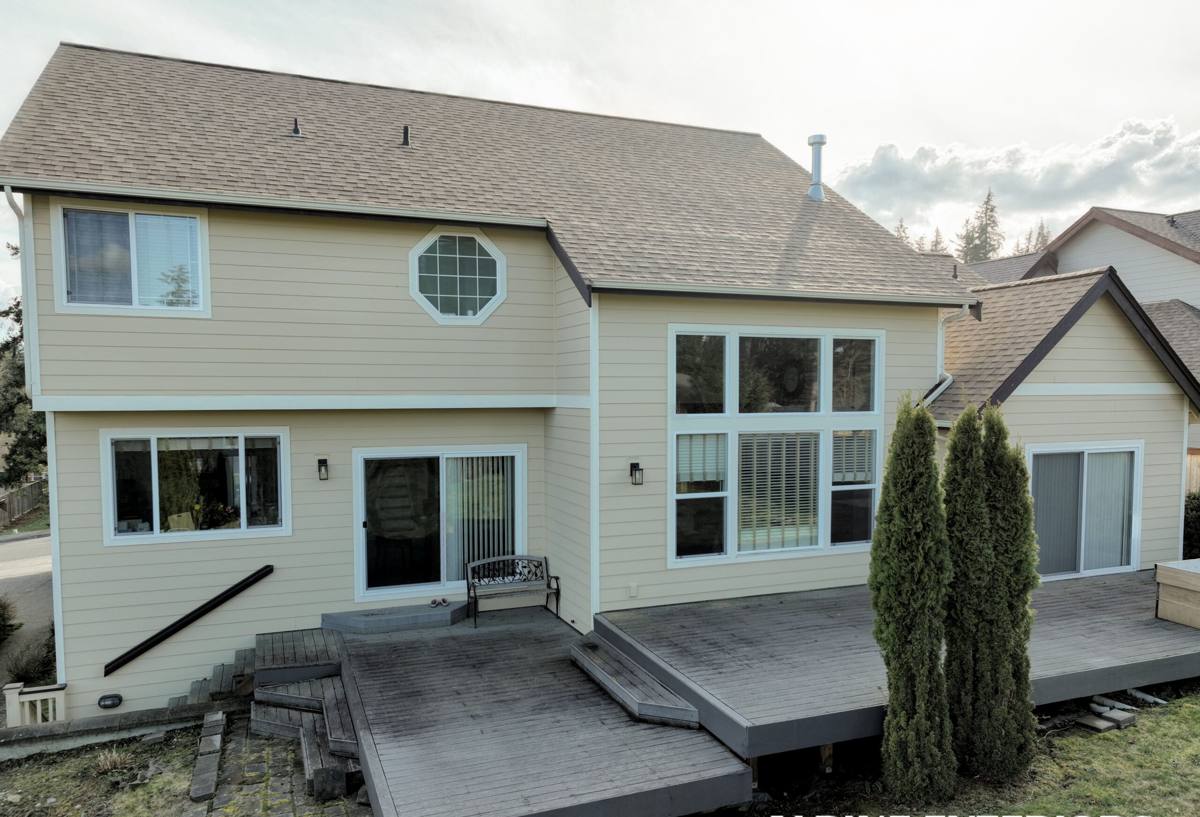
Why Decks in Ballard Wear Out Faster Than People Expect
Salt Air and Metal Fatigue
Proximity to Puget Sound means a steady, low-level exposure to salt in the air, even for homes that aren't waterfront. Salt accelerates corrosion in any exposed metal — nails, screws, joist hangers, post bases — long before the wood itself gives out. We've seen decks where the boards still look serviceable but the fasteners holding the frame together are badly corroded underneath. That's a structural problem hiding behind a cosmetic one.
Driving Rain and Moisture Intrusion
Ballard gets more than its share of wind-driven rain, and that rain doesn't fall straight down — it gets pushed under railings, behind ledger boards, and into any gap where flashing was skipped or done poorly. Once water gets behind a ledger board or into an unprotected post base, rot starts from the inside, which is exactly why decks sometimes "fail" without much warning from the surface.
Moss, Shade, and Trapped Moisture
Between mature trees, close-set houses, and our long gray season, a lot of Ballard decks sit in partial shade for most of the year. That means slower drying times after every rain, and moss and algae get a foothold on boards, especially on the north or west side of a house. Beyond being slippery underfoot, sustained moss growth holds moisture against the wood and speeds up decay, particularly on lower-grade lumber or decking that was never properly sealed.
Repair, Refresh, or Full Replacement?
Not every deck needs to be torn out. But there's a point where patching individual boards or sistering a joist here and there stops being a fix and starts being a delay tactic. Some signs that point toward full replacement rather than repair:
- Soft, spongy decking in multiple areas, not just one isolated board
- Visible rot or rust at the ledger board where the deck attaches to the house
- Railings that flex or feel loose when leaned on
- Posts or footings that have shifted, settled, or show cracking at grade level
- Persistent moss or algae that returns within weeks of cleaning
- A structure over 15-20 years old built to an older, less protective code
- Fasteners showing heavy rust staining down the face of the boards
If most of what you're seeing is surface graying, a few loose screws, or mild mildew, that's usually a maintenance or repair conversation. If you're seeing structural signs like the ones above, replacement is almost always the more honest recommendation, because a rebuilt deck lets us fix the framing and drainage issues that repairs can't reach.
What a Correct Deck Replacement Actually Involves
A deck replacement is more than swapping old boards for new ones. The parts nobody sees are what determine whether the new deck lasts five years or twenty-five.
Ledger Board and Flashing
Where the deck attaches to the house is the single most common failure point we find in this climate. Correct flashing — installed so water sheds outward and down, never trapped behind the ledger — is non-negotiable on a replacement. This is also the point where a lot of older Ballard decks were built without any flashing at all, which is exactly why we see rot concentrated right at the house wall.
Footings and Posts
Footings need to be sized and set to current code depth and bear on stable soil, not just poured to whatever depth was convenient decades ago. Post bases should hold the post above the concrete and off standing water, not buried or resting directly on wet ground.
Framing and Joist Protection
We use corrosion-resistant fasteners and connectors throughout, given the salt air exposure common across Ballard. Joist tape or an equivalent protective barrier on top of the joists keeps water from wicking into the end grain, which is one of the cheapest upgrades with the biggest long-term payoff.
Drainage and Airflow Underneath
A deck that can't dry out underneath will grow moss and mildew no matter what decking material sits on top. Proper spacing, grading away from the house, and clearing vegetation that blocks airflow all matter more here than in drier climates.
Choosing the Right Decking Material for This Climate
There's no single "best" decking material — it depends on budget, maintenance appetite, and how much shade and moisture your specific yard deals with. Here's how the common options actually perform under Ballard conditions:
| Material | Moisture/Moss Resistance | Maintenance | Typical Lifespan Here |
|---|---|---|---|
| Pressure-treated wood | Moderate — needs sealing to perform well | Annual cleaning and periodic re-sealing | 10-15 years |
| Cedar | Naturally decent, but surface still grows moss without upkeep | Regular cleaning and oiling to hold color and resist moss | 15-20 years |
| Composite decking | Strong — doesn't absorb moisture like wood | Periodic washing to keep pollen/moss film off the surface | 25-30 years |
| PVC/cellular decking | Excellent — fully synthetic, no wood fiber to feed rot | Occasional rinse; least upkeep of the group | 25-30+ years |
We'll walk through these trade-offs honestly during your estimate rather than pushing whatever has the best margin. If a homeowner wants the look and feel of real wood and is willing to keep up with sealing, cedar is a legitimate choice. If low maintenance matters more, composite or PVC decking makes more sense for a shaded, moss-prone lot.
Permits, Setbacks, and Code Requirements
Deck replacement in King County and within Seattle jurisdiction typically requires a permit once you're rebuilding the structure rather than just replacing surface boards, and inspections check things like footing depth, guardrail height, baluster spacing, and ledger attachment. Ballard's mix of older housing stock and newer infill construction means we regularly run into decks that were legal when built decades ago but wouldn't meet current guardrail or footing requirements. Part of a proper replacement is bringing the structure up to current code, not just rebuilding the old design as-is.
We handle the permitting process as part of the job rather than leaving homeowners to sort it out, since incorrect assumptions about setbacks or height limits are one of the more common ways a deck project gets delayed.
Our Process for a Ballard Deck Replacement
- On-site assessment — we inspect the existing deck's framing, ledger, footings, and drainage, not just the visible boards, so the estimate reflects what's actually going on underneath.
- Design and material selection — we walk through decking, railing, and fastener options suited to your yard's sun exposure and moisture level.
- Permit handling — we prepare and submit what's required for your jurisdiction before demo begins.
- Demolition and disposal — full removal of the old structure, checking the ledger area and framing for hidden rot as we go.
- Rebuild — footings, framing, flashing, and decking installed to current code, with attention to drainage and airflow underneath.
- Final walkthrough — we go over the finished deck with you, including basic maintenance guidance specific to the material you chose.
Keeping a New Deck Looking Good Through the Wet Season
Whatever material you choose, a little seasonal upkeep goes a long way in this climate. A basic checklist we give homeowners after a replacement:
- Sweep debris and fallen leaves off the deck regularly in fall, since trapped organic matter holds moisture and feeds moss
- Rinse or lightly scrub the surface once or twice a year to keep algae and pollen film from building up
- Check railings and stair connections annually for any looseness
- Keep gutters and downspouts near the deck clear so runoff isn't dumping directly onto or under the structure
- For wood decking, re-seal or re-stain on the manufacturer's recommended schedule rather than waiting until it visibly grays
- Trim back overhanging branches or shrubs that keep sections of the deck shaded and slow to dry
Why It Matters That We Already Work in Ballard
A contractor who mostly works drier, inland areas can still build a technically sound deck, but they may not default to the flashing details, fastener grade, and drainage planning that Ballard's salt air and rain actually demand — those are habits built from repeatedly seeing what fails here. Working regularly in this neighborhood also means we're familiar with the local permitting process and the mix of older and newer housing stock in the area, which speeds up both the estimate and the build. It's a smaller thing, but it also means we're not learning the neighborhood's quirks on your project.
If your deck is showing its age or you're just ready for something that'll hold up through Ballard's wet, salty winters, we're happy to come take a look and give you a straightforward, no-pressure estimate. Use the form below to get started.