 King County
 Ballard's Marine Climate Puts Real Stress on Siding
Ballard sits right up against Puget Sound and Salmon Bay, and that proximity to open water shapes everything about how siding performs here. Salt-laden air moves through the neighborhood on a regular basis, and over years that airborne salt accelerates corrosion on fasteners, staples, and any metal trim that isn't rated for a marine environment. Add in the driving, wind-pushed rain that comes off the water during fall and winter storms, and you have a combination that finds every weak seam, every under-caulked joint, and every piece of siding that wasn't installed with real drainage in mind.
Then there's shade. Ballard's mature tree canopy and the tight lot spacing typical of this part of Seattle mean a lot of exterior walls stay damp and shaded for long stretches of the year. That's exactly the environment moss, algae, and mildew need to take hold. None of this is unique to any one house — it's a King County, Puget Sound reality that every siding material on every wall in the neighborhood has to deal with. The question isn't whether your siding will face salt air, wind-driven rain, and moss season. It's whether it was installed in a way that actually holds up to it.
What Ballard's Housing Stock Actually Needs
Older homes
Ballard has a lot of older craftsman bungalows and early-to-mid-century houses, many of which have already been through at least one round of siding in their lifetime — sometimes original wood, sometimes an aluminum or vinyl replacement layered over it. On these homes, a siding replacement is a good opportunity to correct decades-old moisture problems: missing weather barriers, rotted sheathing hidden behind old cladding, and window and door flashing that was never installed to a real standard. Fixing what's underneath matters as much as what goes on top.
Newer construction
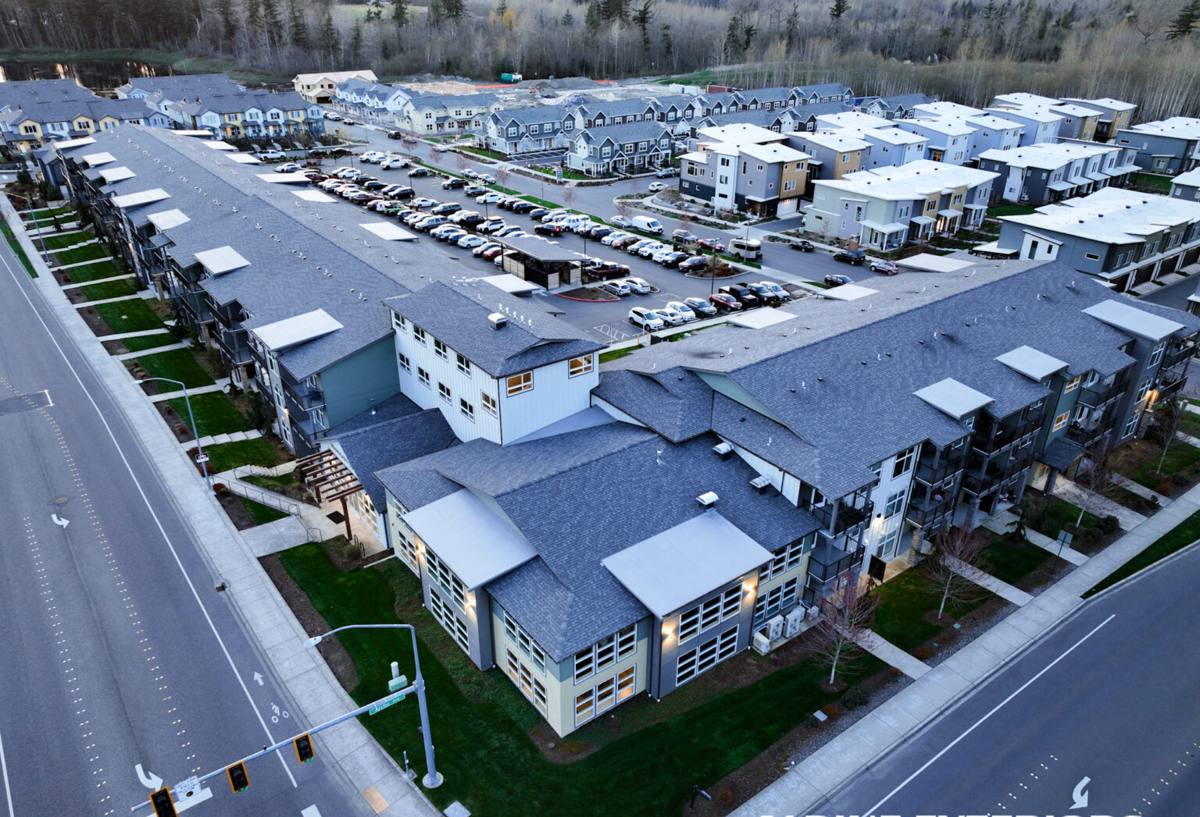
Ballard has also seen a steady wave of infill townhomes and new single-family builds packed onto smaller lots. These homes are often sided with materials chosen for cost and speed rather than long-term performance in a marine climate. Even on newer construction, we regularly see rainscreen gaps that are too shallow, sealant that was never meant to last more than a few years, or trim details that trap water instead of shedding it. New doesn't automatically mean correctly built for this climate.
Why We Install Only James Hardie Fiber Cement in Ballard
We standardized on James Hardie fiber cement for every job we do, and Ballard's climate is a big part of why. Fiber cement is non-combustible, dimensionally stable, and doesn't absorb and release moisture the way wood-based products do — it won't swell, cup, or delaminate the way a lot of engineered wood siding can when it's exposed to years of wet Pacific Northwest weather. Hardie's factory-applied ColorPlus finish is also baked on under controlled conditions, which gives it far better adhesion and UV resistance than field-applied paint, and that matters when a wall is going to sit in shade and moisture for months at a stretch.
Just as important, Hardie manufactures specific HardieZone products engineered for wetter climate zones, and King County falls squarely into that category. We're not installing a generic siding product and hoping it holds up — we're installing a product line built with this exact climate in mind, backed by a warranty structure that reflects that engineering.
What a Correct Fiber Cement Installation Involves
Rainscreen gap and drainage
Fiber cement siding is only as good as the drainage plane behind it. A correct install includes a rainscreen gap — typically created with vertical furring strips or a purpose-made drainage mat — so that any moisture that does get behind the cladding has somewhere to go instead of sitting against the sheathing. On a wall that faces wind-driven rain off Salmon Bay or Puget Sound, skipping this step is one of the most common reasons siding fails early.
Flashing and fasteners
Every window, door, and horizontal trim transition needs proper flashing that directs water outward and down, not into the wall assembly. In a salt-air environment, fastener selection matters too — we use corrosion-resistant fasteners rated for the exposure, because standard fasteners can start rusting and staining a wall years before the siding itself would ever fail.
Caulking, joints, and clearances
Butt joints get properly flashed or capped rather than just caulked, since caulk alone is a maintenance item, not a permanent seal. We also hold clearances at grade, decks, and roof lines to manufacturer spec, because tight or missing clearances are one of the fastest ways to trap moisture at the bottom edge of a wall — exactly where Ballard's rain tends to collect.
Fiber Cement vs. Other Siding Options in a Marine Climate
Homeowners comparing siding materials for a Ballard property should weigh how each option actually performs against salt air, sustained moisture, and moss growth — not just upfront cost.
| Material | Salt air / corrosion resistance | Moisture & moss resistance | Typical maintenance |
|---|---|---|---|
| James Hardie fiber cement | Strong — non-combustible, engineered HZ product line | Doesn't absorb moisture like wood; factory finish resists mildew staining | Occasional wash; repaint on a much longer cycle |
| Vinyl | Can become brittle and discolor over time near salt air | Traps moisture behind panels if house wrap and flashing aren't done right | Low, but prone to warping and fading |
| LP SmartSide / engineered wood | Edge and seam sensitivity in wet climates | Vulnerable to swelling and edge deterioration if any water intrusion occurs | Regular inspection of seams and cut edges |
| Cedar / primed wood | Attractive but higher upkeep near marine air | Prone to moss growth and rot without diligent upkeep | Frequent refinishing and moss treatment |
Our Process for a Ballard Siding Project
Every project starts with an on-site assessment of the existing wall assembly, not just a measurement of square footage. We're looking for rot, moisture intrusion, inadequate flashing, and anything else hiding under the current siding before we ever price the job.
- Site walkthrough and moisture/rot assessment of the existing wall assembly
- Careful tear-off, with sheathing repair where needed before anything new goes up
- Installation or correction of the weather-resistive barrier and flashing details
- Rainscreen gap installed to spec, not skipped for speed
- James Hardie fiber cement installed with corrosion-resistant fasteners and correct clearances
- Trim, caulking, and final detail work reviewed against manufacturer installation standards
We don't shortcut the parts of the job that aren't visible once the siding goes up, because those are the parts that determine whether a wall stays dry for the next several decades or starts causing problems in five years.
Fighting Moss and Algae Season
Given Ballard's shade and moisture, moss and algae are a fact of life for exterior surfaces, not a sign that something was done wrong. The goal is a siding system and a maintenance routine that keeps growth from turning into a moisture problem.
- Keep gutters clear so overflow doesn't run down the wall face and feed moss growth
- Trim back vegetation and tree limbs that keep a wall shaded and damp longer than necessary
- Rinse siding periodically with a garden hose rather than a high-pressure washer, which can force water behind panels and damage caulk lines
- Check caulked joints and trim edges yearly for cracking, especially after the wettest months
- Address any moss or algae staining early — it's far easier to clean off a factory-finished surface than to let it sit for years
Why Local Experience in Ballard Matters
A crew that regularly works in Ballard and the rest of King County already knows what this climate does to a wall over time. That means knowing to spec corrosion-resistant fasteners without being asked, knowing where wind-driven rain hits hardest on a given lot orientation relative to the water, and knowing how Seattle's permitting process works for exterior work on both older homes and newer infill construction. It also means we've seen what happens when any of these details get skipped — because we're often the crew called in years later to fix it. That perspective shapes how carefully we detail every wall we side, not just the ones facing the water directly.
Warranty and Long-Term Value
James Hardie backs its fiber cement products with a strong, transferable limited warranty, and that transferability matters in a neighborhood like Ballard where homes turn over regularly and buyers pay close attention to the condition of the exterior. Siding installed correctly to manufacturer spec — proper rainscreen, flashing, fasteners, and clearances — is what keeps that warranty intact and what actually delivers the decades of performance the product is engineered for. Cutting corners on installation is the single most common reason a good product underperforms in a climate like this one.
If your Ballard home's siding is showing moss staining, failing caulk lines, rot at the trim, or you're simply ready to stop patching an aging exterior, we're happy to take a look and talk through what correct fiber cement installation looks like for your specific house. Reach out for a free, no-pressure estimate using the form below.