 King County
 Composite Decking in Ballard: Built for the Weather You Actually Get
Ballard sits close enough to Puget Sound that salt-tinged air, wind-driven rain off the water, and a long stretch of gray, damp months are just part of owning a home here. A deck in this neighborhood isn't a fair-weather feature — it gets used, or at least sits exposed, through nine or ten months of moisture a year. That changes what "good decking" means. It's not about the nicest board on the showroom wall; it's about what holds up to repeated wetting and drying, resists the moss and algae that thrive in shaded, damp corners, and doesn't need babying every spring.
We install composite decking across King County, and Ballard jobs have their own quirks: older homes with additions and re-roofs that changed drainage patterns, lots with mature trees dropping debris and shade year-round, and a housing stock where a deck often ties into a kitchen or living space that was never designed with today's outdoor-living use in mind. Getting a composite deck right here means solving for water and organic growth first, aesthetics second.
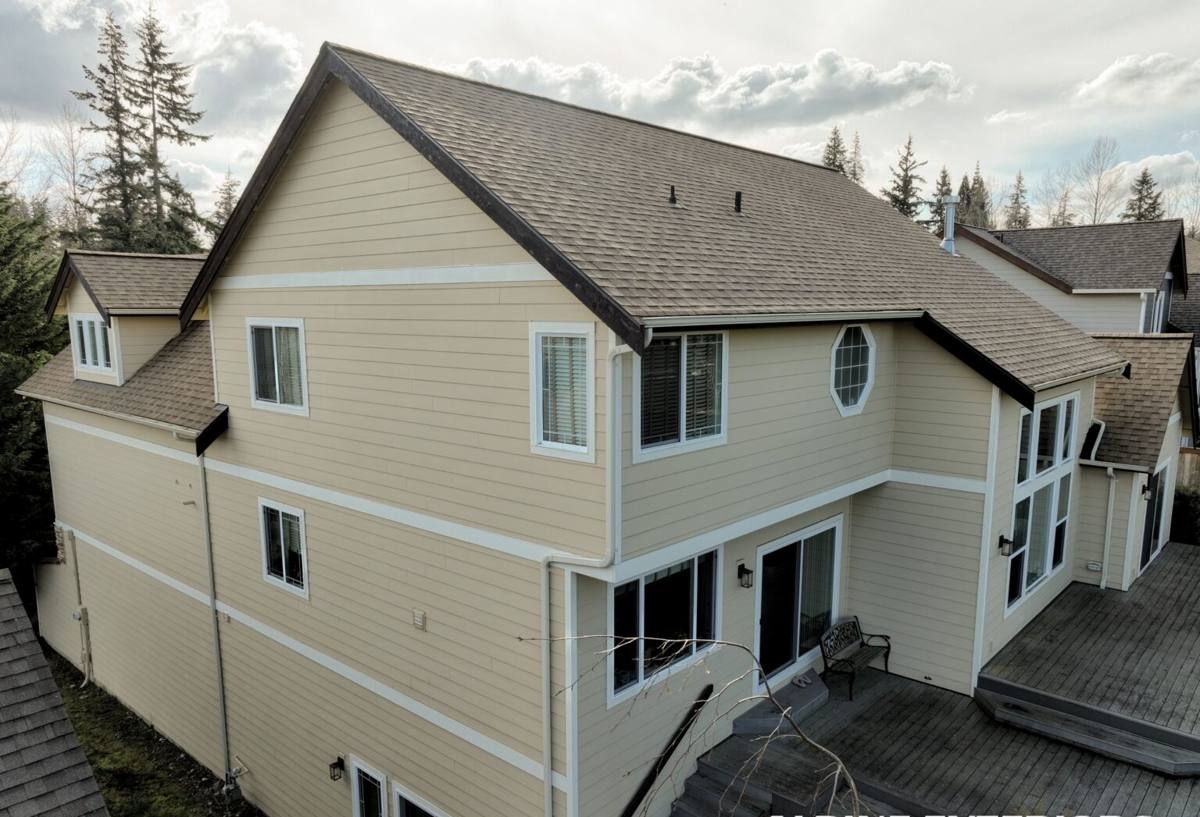
Why Composite Makes Sense for This Climate
Composite decking (wood-plastic blends, and capped composite with a protective outer shell) doesn't absorb water the way pressure-treated lumber does. That matters directly in a climate like ours:
- Salt air exposure: airborne salt accelerates corrosion on hardware and speeds up wood fiber breakdown; composite's plastic content resists that degradation better than raw wood.
- Driving rain: wind-blown rain gets under railings and into end grain that a lot of homeowners never think to check. Capped composite boards seal that end grain far more effectively than wood, which is prone to soaking and swelling at cut edges.
- Moss and algae season: anywhere shaded, north-facing, or under tree cover in King County grows moss on almost any surface eventually. Composite doesn't feed mold and algae the way untreated or lightly treated wood fiber does, though it isn't immune — more on that below.
- Freeze-thaw swings: we don't get brutal winters, but repeated damp-cold-damp cycles still stress wood fibers and fasteners over years. Composite handles that cycling with less cupping, splitting, and fastener pop than lumber.
None of this means composite is maintenance-free — no decking product is — but it shifts the maintenance from structural repair (replacing rotted boards, re-sealing every year) to simple periodic cleaning.
Where Composite Still Needs Respect
Composite boards can still grow surface moss or algae in shaded, poorly ventilated spots, especially on lower-end, uncapped boards. The fix isn't a different product line so much as correct installation: adequate airflow underneath the deck, proper board spacing, and a design that doesn't trap standing water in low spots. A deck installed without attention to drainage will grow moss whether it's wood or composite — the difference is how much damage that moss does before anyone notices.
What a Correct Composite Deck Build Actually Involves
A lot of decking problems we get called out to fix in King County trace back to shortcuts at the substructure stage — the part nobody sees once the boards go down. On a Ballard job, we pay particular attention to:
Ledger Board and House Connection
Where the deck attaches to the house is the single most common failure point on any deck, wood or composite. It needs correct flashing that sheds water away from the house's siding and sheathing, not just a bolted board. Salt-laden coastal air makes corrosion-resistant fasteners and flashing non-negotiable here, not optional upgrades.
Framing and Joist Spacing
Composite boards often require tighter joist spacing than traditional lumber decking — manufacturer specs vary by product and by whether boards run straight or on a diagonal. Building to the lumber-era joist spacing habits under a composite board is a common corner-cutting mistake that leads to bounce and long-term sagging.
Ventilation Underneath
Low-clearance decks, common on sloped Ballard lots, need real airflow underneath to let moisture escape. Skirting without vent gaps traps humidity against the joists and the underside of the decking, creating exactly the damp, shaded environment moss and mildew prefer.
Fastening Method
Hidden fastener clip systems give a cleaner look and avoid the exposed screw heads that can telegraph rust streaks over time in a salt-air environment. Face-screwing has its place on certain board types, but it should be a deliberate choice, not a default.
Drainage and Grading
Water needs somewhere to go. That means correct board gapping, a substructure that doesn't create low pockets, and attention to how water sheds off the deck edge — especially important on the tighter, sloped lots common around Ballard.
Composite vs. the Alternatives
| Decking Type | Moisture Behavior | Moss/Algae Resistance | Upkeep | Typical Lifespan |
|---|---|---|---|---|
| Pressure-treated wood | Absorbs and releases water; prone to swelling, splitting, checking | Low — feeds mold and algae without regular treatment | Annual cleaning, periodic staining/sealing | 10-15 years with upkeep |
| Cedar | Naturally moisture-resistant but still absorbs over time | Moderate | Regular sealing to preserve color and resistance | 15-20 years with diligent upkeep |
| Uncapped composite | Resists swelling; end grain more exposed to moisture | Moderate — can grow surface moss in shaded areas | Periodic washing | 20-25 years |
| Capped composite / PVC-cap | Sealed shell resists moisture intrusion well, including at cut ends when properly finished | Higher — smoother, less porous surface | Occasional washing | 25-30+ years, per manufacturer warranty |
We're honest with clients about trade-offs rather than pushing one brand: capped composite costs more up front but generally makes the most sense for homes exposed to salt air and heavy shade, which describes a lot of Ballard lots. Lower-tier uncapped composite can be the right call on a budget-driven, sun-exposed deck with good airflow underneath.
Our Process
- On-site assessment: we look at the existing structure (if replacing a deck), house connection point, sun/shade exposure, drainage path, and any tree cover that will affect moss and debris buildup.
- Design and product selection: board pattern, railing style, and product tier matched to your budget and exposure — we'll tell you plainly if a cheaper board isn't a good fit for a shaded, damp corner of the yard.
- Permitting: King County and City of Seattle jurisdictions (Ballard falls under Seattle permitting) have specific requirements for deck height, guardrails, and structural attachment — we handle that paperwork rather than leaving it on you.
- Demolition (if applicable): old wood decking removed, substructure inspected for rot or corrosion before anything new goes up.
- Framing and flashing: ledger flashing, joist layout, and ventilation gaps built to spec, not to habit.
- Installation: board fastening per manufacturer specification, correct expansion gaps (composite expands and contracts with temperature more than people expect), and clean railing and stair work.
- Final walkthrough: we go over basic care with you — what to do, and just as important, what not to do (pressure washing settings, cleaning products that can void warranties).
Keeping a Ballard Composite Deck Looking Good Year-Round
- Sweep debris (needles, leaves, seed pods) regularly — trapped organic matter holds moisture against the board surface and is the number one driver of surface moss.
- Wash the deck once or twice a year with a soft-bristle brush, mild soap, and water; avoid harsh chemical cleaners not approved by the manufacturer, which can affect the cap finish or void warranty coverage.
- Keep gutters and downspouts near the deck clear so overflow isn't dumping extra water onto or under the decking.
- Trim back overhanging branches where practical to cut down on shade and debris — you won't eliminate King County's moss season, but you can reduce how hard it hits one specific area.
- Check railing posts and stair connections annually for movement, especially after a hard winter storm season.
Why a Local Crew Matters for This Job
Decking looks like a straightforward install, but the details that determine whether it lasts 10 years or 30 are regional. A crew that works Ballard and the wider King County area regularly knows which products actually perform in salt-tinged, rain-heavy, moss-prone conditions versus which ones look good in a showroom and struggle here. We know the Seattle permitting process for deck attachments and guardrails, we're used to the tight lots and sloped yards common in the neighborhood, and we're not learning on your project.
Just as important: we're around after the install. If a warranty question comes up, if a fastener needs attention, or if you just want an honest read on how your deck is holding up after a wet winter, you're not calling a crew that only passed through once.
Getting Started
Every yard, house connection, and budget is a little different, and the right board and build details for a shaded, tree-covered lot aren't always the right ones for an open, sun-exposed spot a few blocks away. We're glad to come take a look, walk the site with you, and give it to you straight — including telling you if a lower-cost option is genuinely fine for your situation, or if it's worth spending more given your exposure. Reach out for a free, no-pressure estimate using the form below.