 King County
 Metal Roofing in Bothell: Built for This Climate, Not Just This Roof
Bothell sits in one of the wetter, greener pockets of King County, and that's exactly the kind of environment where metal roofing either performs beautifully for decades or, if it's installed wrong, causes problems faster than an asphalt roof would have. The Pacific Northwest doesn't ask much of a roof in terms of extreme heat or hail. What it asks for is sustained, months-long exposure to moisture, shade, and organic debris. A metal roof is one of the best tools we have for handling that — but only when the details underneath it are done right.
This page is about metal roofing specifically for Bothell homes: what the local climate actually does to a roof here, what a correct metal roof installation involves, and why hiring a crew that already works this area matters more than it might seem.
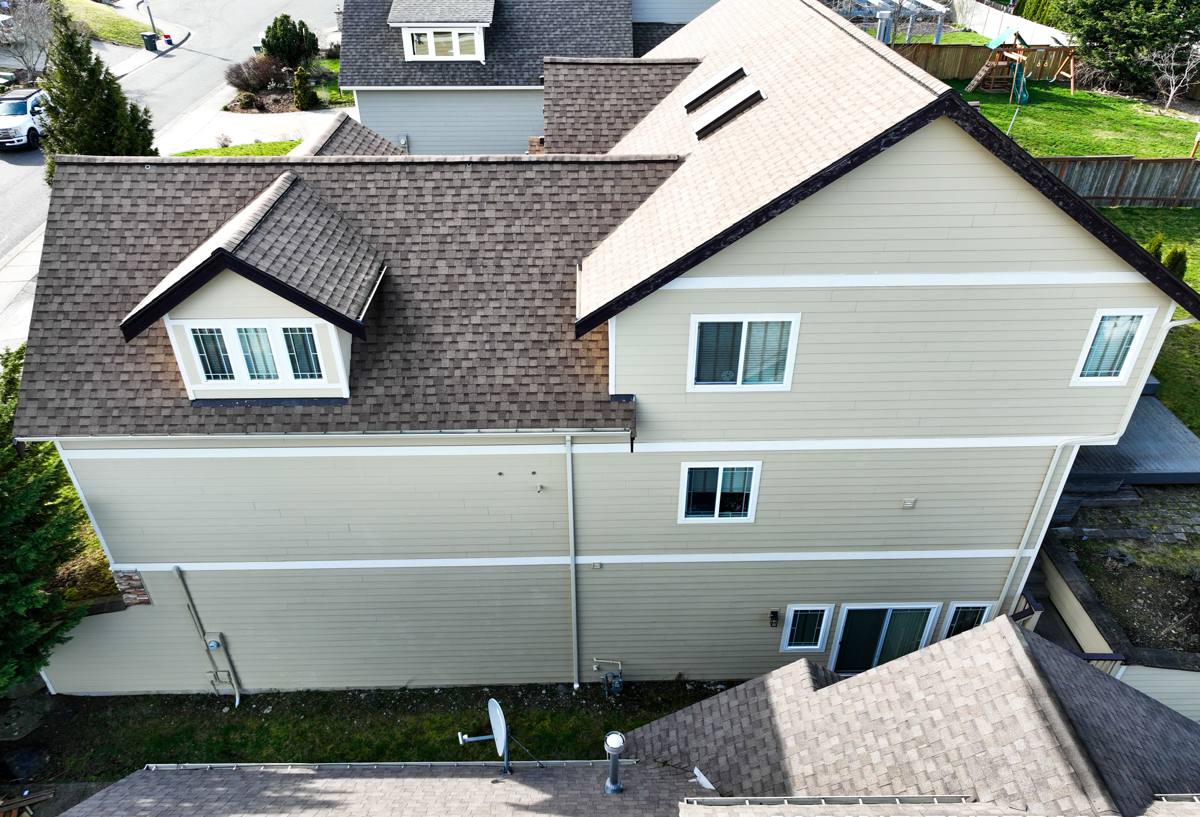
What King County's Climate Actually Does to a Roof
Western Washington's roofing challenges aren't dramatic, they're relentless. Three things matter most for a roof in this region:
A Long, Wet Moss Season
Between the tree cover common in Bothell neighborhoods and the region's extended damp season, roofs here spend a large part of the year staying wet longer than they would in a drier climate. That's the exact condition moss and algae need to establish themselves. On asphalt shingles, moss growth traps moisture against the roofing material and shortens its life. Metal roofing gives moss and moss spores far less to hold onto, which is one of the material's real practical advantages in a market like this one.
Driving, Wind-Blown Rain
Rain in this region rarely falls straight down. Storms moving through the Puget Sound lowlands frequently push rain sideways under wind, which means flashing details, laps, and fastener seals get tested far more than they would in a calmer climate. A metal roof is only as watertight as its weakest transition point — valleys, wall flashing, penetrations for vents and chimneys. This is where most metal roof failures actually originate, and it's almost never the metal panel itself that's at fault.
Coastal and Marine-Influenced Air
King County's broader location near Puget Sound means the regional air carries more salt and moisture than an inland climate would. This matters for metal roofing specifically because it affects fastener selection, flashing metal compatibility, and how different metals behave next to each other on the same roof. Mixing incompatible metals (say, an uncoated steel fastener against an aluminum panel) can set up galvanic corrosion that slowly eats away at the contact point. It's a detail that's invisible on install day and shows up as a leak years later.
Why Metal Roofing Makes Sense for Bothell Homes
We don't sell metal roofing as an upgrade that's right for every house — it isn't. But for homes in this area, especially ones with steeper pitches, heavy tree cover, or an owner who wants to stop dealing with moss treatments every couple of years, metal has real, practical advantages:
- Sheds water and snow load fast, reducing the standing moisture that feeds moss and rot
- Far less surface for moss and algae to anchor to compared with shingles
- Typically outlasts asphalt shingle roofing by a significant margin when installed and maintained correctly
- Handles wind-driven rain well when flashing and underlayment details are done properly
- Lower long-term maintenance burden — no granule loss, no shingle curling or cracking over time
The trade-off is upfront cost and installation sensitivity. Metal roofing has a much smaller margin for error at the details than shingle roofing does, which is exactly why the installer matters as much as the material.
What a Correct Metal Roof Installation Involves
A metal roof is a system, not just a panel. Getting it right in a climate like Bothell's means paying attention to layers most homeowners never see:
Deck Prep and Ventilation
Before any metal goes down, the roof deck needs to be sound, dry, and properly ventilated. In a climate this humid, trapped moisture under the panels is a bigger long-term risk than surface rain. Ridge and soffit ventilation has to actually move air, not just exist on paper.
Underlayment Choice
Metal roofing needs an underlayment rated to handle the temperature swings metal panels create and the moisture load this region delivers. A high-temp synthetic or self-adhered underlayment at eaves, valleys, and penetrations is standard practice here, not an upsell.
Fastener and Flashing Compatibility
Every fastener, flashing piece, and trim component has to be compatible with the panel metal to avoid galvanic corrosion — an issue that's more relevant here than in drier, less marine-influenced regions. This is a detail that's easy to get wrong and expensive to fix later.
Valleys, Walls, and Penetrations
Given how much of the region's rain arrives at an angle, valley flashing and wall step flashing need generous overlaps and correct fastening patterns — not just caulk covering a gap. Any place a pipe, vent, or chimney comes through the roof is a spot that needs mechanical flashing, not sealant as the primary defense.
Panel Seams and Expansion
Metal expands and contracts with temperature. Panels and seams need to be installed with room to move, using clips or fastening methods appropriate to the panel profile, so the roof doesn't develop stress cracks or loosen over time.
Comparing Metal Roofing Options for This Climate
| Panel Type | Typical Fit for Bothell Homes | Key Consideration |
|---|---|---|
| Standing seam steel | Strong fit — clean look, hidden fasteners | Best moisture and wind performance when installed with proper clips |
| Exposed-fastener steel panels | Budget-friendlier option | Fastener seals need regular inspection over the roof's life |
| Aluminum panels | Good for coastal-influenced air resistance | Requires compatible fasteners and flashing metals |
| Metal shingles/shakes | Works where a traditional look is wanted | More seams than standing seam, so flashing detail matters even more |
Our Process for a Bothell Metal Roof Project
We keep the process straightforward and focused on getting the details right rather than rushing to close the sale:
- On-site assessment — we look at the existing roof, deck condition, ventilation, and any moss or moisture issues specific to your property's tree cover and exposure
- Honest scope and material discussion — we walk through panel options, realistic cost ranges, and whether metal is actually the right call for your roof's pitch and layout
- Written estimate — clear about what's included: tear-off, deck repair if needed, underlayment, flashing, panels, and warranty terms
- Installation — deck prep, underlayment, flashing details, and panel installation done in the sequence that actually protects the home, not the sequence that finishes fastest
- Final walkthrough — we review the completed roof with you, including what routine maintenance (if any) it'll need going forward
Why Hiring a Crew That Works Bothell Already Matters
Roofing crews that work all over the state, or that fly in from out of the area for a single job, don't carry the same working knowledge of how this region's rain, moss cycles, and tree cover interact with a roof over time. A crew that regularly works King County neighborhoods like Bothell has already seen where moss builds up first, which flashing details fail under driving rain, and how local permitting and inspection expectations work. That's not a marketing point — it's the difference between a roof that's built to spec and one that's built for the actual conditions it will sit in for the next several decades.
We also stand behind our work locally, which matters if a flashing detail or seam ever needs attention down the road. A crew that's easy to reach and already familiar with your property is worth more than a slightly lower bid from a company that won't be local next season.
Maintenance: What a Metal Roof Actually Needs
One of the appeals of metal roofing in this climate is reduced maintenance, but "reduced" doesn't mean "none":
- Keep gutters and valleys clear of needles and leaf debris, especially under tree cover
- Have flashing and penetration seals visually checked every few years
- Address any scratched or damaged coating promptly to prevent localized corrosion
- Watch for moss or algae buildup in shaded areas even on metal — it's rarer, but not impossible
Getting Started
If you're weighing metal roofing for a home in Bothell, we're happy to take a look, talk through what your specific roof and site actually need, and give you a straightforward estimate — no pressure, no scare tactics about moss or rot you don't actually have. Use the form below to request a free estimate and we'll go from there.