 King County
 New-Construction Windows Built for Bothell's Weather, Not Just the Blueprint
Bothell sits in a stretch of King County where the weather does real, cumulative damage to a house over time. Long stretches of driving rain, moisture-laden marine air moving in off the Sound, and a moss season that can run most of the year all put pressure on the parts of a house that are easiest to get wrong the first time — and windows are near the top of that list. When we install new-construction windows on a Bothell project, we're not just setting glass into a rough opening. We're building the water management system around that opening, because in this climate, the flashing and sealant details matter more than the window brand printed on the label.
This page is about one job, done right, in one area: new-construction window installation for homes being built or substantially remodeled in Bothell. If you're a homeowner working with a builder, or a builder looking for a window subcontractor who already knows the local inspection expectations and weather patterns, this is what a correct install looks like and why it's worth getting a crew that's done this work in King County before.
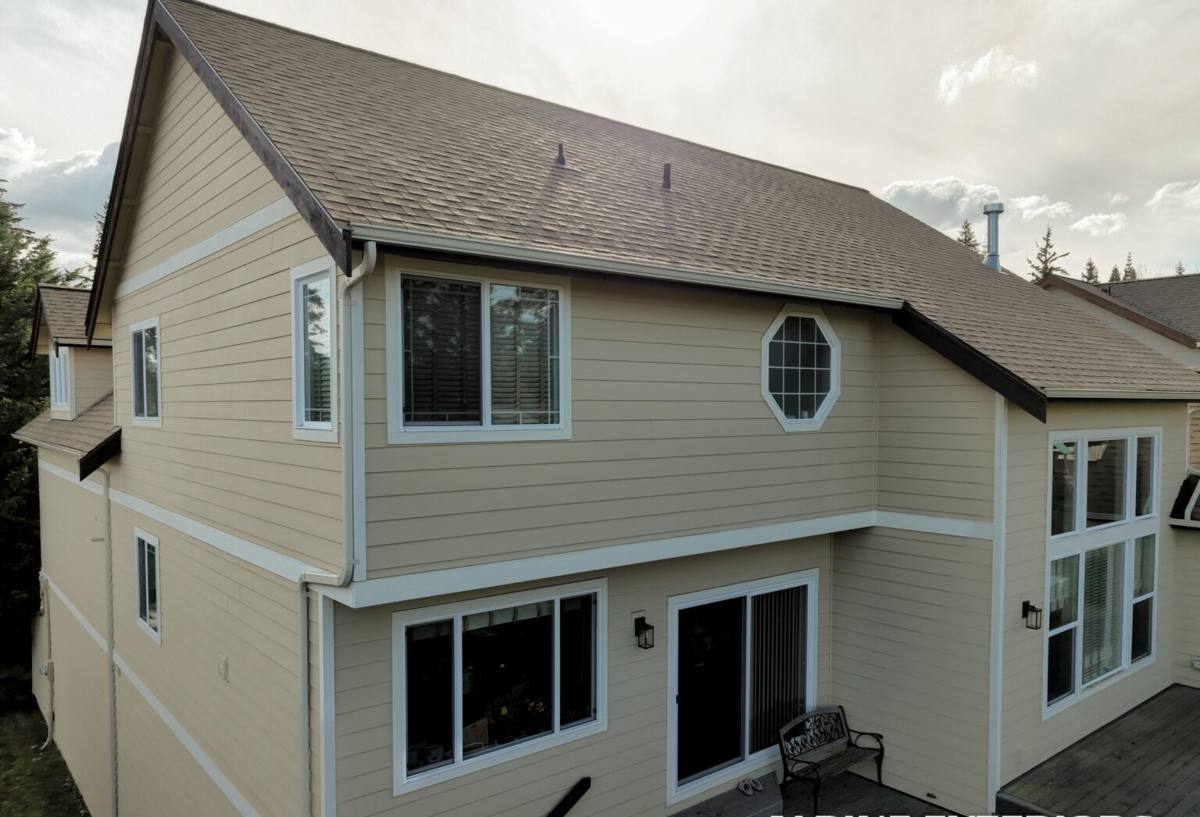
New-Construction vs. Replacement Windows — Why the Distinction Matters
"New-construction" isn't a marketing term — it describes a specific type of window with a nailing flange (fin) around the perimeter of the frame. That flange gets integrated directly into the wall's weather-resistive barrier during framing, before siding goes on. Replacement windows, by contrast, are designed to slide into an existing opening with the old flange or brick mold left in place, using the existing exterior trim to manage water.
The two are not interchangeable, and using the wrong one — or installing a flanged window like a retrofit — is one of the more common mistakes we get called out to fix. On a true new-construction job, the sequence has to go in a specific order relative to the house wrap, sill pan, and siding, or the whole point of the flange is lost.
When This Applies in Bothell
- Ground-up new home construction
- Additions where new exterior wall is being framed
- Full-envelope remodels where siding and sheathing are being removed anyway
- Garage, ADU, and accessory structure builds
What King County's Climate Demands From the Install
A window itself is a manufactured, tested product — but its performance in the field depends almost entirely on how it's flashed into the wall. In a climate with sustained, wind-driven rain, water is going to find any gap in that flashing eventually. It's not a matter of if, it's a matter of how many winters it takes.
The moss and algae growth common on north- and shade-facing walls in this part of King County is also a signal worth reading: if moss is establishing itself on a wall surface, that surface is staying damp longer than it should, and any window nearby is sitting in that same damp microclimate. We factor that into where extra flashing attention and drainage gaps matter most on a given elevation, not just at the window itself but across the whole wall assembly.
The Three Things That Actually Fail First
- Sill pan flashing — a missing or improperly lapped sill pan is the single most common source of hidden rot behind new windows.
- Head flashing laps — water has to be directed out and over the siding below, not behind it.
- Sealant at the jambs — the right sealant, applied to a clean, dry surface, in the right location (not everywhere — over-sealing traps water as often as it keeps it out).
Anatomy of a Correct Install
A new-construction window install follows a strict order. Skipping or reversing a step is how call-backs happen two or three winters later, usually once interior damage is already visible.
- Rough opening is checked for square, level, and correct dimension against the window schedule.
- A sloped sill pan flashing is installed at the bottom of the opening, so any water that gets past the window drains back outside rather than into the wall cavity.
- Weather-resistive barrier (house wrap) is cut and prepped in a shingle-lap pattern around the opening.
- The window is set, shimmed level and plumb, and fastened through the nailing flange per the manufacturer's schedule.
- Flange is integrated into the house wrap — sides first, then head, always lapped so upper layers shed water over lower ones.
- Backer rod and sealant are applied at the interior air seal, and exterior sealant is placed only where it belongs, not as a substitute for correct flashing.
- Final check for operation, square, and weep path before siding or trim closes the opening up.
Every one of those steps is inspectable at the time it happens and essentially invisible once siding goes on — which is exactly why it needs to be done right the first time by a crew that isn't rushing to get to the next house on the schedule.
Frame Material Options — Honest Trade-Offs
We install several frame materials on new-construction jobs, and the right choice depends on budget, the home's design, and how much long-term maintenance the owner wants to take on. None of these are "bad" products — each comes with a different maintenance and cost profile worth understanding up front.
| Frame Material | Typical Cost Position | Maintenance | Best Fit |
|---|---|---|---|
| Vinyl | Lower | Low — no painting, occasional cleaning | Budget-conscious builds, rental/spec homes |
| Fiberglass | Mid to upper | Low — dimensionally stable in temperature swings | Homes wanting durability without wood upkeep |
| Wood / Wood-Clad | Upper | Higher — exterior cladding helps, interior wood still needs care | Traditional or high-end architectural styles |
| Aluminum | Mid | Low, but prone to condensation without thermal breaks | Larger openings, contemporary designs |
In a climate with this much sustained moisture, we lean toward recommending frame materials with strong dimensional stability and manufacturer-backed moisture warranties for street-facing and weather-exposed elevations, and we'll walk through those trade-offs with you rather than defaulting to whatever's cheapest to install.
How We Work With Builders and Homeowners
Most new-construction window work happens on someone else's schedule — a general contractor's framing timeline, an architect's window schedule, an inspector's checklist. We coordinate directly with whoever's running the job site so the window install lands at the right point: after sheathing and house wrap, before siding closes things up, and timed so the opening isn't sitting exposed to weather longer than necessary.
What a Bothell New-Construction Window Job Typically Involves
- Reviewing the window schedule against actual rough openings before ordering
- Confirming flashing details with the builder's weather-resistive barrier system so materials are compatible
- Scheduling install around framing inspections and siding start dates
- Photographing flashing and sill pan work before it's covered, for the homeowner's and builder's records
- Final walkthrough on operation, egress compliance where applicable, and visible sealant lines
Common Mistakes We're Called In to Fix
A lot of our new-construction window calls in the Bothell area aren't first-time installs — they're corrections after a homeowner noticed staining, soft trim, or a drafty window a year or two after move-in. The pattern is usually the same short list of shortcuts:
- No sill pan, or a flat one instead of sloped
- House wrap taped over the flange instead of properly lapped, reversing the drainage path
- Caulk used as the primary water barrier instead of correct flashing sequence
- Wrong fastener type or spacing through the nailing flange, leading to warping or air leaks
- Window installed out of square, straining the frame and seals over time
None of these show up on move-in day. They show up during the second or third wet season, which is exactly why the install quality matters more than almost any other decision on the window scope.
Why a Crew That Already Works Bothell Matters
Flashing details, house wrap systems, and inspection expectations vary somewhat from jurisdiction to jurisdiction within King County, and a crew that's already done this work locally isn't guessing at what a Bothell-area inspector wants to see or how a particular builder's wrap system is meant to integrate with window flanges. That familiarity shows up in fewer surprises mid-build, fewer re-inspections, and a window install that's ready for whatever the next wet season brings rather than just whatever the forecast looked like on install day.
If you're planning a new build, addition, or full-envelope remodel in Bothell and want a window install that's done to hold up to real King County weather — not just pass a quick glance — we're happy to take a look at your plans or framing and put together a straightforward, no-pressure estimate. There's a form below to get that conversation started.