 King County
 Why Bothell Roofs Wear Out the Way They Do
Bothell sits in one of the wetter corners of King County, and the roof over your head takes the brunt of it. Between the marine air that moves in off Puget Sound, months of driving rain, and a moss season that can run from fall through spring, roofing materials here age differently than they would in a drier climate. A shingle rated for 25-30 years on paper often shows real wear well before that mark if the original installation cut corners on ventilation, flashing, or underlayment. Understanding what's actually happening to your roof is the first step in deciding whether it's time to replace it.
Driving Rain and Wind-Driven Moisture
Straight-down rain is easy for almost any roof to shed. The problem in this region is wind-driven rain that gets pushed sideways under shingle tabs, around chimney flashing, and into valleys. Over years, that repeated moisture intrusion finds the weak points in a roof system — nail pops, worn pipe boots, and flashing that was never properly step-lapped into the siding. Once water gets past the surface layer, it doesn't take long to reach the roof deck.
The Long Moss Season
Shaded, north-facing roof slopes and roofs surrounded by mature trees stay damp for extended stretches, which is exactly what moss needs to establish itself. Moss doesn't just look bad — it holds moisture against the shingle surface, lifts tabs as it grows, and traps organic debris that breaks down granule coatings faster than sun and rain alone would. A roof with heavy, established moss growth is usually a roof that's aging faster than its neighbors.
Marine Air and Material Fatigue
The persistent humidity common to the greater Puget Sound area keeps roofing materials, fasteners, and flashing in a near-constant cycle of slight expansion and contraction. That cycle is slow but relentless, and it's part of why cheaper fasteners and thin flashing metal fail earlier here than they would in a drier inland climate. It's also why the quality of the materials under the shingles matters as much as the shingles themselves.
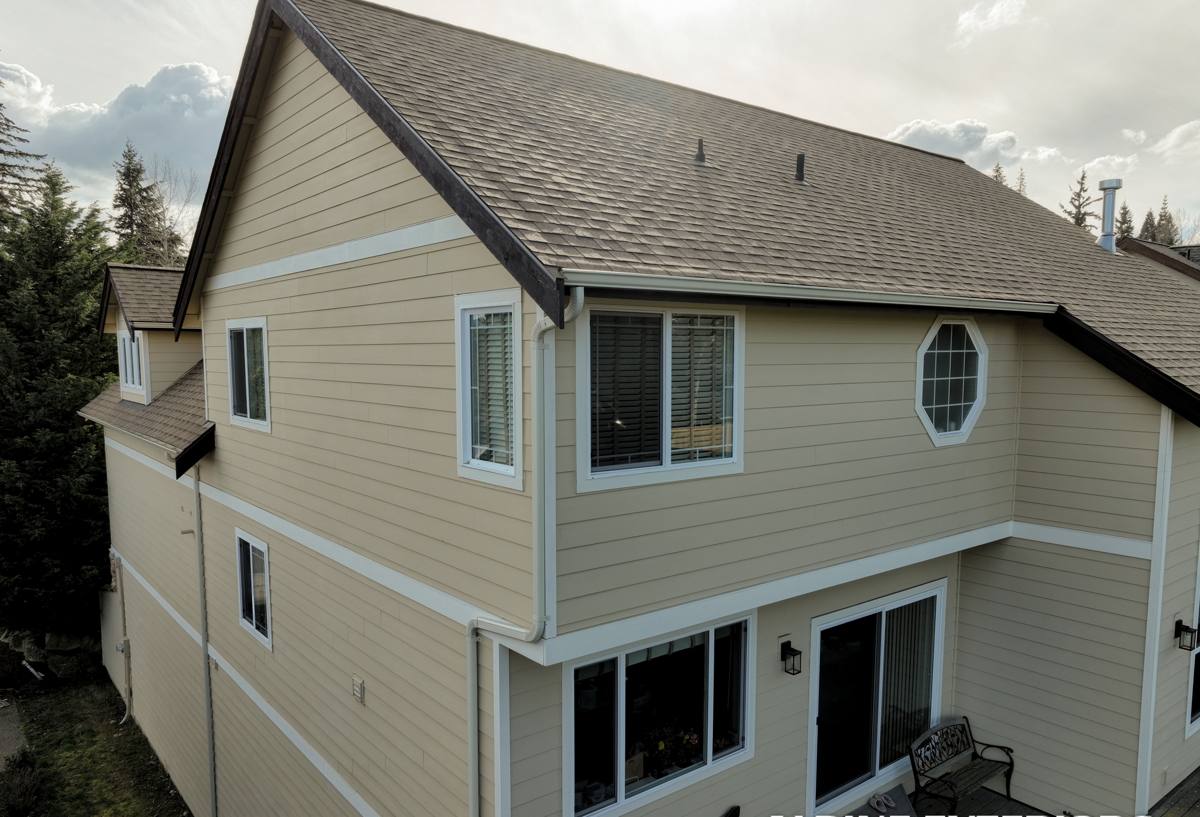
Signs Your Bothell Roof Needs Replacing, Not Just Repair
Not every roofing problem calls for a full replacement. But when several of these show up together, patch repairs are usually a short-term fix on a roof that's already past its useful life.
- Shingles that are cupping, curling at the edges, or missing granules in large patches
- Moss or algae streaking that comes back within months of cleaning
- Daylight visible through the roof deck from inside the attic
- Soft or spongy spots when walking the roof, a sign of a compromised deck
- Rusted, cracked, or separated flashing around chimneys, skylights, and vents
- Granules collecting in gutters in noticeably increasing amounts
- Interior water stains on ceilings or upper walls, especially after wind-driven storms
- A roof that's 20+ years old and has never had underlayment or ventilation upgrades
What a Correct Roof Replacement Actually Involves
A roof replacement is more than swapping old shingles for new ones. The parts homeowners can't see are usually what determine whether the new roof lasts 10 years or 30.
Tear-Off and Deck Inspection
A full tear-off removes the old roofing material down to the deck, which is the only way to actually see what's underneath. Rotted or delaminated plywood sheathing gets replaced before anything new goes down — installing over a compromised deck just hides a structural problem under a fresh layer of shingles.
Underlayment and Water Barrier
Given how much wind-driven rain this area sees, the underlayment layer matters as much as the shingles on top of it. Self-adhering ice and water barrier belongs at eaves, valleys, and around every penetration — the places water is most likely to find a way in. Synthetic underlayment across the rest of the field gives a second line of defense if anything ever gets past the shingles themselves.
Ventilation
A roof that can't breathe traps heat and moisture in the attic, which shortens shingle life from underneath and can lead to condensation issues in our humid climate. Balanced intake at the eaves and exhaust at the ridge keeps air moving, which matters for both the roof's lifespan and the comfort of the rooms below it.
Flashing Details
Chimneys, skylights, sidewalls, and valleys are where the vast majority of roof leaks originate — not the open field of shingles. Properly step-flashed and counter-flashed details, cut and formed for the specific roof rather than pulled off a shelf generic, are what actually keep water out long term.
Roofing Material Options for Bothell Homes
Most Bothell homes land on asphalt composition shingles, and for good reason — they perform well in this climate when installed correctly and offer the best balance of cost, appearance, and maintenance. But it's worth understanding the trade-offs across the common options.
| Material | Typical Lifespan | Moss/Moisture Resistance | Relative Cost |
|---|---|---|---|
| 3-Tab Asphalt Shingle | 15-20 years | Moderate — needs regular moss control | Lowest |
| Architectural (Dimensional) Shingle | 25-30 years | Good, especially with algae-resistant granules | Moderate |
| Standing Seam Metal | 40-50+ years | Excellent — moss struggles to hold on smooth metal | Highest upfront |
| Cedar Shake | 20-30 years with upkeep | Poor without consistent maintenance in wet climates | High, plus ongoing maintenance cost |
We generally steer homeowners away from cedar shake in this climate unless they're committed to an aggressive maintenance schedule — the moisture-holding nature of wood shakes combined with our long wet season and moss pressure means it needs more upkeep than most homeowners want to take on. That's a maintenance-burden conversation, not a knock on the material itself; cedar can work well in drier climates or with disciplined annual care.
Our Roof Replacement Process
We keep the process straightforward so you know what to expect from first call to final walkthrough.
- On-site inspection. We walk the roof, check the attic for ventilation and moisture signs, and assess the deck condition where visible.
- Written estimate. You get a clear scope of work and pricing before anything is scheduled — no vague allowances that turn into surprise costs.
- Material selection. We talk through options based on your home, budget, and how the roof faces sun, shade, and prevailing wind and rain.
- Scheduling around weather. Roof replacement needs a dry window, so we plan installation dates with our local wet-season patterns in mind.
- Tear-off and deck repair. Full removal of old material, deck inspection, and replacement of any damaged sheathing.
- Underlayment, flashing, and shingle installation. Installed in the sequence and detail described above, not shortcuts.
- Final walkthrough and cleanup. We review the completed work with you and make sure the property is left clean, including a magnetic sweep for stray nails.
Roof Maintenance After Replacement
A well-installed roof still benefits from basic upkeep, especially with our moss season. Keeping gutters clear so water isn't backing up under the eaves, trimming back tree limbs that shade the roof and keep it damp, and having moss treated before it becomes established growth will all extend the life of a new roof. We're glad to walk any homeowner through a simple maintenance schedule at the time of installation.
Permits and Local Requirements
Roof replacement in King County typically requires a building permit, and specifics can vary depending on whether a property falls under Bothell's own jurisdiction or unincorporated King County. Permit requirements also touch on things like ice and water barrier placement and ventilation ratios under current building code. We handle the permit process as part of the job so homeowners aren't left figuring out code requirements on their own.
Why Hire a Crew That Already Works in Bothell
Roofing knowledge that's specific to this area isn't something you get from a general contractor passing through. A crew that regularly works Bothell roofs already knows which slopes tend to hold moss, how local wind patterns drive rain into valleys and sidewalls, and what inspection and permit expectations look like locally. That familiarity shows up in fewer callbacks and a roof that's built for the conditions it actually has to handle, not a generic install.
It also means a company that's easy to reach if a warranty question ever comes up years down the road — not an out-of-area crew that did one job and moved on. For a roof, that kind of accountability matters as much as the materials themselves.
Get a Free, No-Pressure Estimate
If your roof is showing signs of wear, dealing with recurring moss, or simply approaching the age where replacement makes more sense than another round of repairs, we're happy to take a look. Use the form below to request a free estimate — there's no pressure and no obligation, just a clear, honest assessment of what your roof actually needs.