 King County
 Roof Repair in Bothell: Built for Puget Sound Weather
Bothell sits where the moisture rolls in off the Sound and settles into the tree cover along the Sammamish River valley, and that combination is hard on roofs. Homes here deal with driving rain that finds its way under aging flashing, salt-tinged air that speeds up corrosion on metal fasteners and gutters, and a moss season that can run eight months out of the year on shaded, north-facing slopes. A roof repair in this area isn't just patching a leak — it's addressing the specific way King County weather attacks a roof over time.
We've worked enough roofs in and around Bothell to know the usual suspects: moss-lifted shingles near the ridge, soft spots where valleys collect debris, and flashing around chimneys and skylights that was never properly sealed to begin with. Below is what we look for, what a correct repair actually involves, and how to think about the decision between a repair and a larger project.
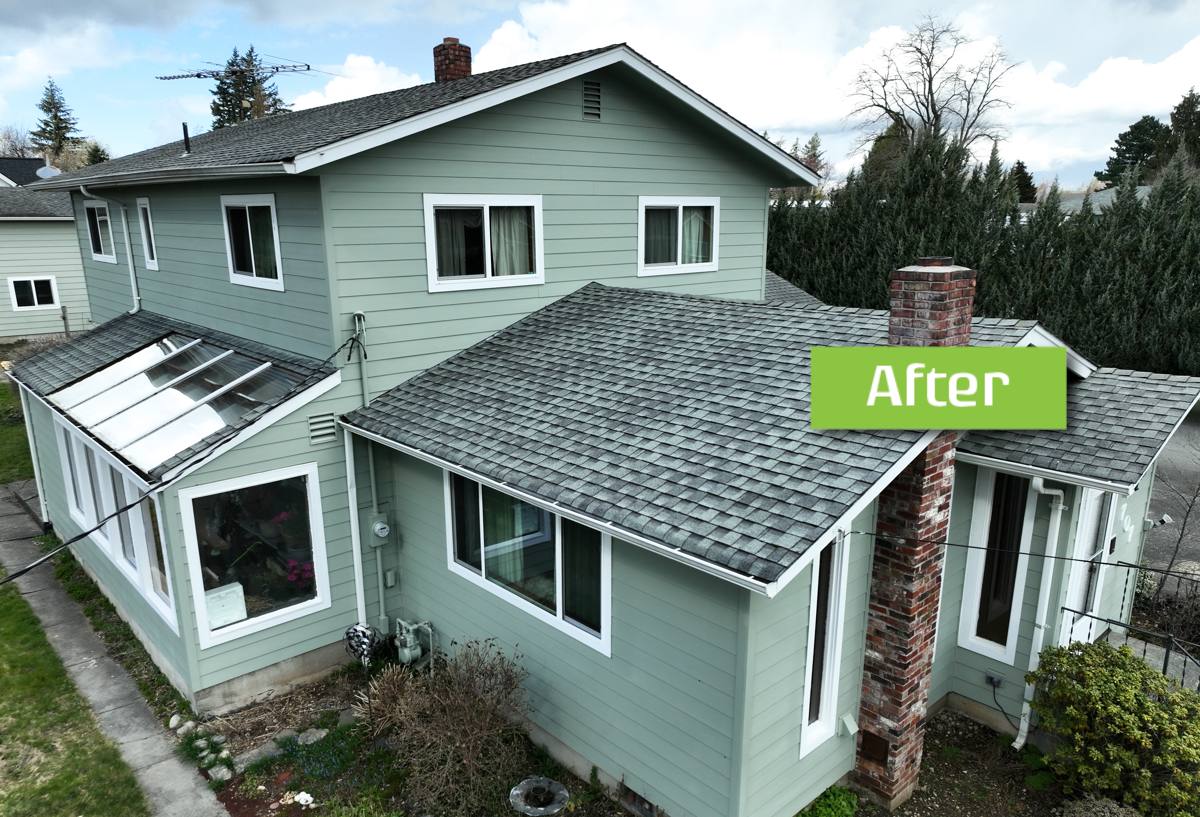
What Bothell's Climate Does to a Roof
Moss and Organic Growth
The tree canopy that makes Bothell neighborhoods attractive also means constant shade on parts of most roofs, and shade plus moisture equals moss. Moss doesn't just sit on top of shingles — it works its root structure under the shingle tabs, lifting them and holding water against the roof deck. Left alone through a wet fall and winter, that trapped moisture is one of the most common causes of the interior leaks we get called out for.
Driving Rain and Wind-Driven Water
Storms moving through the region often come with sideways rain rather than straight-down rain. That matters because straight-down rain sheds off a roof the way it's designed to, while wind-driven rain gets pushed up under shingle edges, around vent boots, and into flashing laps that are fine in normal conditions but marginal in a real blow. Repairs that only address the visible gap and ignore the direction water was pushed from tend to fail again in the next storm.
Salt Air and Corrosion
Bothell isn't right on saltwater, but King County's marine air still carries enough salt content to accelerate corrosion on exposed metal — nail heads, drip edge, gutter fasteners, and older flashing. Once a fastener starts to corrode, it loses its grip and the seal around it opens up, which is a slow leak waiting to happen rather than a sudden one.
Freeze-Thaw Cycling
King County doesn't get deep freezes often, but it gets enough freeze-thaw swings in winter that any water already trapped under moss or in a compromised valley can expand and contract repeatedly. That cycling widens small cracks in shingles and sealant faster than a drier climate would.
Signs a Bothell Home Needs Roof Repair
- Dark streaking or visible moss patches, especially on north- or shade-facing slopes
- Granules collecting in gutters or at downspout outlets — a sign shingles are wearing thin
- Curling, cupping, or lifted shingle tabs, particularly near ridges and edges
- Water stains on interior ceilings or in the attic, even faint or intermittent ones
- Rusted or visibly corroded flashing around chimneys, skylights, or vent pipes
- Sagging in a valley or along a roof plane, which can indicate deck-level moisture damage
- Daylight visible through the roof deck from inside the attic
Any one of these on its own might be minor. Two or three together usually means water has already found a way in and the repair needs to address the source, not just the symptom.
What a Correct Repair Actually Involves
A roof repair done right starts with finding the actual entry point, not just the spot where the stain shows up inside. Water travels — it can enter at a ridge, run along the underlayment, and show up as a stain three feet away on a ceiling. That's why we start every repair with a physical inspection of the roof surface, not just a look at the ceiling stain from the driveway.
Diagnosis Before Repair
We check flashing at every penetration — chimneys, skylights, plumbing vents, and where roof planes meet siding or a lower roof. We check valleys for debris buildup and granule wear. We check the shingle field for moss lift, cracked tabs, and exposed nail heads. And where there's an attic, we check the underside of the deck for staining, discoloration, or soft spots that tell us how long water has been getting in.
Matching the Repair to the Cause
Moss-related leaks need the moss removed carefully — not power-washed, which can drive water and debris further under the shingles and strip granules — along with treatment to slow regrowth, plus replacement of any shingles that were lifted or cracked in the process. Flashing failures need the flashing re-set or replaced with proper laps and sealant, not just a bead of caulk over the gap, which is a short-term patch that fails within a season or two. Wind or storm damage needs a full check of the affected slope, since one torn shingle is often a sign that its neighbors are also compromised and close to failing.
Deck-Level Damage
If water has been getting in long enough to soften the roof deck itself, patching the shingle layer without addressing the deck underneath just hides the problem. We'll tell you honestly if a section of decking needs to be replaced as part of the repair — it's a bigger job than a shingle swap, but skipping it means the leak comes back.
Repair vs. Replacement: How to Think About It
| Factor | Leans Toward Repair | Leans Toward Replacement |
|---|---|---|
| Roof age | Under 15-20 years, one problem area | Near or past expected lifespan, multiple issues |
| Extent of damage | Isolated to one slope, valley, or penetration | Widespread granule loss, curling across most of the roof |
| Deck condition | Solid, dry decking under the affected area | Soft or rotted decking in multiple locations |
| Repair history | First or second repair on this roof | Recurring leaks in different spots year after year |
| Moss/algae staining | Localized, treatable | Heavy, long-term staining across most shingles |
Most roofs we look at in Bothell are candidates for repair, not replacement — a well-installed roof that's had one flashing failure or one moss-related leak usually just needs that section addressed. We'll tell you plainly if we think repair is the right call, and we'll also tell you plainly if we think you're better off putting the money toward a new roof instead of chasing repairs on one that's near the end of its service life.
Our Repair Process
- Inspection: We walk the roof (weather permitting) and check the attic if accessible, documenting what we find before recommending anything.
- Honest estimate: You get a clear explanation of what's causing the problem, what it will take to fix it, and roughly what that involves — no pressure to upgrade to a full replacement if a repair will genuinely hold.
- Repair work: Moss removal, flashing replacement, shingle replacement, and deck repair as needed, using materials matched to your existing roof where possible.
- Cleanup and check: We clear debris from gutters and valleys as part of the job, since clogged drainage is often what caused the original problem.
- Follow-up: If something doesn't hold the way it should, we want to know — a repair that fails in the next storm isn't a repair.
Preventing the Next Leak
- Have moss treated or removed before it has a chance to lift shingles, ideally before the wet season builds up
- Keep gutters and valleys clear so water has a clean path off the roof instead of pooling
- Trim back overhanging branches that keep sections of roof shaded and damp
- Get flashing checked periodically, especially around chimneys and skylights, since it's the most common failure point
- Address small leaks quickly — a small flashing gap this year is a soft roof deck in two years if it's ignored
Why Hire a Crew That Already Works Bothell
A roofer who works this part of King County regularly knows which slopes in a given neighborhood tend to hold moss, how local storm patterns push rain into flashing, and what a typical Bothell roof assembly looks like under the shingles. That's not something you get from a crew that mostly works drier climates or unrelated regions — the failure points here are specific to this weather, and diagnosing them correctly the first time saves you from paying for a repair that doesn't actually solve the problem.
We also stand behind the work. If we repair a section of roof, we want it to hold through the next wet season, not just look fine until the first real storm tests it.
If you're dealing with a leak, moss buildup, or storm damage on your Bothell roof, we're happy to take a look and give you an honest read on what it needs. Request a free, no-pressure estimate using the form below.