 King County
 Why Bothell Homes Need Windows Built for This Climate
Bothell sits in the wet, marine-influenced part of King County, and that shows up in how windows age here. It isn't one dramatic storm that ruins a window opening — it's years of steady moisture load: long stretches of driving rain in fall and winter, humidity that never fully clears in the shoulder seasons, and a moss and algae season that runs longer than most homeowners expect. Even homes well away from open water deal with the same marine airflow that keeps everything just a little damp for months at a time. Original builder-grade windows and older aluminum-frame units were rarely detailed to handle that kind of sustained exposure, and it catches up with them.
Custom windows solve two problems at once: they're sized and configured to fit openings that are rarely as square as they were the day the house was framed, and they let us choose materials, glass, and flashing details matched to King County's climate instead of a generic national spec. That combination is what actually keeps water out over the long run — not just on installation day, but ten and twenty years later.
What "Custom" Actually Means for a Bothell Window Job
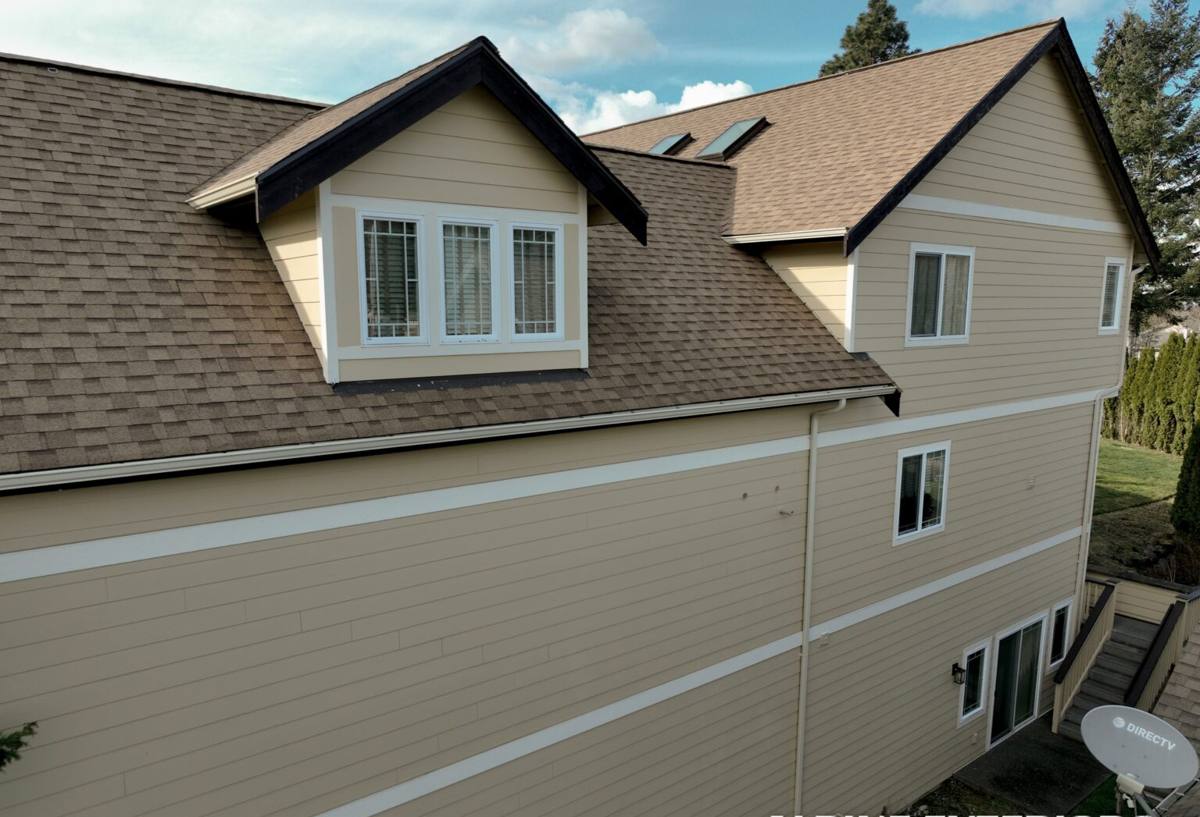
Custom doesn't mean unusual shapes or high-end finishes, though we do those too. Most of the time it means the window is built to the exact opening on your house rather than forced into a standard size with extra trim or shims to make up the difference. On homes in this area — especially anything built before the 2000s — openings settle, framing shifts slightly, and stucco or siding lines aren't perfectly true. A custom-sized window closes those gaps properly instead of relying on caulk to hide a bad fit.
Where custom sizing matters most
- Older homes where original openings were never perfectly square
- Additions or remodeled rooms with non-standard rough openings
- Replacing a single window without disturbing surrounding trim or siding
- Matching sightlines when only some windows on a wall are being replaced
- Larger openings where a stock size would leave visible gaps or require awkward mulling
Material and Frame Options
We install a range of frame materials, and the right one depends on the house, the exposure, and the budget — not on pushing a single product. Here's how the common options compare for a King County climate specifically.
| Frame Material | Moisture Performance | Maintenance | Typical Fit |
|---|---|---|---|
| Vinyl | Good — won't rot or corrode, handles constant damp well | Low; occasional cleaning | Most Bothell homes, best overall value |
| Fiberglass | Excellent — very stable in temperature and moisture swings | Low | Larger openings, higher-exposure walls, longer-term hold |
| Wood-clad | Good on the exterior clad side; interior wood needs care | Moderate to high | Homes prioritizing an interior wood look |
| Aluminum | Weaker in this climate — prone to condensation and thermal transfer | Low, but moisture issues are harder to fix later | We use it selectively, not as a default |
We'll tell you plainly if a material isn't a good match for a given wall or exposure. Aluminum, for example, conducts cold and tends to sweat on the interior in our winter humidity — that's a physics issue, not a knock on any particular manufacturer, and it's why we steer most Bothell homeowners toward vinyl or fiberglass unless there's a specific design reason to do otherwise.
Glass Packages That Actually Matter Here
The frame gets most of the attention, but the glass package does most of the work for comfort and moisture control. In this climate, we typically recommend:
Double-pane with Low-E coating and argon fill
This is the baseline that makes sense for most Bothell homes — it cuts heat loss, reduces condensation risk on the interior glass, and holds up well through our temperature swings between damp winters and warmer, drier summers.
Triple-pane for specific situations
Worth considering on north-facing walls, rooms with historically bad condensation, or homes near busier roads where the extra pane also helps with sound. It's not always necessary — we'll say so if it isn't — but it's a real option, not an upsell we push on every job.
Low-E coating variants
Different coatings balance solar heat gain differently. For rooms that get strong afternoon sun, a coating tuned to limit heat gain keeps things comfortable without darkening the glass noticeably.
Signs Your Current Windows Are Losing the Fight
Most window failures in this area show up gradually, and homeowners often chalk them up to "just an old house" rather than a fixable problem. Worth checking for:
- Fogging or a permanent haze between panes (a failed seal, not a cleaning issue)
- Soft or discolored wood at the sill or bottom corners of the frame
- Persistent condensation on the interior glass through fall and winter
- Visible moss or dark streaking building up on the sill or exterior trim
- Drafts you can feel by hand along the frame edge on a windy day
- Windows that stick, won't latch fully, or have gotten harder to open over the years
- Rising heating bills without any other clear explanation
Any one of these can be minor. Two or three together, especially on the same wall, usually means water has been getting past the frame for a while.
What a Correct Installation Actually Involves
The window unit itself is maybe half the job. The other half — the part that determines whether it still performs in ten years — is how it's flashed and sealed into the wall.
The details we don't skip
- Removing the old unit and inspecting the framing and sill for hidden rot or moisture damage before anything new goes in
- Installing proper flashing at the sill and head so water is directed out and down, not trapped behind the siding
- Using a correctly lapped weather-resistant barrier around the opening, integrated with the existing wall wrap
- Sealing with the right sealant for the substrate — not just running a bead of caulk around the trim
- Insulating the gap between the frame and rough opening without overpacking it, which can bow the frame
- Confirming the window operates smoothly and locks fully before we consider the job done
Skipping any one of these is how a brand-new window ends up with a moisture problem in a few years — and it's usually invisible from the outside until the damage is already in the wall.
Our Process, Start to Finish
1. On-site assessment
We measure the actual openings, check the condition of the surrounding framing and siding, and talk through what you actually need — better efficiency, less condensation, easier operation, or just replacing units that are failing.
2. Straightforward proposal
You get a clear breakdown of materials, glass package, and scope — no vague allowances that turn into surprise add-ons later.
3. Install day
Old units come out, framing gets inspected, and any moisture damage we find gets flagged and discussed before we move forward — we won't cover up a problem to keep a schedule.
4. Final check and cleanup
Every window gets operated, checked for a square, tight fit, and cleaned up before we call it finished.
Why a Local Crew Matters for This Job
Window installation is one of those jobs where regional experience shows up directly in the results. A crew that works King County regularly knows which walls in this area tend to take the worst weather, how local siding types (lap, hardie, stucco) need to be handled during a swap-out, and what a normal wet-season timeline looks like for scheduling. That's different from a crew that installs windows in a dry climate and treats flashing as an afterthought.
We're not asking you to take that on faith — ask any contractor how they handle sill flashing and moisture barrier integration, and the answer should be specific, not vague. If it isn't, that's worth noticing before, not after, the job.
Cost Factors Worth Understanding
| Factor | Why It Moves the Price |
|---|---|
| Number of windows | Per-window cost drops somewhat with larger projects due to shared setup time |
| Frame material | Fiberglass and higher-end vinyl cost more than base vinyl; wood-clad more still |
| Glass package | Triple-pane and specialty Low-E coatings add cost over standard double-pane |
| Opening condition | Rot or framing repair discovered during removal adds labor and material |
| Size and shape | Large, custom, or non-rectangular openings take more time to fabricate and fit |
| Access | Second-story or hard-to-reach windows add labor time |
We don't quote broad per-window prices in the abstract because these factors genuinely change the number — a small, standard vinyl unit and a large custom fiberglass unit with upgraded glass aren't in the same category. What we will do is give you real numbers once we've actually looked at your windows.
If your windows are fogging, drafting, sticking, or just past their useful life, we're happy to take a look and give you a straightforward, no-pressure estimate — use the form below to get started.