 King County
 Building New on Queen Anne: Why Window Installation Timing Matters
Queen Anne sits on one of Seattle's highest hills, which means new construction here almost always comes with a view — and with that view comes real exposure to wind, driving rain, and salt-laden air moving in off Puget Sound and Elliott Bay. When you're building new rather than replacing old windows, you get one real chance to integrate the windows with the building envelope correctly. Get the flashing, the water-resistive barrier sequencing, and the rough opening details right during framing, and the house stays dry for decades. Get them wrong, and the mistake gets buried behind siding and trim, where it won't show up as a problem until there's rot, mold, or a stained ceiling below a window head.
New-construction window work is a different discipline than replacement work. There's no old frame to reference, no existing flashing to inspect and reuse — everything is built from the rough opening out, in coordination with the framer, the siding crew, and whoever is running the weather-resistive barrier. On a King County job, that coordination is the difference between a window package that performs for 30+ years and one that starts leaking within the first few wet seasons.
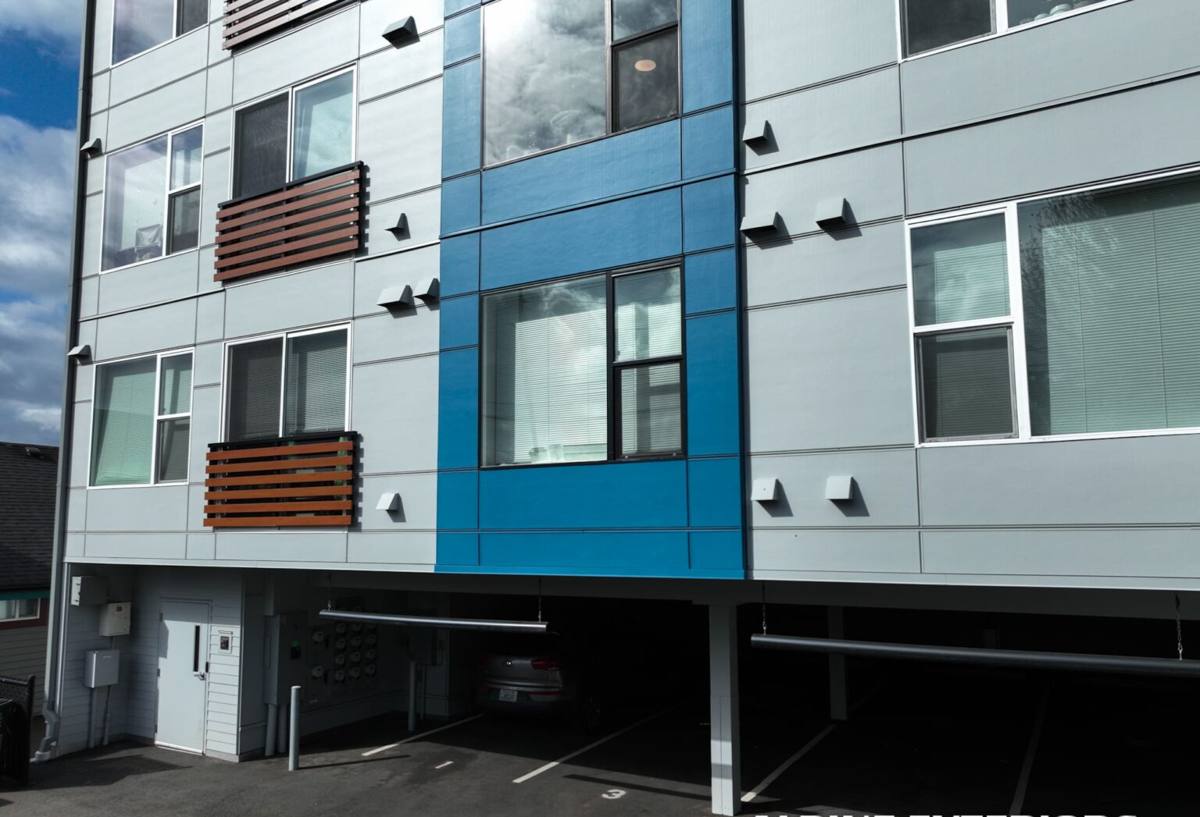
What Queen Anne's Climate Actually Demands From a Window Package
Queen Anne's elevation and proximity to the water create a specific set of stresses that a generic window spec doesn't account for.
Salt Air
Homes with exposure toward the Sound see airborne salt that accelerates corrosion on unprotected hardware, fasteners, and lower-grade finishes over time. We spec corrosion-resistant hardware and finishes on view-facing elevations rather than treating every window on the house the same.
Driving Rain
Wind off the water doesn't just fall as rain, it drives it sideways and up under sills and trim. That means sill pan flashing and proper head flashing aren't optional details reserved for "high-exposure" walls — on an elevated Queen Anne lot, most walls qualify as high-exposure.
A Long Moss Season
Shaded elevations, tree cover, and King County's extended wet stretch from fall through spring keep moss and algae established on sills, tracks, and cladding for much of the year. Left unaddressed, that moisture-holding growth degrades sealants and finishes faster than it would in a drier climate, so drainage and material choice around the window opening matter more here than in most parts of the country.
Choosing the Right Windows for a Queen Anne Build
Vinyl, Fiberglass, and Wood-Clad
Each frame material handles this climate differently. Vinyl is cost-effective and low-maintenance but can flex more in large view-window applications. Fiberglass holds its shape better under temperature swings and takes paint well if you want a custom color to match the home's exterior. Wood-clad interiors give a warm look inside but put more importance on the exterior cladding and flashing detail, since any breach exposes wood to King County's moisture. We'll walk through the trade-offs for your specific elevations and budget rather than defaulting to one material for the whole house.
Glazing and Washington's Energy Code
New construction in King County has to meet Washington State Energy Code requirements for window U-factor and solar heat gain, which are stricter than many homeowners expect. On a hill with big view glazing, that usually means double or triple-pane units with a Low-E coating tuned for the orientation — a west-facing wall of glass toward the water needs different solar heat gain performance than a shaded north elevation. We confirm code compliance with your project's energy path before ordering, not after the windows show up.
The Flashing and Integration Details That Prevent Future Leaks
Sill Pan Flashing
Every rough opening gets a sloped, sealed sill pan before the window ever goes in. This is the single most common detail skipped on production builds, and it's the one that matters most in a climate that drives rain sideways. A sill pan gives any water that gets past the window a way out instead of a place to sit.
Sequencing With the Weather-Resistive Barrier
The order matters: WRB laps over the top flashing, under the side flashing, and integrates with the sill pan in a shingle-style sequence so water always sheds outward and down, never inward. We coordinate this step-by-step with the framing and siding crews so nothing gets covered up out of order.
Sealant Selection and Placement
Sealant is a backup to good flashing, not a substitute for it. We use compatible, weather-rated sealants at the correct joints — and just as importantly, we leave the weep path at the sill open so any incidental water can drain rather than getting trapped.
Our New-Construction Window Installation Process
- Review the window schedule and rough opening dimensions against the actual framing before ordering.
- Confirm U-factor and solar heat gain values meet Washington State Energy Code for each elevation.
- Install sloped sill pan flashing at every opening.
- Set windows plumb, level, and square, with proper shimming at the manufacturer's specified points.
- Integrate head and jamb flashing with the WRB in correct shingle-lap order.
- Insulate the gap between frame and rough opening without over-compressing it.
- Seal and trim to the finished exterior, then walk the job with the builder before siding closes it in.
Working With Your Builder or General Contractor
Most of our new-construction window work happens as a subcontract to a builder or GC, and we're used to fitting into that schedule without becoming the bottleneck. That means showing up when the rough opening is actually ready, having material on-site and confirmed against the plan set in advance, and communicating directly with the site super about sequencing with siding and trim. If you're the homeowner overseeing your own build, we're glad to work directly with you and coordinate with your other trades on timing.
Cost Factors for a New-Construction Window Package
| Factor | Why It Affects Cost | What to Expect |
|---|---|---|
| Frame material | Vinyl, fiberglass, and wood-clad price differently and perform differently in wind and salt exposure | Fiberglass and wood-clad typically run higher than vinyl |
| Glazing package | Meeting Washington's energy code on large view glazing often requires upgraded Low-E or triple-pane units | Adds cost per window but reduces long-term energy loss |
| Window size and count | Large view openings and multi-unit combinations cost more per square foot than standard sizes | Custom sizing and multi-panel combinations command a premium |
| Elevation and exposure | West- and south-facing openings toward the water need more robust flashing and hardware | Modest added labor cost for high-exposure walls |
| Site access | Steep Queen Anne lots and hillside grading can complicate material staging and crane or hoist needs | Access difficulty is priced case by case |
Any honest estimate for a new-construction window package needs to walk the actual site, review the plan set, and confirm the energy code path — broad per-window ballpark figures rarely hold up once elevation, size, and exposure are factored in.
Maintenance in a Salt Air, Moss-Prone Environment
Windows installed correctly still need basic upkeep to hold up in this climate. Rinsing salt residue off exterior hardware and glazing periodically, keeping tracks and weep holes clear of moss and debris, and checking exterior sealant joints once a year go a long way. We can point out the maintenance items specific to your home's exposure at the end of the install so you know what to watch for on the elevations that face the weather.
Why Hire a Crew That Already Works Queen Anne
A window package that's correct on paper can still fail on site if the crew installing it doesn't understand how this particular hill and this particular climate behave. Before you sign off on your new-construction window subcontractor, it's worth confirming:
- They can explain their sill pan flashing detail without hesitation, not just point to a manufacturer's install sheet.
- They've priced hardware and finish upgrades for salt air exposure, not a one-size-fits-all spec across every elevation.
- They know which King County jurisdiction's inspection process applies to your build and what inspectors look for at rough-in.
- They'll walk the openings with your builder before siding closes them in, not after a problem shows up.
- They carry current licensing and insurance appropriate for new-construction subcontract work in Washington.
Local experience matters here in a way it doesn't in milder climates. A crew that's only worked drier inland markets can still install a window correctly on a calm day — the difference shows up years later, on the wall that catches the wind off the Sound.
If you're framing a new build or planning one on Queen Anne, we're happy to look at your plan set and walk the site with you. Reach out for a free, no-pressure estimate — there's a form below to get started.