 King County
 Roofing in Issaquah: Built for the Foothills, Not Just the Forecast
Issaquah sits where the Puget Sound lowlands meet the Cascade foothills, tucked against Cougar, Squak, and Tiger Mountain. That location is part of why the town is so green, and it's also why roofs here take a different kind of beating than roofs in drier parts of the country. Heavy tree canopy, valley humidity, and long stretches of overcast, wet weather all work against a roof that isn't built and installed with this specific climate in mind. A new roof installation in Issaquah has to account for moss growth, sustained moisture exposure, and the kind of driving rain that comes through the region in fall and winter storms — not just look good on a sunny day.
We install roofs across King County, and Issaquah's mix of mature tree cover, sloped lots, and older housing stock means we see a fairly consistent set of problems and priorities when homeowners are ready for a replacement. This page covers what actually matters for a new roof in this area: what the climate demands, what a correct installation looks like, and how to think about the decision.
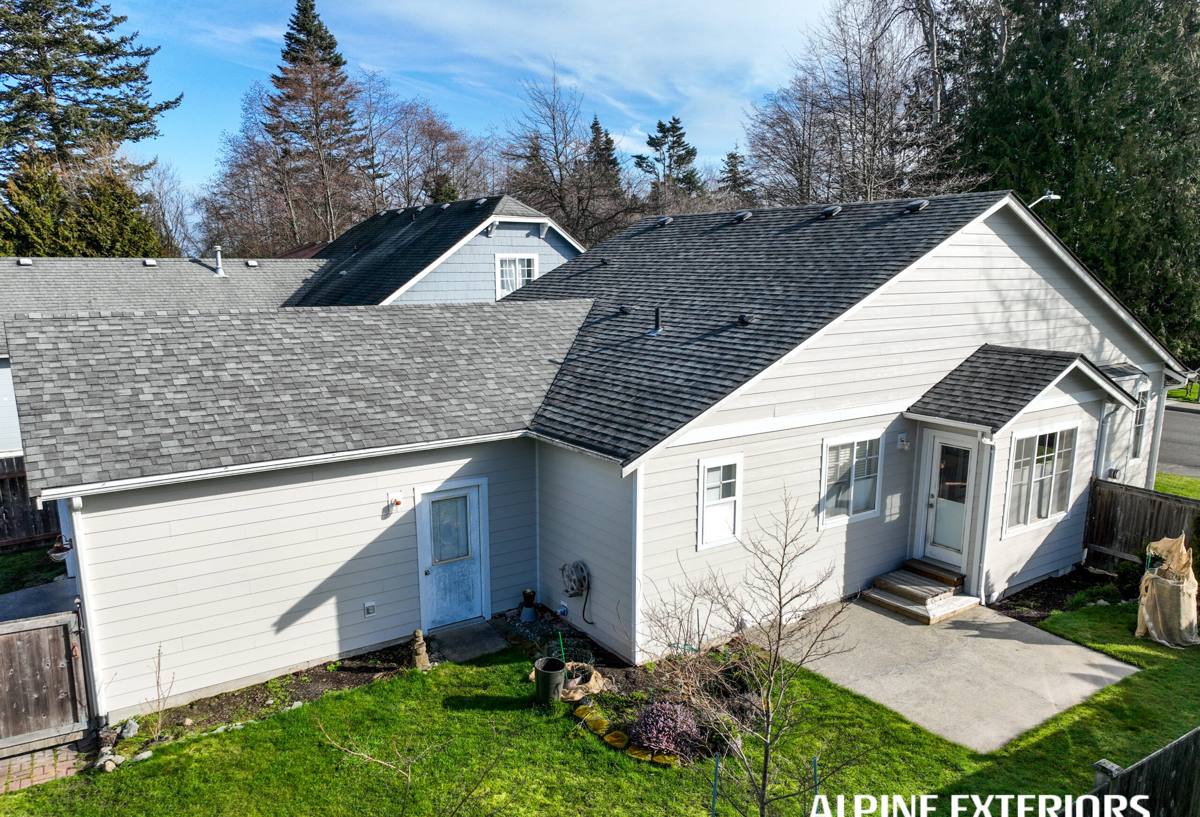
What Issaquah's Climate Actually Does to a Roof
Moss and Organic Growth
Issaquah's tree cover is a defining feature of the town, but it's not free. Overhanging conifers and deciduous trees drop needles, leaves, and debris onto roof surfaces year-round, and that organic material holds moisture against shingles or shakes long after a storm has passed. Combined with shaded, north-facing roof planes that never fully dry out, this creates ideal conditions for moss, algae, and lichen. Left unaddressed, moss doesn't just look bad — it lifts shingle edges, traps water underneath the roofing material, and accelerates granule loss on asphalt shingles.
Sustained Moisture and Driving Rain
King County doesn't get flash-flood-style storms very often, but it gets long, low-intensity rain systems that can sit over the area for days, along with periodic windier storms that drive rain sideways into eaves, valleys, and wall-roof transitions. A roof here needs underlayment, flashing, and ventilation detailing that assumes water will find every weak point eventually — because over a Puget Sound winter, it usually does.
Regional Marine Influence
Being part of the greater Puget Sound region, King County's air carries more moisture and salt-influenced marine air than inland climates far from the Sound. That marine influence, combined with our wet season, is part of why we don't treat roofing materials or fastener choices as one-size-fits-all — what performs well in a dry climate can underperform here.
What a Correct New Roof Installation Involves
A roof replacement is more than stripping old material and nailing down new shingles. In a climate like Issaquah's, the components underneath the visible roofing are just as important as the roofing itself.
- Tear-off and deck inspection: Full removal of old roofing so the deck can be inspected for rot, soft spots, or delamination — problems that are common under roofs that have held moss or trapped moisture for years.
- Deck repair or replacement: Any compromised sheathing gets replaced before new material goes down. Installing over a damaged deck just hides the problem.
- Ice-and-water shield at vulnerable points: Eaves, valleys, and roof penetrations get self-adhering waterproof membrane, not just standard felt, because these are the spots where driving rain and ice damming (during the occasional freeze) cause the most damage.
- Synthetic or felt underlayment across the field: A continuous, correctly lapped secondary water barrier under the full roof.
- Proper flashing at all transitions: Chimneys, skylights, sidewalls, and roof-to-wall intersections are common leak points if flashing is reused or installed loosely.
- Balanced ventilation: Intake at the eaves and exhaust at the ridge, sized to the attic, to control condensation and moisture buildup — a bigger issue in humid climates than most homeowners realize.
- Correct fastening and exposure: Manufacturer nailing patterns and shingle exposure, especially important in a wind-exposed area.
Choosing Materials for an Issaquah Roof
There's no single "right" roofing material — the right choice depends on the home, the budget, and how much roof maintenance the homeowner wants to take on. Here's how the common options stack up for a moss-prone, wet Western Washington climate like Issaquah's:
| Material | Moss/Moisture Resistance | Maintenance | Typical Lifespan Here |
|---|---|---|---|
| Architectural asphalt shingles | Good with algae-resistant granules; needs periodic cleaning near tree cover | Low to moderate | 20-30 years |
| Standing seam metal | Excellent — smooth surface sheds moss and debris well | Low | 40-60 years |
| Cedar shake | Requires diligent upkeep; naturally decay-resistant but holds moisture without maintenance | High | 20-30 years with upkeep |
| Synthetic/composite shingles | Good; resists moisture absorption better than wood | Low to moderate | 30-50 years |
We're generally cautious about recommending untreated cedar shake in heavily shaded Issaquah lots, not because the material is bad, but because our professional standard is to match material to maintenance reality — a shaded, moss-prone roof plane needs more attention with wood shakes than most homeowners are prepared to keep up with. Asphalt and metal roofing tend to be a better fit for lower-maintenance goals in this specific setting, but we'll walk through the trade-offs honestly based on your home and how much upkeep you want to commit to.
Our Process for a New Roof Installation
1. On-Site Assessment
We walk the roof and attic in person — not just a satellite estimate — to check deck condition, ventilation, flashing points, and how much tree cover and shading the roof deals with. Issaquah lots vary a lot from one street to the next, so this step matters.
2. Written Scope and Estimate
You get a clear, itemized scope: tear-off, deck repair allowances, underlayment type, flashing plan, ventilation approach, and material options with honest pricing ranges — no surprise add-ons mid-project.
3. Scheduling Around Weather
King County roofing works best in dry weather windows. We plan installation timing around forecasts and keep the roof deck protected if conditions shift mid-job, since an open deck and a Puget Sound rain system don't mix.
4. Installation
Full tear-off, deck repair as needed, underlayment, flashing, and final roofing material installed to manufacturer specification, with attention to the moss- and moisture-prone details covered above.
5. Final Walkthrough
We review the completed roof with you, confirm ventilation and flashing details, and go over any maintenance recommendations specific to your property's tree cover and exposure.
Signs an Issaquah Home Needs a New Roof, Not a Repair
- Granule loss heavy enough that shingles look patchy or bald in spots
- Moss coverage that keeps returning within a season or two of cleaning
- Soft or spongy spots when walking the roof, suggesting deck damage
- Daylight visible through the attic roof deck
- Multiple past repairs in different areas rather than one isolated issue
- Roof age approaching or past its material's expected lifespan
- Curling, cracking, or cupping shingles across large sections
If only one section is affected and the rest of the roof is sound, a repair may genuinely be the better call — we'll tell you that plainly rather than push a full replacement that isn't needed.
Why Local Experience in Issaquah Matters
A crew that regularly works in and around Issaquah already understands the practical realities: which neighborhoods sit under heavy tree canopy, how steep and shaded certain lots get, what permitting looks like locally, and how weather windows in the foothills can differ slightly from lower-elevation King County areas. That local familiarity shows up in small but real ways — knowing to plan extra time for moss removal on tear-off, sizing ventilation correctly for humid, shaded attics, and not underestimating how much a driving rainstorm off the foothills can push water sideways into flashing.
It also matters for accountability. A contractor based in and around the region is easier to reach for a warranty question or a follow-up inspection years down the line than a company that only shows up for the sale.
What to Expect on Cost
Roofing costs vary based on roof size, pitch, tear-off complexity, deck repair needs, and material choice, so we don't publish blanket numbers that don't apply to your home. In general, asphalt shingle replacements tend to sit at the lower end of the cost range, metal roofing costs more upfront but less over the life of the roof, and any hidden deck damage found during tear-off will affect final pricing. We'll give you real, itemized numbers after an on-site look — not a phone estimate.
Ready to Talk Through Your Roof?
If your roof in Issaquah is showing moss buildup, aging shingles, or you're just planning ahead, we're happy to take a look and walk you through honest options. Use the form below to request a free, no-pressure estimate — we'll assess the roof, answer your questions, and give you a straightforward scope with no obligation.