 King County
 Siding Replacement Built for the Sammamish Plateau
Sammamish sits up on a forested plateau in King County, and that setting is part of what makes it such a desirable place to live — mature trees, lake access, and a quieter feel than the denser parts of the Eastside. It also means homes here take on a very specific kind of exterior wear. Heavy tree canopy holds shade and moisture against exterior walls long after a storm has passed, driving rain off the Sound works its way into every gap and seam over a wet season, and a long moss season settles in wherever siding stays damp and shaded. None of that is dramatic on its own, but stacked up year after year, it is exactly the kind of slow, compounding stress that determines whether siding lasts twenty years or forty.
This page is specifically about siding replacement for Sammamish homes — not a general primer on siding, but what actually matters when an aging wall system on this plateau needs to come off and be done right the first time.
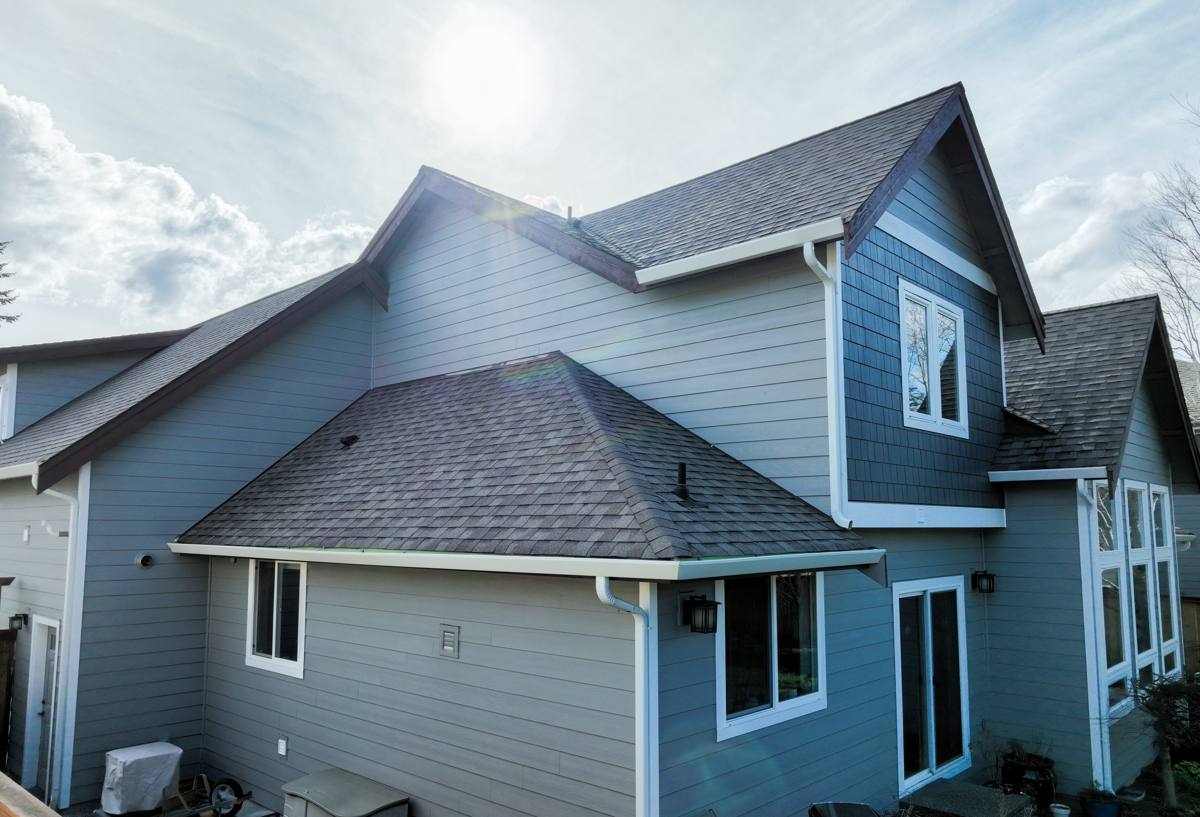
What the Sammamish Climate Actually Does to Siding
Three things define exterior wear here, and they interact with each other.
Shade and Moisture Retention
Lots ringed by tall conifers and deciduous trees keep large sections of a home's exterior out of direct sun for much of the day. That's pleasant for the homeowner and hard on siding — walls that stay shaded stay damp longer after rain, and damp siding is what feeds moss, algae, and, eventually, rot at seams and butt joints.
Driving Rain
King County's rain rarely falls straight down. Wind-driven rain pushes water sideways into laps, corners, and penetrations — around windows, hose bibs, light fixtures, and vents. Siding and flashing that were installed correctly shed that water. Siding installed with shortcuts lets it track behind the cladding, where it does damage no one sees until the wall is opened up.
A Long Moss Season
Between the shade and the moisture, moss and algae have a long window to establish themselves on north-facing and tree-shaded walls. Beyond looking bad, moss holds water against the siding surface and, on wood-based products, accelerates the exact decay process homeowners are trying to avoid.
Put together, these conditions punish any siding product that depends on a perfect, unbroken paint film or that swells and softens when it stays wet. That's the backdrop for every recommendation on this page.
Signs a Sammamish Home Needs Siding Replacement, Not Just Repair
Some damage can be patched. Some can't. A quick self-check before you call anyone:
- Soft or spongy spots when you press on siding, especially near the bottom courses or below windows
- Visible bubbling, peeling, or flaking paint that keeps coming back after repainting
- Persistent moss or dark staining that returns within a season of cleaning
- Gaps, warping, or boards pulling away from the wall at seams and corners
- Siding that feels swollen or noticeably thicker in spots than the surrounding material
- Visible damage or staining on interior walls that lines up with an exterior trouble spot
- Siding that's simply reached the end of its expected service life, even if it looks okay from the street
If you're seeing more than one of these, especially soft spots or recurring interior staining, that's usually moisture that's already gotten past the surface — a sign the wall system needs a real replacement, not another coat of paint.
Why We Install Only James Hardie Fiber Cement
We don't install vinyl, LP SmartSide, Cemplank, Allura, primed spruce, or cedar. That's a deliberate standard, not a limitation of what we're capable of installing, and on a plateau like Sammamish the reasoning holds up especially well.
Vinyl siding is affordable and low-maintenance in mild conditions, but it's a thin plastic product that can warp in temperature swings, doesn't stop moisture from tracking behind it, and offers no fire resistance. Wood-based siding products — including primed spruce, cedar, and engineered wood like LP SmartSide — perform well when maintained perfectly, but they depend on an intact paint or coating layer to keep moisture out. In a climate with a long wet season and heavy shade, that's a maintenance burden that catches up with most homeowners eventually, usually as swelling at the bottom edge or delamination at seams. Fiber cement products like Cemplank and Allura are closer to what we install, but we've standardized on James Hardie specifically for its manufacturing consistency, factory-applied finish, and the depth of its warranty backing.
James Hardie fiber cement is non-combustible, doesn't swell or rot when it absorbs moisture the way wood-based products can, and is engineered in climate-specific HZ formulations — the version we install here is built for the Pacific Northwest's wet, moderate-temperature conditions rather than a one-size-fits-all product. Its ColorPlus finish is baked on at the factory under controlled conditions, which holds color and resists fading and moisture intrusion far better than field-applied paint. It also carries a strong, transferable manufacturer warranty, which matters if you sell the home before the siding's service life is up.
None of that means other products are without merit — vinyl and engineered wood both have real advantages in the right application. It means that for the specific combination of moisture, shade, and moss pressure that Sammamish homes deal with, we've concluded Hardie is the product that holds up with the least long-term risk to the homeowner.
What a Correct Siding Replacement Actually Involves
Siding replacement is not just removing old boards and nailing up new ones. On a home that's dealt with years of Pacific Northwest moisture, what's underneath the siding matters as much as the siding itself.
Tear-Off and Inspection
Old siding comes off in full, exposing the sheathing and framing underneath. This is the point where hidden rot, soft sheathing, or past water damage gets found — and it needs to get fixed before anything new goes up. Covering a compromised wall with new siding just hides the problem for a few more years.
Weather-Resistive Barrier and Flashing
A correctly installed weather-resistive barrier, properly lapped and sealed, is what actually keeps driving rain out of the wall assembly — the siding itself is the first line of defense, not the only one. Flashing around windows, doors, and other penetrations has to be installed in the right sequence so water is directed out and down, never trapped behind the cladding.
Installation to Manufacturer Spec
James Hardie siding has specific requirements for fastener placement, clearances from grade and roof lines, joint treatment, and caulking — all of it engineered around how the product expands, contracts, and sheds water. Installed to spec, it performs the way it's rated to. Installed with shortcuts, even the best product on the market will underperform.
Finish Detail
Cut edges get properly sealed, touch-up matches the ColorPlus finish rather than standing out, and trim and caulking lines are clean. This is the difference between a job that looks good at handoff and one that still looks good in five years.
Our Process for Sammamish Homeowners
- On-site assessment — We look at your current siding, the condition of the sheathing where visible, sun and shade exposure on each elevation, and any trouble spots you've already noticed.
- Scope and product selection — We walk you through the applicable James Hardie lines, profiles, and ColorPlus color options for your home, and give you an honest, itemized picture of the work involved.
- Tear-off and repair — Old siding comes off, the wall is inspected, and any sheathing or framing repairs are handled before new material goes on.
- Installation — Weather barrier, flashing, and Hardie siding installed to manufacturer specification, with attention to the seams and penetrations that matter most in wind-driven rain.
- Walkthrough and cleanup — We review the finished work with you, address anything you flag, and leave the site clean.
Why a Crew That Already Works Sammamish Matters
Sammamish isn't a generic King County suburb from a contractor's standpoint. A lot of neighborhoods here are part of planned communities with homeowners' association architectural guidelines that govern exterior colors and materials — a crew that's worked in the area knows to check on that before ordering material, not after. Lots are often tree-lined and sloped, which changes how a job gets staged, where material and debris disposal happen, and how much care goes into protecting landscaping during tear-off. And depending on the scope of work — particularly if sheathing is being replaced — permitting may come into play with the City of Sammamish, which a crew unfamiliar with local requirements can easily miss.
None of that is complicated when you've done it before. It becomes a problem when it's someone's first job in the area and they find out about an HOA covenant or a permit requirement partway through.
Cost Factors for Sammamish Siding Replacement
Every home is different, and we don't publish blanket pricing because the honest answer depends on your specific house. What generally moves the number:
| Factor | Why It Matters |
|---|---|
| Home size and elevation count | More square footage and more wall complexity (dormers, angles, multiple stories) means more material and labor |
| Condition of existing sheathing | Hidden rot or moisture damage found during tear-off adds repair scope before new siding can go on |
| Siding profile and trim detail | Lap siding, panel systems, and trim complexity vary in material and installation time |
| Site access and lot conditions | Tree-lined, sloped, or tight-access lots common on the plateau can affect staging and disposal logistics |
| Color and finish selection | Standard ColorPlus color options versus premium or custom selections |
| HOA or permit requirements | Architectural review timelines or permitting needs can affect scheduling, though not always material cost |
Get an Honest Look at Your Home
If your siding is showing its age — moss that won't stay gone, soft spots, paint that won't hold, or it's simply due — the best next step is having someone look at it in person rather than guessing from the street. We'll walk your home, give you a straight assessment of what's actually going on, and lay out what James Hardie siding replacement would involve for your specific house. The estimate is free, and there's no pressure to move forward — fill out the form below to get started.