 King County
 Why Siding Installation in Seattle Isn't a Generic Job
Seattle sits in a climate that's genuinely hard on the outside of a house. Homes here deal with months of sustained rain, wind-driven moisture off Puget Sound, salt-tinged air in neighborhoods closer to the water, and long stretches of shade and dampness that let moss and algae get a foothold on anything organic. A siding installation that would hold up fine in a dry inland climate can fail here in a fraction of the time if it's not planned around these conditions. That's the starting point for every job we do in King County: the siding material, the water management behind it, and the installation details all have to be chosen for what Seattle actually throws at a house, not for a national average.
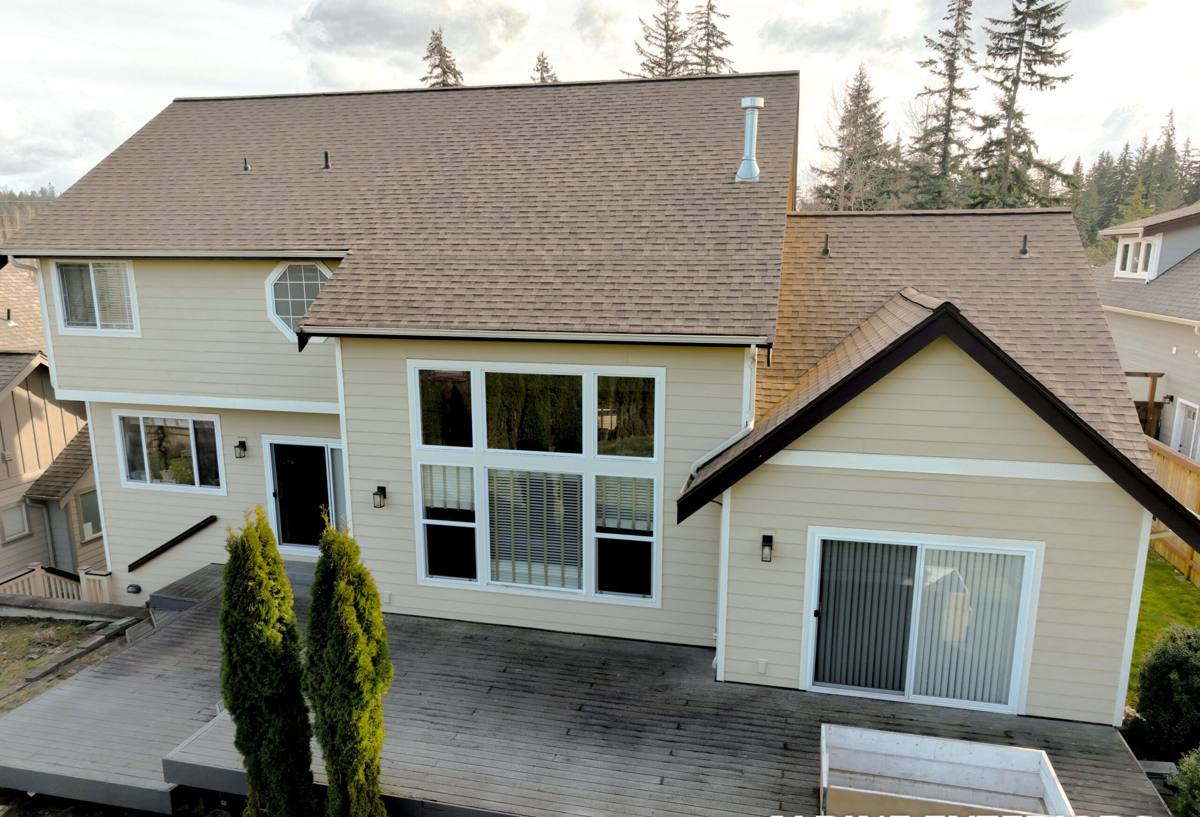
This page is about one thing specifically: installing new siding on a Seattle home, done correctly, with a product built for this climate. We'll walk through what local homes need, what a correct installation actually involves, and why the crew doing the work matters as much as the material itself.
What Seattle's Climate Does to Siding Over Time
Driving Rain and Wind-Driven Moisture
Seattle doesn't just get a lot of rain — it gets a lot of sideways rain. Wind off the Sound pushes moisture into wall assemblies at seams, laps, and penetrations that would stay dry in a calmer climate. Siding that isn't installed with the right overlaps, flashing, and clearances gives that water a path behind the cladding, where it can sit against sheathing and framing for weeks at a time during the wet season.
Salt Air Near the Water
Homes closer to Elliott Bay, the Duwamish, or Lake Washington's shoreline deal with a low but steady dose of salt in the air. Salt exposure accelerates corrosion on fasteners, flashing, and any metal trim that isn't rated for it, and it can accelerate the breakdown of coatings and finishes that aren't formulated to resist it.
The Long Moss and Algae Season
King County's combination of shade, moisture, and mild temperatures is close to ideal for moss and algae growth. Any siding with texture, seams, or a finish that holds moisture will show green and black staining faster here than almost anywhere else in the country. On wood-based products, that moisture retention doesn't stop at the surface — it can feed rot underneath.
Freeze-Thaw Cycling, Even If Mild
Seattle winters aren't brutally cold, but they do dip below freezing often enough that any moisture trapped in or behind siding gets a freeze-thaw cycle. Over years, that repeated cycling is what turns a small moisture problem into a structural one.
What a Correct Siding Installation Involves Here
The material matters, but so does everything underneath and around it. A siding job that looks right from the curb can still be set up to fail in this climate if the water management details are skipped. Here's what we treat as non-negotiable on every Seattle installation:
- A drainage plane behind the siding — a weather-resistant barrier installed so any moisture that does get past the cladding has a clear path down and out, not into the wall cavity.
- Rainscreen or furring where the wall assembly calls for it — a small air gap behind the siding that lets it dry out after wet weather instead of staying damp against the sheathing.
- Correct flashing at every penetration — windows, doors, hose bibs, light fixtures, and vents all need flashing detailed to shed water outward, not just caulk covering a gap.
- Proper lap and fastener spacing — manufacturer-specified overlaps and nailing patterns aren't a suggestion; they're what keeps wind-driven rain from working its way behind the boards.
- Ground clearance and kick-out flashing — siding held up off grade and decks, and kick-out flashing at roof-wall intersections, so water is directed away from the bottom edge of the siding instead of wicking into it.
- Caulking only where it belongs — sealant at trim joints and penetrations, not as a substitute for correct flashing.
Why We Only Install James Hardie Fiber Cement
We install James Hardie siding exclusively, and in a climate like Seattle's that's a deliberate choice, not a brand preference. Fiber cement is non-combustible, dimensionally stable, and doesn't absorb and swell with moisture the way wood-based products do. Hardie's HZ5 product line is engineered specifically for climates with heavy moisture exposure, which fits King County directly. The factory-applied ColorPlus finish is baked on under controlled conditions and resists the fading, cracking, and peeling that field-applied paint jobs are prone to after a few Seattle winters. It also holds up better against moss and algae staining than porous or textured alternatives, because the surface doesn't hold moisture the way raw or lightly primed wood-based products do.
We get asked why we don't install vinyl, LP SmartSide, or wood siding, and the honest answer is trade-offs we're not willing to put on a customer's house in this climate. Vinyl can warp and doesn't offer the fire resistance fiber cement does. Engineered wood products are more moisture-sensitive at cut edges and seams than fiber cement, which matters when the local weather is this consistently wet. Real wood and primed spruce need ongoing maintenance — recoating, caulking, moss treatment — that most homeowners don't want to sign up for indefinitely. James Hardie isn't the cheapest option upfront, but it's the one we're comfortable standing behind for a house that's going to face decades of Seattle rain.
Comparing Siding Options for a Seattle Climate
| Factor | James Hardie Fiber Cement | Vinyl | Engineered Wood / LP | Real Wood / Cedar |
|---|---|---|---|---|
| Moisture resistance | Strong — won't rot or swell | Doesn't rot, but can warp | Moderate — vulnerable at cut edges/seams | Weak without regular maintenance |
| Moss/algae resistance | Good with factory finish | Moderate | Moderate | Poor — feeds growth if untreated |
| Fire resistance | Non-combustible | Melts/deforms in heat | Combustible | Combustible |
| Finish longevity | Factory ColorPlus, 15-yr finish warranty | Color molded in, can fade/chalk | Field-applied, needs repainting | Field-applied, needs frequent recoating |
| Ongoing maintenance | Low | Low | Moderate | High |
Our Process for a Seattle Siding Installation
1. On-Site Assessment
We walk the exterior and look specifically for what's driving the need for new siding — moisture intrusion, moss buildup, failed caulking, existing rot at trim or penetrations — and check the condition of the sheathing underneath wherever we can access it.
2. Removal and Sheathing Check
Old siding comes off and we inspect the wall assembly before anything new goes up. Any soft or water-damaged sheathing gets addressed before we move forward — covering it over is how moisture problems get hidden, not solved.
3. Water Management Layer
We install the weather-resistant barrier and rainscreen/furring per the wall assembly's needs, and detail flashing at every window, door, and penetration before a single piece of siding goes on.
4. Hardie Installation to Spec
Siding is installed per James Hardie's fastening and clearance specifications — the ones that keep the manufacturer's warranty intact and that matter most in a wet climate.
5. Trim, Caulking, and Final Walkthrough
Trim and flashing details get finished, sealant goes only where it belongs, and we walk the completed job with the homeowner.
Why Hiring a Crew That Already Works Seattle Matters
Water management details aren't generic — they change based on wall orientation, exposure to wind-driven rain, proximity to the water, and how much shade a given elevation gets. A crew that installs siding across a range of climates may know fiber cement well but not know which side of a Seattle house needs extra attention to rainscreen detailing, or which King County neighborhoods see enough salt air to warrant closer attention to fastener and flashing material. Local experience shows up in the small decisions — where to add a kick-out flashing that wasn't there before, how much clearance to leave at grade given how wet the ground stays here, which elevations are worth extra scrutiny for moss. Those are the details that separate a siding job that looks fine on installation day from one that's still performing well ten winters later.
What to Check Before You Hire a Siding Contractor in King County
- Are they certified to install the specific James Hardie products they're quoting, or just familiar with fiber cement generally?
- Do they talk through water management — drainage plane, rainscreen, flashing — or only the visible siding itself?
- Will they inspect and address sheathing condition before installing new siding, not just cover over what's there?
- Do they follow manufacturer fastening and clearance specs closely enough to keep the product warranty valid?
- Can they explain how their approach accounts for Seattle's rain, moss, and (if relevant to your home) salt exposure specifically?
- Do they offer a clear, written scope before work starts, not a vague verbal estimate?
Signs Your Seattle Home May Need New Siding Soon
Not every siding issue means a full replacement, but a few signs are worth taking seriously in this climate: soft or spongy spots when you press on siding, especially near the bottom edge or around windows; persistent moss or dark staining that comes back quickly after cleaning; visible warping, buckling, or gaps at seams; paint that's peeling or bubbling rather than just fading; and any sign of moisture or staining on interior walls near exterior corners. Any of these can point to water getting behind the current siding, which is worth having assessed before it spreads to framing or sheathing.
If you're weighing a siding replacement on a Seattle home, we're happy to take a look and talk through what your house actually needs — no pressure, no obligation. Fill out the form below and we'll set up a free estimate.