 King County
 Sammamish Decks Face a Different Set of Problems
Sammamish sits up on the plateau between Lake Sammamish and the foothills, and that geography shapes what a deck has to survive here. Mature fir and cedar canopy keeps huge sections of many yards in shade for most of the day, which means decking that never fully dries out between rain events. Add in King County's long, wet stretch from fall through spring, and you get the two things that quietly wreck more decks than anything else: standing moisture and moss.
Homeowners closer to Puget Sound deal with salt air working into fasteners and finishes. Sammamish is inland on the plateau, so that's less of a direct factor here — but the broader King County pattern of driving rain, high humidity, and a moss season that can run half the year still does real damage. Moss holds water against wood and decking surfaces, algae makes boards slick and dangerous, and organic debris from overhead trees packs into board gaps and fastener heads where it traps moisture instead of shedding it.
A deck built without accounting for this will look fine for a season or two, then start showing soft spots, staining, and slippery patches in the shaded corners first. A deck built for this climate specifically will not.
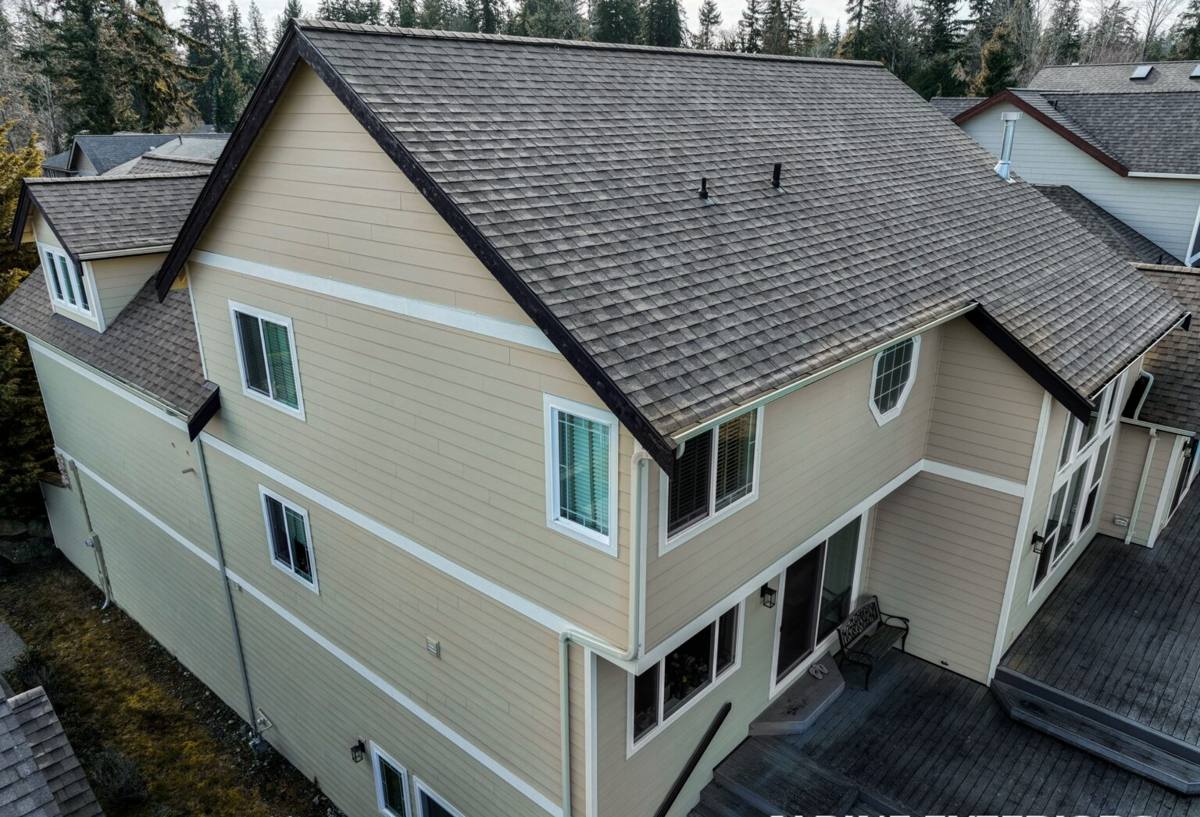
What a Correctly Built Deck Needs in This Climate
Drainage and airflow come first
Every deck we build starts with the assumption that water will land on it — the design question is where that water goes next. That means a consistent slope away from the house, gaps between boards sized for airflow rather than looks alone, and open space underneath so the substructure can dry out between storms instead of sitting damp for weeks.
The ledger board is the single biggest failure point
The ledger board — where the deck attaches to the house — is where the vast majority of serious deck failures in this region start. If it isn't flashed correctly, water works its way behind it, into the rim joist, and sometimes into the house framing itself, all hidden behind the decking above. We treat ledger flashing as non-negotiable, not an upsell.
Fasteners and hardware matter more here than in dry climates
Standard hardware corrodes faster in a climate that stays damp this much of the year. We use corrosion-resistant, code-rated structural connectors and fasteners rated for the treated lumber and moisture exposure our substructures see, not whatever is cheapest at the yard.
Choosing Decking Material for a Shaded, Wet Lot
There's no single "best" decking material — there's the right material for a given yard, budget, and how much upkeep the homeowner actually wants to do. On heavily shaded Sammamish lots, moisture tolerance and moss resistance matter more than they would on a sunny, open lot.
| Material | How it handles this climate | Upkeep | Typical lifespan |
|---|---|---|---|
| Cedar | Naturally rot- and insect-resistant, but still needs to dry and be sealed to fight moss and graying in shaded spots | Annual cleaning, periodic sealing/staining | 15-20+ years with upkeep |
| Pressure-treated pine/fir | Treated for rot resistance; performs well structurally but shows moss and staining faster in deep shade if neglected | Regular cleaning, sealing every 1-2 years | 15-20 years with upkeep |
| Composite/PVC decking | Doesn't absorb water or rot, resists moss buildup better on the surface, but still needs the gaps and substructure kept clear so debris doesn't pack in | Periodic washing, no sealing or staining | 25-30+ years, manufacturer-warrantied |
We're honest with homeowners about trade-offs rather than pushing one product. Cedar gives a warmer, natural look many Sammamish homes want, but it's an ongoing commitment. Composite costs more up front and trades that natural wood look for far less maintenance, which matters a lot on a shaded lot where moss keeps coming back. Pressure-treated lumber is the budget-friendly middle ground if you're willing to stay on top of cleaning and sealing.
What Happens Below the Decking — The Part Nobody Sees
The framing and footings under a deck do all the structural work, and they're also where corners get cut on a low-quality build. Correct footing depth matters for frost and soil movement, and King County's clay-heavy soils on the plateau can shift more than sandy or well-drained sites, which stresses undersized or shallow footings over time.
- Footings sized and set below the frost line, not just poured to "look deep enough"
- Joist hangers and structural screws rated for the load and the treated lumber species
- Ledger board flashed with a proper moisture barrier, not just caulked
- Beam and post spacing matched to actual span tables for the decking and joist material used
- Blocking added where guardrail posts attach, since railing loads concentrate stress at a few points
- Ventilation gaps left in the skirting or under low decks so air can move and moisture can escape
None of this is visible once the decking goes down, which is exactly why it's worth asking a contractor how they handle it before work starts, not after.
Permits and Code in Sammamish
Most new decks and significant deck rebuilds in Sammamish require a building permit through the city, and inspections happen at key stages — typically footings/framing and then a final. Decks built a meaningful height above grade need guardrails, and stair and railing dimensions have to meet code for rise, run, and spacing. None of this is optional, and skipping it doesn't just risk a fine — it risks a deck that isn't actually safe, and it can complicate things if you sell the house later and the permit history doesn't match what's built.
We handle the permit process as part of the job rather than leaving it to the homeowner to sort out, and we build to pass inspection the first time, not to squeak by.
How Our Process Works
1. Site visit and design
We look at the actual lot — slope, tree cover, sun exposure, drainage patterns, and how the deck connects to the house — before recommending a layout or material. A design that works for a flat, open backyard often isn't right for a sloped, shaded Sammamish lot.
2. Permit and planning
We pull the required permits and prepare the plans King County and the City of Sammamish need for review, so there are no surprises mid-project.
3. Demolition and site prep
If we're replacing an existing deck, we remove it and inspect the ledger area and any framing that will be reused — this is often where we find the moisture damage a homeowner didn't know was there.
4. Framing and substructure
Footings, posts, beams, and joists go in to code, with flashing and hardware sized for this climate, not a dry-climate minimum.
5. Decking, railing, and stairs
Decking is installed with proper gapping for drainage and airflow, and railings and stairs are built to the dimensions code requires.
6. Final walkthrough and inspection
We walk the finished deck with you, and it goes through final city inspection so you have a documented, permitted structure.
Living With Your Deck: Maintenance in a Wet, Shaded Climate
A well-built deck in Sammamish still needs seasonal attention, especially under tree cover. The goal is keeping water moving and moss from getting a foothold rather than fighting it after it's established.
- Sweep leaves, needles, and debris out of board gaps regularly, especially in fall
- Rinse or gently power-wash surfaces before moss and algae get established, not after
- Check that gaps between boards haven't packed shut with debris, which traps moisture underneath
- Reseal or restain wood decking on the schedule the product calls for — don't wait until it looks bad
- Look at the ledger board area once a year for staining or soft wood, since that's where hidden problems show up first
- Keep gutters and downspouts near the deck clear so runoff isn't dumping extra water onto or under it
What Affects the Cost of a Custom Deck
| Factor | Why it matters here |
|---|---|
| Decking material | Cedar, pressure-treated, and composite carry different material and labor costs, and composite has a higher upfront cost offset by lower upkeep |
| Site slope and access | Sammamish's rolling, plateau terrain means some lots need taller foundations, additional footings, or multi-level designs |
| Size and layout complexity | Multiple levels, built-in seating, or custom railing details add labor beyond a simple rectangular deck |
| Tree removal or trimming needs | Overhanging limbs sometimes need clearance for both construction and long-term deck health |
| Permit and engineering requirements | Larger or elevated decks may need engineered plans, which adds cost but ensures the structure is properly sized |
We give straightforward estimates based on your actual lot and goals rather than a generic per-square-foot number that doesn't hold up once the site conditions are factored in.
Why Hire a Crew That Already Works in Sammamish
A deck detailed for a dry climate, or built by someone unfamiliar with how King County's rain and shade patterns actually stress a structure over time, tends to show problems within a few years — moss returning fast, soft spots near the house, railings that loosen. A crew that regularly works Sammamish's sloped, tree-covered lots knows to check drainage before framing goes in, knows what the city's permit reviewers expect, and has already seen where shortcuts fail in this specific climate. That local experience shows up in decisions you won't see on the surface — footing depth, flashing details, board spacing — but that determine whether the deck is still solid in fifteen years.
If you're planning a new deck or need to replace one that's showing its age, we're happy to take a look and give you a straightforward, no-pressure estimate — just fill out the form below.