 King County
 Roofing in Issaquah's Foothill Climate
Issaquah sits where the Puget Sound lowlands meet the foothills of the Cascades, and that location shapes what a roof has to deal with year-round. Heavy tree canopy, valley shade pockets, and a wet season that can stretch from October well into spring all add up to conditions that are tougher on a roof than what you'd see in a drier, more open part of King County. Add in the driving rain events that roll through the Sound region and the salt-tinged air that reaches inland on a west wind, and you've got a climate that rewards a roof built correctly the first time and punishes one that wasn't.
We've worked on enough roofs in this part of King County to know the pattern: it's rarely one dramatic failure that takes a shingle roof down. It's slow, quiet moisture intrusion — under a lifted shingle edge, behind a poorly flashed chimney, through a valley that wasn't given enough underlayment — that shows up two or three winters later as a stain on a ceiling. Asphalt shingle roofing done right in Issaquah isn't just about the shingle itself. It's about every detail underneath it.
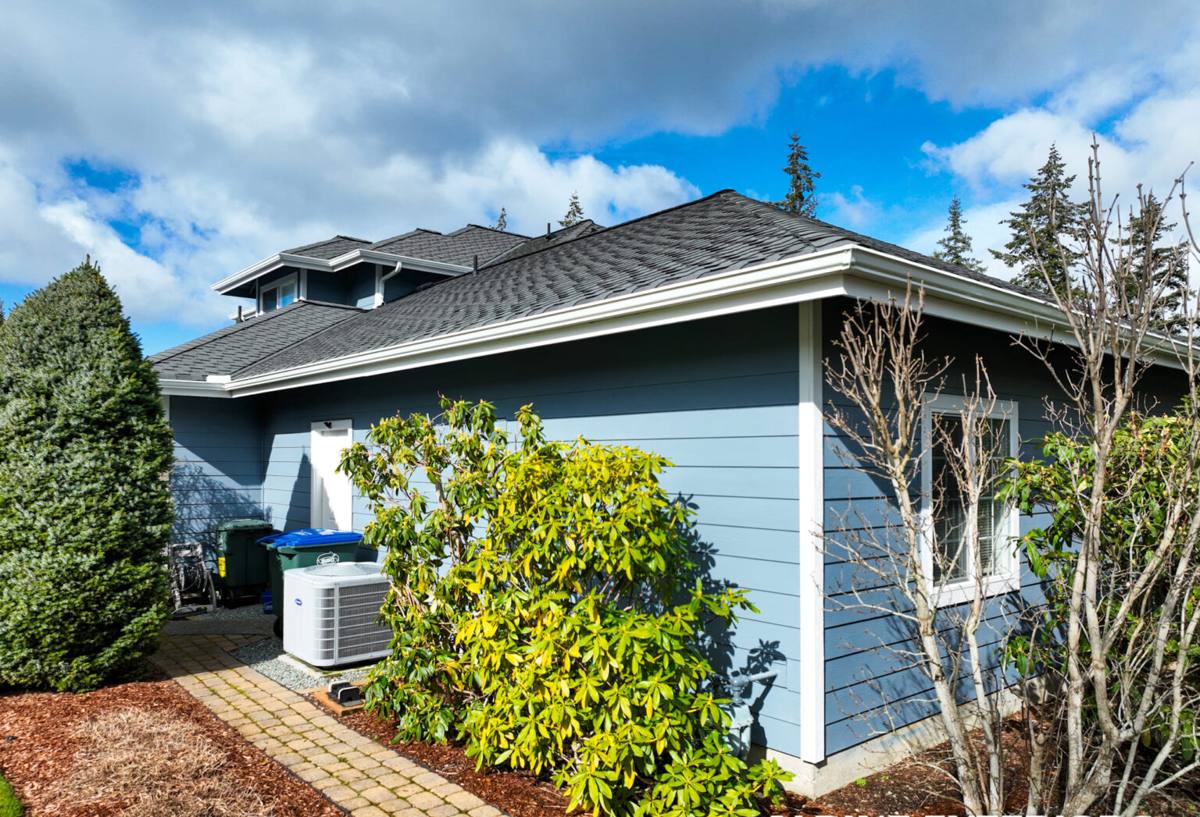
What Local Homes Actually Need From a Shingle Roof
Moisture Management First
Issaquah's long moss season is the clearest local signal of what's really happening on a roof: persistent moisture sitting in shaded, low-airflow areas. Moss doesn't just look bad — it holds water against the shingle surface far longer than the shingle was designed to tolerate, and it works its way under tabs and around fasteners over time. A correct installation accounts for this from the start, not as an afterthought once moss has already taken hold.
Ventilation That Matches the Canopy
Homes tucked under mature trees or set into a shaded slope often have less natural airflow across the roof deck than a home in the open. That makes proper intake and exhaust ventilation more important here, not less — a roof that can't breathe holds moisture in the attic space, which shortens the life of both the shingles and the deck underneath them regardless of how good the shingle brand is.
Wind and Driving Rain Resistance
Storms moving through the Sound region don't always bring straight-down rain — driving rain at an angle finds every gap in flashing, every underdriven nail, every valley that was cut too tight. Shingle roofing built for this area needs sealant strips that actually activate, correctly lapped underlayment, and flashing details that don't rely on caulk to do a metal joint's job.
Signs Your Issaquah Roof May Need Attention
Because failure tends to be gradual here, it helps to know what to actually look for before a small issue becomes a repair bill or an interior leak.
- Moss or dark streaking concentrated on the shaded, north-facing slopes of the roof
- Granules collecting in gutters or at the base of downspouts
- Shingle edges that look curled, cupped, or lifted, especially after a windy stretch
- Soft or spongy spots when walking the roof (deck moisture, not a shingle problem alone)
- Daylight visible through the attic roof deck, or damp insulation near the eaves
- Flashing around chimneys, skylights, or roof-to-wall transitions that looks rusted, lifted, or gapped
- A roof approaching or past 18-20 years old with no major work done
None of these mean the roof needs full replacement automatically — but each one is worth an honest inspection rather than a guess.
Choosing the Right Shingle for This Climate
Not every asphalt shingle product performs the same way under heavy shade, moss pressure, and repeated wet-dry cycling. We steer homeowners toward products that hold up to those specific conditions rather than whichever option is cheapest per square.
| Shingle Type | Best Fit For | Trade-Offs in This Climate |
|---|---|---|
| 3-tab asphalt | Budget-conscious re-roofs on simpler rooflines | Lower wind rating and shorter algae/moss resistance than architectural options; less margin under heavy canopy |
| Architectural (laminate) asphalt | Most homes in shaded or wet-prone areas | Thicker profile and better wind and impact ratings; typically includes algae-resistant granules, which matters here |
| Algae/moss-resistant granule lines | Homes under heavy tree cover or on north-facing slopes | Copper-infused granules slow moss regrowth but don't eliminate the need for periodic roof cleaning |
| Impact-rated (Class 4) shingles | Homes wanting added durability against wind-driven debris | Higher upfront cost; sometimes qualifies for an insurance discount worth asking your carrier about |
Our default recommendation for most Issaquah homes is an architectural shingle with algae-resistant granules — it's the combination that best matches the shade and moisture pattern we see locally without pushing a homeowner into paying for performance they don't need.
How We Approach an Asphalt Shingle Roof Here
1. Inspection and Honest Scoping
We start by getting on the roof, not just looking at it from the ground. We check the deck condition, existing ventilation, flashing details, and how much of the roof's wear is shingle-related versus a moisture or airflow problem underneath. This determines whether a homeowner actually needs a full re-roof or a more targeted repair.
2. Tear-Off and Deck Check
We remove the old roofing down to the deck rather than layering over it. This lets us find soft or rotted decking before it becomes a hidden problem, and it's the only way to install underlayment and flashing correctly.
3. Underlayment and Ice/Water Protection
Valleys, eaves, and roof penetrations get self-adhering waterproof membrane, not just felt paper. Given how much of the year Issaquah spends wet, this layer is doing real work, not just meeting code minimums.
4. Flashing Done as Metalwork, Not Caulk Work
Step flashing, counterflashing, and valley metal are installed so water sheds by design. Sealant supplements a correct flashing detail — it doesn't substitute for one.
5. Shingle Installation
Shingles are installed to the manufacturer's nailing pattern and exposure specs, which is what keeps the wind warranty and the moss-resistant granule warranty valid. Rushed or off-pattern installation is one of the most common reasons a shingle warranty gets denied later.
6. Ventilation Balance
We confirm intake and exhaust ventilation are balanced for the attic space, adding or correcting vents where the existing setup is undersized for the home.
7. Final Walkthrough
We walk the finished roof and the site with the homeowner, covering what was done, what to expect from the shingle over time, and what routine maintenance actually looks like.
Moss, Debris, and Canopy: Ongoing Maintenance That Actually Matters
A correctly installed shingle roof in Issaquah still lives under trees. That means gutters and valleys will collect needles and leaf debris faster than they would in a more open part of King County, and shaded slopes will need periodic moss treatment even with algae-resistant granules. We recommend a simple, low-effort maintenance rhythm rather than reactive fixes after a problem shows up.
- Clear gutters and valleys of debris at least twice a year, more often under heavy tree cover
- Have moss growth treated (not pressure-washed, which damages granules) before it spreads across a slope
- Trim overhanging branches back from the roofline to reduce shade, debris, and physical abrasion
- Schedule a walk-on inspection every few years, or after any major windstorm
- Address small flashing or sealant issues promptly rather than waiting for a leak to appear inside
What Drives the Cost
Every roof is different, so we won't quote a number without seeing yours, but these are the factors that move the price up or down on most Issaquah re-roofs.
| Factor | Why It Matters Locally |
|---|---|
| Roof pitch and access | Steeper foothill lots and wooded access can add labor and safety staging time |
| Number of valleys and penetrations | More cut lines mean more flashing and underlayment detail work, which is where leaks start if rushed |
| Deck condition | Moisture-related deck repair found during tear-off is common on older, shaded roofs |
| Shingle tier selected | Architectural and algae-resistant lines cost more per square than basic 3-tab but hold up better here |
| Ventilation upgrades | Correcting undersized intake or exhaust venting adds modest cost but extends roof life |
| Permit and disposal | Local permit requirements and tear-off debris volume vary by property and roof size |
Why a Crew That Already Works Issaquah Matters
Roofing crews that work across the whole Puget Sound region know general best practice. A crew that regularly works Issaquah and the surrounding King County foothills knows the specifics: which neighborhoods sit in heavier shade pockets, how local permitting typically runs, what deck conditions are common on homes of a certain age here, and how to sequence a tear-off around the region's wetter stretches so a deck isn't left exposed longer than it should be. That local pattern recognition is what keeps a project on schedule and keeps surprises from turning into change orders.
It also means someone who answers the phone if a question comes up two years after installation isn't a call center — it's a crew that's still working roofs down the road from yours.
If you're weighing a repair against a full replacement, or just want an honest read on where your roof actually stands, we're glad to take a look. Fill out the form below for a free, no-pressure estimate — no obligation, no pushy follow-up, just a straight answer about your roof.