 King County
 Building Decks for Issaquah's Foothill Climate
Issaquah sits where the Puget Sound lowlands meet the Cascade foothills, and that location shapes everything about how a deck should be built here. Homes tucked against Cougar, Squak, or Tiger Mountain get more shade, more standing moisture, and more organic debris falling onto outdoor structures than homes out in open, sunnier parts of King County. A deck built with a generic, one-size-fits-all approach tends to show its age fast in this environment: black streaking on the boards, soft spots near the house, and hardware that rusts years before it should.
We build custom decks for Issaquah homeowners with that reality in mind from the first sketch. That means material choices, drainage details, and fastener selection that match what this specific stretch of King County actually deals with — not just what looks good in a showroom.
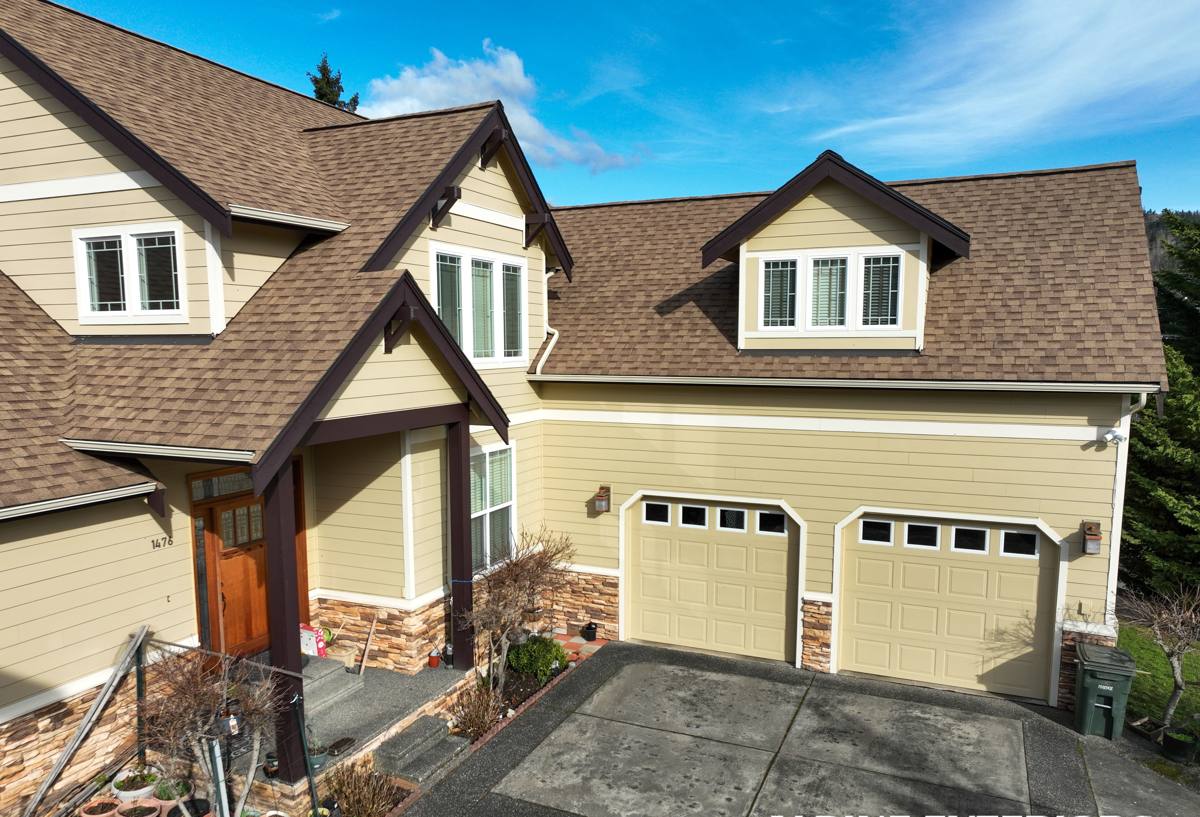
What Driving Rain and a Long Moss Season Actually Do
King County's wet season runs long, and Issaquah's tree cover and terrain make it linger even longer on outdoor surfaces. Three things cause most of the deck problems we get called out to fix:
Driving Rain
Wind-driven rain doesn't fall straight down — it gets pushed sideways into ledger boards, stair stringers, and the gap where a deck meets siding. If flashing and water management aren't done correctly at that joint, water works its way behind the house's exterior finish long before anyone notices a problem on the surface.
Moss and Algae Growth
Shaded decks under fir and cedar canopy stay damp far longer after a storm than decks in full sun. That extended dampness is exactly what moss and algae need to take hold. Beyond looking bad, a mossy deck surface gets slick and dangerous, and moss holds moisture directly against the wood or composite surface, accelerating rot or surface degradation underneath it.
Salt-Laden Air and Corrosion
Homes closer to Puget Sound waterways deal with airborne salt that speeds up corrosion on fasteners, brackets, and railing hardware. Even away from the water, humidity and the region's persistent moisture push cheaper fasteners toward rust faster than homeowners expect.
What a Correctly Built Deck Needs Here
A deck that holds up in this climate isn't about buying the most expensive material — it's about getting a handful of details right that generic builders often skip or rush.
- Flashing at the ledger board that actually sheds water away from the house rim joist, not just a bead of caulk
- Stainless or coated corrosion-resistant fasteners rated for ground contact and exterior exposure
- Proper board spacing and airflow underneath the deck so wet debris and moss don't have a place to sit and hold moisture
- Footings set below frost depth and sized for King County soil conditions, which vary block to block in the foothills
- A surface material chosen for how it actually performs in shade and rain, not just how it looks on day one
- Stair and railing hardware built for repeated wet-dry cycling without loosening
Comparing Decking Materials for Issaquah Conditions
Every material has real trade-offs in this climate. We walk homeowners through these honestly rather than steering everyone to the same product.
| Material | Moisture Behavior | Moss/Algae Resistance | Maintenance | Typical Lifespan |
|---|---|---|---|---|
| Pressure-treated wood | Absorbs and releases moisture; can cup or warp if not sealed regularly | Low — needs regular cleaning and sealing to resist growth | Annual cleaning, re-staining every 1-3 years | 10-15 years with upkeep |
| Cedar | Naturally moisture-resistant but still needs sealing in shaded areas | Moderate — natural oils help but fade over time | Cleaning and oiling every 1-2 years | 15-20 years with upkeep |
| Composite decking | Doesn't absorb water like wood; performance varies by brand and core type | Higher, but surface still needs periodic washing in shaded spots | Occasional washing, no sealing or staining | 25-30 years, per manufacturer warranties |
| PVC/capped polymer | Fully moisture-resistant surface | Highest — smooth capped surface resists staining and growth | Low — occasional rinse | 25-30+ years, per manufacturer warranties |
Composite and capped polymer boards generally make the most sense under heavy tree cover because they don't feed moss the way bare wood does, but they cost more up front and installation sensitivity — expansion gaps, hidden fastener spacing, proper joist spacing — matters more with these products than with standard lumber. Wood remains a solid, honest choice for homeowners who want the lowest upfront cost and don't mind the maintenance routine that keeps it performing well through King County winters.
Structure First: What's Under the Surface Matters Most
The decking material gets all the attention, but the framing underneath is what actually determines whether a deck lasts. In a climate that stays wet for months at a time, we pay particular attention to:
Ledger Attachment and Flashing
This is the single most common failure point on older decks we inspect. A ledger board that's bolted to the house without correct flashing lets water track behind siding and into the rim joist, which can rot both the deck attachment point and the wall structure behind it.
Joist Protection
Joist tape or an equivalent moisture barrier over the top of each joist keeps standing water from soaking into end grain and fastener holes — the two places rot starts fastest.
Footings and Post Bases
Post bases that hold the wood post above the concrete, rather than embedding it directly, keep the most vulnerable part of the structure out of standing water and soil moisture.
Ventilation Underneath
Decks built low to the ground or over patios need enough clearance and airflow to let the underside dry out between storms. Skipping this is a common shortcut that causes hidden rot years down the line.
Our Custom Deck Process
We keep the process straightforward and give homeowners a clear picture of what's happening at each stage.
- On-site assessment — We look at sun exposure, tree cover, drainage patterns, and how the deck will tie into your home's existing structure and siding.
- Design and material selection — We talk through layout, railing style, and material trade-offs based on your budget and how much upkeep you actually want to do.
- Permitting — We handle the permit application and inspections required through King County or the City of Issaquah, depending on your address.
- Demolition of the old deck, if applicable, with attention to what condition the ledger and framing are hiding underneath.
- Framing and flashing — This is where the long-term durability of the deck actually gets decided, and where we spend the most care.
- Decking, railing, and stairs installed to manufacturer specifications, with fastener and spacing choices matched to the material.
- Final walkthrough — We go over care instructions specific to whatever material you chose before we call the job done.
Permits and Code Considerations in the Issaquah Area
Most new decks and significant deck rebuilds in King County and within Issaquah city limits require a building permit, particularly when the deck is attached to the house, elevated above a certain height, or involves structural changes. Requirements can differ depending on whether your property falls under City of Issaquah jurisdiction or unincorporated King County, and there are additional considerations for homes near critical areas like steep slopes or streams, which are common around the foothills. We handle this process as part of the job so homeowners aren't left guessing about what's required or chasing down inspections on their own.
Keeping a New Deck Performing Through the Wet Season
Even a well-built deck needs some seasonal attention in this climate. A short annual routine goes a long way toward preventing the moss buildup and moisture damage that shortens a deck's life.
- Sweep leaves and needles off the surface regularly through fall, especially in shaded corners
- Clear debris out of the gaps between boards where it traps moisture
- Rinse or gently wash the surface at the start and end of the wet season to knock back early moss and algae growth
- Check under-deck ventilation isn't blocked by stored items or overgrown landscaping
- Inspect railing and stair hardware once a year for rust or loosening, particularly on decks closer to the water
- Reseal wood decking on the schedule appropriate to the product — don't wait until it's visibly gray and weathered
Why a Crew That Already Works Issaquah Makes a Difference
A deck builder who works across a wide, generic service area treats every job the same. A crew that regularly builds in Issaquah and the surrounding King County foothills already knows which neighborhoods sit in heavier shade, where drainage tends to be a problem, and which framing details actually hold up against this specific mix of driving rain and long, damp winters. That local pattern recognition shows up in fewer callbacks and a deck that's still solid a decade later, not just the year it was built.
We also know the permitting path for both City of Issaquah and unincorporated King County jobs, which keeps projects moving instead of stalling on paperwork. That local familiarity is worth more than it sounds like on paper — it's the difference between a deck built to a generic standard and one built for the conditions it'll actually face outside your door.
Get a Free, No-Pressure Estimate
If you're planning a new deck or replacing one that's showing its age, we're happy to take a look and walk you through options honestly — no pushy sales pitch, just a straight assessment of what your property needs. Use the form below to request a free estimate for your Issaquah deck project.