 King County
 Building a Deck That Actually Holds Up in Issaquah
Issaquah sits in the foothills of King County, where tree cover, valley moisture, and a long wet season put more stress on an outdoor deck than most homeowners expect. A deck built the way it would be in a drier climate — or built fast to hit a low bid — tends to show problems within a few years: soft spots near the house, black streaks on the boards, rails that wobble, or a slick green film that shows up every fall and doesn't fully leave until summer. We build decks for Issaquah properties specifically, not a generic deck dropped into a wet climate and hoped for the best.
This page covers what a deck in this area actually needs, what a correct build looks like from the ground up, and how we approach the work when we're on your property. It's meant to help you understand the job, not just sell it.
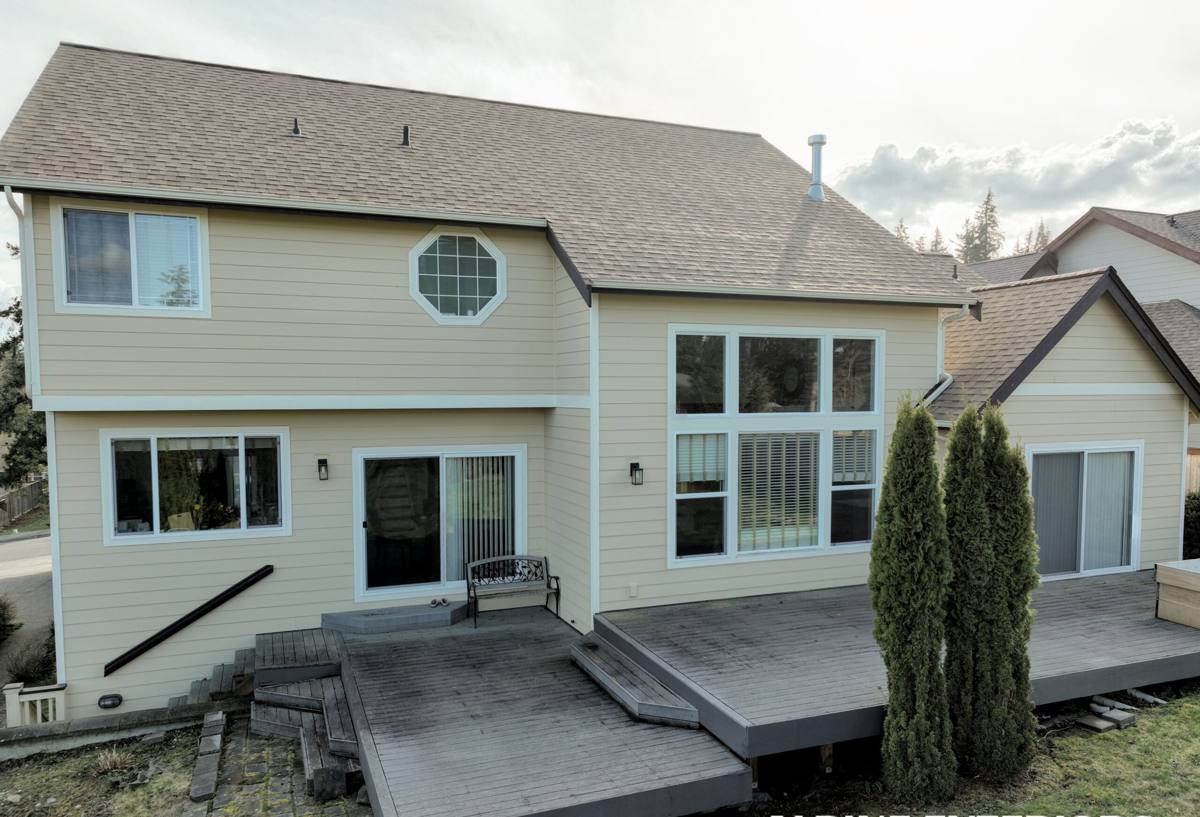
What Issaquah's Climate Does to a Deck Over Time
Rain and standing moisture
King County gets a long stretch of steady rain rather than short heavy storms, and that changes how a deck fails. Water doesn't just hit the surface and run off — it sits in shaded corners, soaks into end grain, and works its way behind ledger boards and around post bases if those areas weren't detailed correctly. Driving rain also finds its way sideways under railings and along house walls, which is why flashing and gaps matter as much as the decking material itself.
Shade, tree cover, and moss
Many Issaquah lots have significant tree cover or sit close to greenbelt terrain, which means decks often get partial shade for large parts of the day. Shaded, damp wood is exactly what moss and algae need to take hold. Once moss establishes on a deck surface or in the gaps between boards, it holds moisture against the wood or composite even longer, which accelerates the problem it caused in the first place. A deck built with airflow and drainage in mind fights this naturally; one built without it turns into a yearly moss-scraping chore.
Temperature swings and seasonal movement
Our winters aren't extreme, but the freeze-thaw cycle still happens enough times each season to matter. Fasteners loosen, wood expands and contracts, and any gaps in flashing or sealant get worked wider a little at a time. None of this is dramatic in a single season — it's the accumulation over several seasons that separates a deck that lasts from one that needs early repair.
Choosing the Right Decking Material for This Area
There's no single "best" decking material — the right choice depends on your budget, how much upkeep you want to do, and how exposed the deck is to shade and moisture. Here's how the common options compare for a climate like ours:
| Material | Upfront Cost | Moisture & Moss Behavior | Maintenance |
|---|---|---|---|
| Pressure-treated wood | Lowest | Absorbs moisture; needs sealing to resist moss and rot | Annual cleaning and resealing recommended |
| Cedar | Mid-range | Naturally more rot-resistant than treated pine, but still absorbs water without finish | Periodic staining/sealing to hold color and resist moss |
| Traditional composite | Mid to high | Resists rot but can hold surface moisture and stain if not capped | Occasional washing; less sealing than wood |
| Capped composite / PVC | Highest | Best resistance to moisture absorption and staining | Low — mostly rinsing off debris and moss film |
We'll talk through this with you honestly. If you want the warmth of real wood and are willing to stay on top of maintenance, cedar is a reasonable choice. If you'd rather spend more upfront and do far less upkeep for the next fifteen-plus years, capped composite is usually the better long-term value in a shaded, wet climate. We don't push one product line — we explain the trade-offs and let you decide what fits your house and your tolerance for maintenance.
What a Correctly Built Deck Actually Involves
A deck that holds up here isn't about a fancier material — it's about details that don't show up in a photo. The parts that matter most are usually the parts you'll never see once the deck is finished.
- Ledger board flashing: where the deck attaches to the house is the single most common source of hidden rot if it isn't flashed correctly to shed water away from the wall.
- Footings sized for the soil and load: King County's building code sets minimum footing depth and sizing for a reason — frost and soil movement will find any shortcut over time.
- Joist protection: joist tape or a comparable barrier over the top of framing lumber keeps screw penetrations from becoming entry points for water.
- Corrosion-resistant fasteners and hardware: galvanized or stainless hardware rated for treated lumber contact, not standard fasteners that corrode and stain the wood around them.
- Proper board spacing: gaps sized for airflow and drainage, adjusted for the material's expansion and contraction.
- Post bases off the ground: posts set on bases or brackets rather than buried directly in concrete, so the end grain isn't sitting in standing moisture.
None of this is unusual or exotic — it's just easy to skip when a crew is trying to move fast. Skipping it doesn't show up as a problem on day one. It shows up two or three winters later.
Our Deck Building Process
1. On-site consultation and design
We walk the property with you, talk about how you'll use the space, and look at sun exposure, drainage patterns, and how the deck will tie into the house. This is also where we talk through material options honestly based on your specific lot conditions.
2. Permitting
Most new decks and many substantial rebuilds in King County require a permit. We handle the permit application and make sure the design meets current code for footings, railings, and structural framing before work starts.
3. Site prep and footings
We lay out the footing locations, dig to the required depth, and pour footings sized to the deck's load and your soil conditions.
4. Framing
Ledger flashing, joist layout, and hardware go in at this stage. This is the part of the job that determines how the deck performs in ten years, even though it's completely hidden once decking goes down.
5. Decking, railing, and finish work
Decking boards, railings, stairs, and any built-in features go in last, along with final fastening and trim work.
6. Final walkthrough
We walk the finished deck with you, go over basic care for whatever material you chose, and answer any questions before we consider the job done.
Maintenance Issaquah Homeowners Should Actually Expect
Every deck material needs some upkeep in this climate — the difference is how much and how often. A realistic seasonal routine looks like this:
- Sweep debris (needles, leaves, seed pods) off the surface and out of board gaps regularly through fall — trapped organic matter is what feeds moss.
- Rinse or lightly wash the deck surface once or twice a year to remove the surface film that leads to moss growth, especially in shaded sections.
- Check railings and stair connections annually for looseness from seasonal wood movement.
- For wood decks, plan on resealing or restaining every one to three years depending on sun and shade exposure.
- For composite decks, check manufacturer guidance on cleaning products — some cleaners can dull or discolor the surface.
- Keep an eye on the area where the deck meets the house; that's the first place to check if you ever notice soft wood or discoloration.
Permits and Local Considerations in King County
Deck projects in Issaquah generally fall under the City of Issaquah's building permit process, and requirements can vary depending on deck height, size, and whether it's attached to the house. Rather than guess at your specific situation, we handle the permit review as part of the job and make sure the design we build actually matches what gets approved. If your property has an HOA, it's also worth checking their guidelines on deck materials, colors, or railing style before final design — we're happy to work within those if you let us know upfront.
Why Hire a Crew That Already Works in Issaquah
A deck builder who works this specific part of King County regularly already knows how the local climate treats different materials, what the permitting process looks like, and what kind of framing details actually matter here versus in a drier region. That's not a marketing point — it's the difference between a deck that's built to a generic standard and one that's built for the conditions it will actually sit in for the next twenty years. We'd rather spend an extra hour on footings and flashing than have you calling us back in three years about a soft spot by the house.
If you're planning a new deck or replacing one that's past its prime, we're glad to come take a look, walk the site with you, and put together a straightforward estimate — no pressure, no inflated scope. There's a form below to get that conversation started.