 King County
 Why Decks Wear Out Faster on Mercer Island
Mercer Island sits surrounded by Lake Washington, and that setting shapes what a deck goes through every year. Homes here deal with near-constant humidity, driving rain that blows in off the water, and one of the longer moss seasons you'll find anywhere in King County. That combination doesn't just make a deck look tired — it works on the wood and hardware you can't see from the surface: the ledger board bolted to the house, the joists underneath, the post bases sitting in or near grade, and every fastener holding it together.
A deck on the west side of Puget Sound country dries out between storms. A deck on Mercer Island, tucked among mature trees and lake-effect moisture, often doesn't get that chance. Shade, tree cover, and the lake's humidity mean boards stay damp longer after each rain, which is exactly the condition moss, algae, and rot organisms need to take hold. We've built and replaced enough decks around the island to know this isn't a hypothetical — it's the normal wear pattern for this specific setting, and it's why a deck that looks fine from a distance can be structurally compromised underneath.
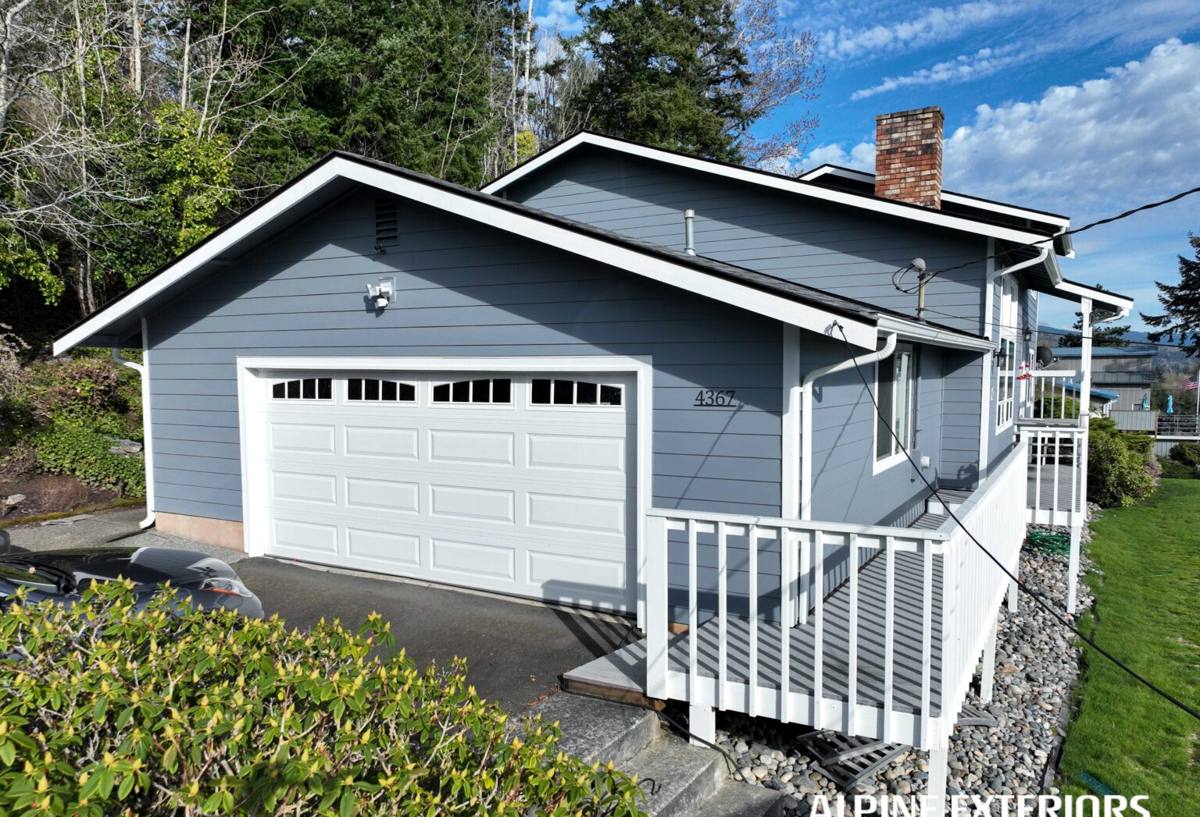
Signs a Deck Needs Replacement, Not Just Repair
Not every tired deck needs to be torn out. But there's a point where patching boards is just deferring a bigger problem, and it's worth knowing where that line is before you spend money on the wrong fix.
Repair usually makes sense when:
- A handful of deck boards are cupped, splintering, or gray but the framing underneath is still solid and dry
- Railings are loose but the posts they're attached to aren't rotted
- Fasteners have started to pop or rust but the wood around them hasn't degraded
Replacement is the honest answer when:
- The ledger board (where the deck attaches to the house) shows soft spots, staining, or gaps — this is the single most common structural failure point on older decks
- Joists feel spongy or give when you press on them, especially near the house or at ground contact points
- Post bases or footings have shifted, settled, or show rot at the base
- Moss and algae keep coming back within weeks of cleaning, which usually means moisture is trapped rather than just sitting on the surface
- The deck was built without a permit or doesn't meet current attachment and railing code — repairing around a code problem doesn't fix the code problem
If you're not sure which category your deck falls into, that's a normal thing to ask us to look at before deciding anything. An honest assessment costs you nothing and saves you from either overpaying for repairs on a deck that's done, or tearing out a deck that had years left in it.
What a Correct Deck Replacement Actually Involves
A deck is a structure, not a surface — the decking boards are the part you see, but the part that determines whether the deck is safe and lasts is everything underneath. A correct replacement addresses each layer:
Ledger attachment
This is where most deck failures start, and it's also the detail most likely to get shortcut on a lower-bid job. The ledger needs proper flashing to keep water from tracking behind it into the house rim joist, and it needs structural fasteners or through-bolts sized and spaced to current code — not just whatever was used the first time around.
Framing and joists
Joist size, spacing, and hardware (proper joist hangers, not just toe-nailing) all matter for load capacity, especially if the deck will carry a hot tub, large gatherings, or heavy furniture. In a wet climate, joist tape or a moisture barrier on top of the joists before decking goes down meaningfully extends the framing's life by keeping standing water off bare wood.
Posts, footings, and beams
Footings need to sit below frost depth and bear on solid, undisturbed soil — on sloped or wooded lots, that sometimes means deeper or additional footings than the original deck had. Post bases should keep wood off concrete and off grade, since ground-contact rot is one of the most common failure points we find on older decks.
Railings and stairs
Guard height, baluster spacing, and graspable handrail requirements are code items, not style preferences. If the old deck predates current code, replacement is the moment to bring it up to standard.
Choosing Decking Material for This Climate
There's no single "best" decking material — there's a best fit for your budget, how much upkeep you're willing to do, and how much shade and moisture the deck sits in. On Mercer Island, where tree cover and lake humidity keep decks damp longer, the maintenance difference between materials is more pronounced than it would be in a drier, more exposed location.
| Material | Upfront Cost | Maintenance | How It Handles This Climate |
|---|---|---|---|
| Pressure-treated wood | Lowest | Annual cleaning, periodic sealing | Affordable and repairable, but needs consistent upkeep to resist moss and rot in shaded, humid spots |
| Cedar | Mid | Regular sealing/staining | Naturally rot-resistant and handsome, but still needs maintenance attention in low-sun areas |
| Composite decking | Higher | Occasional washing, no sealing | Resists moisture absorption well; still needs airflow underneath to avoid mildew film in deep shade |
| PVC/capped composite | Highest | Minimal | Best moisture and moss resistance of the common options, strongest fit for heavily shaded lakeside lots |
Whatever decking you choose, the framing underneath should be treated the same way regardless — pressure-treated structural lumber, proper flashing, and adequate ventilation under the deck so air can move and dry things out between storms. Skimping on framing to afford premium decking boards is a trade-off we won't recommend, because the boards are replaceable and the framing is not something you want to redo in ten years.
Permits and Code on Mercer Island
Deck replacement in King County generally requires a permit once you're rebuilding structure — not just swapping surface boards on an otherwise sound frame. Mercer Island, like most cities in the county, reviews decks for footing depth, ledger attachment, guard and stair requirements, and setback from property lines. Skipping the permit might save time up front, but it can create real problems later: unpermitted work can complicate a home sale, and it removes the inspection step that catches ledger and footing mistakes before they're buried under decking.
We pull permits as part of the job rather than treating it as an optional add-on. It's a normal part of doing a deck replacement correctly, and it protects you as the homeowner if anything about the structure is ever questioned down the road.
Our Deck Replacement Process
- On-site assessment — we check the ledger, joists, posts, and footings, not just the surface boards, and tell you honestly whether repair or replacement is the right call
- Clear scope and pricing — you get a written breakdown of what's being replaced, what materials are involved, and why, before any work starts
- Permit and code review — we handle the permit process and design to current guard, stair, and attachment code
- Demolition and disposal — old decking, framing, and hardware removed and hauled off, with attention to protecting landscaping and grade around the deck footprint
- Structural rebuild — ledger flashing and fastening, joists, joist tape or moisture barrier, footings and posts sized to load and frost depth
- Decking, railing, and stairs installed — to the material and layout you chose, with attention to fastener spacing and airflow underneath
- Final walkthrough and inspection sign-off — we go over the finished deck with you and make sure permit inspection is closed out
Cost Factors for a Mercer Island Deck Replacement
Deck replacement costs vary based on size, material, height off grade, and how much of the existing structure can be reused versus needs full replacement. Rather than quote a number that won't mean much without seeing your deck, here's what actually moves the price:
| Factor | Why It Matters |
|---|---|
| Deck size and shape | Square footage and the number of corners, levels, or stairs directly affect labor and material |
| Decking material | Pressure-treated wood, cedar, composite, and PVC span a wide cost range |
| Height and footing depth | Taller decks and deeper footings (especially on sloped lots) mean more concrete and structural work |
| Ledger and framing condition | Rot found at the ledger or rim joist during demo can add scope — this is common on older decks in shaded, humid spots |
| Railing and stair complexity | Custom railings, multiple stair runs, or code upgrades add cost beyond a simple rectangular deck |
| Permit requirements | Permit fees and any required engineering for larger or elevated decks factor into total project cost |
Maintaining a New Deck in This Climate
Even a well-built deck needs a little seasonal attention on Mercer Island to get its full lifespan out of it. A short checklist we give homeowners after every replacement:
- Sweep debris and standing leaves off the deck regularly, especially in fall — trapped organic matter holds moisture against the boards
- Rinse or lightly scrub moss and algae as soon as you see it forming, before it gets a foothold in shaded corners
- Check that gaps between boards stay clear so water drains through instead of pooling
- Inspect railings and stair connections once a year for looseness
- Reseal wood decking on the manufacturer's recommended schedule — don't wait until it's visibly gray and dry
- Keep an eye on the area where the deck meets the house for any staining or gaps in flashing
Why a Crew That Already Works Mercer Island Matters
Deck replacement isn't just about materials — it's about knowing how a specific setting behaves. A crew that works Mercer Island regularly already knows how shaded, lake-adjacent lots hold moisture differently than a sunny lot ten minutes inland, knows what the city's permit review looks for, and has seen firsthand where older decks on the island tend to fail first. That local pattern recognition means fewer surprises during demo, a more accurate first assessment, and a deck built to actually hold up to the conditions it will sit in for the next few decades, not a generic spec sheet.
We're a King County crew, and Mercer Island is part of the area we work in consistently — not a one-off trip. If your deck is showing its age, or you're just not sure whether it needs repair or replacement, we're happy to come take an honest look. Reach out for a free, no-pressure estimate using the form below.